Written by: Luis Teran, Co-founder, CEO, TenantEvaluation | Last updated: August 6, 2026
Key Takeaways for Florida HOA Screening
- Florida HOAs and condominiums must follow Chapters 718 and 720, FCRA permissible purpose rules, and open-session board voting requirements that generic rental screening tools do not address.
- Manual screening workflows create compliance gaps, identity fraud exposure, and operational delays that can cost qualified applicants and association revenue.
- Modern HOA screening platforms should combine biometric identity verification, board voting dashboards, lease lifecycle tracking, and connected payments in a single audit-ready system.
- TenantEvaluation is the only end-to-end, FCRA-first platform purpose-built for Florida community associations, serving 5,000+ communities and processing approximately 100,000 applications annually.
- Property managers can streamline compliance and reduce approval times by up to 70% with TenantEvaluation’s integrated tools. See the platform in action with a live demo.
7 Florida HOA Screening Requirements You Must Meet
- Statutory authority under Chapters 718 and 720. Condominium associations operate under Florida Statute §718 and HOAs under Florida Statute §720. Screening criteria must align with each association’s governing documents and these statutes.
- FCRA permissible purpose and adverse action. Every credit or background report requires documented permissible purpose. Manually generated adverse action notices can contain errors. Automated workflows reduce this exposure.
- Consistent, documented criteria. Federal Fair Housing Act compliance requires identical screening criteria applied to every applicant, with all decisions documented. Selective enforcement is unlawful under Florida law and can expose board members to personal liability.
- Board vote in open session. Under Florida HOA law, all votes must occur in open session with documented notice, agenda, and minutes. Every approval decision therefore creates mandatory audit-trail requirements.
- Official records access within 10 days. Under Section 718.111(12), associations must produce official records within 10 working days of a written request or face $50-per-day statutory damages up to $500.
- Record retention. Florida law requires associations to retain records for extended periods. That obligation includes screening records, approval decisions, and fee documentation.
- Identity fraud prevention. CS/HB 1293, effective October 1, 2026, creates Florida Statute §817.537 making it a third-degree felony to obtain a residential rental unit through materially false identity statements or forged documents. Identity verification now sits squarely in the compliance chain.
Why Florida HOAs and Condos Need Specialized Resident Screening
Generic rental screening tools are built for multifamily landlords, not community associations. Florida HOAs and condominiums operate under a distinct legal framework that includes board governance, fiduciary duties, open-meeting requirements, rental caps, and mandatory lease addenda that generic platforms do not address. A CAM managing a 300-unit condominium in Miami faces different statutory obligations than a multifamily leasing agent in Atlanta. The screening platform must reflect that difference at every step.
Condominium associations often process rental approval packets within a few days, yet board meeting schedules can extend overall timelines from tenant selection to move-in. That gap reflects a workflow problem, not a people problem. Purpose-built technology closes that gap by aligning screening, board review, and occupancy in one connected process.
The Resident Journey: How a Compliant Process Flows from Application to Occupancy
To address these distinct legal requirements, a compliant resident journey must integrate board governance and audit trails at every stage. TenantEvaluation structures this as four connected stages.

- Application begins. The prospective resident receives a property code, creates an account, and initiates the digital application. They provide personal, financial, and contact details and upload required documents.
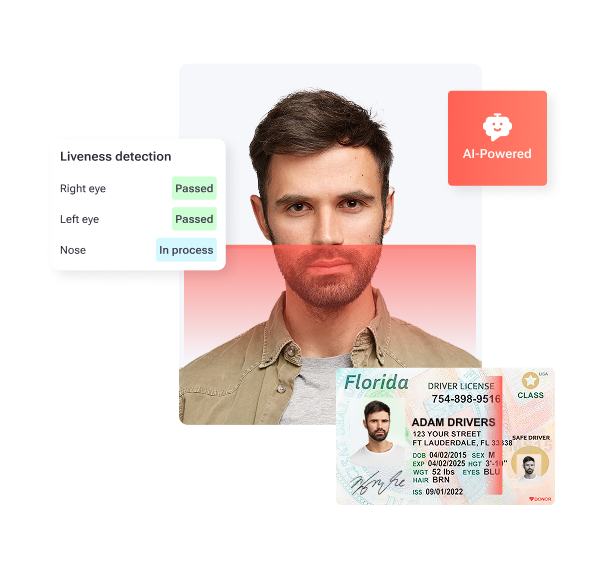
- Identity verification. The applicant completes biometric identity verification, validating a government-issued ID and confirming physical presence through AI-powered liveness detection before the application proceeds to review.
- Review and digital signing. The applicant reviews information for accuracy and signs required documents electronically. The platform checks for completeness and automatically rejects incomplete submissions.
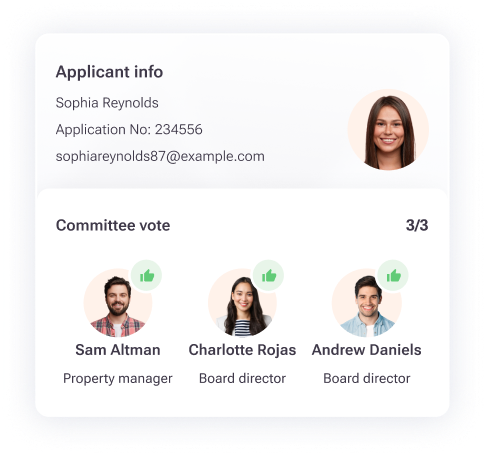
- Board approval and occupancy. The board reviews a summarized application report through a dedicated voting dashboard and records its decision in open session. The lease then connects to the unit record, creating an audit-ready occupancy record from day one.
The Current Landscape: Fraud, Compliance Pressure, and Board Oversight
This structured journey supports more than efficiency. It directly addresses the fraud and compliance pressures that make manual screening increasingly risky. Over 93% of rental housing owners and managers experienced application fraud in the last year. The new felony statute targets three specific fraud categories: online document-forging services generating fake pay stubs and bank statements, falsified employment and income claims, and synthetic identity theft designed to bypass standard screening. Florida’s updated law raises the stakes for associations that still rely on document uploads alone.
Board oversight requirements have also tightened. Board meeting minutes and official records are frequently required to prove patterns of selective enforcement or retaliation. Centralized, auditable documentation now functions as a core protection for both the association and its board members.
Day-to-Day Operational Realities for CAMs
Property management leasing teams spend a substantial amount of time on application processing and follow-up. Many property managers still rely on manual verifications for income, employment, and assets. The result is a compounding administrative burden: incomplete applications, missed lease expirations, disconnected payment records, and board members waiting on email chains for information they need to vote.
Applicants may accept other offers if a decision does not arrive promptly. For Florida communities managing seasonal application surges, faster processing helps reduce vacancy loss and protects association revenue.
Florida Statutes 718/720, FCRA, and Audit-Trail Expectations
Florida Statutes Chapters 718 and 720 impose overlapping obligations on associations and their managers, which directly shape screening workflows. Under Florida Statute 718.110(13), condo rental amendments apply only to owners who consent and owners who take title after the amendment becomes effective. Lease approval workflows therefore must track owner consent status at the unit level. Under Florida Statute 720.305, HOAs may impose fines for rental restriction violations subject to $100-per-violation and $1,000-aggregate limits, with 14 days’ written notice and a committee hearing required.
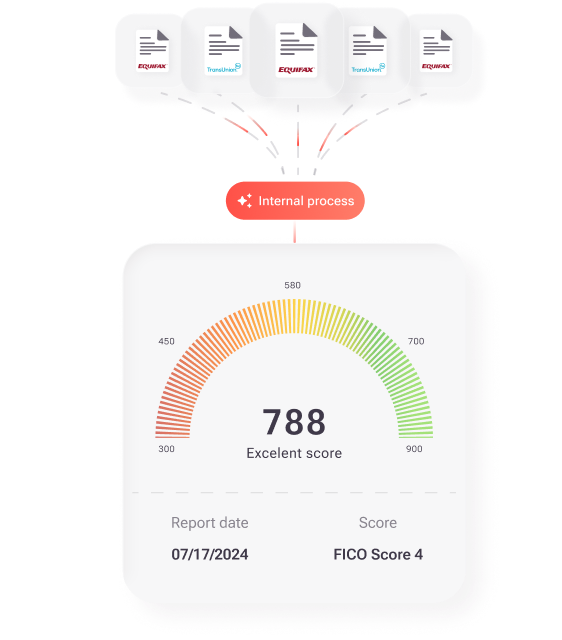
FCRA compliance adds a parallel layer. Permissible purpose must be documented before each report pull, adverse action notices must be accurate and timely, and the separation between data provision (the screening platform) and decision-making (the association) must remain clear. TenantEvaluation is a direct reseller of TransUnion and Equifax data, with regular compliance reviews, strict bureau rules, and no gray-market data sources.
Common Failure Points in Manual Screening Workflows
Manual workflows fail at predictable points.
- Incomplete identity documentation and screening packets are among the most common rejection triggers, consuming staff time on follow-up before review even begins.
- Manual screening requires eight distinct steps across five or more separate systems, which introduces transcription errors such as transposed credit scores that alter approval decisions.
- Missing or fragmented records about rental caps and prior approvals are a recurring operational bottleneck. Applicants may be rejected even when their tenant packet is otherwise complete.
- Lease data stored across folders, inboxes, and spreadsheets creates occupancy blind spots and compliance risk tied to incomplete records.
- Payment collection separated from onboarding forces managers to chase confirmations by email and phone, while boards have limited visibility into where funds are.
Best-Practice Principles for Modern HOA Screening
- Standardize criteria before the first application arrives. Document income thresholds, credit minimums, and required documents in the platform configuration, not in a manager’s memory. This standardization creates the foundation for consistent enforcement.
- Verify identity biometrically, not just documentarily. Even perfectly standardized criteria fail if the applicant’s identity is not verified. Property management guidance recommends upgrading to digital ID authentication services to detect synthetic identity theft and online document-forging services.
- Connect the lease to the application from day one. Lease lifecycle visibility should begin at application submission, not after move-in. This connection supports rental caps, minimum terms, and addenda tracking.
- Give boards a structured decision interface. Board members need summarized reports and a voting workflow, not raw document stacks delivered by email. A clear interface speeds decisions and strengthens records.
- Collect payments inside the onboarding workflow. Fees and deposits collected outside the application process create reconciliation gaps and board visibility problems. Integrated payments keep money flow and records aligned.
- Maintain a complete, searchable audit trail. Every action, including application submission, document upload, board vote, and payment receipt, must be timestamped and retrievable within 10 business days.
Evaluation Framework: Six Criteria for Florida HOA Screening Platforms
Florida associations can evaluate tenant screening solutions more confidently by using six criteria that map directly to their legal and operational risks.
- Compliance: FCRA-first design, direct bureau reseller relationships, automated adverse action, and Florida-specific statutory configuration.
- Efficiency: Application-to-decision time, staff hours saved, and automation rate for routine applications.
- Transparency: Real-time status visibility for CAMs, boards, applicants, and realtors.
- Scalability: Ability to handle portfolio growth and seasonal volume without adding headcount.
- Auditability: Timestamped records for every action, retrievable on demand, retained for seven-plus years.
- Risk Controls: Biometric identity verification, fraud detection, PCI Level 1 data security, and auto-redaction of PII.
How TenantEvaluation Delivers on the Six-Criterion Framework
TenantEvaluation is built specifically for community associations and management companies, with FCRA compliance as the foundation, not an afterthought. With this scale of proven deployment, it is the only end-to-end platform that addresses every criterion above in a single ecosystem.
- Compliance: Direct TransUnion and Equifax reseller relationships, strict permissible purpose controls, automated adverse action workflows, and Florida-specific governing document configuration.
- Efficiency: Automated screening workflows process applications faster than manual processes. TenantEvaluation reduces approval times by up to 70% and can free as many as 50 staff hours per day.
- Transparency: QuickApprove is TenantEvaluation’s accelerated approval workflow built for CAMs, boards, and property management teams inside one connected platform. It delivers real-time application tracking, automated communication support, customized approval letters, a personalized welcome package, and a board-ready approval process, while maintaining control, compliance, and visibility.
- Risk Controls: IDVerify+ introduces biometric identity verification directly inside the TenantEvaluation workflow. It combines government ID validation, AI-powered liveness detection, and biometric selfie-to-ID comparison, which moves communities from document-based review to biometric-confirmed identity verification. PCI Level 1 compliance and end-to-end encryption protect all applicant data.
- 55+ Community Standardization: 55+ Communities Verification helps Florida Condos and HOAs standardize application handling for age-restricted requirements. It reduces manual work, supports documentation consistency, and improves operational efficiency across communities.
- Lease Lifecycle Visibility: Lease Tracking connects resident onboarding, unit data, approvals, and lease documentation into one centralized, real-time workflow. It delivers real-time lease status, automated lease document collection, unit-level tracking, and audit-ready digital lease records from application to occupancy.
- Connected Payments: TEpayments by Zinc is a connected payment workflow inside TenantEvaluation that collects application fees and deposits during resident onboarding. Payments go directly to the Association’s designated account, and TenantEvaluation never holds the funds.
- Scalability and Auditability: Every action is timestamped, searchable, and audit-ready. The platform has generated $150M for communities and holds a 4.8/5 Google rating.
Request a personalized walkthrough to see how TenantEvaluation supports Florida HOA screening from application through payments.
How TenantEvaluation Compares to Generic Screening Tools
The tables below show how purpose-built HOA screening differs from generic rental platforms across the capabilities that matter most for Florida compliance. Focus on board governance features, identity verification, and statutory configuration. The key takeaway: only TenantEvaluation delivers all six framework criteria in a single platform.
The first table compares core capabilities relevant to Florida HOA tenant screening. Revenue model and board dashboard data reflect publicly available product positioning. Processing time figures are drawn from NAA and NARPM benchmark data and TenantEvaluation’s documented performance. Where a competitor does not publish a comparable metric, the cell reflects available positioning information.
| Capability | TenantEvaluation | ApplyCheck | AppFolio |
|---|---|---|---|
| Built for Florida HOAs/Condos | Yes, purpose-built for community associations | Background check focus; not HOA-specific | Broad property management; not HOA-specific |
| Board voting dashboard | Yes, dedicated board review and voting panel inside platform | Not available | Not available as a dedicated board voting interface |
| Biometric identity verification | Yes, IDVerify+ with liveness detection and biometric matching | Not available natively | Not available natively |
| Lease lifecycle tracking | Yes, centralized, real-time, audit-ready from application to occupancy | Not available | Lease management available; not connected to HOA onboarding workflow |
| 55+ community verification | Yes, built-in, standardized workflow for age-restricted communities | Not available | Not available |
| Revenue model | Applicant-paid, revenue-sharing; no upfront fees to association | Fee-based background check service | Monthly subscription |
| FCRA, direct bureau reseller | Yes, TransUnion and Equifax direct reseller | Uses TazWorks platform (third-party) | Third-party bureau integrations |
| Capability | TenantEvaluation | Screening Link | RealPage |
|---|---|---|---|
| End-to-end onboarding (application to occupancy) | Yes, A-to-Z resident onboarding in one platform | Screening and application focus; not end-to-end | Broad platform; not HOA-specific onboarding |
| Connected payment workflow | Yes, TEpayments by Zinc; funds go directly to Association account | Not available as integrated onboarding payment | Payment features available; not HOA onboarding-specific |
| Florida statutory configuration | Yes, custom setup per governing documents and Chapters 718/720 | Not Florida HOA-specific | Not Florida HOA-specific |
| Revenue model | Applicant-paid; association receives revenue share | Fee-based screening service | Monthly subscription |
Frequently Asked Questions
What service should you use to screen tenants in Florida HOAs?
Florida HOAs and condominiums require a screening service built specifically for community associations, not a generic rental screening tool. The platform must support Florida Statutes Chapters 718 and 720, include FCRA-compliant background checks with documented permissible purpose, provide a board voting interface for open-session approvals, and maintain a complete audit trail retrievable within 10 business days. TenantEvaluation is the only end-to-end platform purpose-built for this environment, serving 5,000+ Florida communities with approximately 100,000 applications processed annually. It includes biometric identity verification through IDVerify+, accelerated approvals through QuickApprove, centralized lease tracking, 55+ Communities Verification for age-restricted HOAs, and a connected payment workflow through TEpayments by Zinc, all inside one FCRA-first platform.

What company will help a small HOA do background screening?
Small, self-managed Florida HOAs face the same statutory obligations as large enterprise portfolios, including FCRA compliance, board voting documentation, adverse action notices, and seven-year record retention, but usually without dedicated compliance staff. TenantEvaluation serves communities of all sizes, from small self-managed associations to large management companies. Its applicant-paid, revenue-sharing model means there are no upfront fees to the association, and the platform pays for itself through application fees collected directly from applicants. The platform’s custom setup configures each community’s specific governing documents and screening criteria, so a small HOA receives the same compliance infrastructure as a 5,000-unit portfolio without the administrative overhead.
What is the difference between HOA tenant screening and standard rental screening?
Standard rental screening is designed for landlord-tenant relationships governed by Chapter 83 of the Florida Statutes. HOA and condominium tenant screening operates under Chapters 718 and 720, which impose additional requirements such as board approval in open session with documented minutes, rental caps tracked at the unit level, mandatory lease addenda signed by all adult occupants, fiduciary duties on board members, and official records access rights for unit owners. A platform built for standard rentals does not configure these requirements. TenantEvaluation is built exclusively for community associations, with Florida-specific governing document configuration, a dedicated board voting dashboard, and audit trails designed to satisfy the statutory records access obligations that apply to HOAs and condominiums.
How does lease tracking benefit Florida HOA property managers?
Lease tracking gives CAMs and boards centralized, real-time visibility into every lease across their portfolio, including active, pending, expired, or missing leases, without searching across folders, inboxes, and spreadsheets. In Florida HOAs, where rental caps, minimum lease terms, and mandatory addenda create documentation obligations, a missing or outdated lease copy creates compliance risk, not just administrative inconvenience. TenantEvaluation’s Lease Tracking connects resident onboarding, unit data, approvals, and lease documentation into one streamlined, audit-ready workflow, with automated lease document collection during onboarding and searchable digital history. This directly supports the seven-year record retention requirement under Florida Statute §720.303(5) and the 10-business-day records access obligation under Section 718.111(12).
How does the applicant-paid model work for Florida HOA screening?
TenantEvaluation’s revenue model collects application fees directly from applicants as part of the onboarding process through TEpayments by Zinc. TenantEvaluation deducts its service fee and the remainder is returned to the association or management company, creating a revenue stream without upfront costs to the community. Payments go directly from the applicant to the Association’s designated account, and TenantEvaluation organizes the workflow but never holds the funds. This model has generated $150M for communities served by TenantEvaluation. Each association configures what is collected and at which stage of the application process, so the workflow adapts to the property’s existing process rather than forcing a universal payment sequence.
Conclusion: Measure Your Process Against the Florida HOA Screening Framework
Manual, spreadsheet-driven tenant screening exposes Florida HOAs and condominiums to compliance risk under Chapters 718 and 720, identity fraud exposure under the new Florida Statute §817.537, Fair Housing liability from inconsistent criteria application, and operational drag that costs qualified applicants and association revenue. The six-criterion framework of compliance, efficiency, transparency, scalability, auditability, and risk controls provides a structured basis for evaluating any platform against these realities.
TenantEvaluation is the only end-to-end, FCRA-first platform built specifically for Florida community associations, combining QuickApprove, IDVerify+, 55+ Communities Verification, Lease Tracking, and TEpayments by Zinc in one board-ready, audit-ready workflow. Apply the framework to your current process, then compare it to TenantEvaluation across each criterion.
Schedule a demo today and replace manual Florida HOA tenant screening with a compliant, board-ready platform built for community associations.
