Written by: Luis Teran, Co-founder, CEO, TenantEvaluation | Last updated: July 15, 2026
Key Takeaways for Florida HOA Digital Compliance
- Compliant digital onboarding for Florida HOAs uses a complete 10-step workflow that covers intake, identity verification, FCRA screening, automated redaction, and lease retention.
- Florida Statute §720.303 requires HOAs with 100+ parcels to maintain a dual-access website or portal that posts official records with proper redaction and consent tracking for electronic notices.
- Condominium associations face stricter 2026 rules under §718.111(12)(g), with a 25+ unit threshold, 18 record categories, and 30-day posting deadlines enforced by the DBPR.
- FCRA compliance, biometric identity verification, and automated PII redaction reduce exposure to penalties up to $1,000 per violation and help prevent identity fraud in resident screening.
- TenantEvaluation streamlines Florida HOA compliance with FCRA-native workflows, biometric verification, lease tracking, and board-ready dashboards, and you can learn more here.
Florida Statute 720.303 Portal Rules for HOAs
Florida Statute §720.303(4)(b), enacted by HB 1203 and effective January 1, 2025, requires every HOA with 100 or more parcels to maintain a website or downloadable mobile application that posts specified official records and includes a password-protected owner portal accessible only to parcel owners and association employees. The statute mandates a dual-access structure with a publicly reachable site and a gated subpage, and a pure public website or a pure gated portal without both layers does not satisfy the requirement.
Florida HOAs with 100 or more parcels must post official records including governing documents, budgets, financial reports, insurance policies, director certifications, and conflict-of-interest disclosures. HOA failure to produce official records upon written request is enforced through civil suits under §720.303(5), exposing associations to $50 per day in owner damages (up to $500) for willful violations.
For condominium associations, Section 718.111(12)(g) lowered the website threshold from 150 to 25 units effective January 1, 2026, and it requires 18 categories of official records to be posted. The DBPR has enforcement authority for condominium associations.
Required Records and Redaction Rules for Florida Portals
The following table maps mandatory portal documents for Florida HOAs under §720.303(4)(b) and Florida condominiums under §718.111(12)(g), including retention periods, redaction obligations, and statutory sources.
| Document | Retention Period | Redaction Required | Statutory Source |
|---|---|---|---|
| Governing documents (articles, bylaws, declaration, rules) | Indefinitely | No (unless PII embedded) | §720.303(4)(b)1 / §718.111(12)(g) |
| Approved meeting minutes (board and membership) | 7 years minimum | Yes | §720.303(4)(b)1 / §718.111(12)(g) |
| Current and proposed budgets and financial reports | 7 years minimum | Yes, bank account numbers | §720.303 / §718.111(12)(g) |
| Current insurance policies | 7 years minimum | No | §720.303(4)(b)1 / §718.111(12)(g) |
| Director certifications and conflict-of-interest disclosures | 7 years minimum | Yes | §720.3033 / §718.111(12)(g) |
The next table summarizes redaction rules that apply to records posted on Florida HOA and condo portals.
| Data Type | Withheld From | Redaction Method | Platform Capability |
|---|---|---|---|
| Social Security numbers | All portal sections (public and gated) | Redaction | Automated PII redaction |
| Driver license and bank account numbers | All portal sections | Redaction | Automated PII redaction |
| Medical records of owners or residents | All portal sections | Document-level exclusion from portal | Role-based access controls |
| Attorney-client privileged communications | All portal sections | Document-level exclusion from portal | Role-based access controls |
Electronic Consent and Voting Rules for Florida Communities
Electronic notices to owners are valid only if the owner has previously provided written consent to receive notices electronically, and associations must maintain records of those consents. This consent requirement covers meeting notices, records delivery, and any statutory communication that starts a deadline.
Florida HOA boards may authorize electronic voting by resolution without any member petition requirement. Associations without a formal electronic voting system may accept email ballots that include the owner’s name, unit or parcel number, and a waiver of ballot secrecy.
Under HB 1021 (2024), Florida condominium associations can allow unit owners to vote electronically after consent, and personal email addresses of unit owners become official records only when the owner has consented to electronic notice. Every consent record must be timestamped and audit-ready, because the absence of a documented consent trail exposes associations to records-access liability.
A compliant proptech platform captures written electronic consent at the point of application, stores it with a tamper-evident timestamp, and makes it retrievable on demand, replacing scattered email confirmations with a structured, searchable audit log. Beyond consent tracking, Florida associations must also navigate federal screening obligations, so FCRA compliance becomes part of the same digital workflow.
Florida HOA FCRA Compliance and Screening Platforms
Three FCRA obligations are most frequently mishandled in community association settings.
- Permissible purpose certification: The association must certify to the data provider that it has a lawful reason to obtain the report before the report is pulled.
- Adverse action workflow: A denial or conditional approval based on screening data triggers a mandatory written notice identifying the consumer reporting agency, the applicant’s right to a free copy of the report, and the right to dispute inaccurate information.
- Separation of roles: The data provider supplies the report, and the association makes the decision, and conflating these roles creates liability for both parties.
An FCRA-native platform automates all three steps, captures permissible purpose before screening runs, generates adverse action letters automatically when required, and keeps the data provider outside the association’s decision-making lane.
Schedule a demo today to see how TenantEvaluation’s FCRA-native workflows protect your community from adverse action liability.
Florida HOA Board Certification and Portal Posting
New HOA directors must complete a department-approved educational curriculum within 90 days of election or appointment under Florida Statute 720.3033. The certification remains valid for four years, and board members must then complete four hours of annual continuing education, or eight hours for associations with 2,500 or more parcels.
Under Florida Statute 720.3033, HOA board member certification curriculum must cover recordkeeping requirements including what records must be maintained, how long they must be retained, and owner access rights. Director certification records qualify as official records that must appear on the association’s website or portal.
A proptech platform that tracks board certification status, stores certificates as official records, and flags upcoming renewal deadlines reduces the administrative burden on CAMs and keeps the association’s portal aligned with posting obligations. Boards that cannot produce current certification records on demand face the same records-access liability as associations that fail to post governing documents.
2026 Florida Digital Onboarding Rules and Identity Risk
The 2026 Florida legislative session produced only a handful of modest updates to community-association statutes, and major reform bills including HB 657 died in the Senate. The 2026 compliance landscape instead reflects full implementation of reforms enacted in 2024 and 2025.
The operative 2026 requirements for digital onboarding are:
- HB 913’s 30-day posting deadline for all new official records on condo association websites became effective January 1, 2026
- The §718.111(12)(g) website mandate now covers all condo associations with 25 or more units, effective January 1, 2026
- The DBPR holds authority to enforce condominium regulations
- All condo associations must maintain an active DBPR online account, effective October 1, 2025
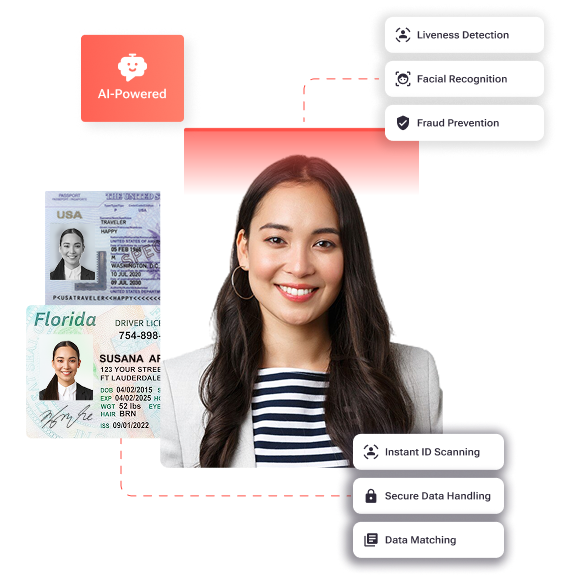
Identity fraud now represents a major operational risk. Communities that rely on document uploads alone face growing exposure to synthetic identities and impersonation attempts that traditional paper-based screening cannot detect. The 2026 environment rewards associations that have shifted from document-based review to biometric-confirmed identity verification.
How Daily CAM and Board Workflows Create Risk
The gap between statutory requirements and daily operational reality is where most compliance failures start. CAMs managing multiple communities juggle document collection across dozens of concurrent applications, consent tracking across several communication channels, identity verification that depends on manual document review, and lease lifecycle management spread across spreadsheets and email folders.
Each of these tasks carries a compliance dimension. A missing consent record invalidates electronic notice delivery. An unredacted document posted to a portal can trigger DBPR investigation authority. A lease not connected to an application creates an occupancy blind spot that surfaces during audits or disputes. Florida HOAs that store resident names alongside identifiers such as email, address, driver’s license, or bank information are subject to the Florida Information Protection Act of 2014, which mandates notification to affected residents and reporting to the Florida Department of Legal Affairs within 30 days of a data breach involving PII.
A centralized platform that connects application intake, consent capture, identity verification, board review, and lease documentation into one workflow closes the operational gaps that create compliance exposure.
Compliance and Governance Risk Areas
Florida HOAs and condominiums face liability exposure from three directions at once: FCRA obligations tied to screening, Florida statutory obligations tied to records access and portal maintenance, and data security obligations tied to PII storage. Manual processes rarely satisfy all three consistently.
FCRA liability arises when permissible purpose is not documented before screening runs, when adverse action notices are not sent or are sent late, or when the association’s decision-making role is not clearly separated from the data provider’s role. Willful FCRA violations can result in statutory penalties up to $1,000 per instance plus actual damages.
Florida statutory liability arises when records are not posted within 30 days, when redaction is incomplete, when the dual-access portal structure is missing, or when written records requests are not answered within 10 business days. Associations that miss the 10-business-day records request window face the same $50 daily penalty structure described earlier, plus attorney’s fees.
Data security liability arises when PII is stored in unencrypted formats, transmitted via unsecured email, or retained without access controls. PCI Level 1 compliance and end-to-end encryption set the baseline standards for any platform that handles applicant financial data.
Common Failure Points in HOA and Condo Onboarding
The most frequent compliance failures in Florida HOA and condo onboarding workflows share a common root: disconnected manual processes that cannot produce a complete audit trail on demand.
Incomplete applications appear when paper or email-based intake allows submission without all required documents, which creates follow-up cycles that delay approvals and leave records gaps. These gaps grow when lease copies sit in email folders or local drives that are not connected to application records, which makes occupancy confirmation and lease expiration tracking unreliable.
The same fragmentation affects consent records, board votes, and adverse action notices that live across email threads and cannot be retrieved as a unified audit trail. Weak identity verification compounds the risk, because document-upload-only screening cannot detect synthetic identities, impersonation, or altered government IDs and communities then face fraudulent occupants. Unredacted portal documents add another failure point, since manual redaction before portal upload is error-prone and a single unredacted SSN or bank account number in a posted document can create regulatory exposure.
Emerging Proptech Best Practices in Florida
Florida community associations adopting proptech in 2026 are converging on a set of operational standards that address statutory requirements and improve efficiency.

- Biometric identity confirmation: IDVerify moves communities from document-based review to biometric-backed identity confirmation using AI-powered liveness detection, government ID authentication, and selfie-to-ID biometric comparison, all inside the screening workflow.
- Automated redaction: Platform-level PII redaction before any document is stored or shared removes manual redaction errors and satisfies §718.111(12)(g)3 and §720.303(5) redaction obligations.
- Real-time lease status visibility: Lease Tracking connects resident onboarding, unit data, approvals, and lease documentation into one centralized, real-time workflow, replacing spreadsheets and scattered email chains with audit-ready digital lease records.
- Board-ready voting dashboards: QuickApprove accelerates resident approvals with a board-ready approval process, real-time application tracking, automated communication support, and customized approval letters inside one connected platform.
- Standardized age-restricted application handling: 55+ Communities Verification reduces manual work, standardizes application handling, and supports documentation consistency for Florida condos and HOAs that manage age-restricted requirements.
Proptech Evaluation Framework for Florida CAMs and Boards
CAMs and boards evaluating proptech platforms for Florida HOA and condo compliance can use the following criteria.
- Compliance readiness: The platform should satisfy FCRA permissible purpose, adverse action, and separation-of-roles requirements natively and support Florida-specific statutes rather than generic rental tools.
- Operational efficiency: The platform should remove manual document collection, follow-up, and redaction and reduce application processing time in a measurable way.
- Transparency: The platform should provide real-time application status visibility to CAMs, boards, and applicants at the same time.
- Scalability: The platform should handle high-volume application seasons without extra headcount or new bottlenecks.
- Auditability: The platform should produce a complete, timestamped audit trail for every application, consent record, board vote, and adverse action notice.
- Risk controls: The platform should include biometric identity verification, automated PII redaction, PCI Level 1 data security, and built-in adverse action workflows.
Schedule a demo today to evaluate TenantEvaluation against every criterion in this framework.
How TenantEvaluation Aligns With Florida Statutory Requirements
TenantEvaluation is built specifically for community associations and management companies, and FCRA compliance sits at the foundation rather than as an add-on.
Founded in 2007 and serving more than 5,000 communities with about 100,000 applications processed annually, TenantEvaluation maps Florida statutory requirements to automated platform features.
- FCRA permissible purpose and adverse action: As a direct reseller of TransUnion and Equifax data, not a third-party scraper, TenantEvaluation operates under strict bureau rules with regular compliance reviews. Permissible purpose is captured before screening runs, adverse action workflows are built in and triggered automatically, and the separation between data provision by TenantEvaluation and decision-making by the association is structurally enforced.
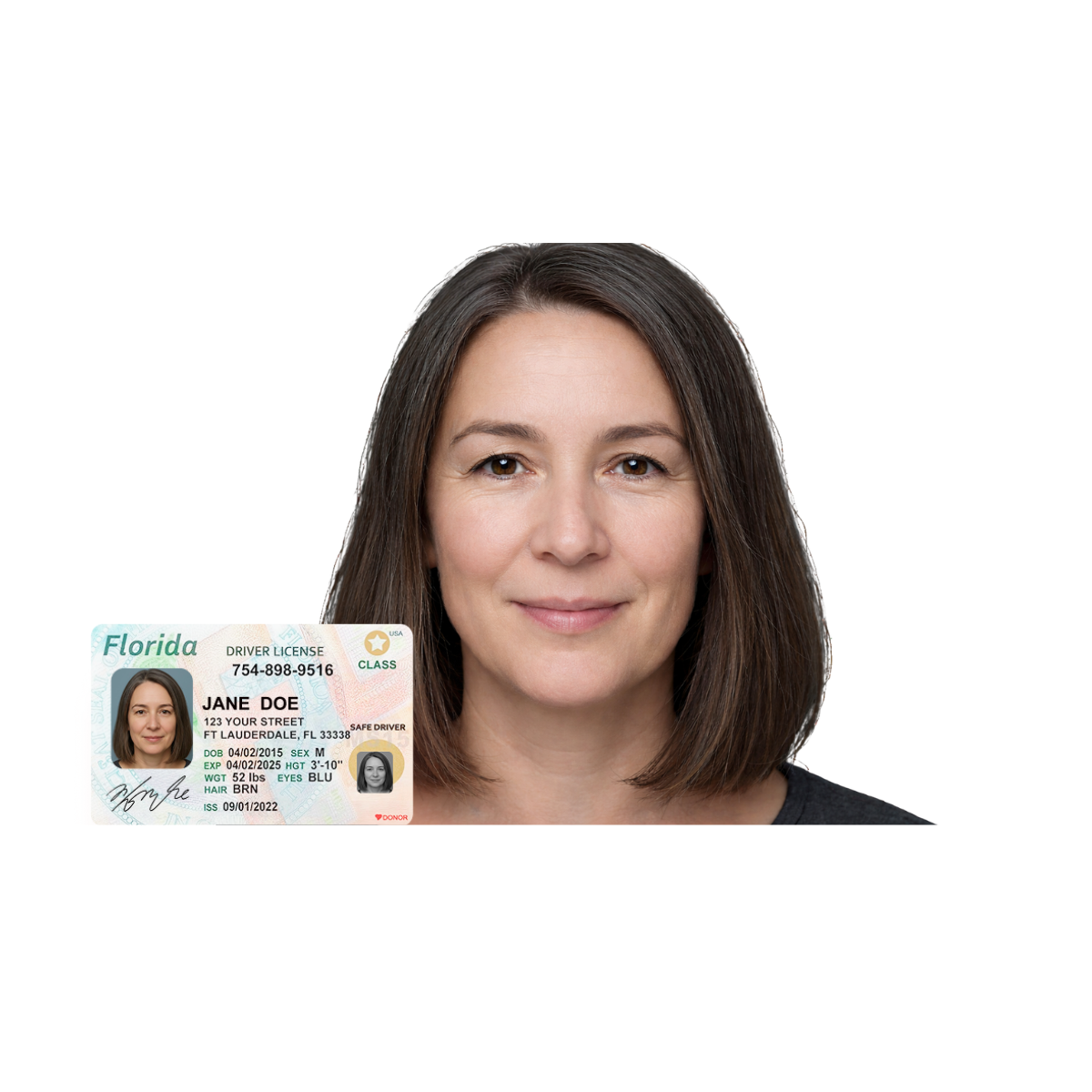
- Biometric identity verification: IDVerify integrates government ID validation, AI-powered liveness detection, and biometric selfie-to-ID comparison inside the screening workflow, and CAMs see ID authenticity confirmation, liveness status, and biometric match results directly in the screening report.
- Accelerated board approvals: QuickApprove gives boards a dedicated review and voting dashboard with summarized applicant reports, real-time application tracking, reduced manual follow-ups, and automated communication support designed for high-volume seasons and complex onboarding.
- Lease lifecycle management: Lease Tracking delivers centralized, real-time lease visibility and lifecycle control from application to occupancy, connecting resident onboarding, unit data, approvals, and lease documentation into one streamlined, audit-ready workflow.
- Age-restricted community standardization: 55+ Communities Verification is built for Florida condos and HOAs and reduces manual work while standardizing application handling for age-restricted requirements.
- Automated redaction and PCI security: PII is automatically redacted before storage or sharing, and PCI Level 1 compliance with end-to-end encryption protects applicant data throughout the workflow.
- Revenue-sharing model: TenantEvaluation deducts its service fee from the collected application fee and rebates the remainder to the association or management company, which turns onboarding into a compliant, controlled income stream without upfront costs.
TenantEvaluation has generated $150M for communities and holds a 4.8/5 Google rating, with partners that include RealManage, Castle Group, FirstService Residential, Campbell Property Management, and Associa.
Conclusion: Why Florida HOAs Need Connected Digital Workflows
Florida HOAs and condominiums operating in 2026 face a compliance environment shaped by §720.303 portal mandates, §718.111(12)(g) website requirements, HB 913’s 30-day posting deadlines, FCRA adverse action obligations, and rising identity fraud risk. Manual paper processes cannot satisfy these requirements at the same time or produce the audit trails that regulators, owners, and courts now expect.
The evaluation criteria that matter most are compliance readiness, operational efficiency, transparency, scalability, auditability, and risk controls. A platform that addresses all six, with FCRA compliance as the foundation, biometric identity verification built in, automated redaction, real-time lease visibility, and board-ready approval workflows, operates very differently from a generic screening tool adapted for community associations.
CAMs and boards should compare their current processes against each criterion and identify the specific gaps that create statutory exposure. The cost of non-compliance, including the $50 daily penalty structure referenced earlier, DBPR penalties up to $5,000 per violation, FCRA statutory penalties up to $1,000 per instance, and potential criminal liability, consistently exceeds the cost of a purpose-built platform.
Schedule a demo today and see how TenantEvaluation maps Florida statutory requirements to an automated, audit-ready workflow built specifically for community associations.
Frequently Asked Questions
What does §720.303 require Florida HOAs to post on their digital portal in 2026?
Florida Statute §720.303(4)(b) requires HOAs with 100 or more parcels to maintain a website or mobile application with a dual-access structure that includes a public site and a password-protected owner portal. The portal must contain governing documents, current and proposed budgets, annual financial reports, current insurance policies, active vendor contracts, recent board meeting minutes, director certifications under §720.3033, conflict-of-interest disclosures, and meeting notices and agendas. Documents posted must have personally identifying information redacted as required, and associations face the civil enforcement penalties detailed earlier in this guide when they fail to produce records upon request.
How does FCRA compliance apply to Florida HOA and condo resident screening?
The Fair Credit Reporting Act applies whenever a Florida HOA or condominium association obtains a credit or background report on a prospective resident. The association must obtain the applicant’s written authorization before pulling the report, certify a permissible purpose to the screening company, and provide a written adverse action notice if the applicant is denied or subjected to less favorable terms based in whole or in part on the report. The adverse action notice must identify the consumer reporting agency that provided the report, inform the applicant of the right to a free copy of the report within 60 days, and explain the right to dispute inaccurate information. Willful violations carry statutory penalties up to $1,000 per instance plus actual damages, and an FCRA-native platform automates these obligations while maintaining a clear structural separation between the data provider and the association’s decision-making role.
What are the new Florida condo website requirements effective January 1, 2026?
Effective January 1, 2026, Florida condominium associations with 25 or more units, excluding timeshares, must maintain a website, mobile application, or web portal that is accessible via the internet and contains a password-protected section that the general public cannot access. The portal must post 18 categories of official records including governing documents, approved meeting minutes, current and proposed budgets, annual financial reports, insurance summaries, active vendor contracts, estoppel contact information, structural inspection reports, and virtual board meeting recordings. New records must be posted within 30 days of creation or receipt, and all documents must have personal identifying information redacted before posting. The DBPR has authority to investigate complaints regarding condominiums, and all condo associations must also maintain an active DBPR online account.
What is the Florida HOA board certification requirement in 2026?
Under Florida Statute 720.3033, new HOA board members must complete a department-approved educational curriculum within 90 days of election or appointment. The certification remains valid for four years, and after that period board members must complete four hours of annual continuing education each year, or eight hours annually for associations with 2,500 or more parcels. The certification curriculum must cover recordkeeping requirements, including which records must be maintained, how long they must be retained, and owner access rights. Director certification records qualify as official records that must be posted on the association’s website or portal, and boards that cannot produce current certification records on demand face the same records-access liability as associations that fail to post governing documents.
How does biometric identity verification reduce risk for Florida HOAs and condos?
Traditional screening methods that rely on document uploads cannot reliably detect synthetic identities, impersonation attempts, or altered government IDs. Biometric identity verification adds a layer of physical presence confirmation that document review alone cannot provide. A biometric verification workflow validates the authenticity of a government-issued ID, uses AI-powered liveness detection to confirm that the applicant is physically present, and performs a facial biometric comparison between the applicant’s selfie and the ID photo. The result appears directly in the screening report, giving CAMs and boards a verified identity confirmation before any approval decision. This approach reduces the risk of fraudulent occupants entering communities and strengthens the association’s audit defensibility by documenting that identity was confirmed before screening authorization, which supports FCRA-aligned permissible purpose workflows.
