Written by: Luis Teran, Co-founder, CEO, TenantEvaluation | Last updated: June 29, 2026
Key Takeaways for Florida HOA PropTech Decisions
- Florida HOAs and condo associations operate under Chapters 718 and 720, which require specialized PropTech instead of generic rental software.
- Core operational risks include fragmented lease records, slow board approval cycles, and inconsistent 55+ documentation that create compliance gaps and revenue loss.
- Essential capabilities for 2026 include FCRA reseller status, biometric identity verification, board approval dashboards, and centralized lease tracking tied to onboarding.
- Florida-built platforms for CAMs provide audit-ready records, permissible purpose controls, and automated adverse action workflows that lower liability.
- Evaluate TenantEvaluation at TenantEvaluation to see how its Florida-focused features streamline resident screening and lease management for your communities.
Core Terminology for Evaluating Florida HOA PropTech
Resident Screening: The process of evaluating prospective residents through background checks, credit reports, income verification, identity validation, and reference checks before an association approves occupancy.
Board Approval Workflow: The structured process by which a Board of Directors reviews, votes on, and formally approves or denies resident applications, ideally with a dedicated digital dashboard instead of email-based review.
FCRA Compliance: The Fair Credit Reporting Act governs how consumer credit and background data is collected, used, and disclosed. For community associations, FCRA compliance requires permissible purpose controls, adverse action workflows, and clear separation between data provision and decision-making.
Lease Lifecycle Visibility: Centralized, real-time tracking of lease status, including active, pending, expired, or missing, from application submission through occupancy, connected to unit-level records and onboarding documentation.
55+ Communities Verification: A structured workflow for handling age-restricted application requirements under the Housing for Older Persons Act (HOPA). This workflow standardizes documentation collection and reduces manual handling across Florida condos and HOAs.

These five operational concepts create the foundation for evaluating how well PropTech platforms support Florida’s evolving regulatory requirements.
Florida HOA New Laws 2026: Software Capabilities You Now Need
Florida’s legislative environment for community associations continues to evolve and now emphasizes recordkeeping accuracy, board governance transparency, and resident data security. Associations operating under Florida Statutes Chapter 718 for condominiums and Chapter 720 for HOAs must maintain records that satisfy compliance and accessibility requirements.
Daily CAM operations in 2026 span application intake, document collection, background screening, board voting coordination, lease tracking, and 55+ eligibility handling. Each function carries compliance implications. Platforms that treat FCRA compliance as a core design principle, not an add-on, reduce the risk of adverse action errors, permissible purpose violations, and incomplete audit trails. Florida HOAs increasingly favor software that automates these workflows natively instead of relying on manual oversight to plug compliance gaps.
Compliance, Risk, and Governance Priorities for Florida HOAs
FCRA reseller status now acts as a critical differentiator among PropTech platforms. Platforms that access credit bureau data through direct reseller relationships with TransUnion and Equifax operate under strict bureau rules, with regular compliance audits and no gray-market data sources. This structure protects community associations from liability tied to impermissible data use.
Permissible purpose controls ensure that background and credit data is accessed only when a legitimate application is in process. Automated adverse action workflows generate required notices when an application is denied based on screening results and reduce manual error. Built-in audit trails with timestamped records of every application action, document submission, and board vote provide the documentation foundation needed for regulatory review or legal disputes.
Board oversight responsibilities now extend directly to data security. Platforms handling sensitive applicant PII must maintain PCI Level 1 compliance, end-to-end encryption, and automatic redaction of Social Security numbers and financial data. Boards that approve residents without a verified identity layer face growing liability as synthetic identity fraud and impersonation attempts increase across Florida communities.
Resident Onboarding and Lease Management Challenges in Florida
Fragmented lease records remain one of the most persistent operational problems for Florida CAMs. Lease copies stored across email inboxes, shared drives, and physical folders create occupancy blind spots. Manual expiration tracking often fails during high-volume seasons. When lease data is disconnected from the original application and approval record, boards cannot confirm occupancy status with confidence.
Lengthy approval cycles often stem from the same fragmentation. Applications waiting for board review sit in email queues with no clear status visibility. Managers follow up manually with applicants, realtors, and board members. Approval letters require additional manual preparation. In communities with complex onboarding requirements or peak application seasons, these bottlenecks translate into delayed revenue and resident dissatisfaction.
Inconsistent 55+ documentation creates a separate category of risk. When age-restricted requirements move through ad hoc email exchanges and PDF attachments, documentation gaps accumulate. Audits or disputes that surface incomplete records expose associations to operational and legal consequences that structured workflows could have prevented.
Best Practices for Florida HOA PropTech Rollouts
Workflow standardization across all communities in a portfolio reduces training burden, error rates, and compliance inconsistency. Platforms that allow CAMs to configure community-specific screening criteria, such as credit score thresholds, document requirements, and income verification standards, while maintaining a consistent underlying process, deliver both flexibility and control.
Biometric identity verification now functions as an operational necessity rather than a bonus feature. AI-powered liveness detection, government ID authentication, and selfie-to-ID biometric comparison confirm that applicants are physically present and matched to their identification before approval decisions. This layer addresses the growing threat of stolen IDs, synthetic identities, and impersonation attempts that document-based screening alone cannot detect.
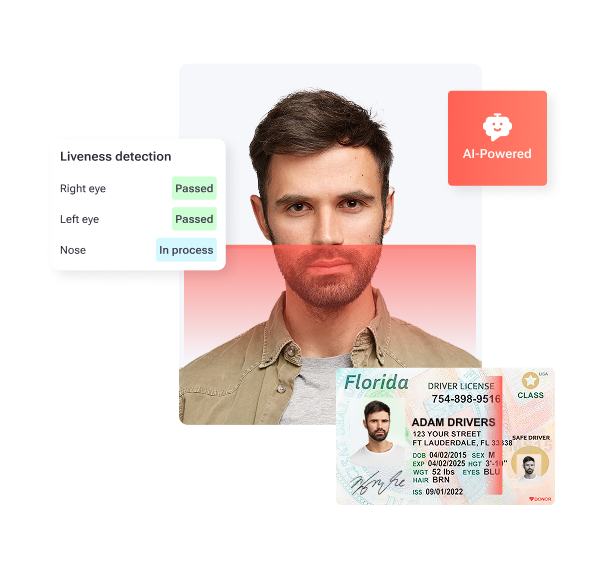
Once identity is verified, the next best practice focuses on connecting that verification to downstream workflows instead of treating it as an isolated check. Centralized lease visibility links onboarding, approvals, and occupancy records into one searchable, audit-ready workflow. This integration supports a third best practice: transparent board dashboards that replace email chains with real-time application status, summarized applicant reports, and structured voting panels.

7 Florida-Specific Features to Look For in a PropTech Platform
- FCRA reseller status, with direct TransUnion and Equifax relationships instead of third-party data aggregation.
- Biometric identity verification, including native IDVerify+ capability with liveness detection and facial biometric matching, not an external redirect.
- Board approval dashboard, featuring a dedicated voting panel with real-time application tracking and AI-generated summaries for board members.
- 55+ Communities Verification, providing structured, standardized handling of age-restricted documentation built for Florida condos and HOAs.
- Centralized lease tracking, delivering real-time lease status visibility from application to occupancy, with automated document collection and unit-level records.
- Florida-specific workflow configuration, with custom setup aligned to Chapter 718 and Chapter 720 requirements instead of generic rental workflows.
- Audit-ready recordkeeping, including timestamped trails for every application action, document submission, board vote, and adverse action notice.
See all seven features in action in a TenantEvaluation demo tailored to your Florida portfolio.
Evaluation Framework for Comparing PropTech Platforms
Florida CAMs evaluating PropTech platforms for portfolios between 1,000 and 10,000 units can apply six criteria: Florida-specific compliance depth, board workflow support, biometric fraud prevention, lease tracking integration, pricing model alignment, and scalability.
Compliance depth separates platforms built for community associations from those adapted from generic rental software. Board workflow support determines whether boards can participate directly in the approval process or remain dependent on manager-mediated email updates. Biometric fraud prevention distinguishes platforms with native identity verification from those relying on document uploads alone. Lease tracking integration measures whether lease data connects to the onboarding record or exists as a separate administrative function. Pricing model alignment favors pay-per-application structures over fixed monthly subscriptions for portfolios with variable application volume. Scalability shows whether the platform absorbs higher onboarding volume without requiring additional headcount.
Florida CAM Decision Matrix: 2026 PropTech Platform Comparison
The table below scores six platforms across five criteria relevant to Florida HOA and condo management. Scores reflect publicly available product information and company-disclosed capabilities. Platforms without a disclosed capability for a given criterion are marked as not available (N/A).
| Platform | Resident Screening & FCRA Reseller Status | Board Dashboard & Approval Workflow | 55+ Handling & Biometric Verification | Lease Tracking Integration |
|---|---|---|---|---|
| TenantEvaluation | Full FCRA-first screening, direct TransUnion & Equifax reseller, permissible purpose controls, automated adverse action, SafeCheck+ background checks | QuickApprove board-ready dashboard with real-time voting panel, AI-generated summaries, and automated communication support | 55+ Communities Verification built in, IDVerify+ biometric verification with liveness detection and facial matching native to platform | Centralized real-time lease lifecycle tracking from application to occupancy, automated document collection, unit-level records, audit-ready digital history |
| Buildium | Screening available via third-party integration | Task and workflow tools available, dedicated board voting dashboard not a primary product feature | No disclosed 55+ verification module, biometric identity verification not a disclosed native feature | Lease management available within broader property management suite, not connected to onboarding workflow as a native lifecycle feature |
| AppFolio | Screening available, broader property management focus | Workflow automation available, board-specific voting dashboard not a disclosed primary feature | No disclosed 55+ verification module, biometric verification not a disclosed native feature | Lease management within property management suite, lifecycle connection to onboarding not disclosed as centralized feature |
| Vantaca | Integrates with screening partners | Board portal and communication tools available, dedicated approval voting workflow not a primary disclosed feature | No disclosed 55+ verification module, biometric verification not a disclosed native feature | Document management available, centralized lease lifecycle tracking not a disclosed primary feature |
| ApplyCheck | Background checks via TazWorks platform, focused on screening component, end-to-end onboarding not primary scope | No dedicated board dashboard disclosed, applicant interaction limited | No disclosed 55+ verification module, biometric verification not a disclosed native feature | No centralized lease tracking disclosed, focused on screening component only |
| Verify Screening Solutions | Background checks via white-labeled TazWorks platform, not primarily designed for tenant screening with full applicant interaction | No dedicated board dashboard disclosed | No disclosed 55+ verification module, biometric verification not a disclosed native feature | No centralized lease tracking disclosed, focused on background check component |
Recommended PropTech Platforms by Portfolio Size
1,000–10,000 unit portfolios (mid-market CAMs and management companies): TenantEvaluation is the primary recommendation. Its end-to-end platform covering application intake, biometric identity verification via IDVerify+, board approval workflows via QuickApprove, 55+ Communities Verification, and centralized lease tracking addresses every operational and compliance layer that mid-market Florida portfolios require. The pay-per-application revenue model removes upfront costs and creates a revenue-sharing structure aligned with community association success. With 5,000+ communities and approximately 100,000 applications processed annually, TenantEvaluation operates at the scale and specialization that mid-market portfolios demand.
Small self-managed communities (under 100 units): Simpler screening tools such as RentSpree or TurboTenant may serve basic needs, though they lack Florida-specific compliance depth, board dashboards, and 55+ handling.
Enterprise portfolios (10,000+ units): TenantEvaluation’s platform scales to enterprise requirements. Management companies such as FirstService Residential, RealManage, and Associa already partner with TenantEvaluation, which demonstrates its enterprise-level operational capacity.
Explore how TenantEvaluation scales across portfolio sizes with FCRA-first design and Florida-specialized workflows.
Frequently Asked Questions
What makes a PropTech platform Florida-specific for HOA and condo management?
Florida-specific PropTech platforms are built around the regulatory requirements of Florida Statutes Chapter 718 for condominiums and Chapter 720 for HOAs, rather than adapted from generic rental software. Key indicators include native 55+ Communities Verification for age-restricted properties, FCRA reseller status with direct credit bureau relationships, board approval dashboards designed for Florida governance structures, and lease tracking connected to the onboarding workflow instead of managed as a separate administrative function. Platforms built for Florida CAMs also support community-specific screening criteria configuration, automated adverse action workflows, and audit-ready recordkeeping aligned with Florida’s association recordkeeping requirements.
What is FCRA reseller status and why does it matter for Florida community associations?
FCRA reseller status means a platform accesses consumer credit and background data directly from credit bureaus, such as TransUnion and Equifax, under strict bureau rules instead of through third-party data aggregators or gray-market sources. For Florida community associations, this distinction affects the legal defensibility of screening decisions, the accuracy of the data used, and the association’s exposure to liability if a screening decision is challenged. Platforms with direct reseller relationships maintain regular compliance audits, enforce permissible purpose controls, and generate automated adverse action notices, which reduces the compliance burden on CAMs and boards while protecting associations from data-related liability.
How does biometric identity verification reduce fraud risk in HOA resident screening?
Traditional screening relies on document uploads such as copies of government IDs, leases, and financial records, which cannot confirm that the person submitting the application is the same person named in those documents. Biometric identity verification adds a layer that validates physical presence and identity authenticity. Platforms like TenantEvaluation’s IDVerify+ use AI-powered liveness detection to confirm the applicant is physically present, government ID authentication to validate document legitimacy, and facial biometric matching to compare a live selfie against the submitted ID. This multi-layer approach addresses stolen IDs, synthetic identities, and impersonation attempts that document-based screening alone cannot detect and strengthens approval confidence before a resident enters the community.

What operational problems does centralized lease tracking solve for Florida CAMs?
Centralized lease tracking removes operational blind spots that affect occupancy accuracy, compliance readiness, and administrative efficiency. When lease copies sit across email inboxes, shared folders, and spreadsheets, disconnected from the original application and approval record, CAMs cannot confirm occupancy status in real time, track lease expirations proactively, or produce complete audit-ready records on demand. Centralized lease tracking connects resident onboarding, unit data, approvals, and lease documentation into one platform. It provides real-time lease status visibility, automated lease document collection during onboarding, and a searchable digital history that replaces manual follow-ups and scattered records.
How should Florida CAMs evaluate PropTech platforms for 55+ age-restricted communities?
Florida condos and HOAs operating as age-restricted communities under HOPA need platforms that standardize how age-restricted application requirements are handled across all applicants, not just flag eligibility manually. Evaluation criteria include whether the platform has a built-in 55+ verification workflow that reduces manual communication, whether it improves documentation consistency across applications, whether it creates structured records for internal operational control, and whether it is designed specifically for Florida community association workflows rather than adapted from generic tools. The goal is operational efficiency and documentation consistency, not a replacement for legal guidance on HOPA compliance.
Structural Takeaways for Florida HOA Property Managers
The decision framework for Florida CAMs evaluating PropTech platforms in 2026 centers on seven criteria: FCRA reseller status, biometric identity verification, board approval dashboards, 55+ Communities Verification, centralized lease tracking, Florida-specific workflow configuration, and audit-ready recordkeeping. Generic property management software and standalone background screening tools address subsets of these requirements. Platforms built exclusively for Florida community associations address all of them within a single connected workflow.
For mid-market management companies overseeing 1,000 to 10,000 units, TenantEvaluation delivers the compliance foundation, operational automation, and Florida-specialized features that reduce administrative burden, mitigate compliance risk, and create measurable time and revenue savings. TenantEvaluation’s established presence across Florida management companies demonstrates its operational capacity as the Florida-first resident onboarding and governance platform for community associations.
Request a personalized demo to evaluate TenantEvaluation for your Florida HOA or condo portfolio and see how QuickApprove, IDVerify+, 55+ Communities Verification, and Lease Tracking work together in one FCRA-first platform.
