Written by: Luis Teran, Co-founder, CEO, TenantEvaluation | Last updated: June 24, 2026
Key Takeaways for Florida HOA and Condo Boards
- HB 1203 and HB 1021 add strict records-production, audit-trail, and fine-documentation rules that expose Florida HOAs and condos to daily penalties under Chapters 718 and 720.
- TenantEvaluation automates lease tracking, board approvals, and adverse-action notices, creating timestamped, auditable records that satisfy statutory deadlines and reduce daily penalty exposure.
- Built-in biometric ID verification and direct TransUnion/Equifax reseller status keep associations aligned with FCRA requirements without third-party or gray-market data sources.
- QuickApprove replaces email-based voting with a real-time dashboard that produces immutable decision records and can cut approval time by up to 70% for self-managed boards.
- Learn how TenantEvaluation helps Florida associations stay compliant and avoid penalties at TenantEvaluation.
Florida HOA Law Changes for 2026: HB 1203 and HB 1021
HB 1203 and HB 1021 reshape how Florida community associations manage records, approvals, and owner rights. HB 1203 expands homeowner rights within HOAs under Chapter 720 and adds stricter rules for official records access, meeting notices, and fine and violation handling. HB 1021 focuses on condominium associations under Chapter 718 and tightens structural reserve funding, board education, and financial reporting after the Surfside collapse.
Both statutes include enforcement tools that create daily fine exposure when associations fall behind on compliance. Under Florida Statute §720.305, HOAs may impose fines of up to $100 per violation, capped at $1,000 in the aggregate, and associations that fail to produce official records within ten business days face a $50-per-day penalty up to $500 as summarized in legal resources. Under Florida Statute §718.111, condominium associations must also meet strict records-production standards.
HB 1203 Compliance Workflows for Florida HOAs
HB 1203 requires Florida HOAs to keep official records in a format members can access, produce those records within statutory deadlines, and document fines and violations with a clear audit trail. Associations must retain meeting minutes, financial records, contracts, and governing documents for defined periods under Chapter 720.
TenantEvaluation aligns its workflows with these requirements. Built-in audit trails timestamp every application action, board vote, and document exchange, creating a defensible record for any records-production request. Lease Tracking organizes lease documentation so associations can pull occupancy records quickly instead of searching across folders and inboxes. Automated adverse-action workflows attach FCRA-required documentation to every screening decision, which supports associations during audits and member disputes.
Reducing Florida HOA Penalty Risk with Connected Software
Daily fine risk under Chapters 718 and 720 increases when associations cannot produce records on demand. The three most common gaps in manual workflows are missing or incomplete lease documentation, undocumented board approval decisions, and absent adverse-action notices for denied applicants.
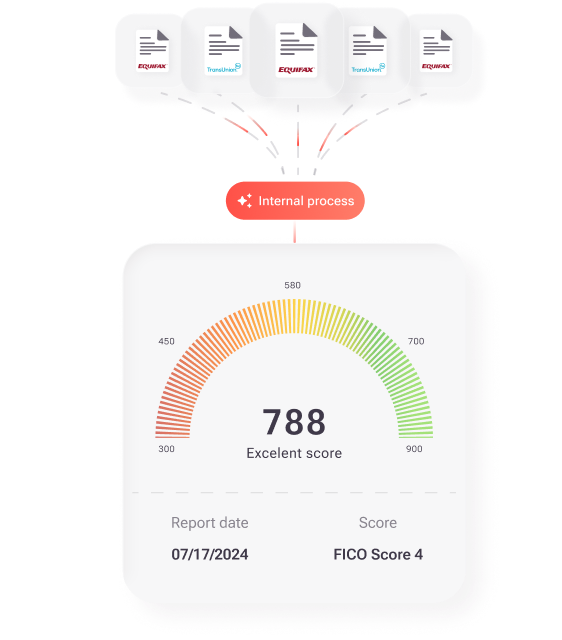
TenantEvaluation closes each of these gaps with one connected platform. Lease Tracking improves lease visibility and document control by tying resident onboarding, approvals, and lease documentation together and replacing spreadsheets and scattered email chains. Every board vote inside QuickApprove is timestamped and stored, which creates an immutable record of each approval decision. Automated adverse-action workflows generate required FCRA notices at the point of denial and remove a frequent compliance failure that can trigger state and federal liability. As a direct reseller of TransUnion and Equifax data, TenantEvaluation accesses credit reports under strict bureau rules and avoids gray-market or scraped data sources, which protects associations from liability tied to impermissible data sourcing.
Florida Condo Board Approval Software: QuickApprove in Practice
Board approval delays frustrate CAMs and Board Presidents across Florida communities. Applications often stall in email chains, board members lack a single view of pending decisions, and approval letters require extra manual work after each vote.
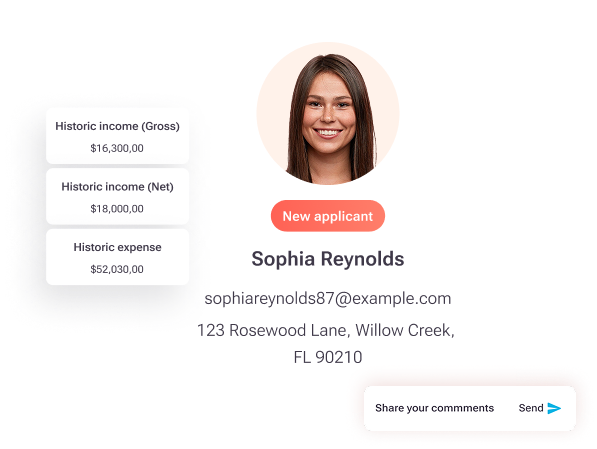
QuickApprove is TenantEvaluation’s accelerated approval workflow for CAMs, Boards, and property management teams inside one platform. It replaces email chains and spreadsheets with real-time application tracking that gives board members a unified view of pending decisions. This centralized visibility supports a board-ready approval process where members review AI-generated applicant summaries, cast timestamped votes, and trigger approval communications without leaving the platform. QuickApprove then generates customized approval letters and personalized welcome packages automatically, which keeps approvals fast, consistent, and documented while preserving control, compliance, and visibility.
HOA Software for Self-Managed Florida Associations
Self-managed Florida associations carry the same statutory obligations as professionally managed communities but without a dedicated CAM to absorb administrative work. TenantEvaluation’s all-in-one platform can reduce application processing time by up to 70% and free significant staff and volunteer hours, so boards operate closer to enterprise management efficiency.
The revenue-sharing model lowers upfront cost barriers for smaller communities. TenantEvaluation deducts its service fee from collected application fees and rebates the remainder to the association, which turns onboarding into a compliant income stream instead of a pure expense. For 55+ communities, 55+ Communities Verification standardizes age-restricted application handling, reduces manual work, and supports documentation consistency, with workflows tailored to Florida condos and HOAs that manage age-restricted requirements.

Florida HOA and Condo Document Retention Rules
Under Florida Statute §720.303, HOAs must retain official records such as contracts, financial records, meeting minutes, and correspondence for specific periods. Florida Statute §718.111 sets similar retention obligations for condominium associations, with timelines that vary by record type.
TenantEvaluation’s audit trails and document collection features support these retention rules by storing lease documents, resident activity, and document trails from application submission through occupancy. Every document collected during onboarding, including executed leases, ID verification results, board votes, and adverse-action notices, lives in one centralized platform. Associations can produce any record on demand within the ten-business-day window without manual searching, which reduces records-production penalty risk under both chapters.
Many Florida associations already rely on general community management platforms for daily operations. Comparing how these tools handle HB 1203 and HB 1021 workflows helps boards decide whether current systems create unnecessary compliance risk.
TenantEvaluation vs HOA Cloud for Florida Compliance
HOA Cloud offers community management features such as violation tracking and communication tools. Associations that use it for resident screening often need to coordinate between separate platforms to complete full compliance workflows.
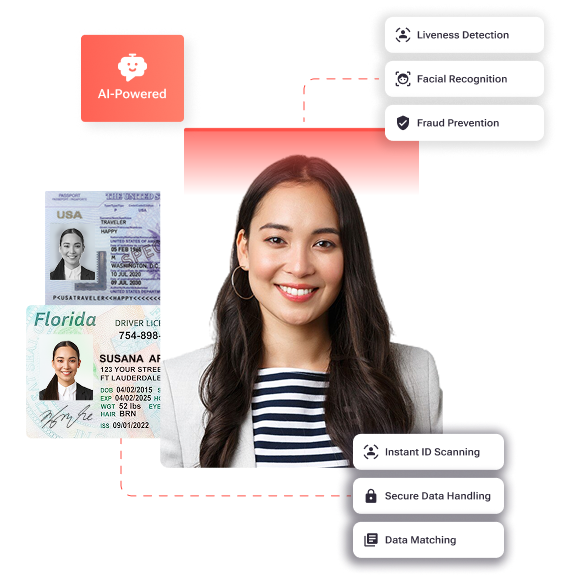
TenantEvaluation operates as a direct reseller of TransUnion and Equifax data, so credit reports follow strict bureau rules without gray-market or offshore data sources. IDVerify embeds biometric identity verification, including government ID validation, AI-powered liveness detection, and facial biometric matching, directly inside the screening workflow. For Florida associations that face identity fraud exposure and FCRA audit risk, TenantEvaluation’s end-to-end, Florida-focused design creates a stronger compliance posture than general community management platforms.
TenantEvaluation vs PayHOA for Screening and Approvals
PayHOA centers on payment processing, accounting, and member communication for self-managed HOAs. Its board voting and approval tools do not connect to a resident screening workflow, so associations must manage applications, background checks, and lease documentation in separate systems.
TenantEvaluation connects every stage of the resident lifecycle, including application intake, biometric identity verification, background screening, board voting, approval letters, and lease tracking, inside one platform. The timestamped voting dashboard in QuickApprove replaces PayHOA’s disconnected approval process with a board-ready workflow that produces an auditable decision record at each step. PayHOA provides lease management features as part of its centralized document and operations tools. Associations that focus on penalty avoidance under HB 1203 and HB 1021 benefit from the deeper documentation that a screening-to-compliance platform delivers.
Florida Statute-Mapped Feature Comparison
The table below maps each platform’s capabilities to Florida’s statutory requirements and highlights where feature gaps can create compliance exposure.
| Compliance Requirement | TenantEvaluation | HOA Cloud | PayHOA |
|---|---|---|---|
| FCRA-first screening with direct bureau reseller status (FCRA) | Native; TransUnion & Equifax direct reseller; automated adverse-action workflows | Third-party integration | No resident screening module |
| Board approval audit trail (Ch. 718/720 records mandate) | Timestamped board voting dashboard inside QuickApprove; immutable decision record | Violation and communication logs; audit trail features | Basic voting tools; not connected to screening or lease data |
| Lease document retention (Chapters 718 and 720 requirements) | Document collection with compliance reporting | Document storage available | Provides lease management features as part of its centralized document and operations tools |
| Biometric identity verification (HB 1203 fraud-prevention alignment) | IDVerify+: government ID validation, liveness detection, biometric facial matching, native workflow | Not listed as native feature | Not listed as native feature |
Frequently Asked Questions
Does TenantEvaluation automate HB 1203 compliance for Florida HOAs?
TenantEvaluation automates the core workflows that HB 1203 targets, including official records production, violation documentation, and audit-trail maintenance. Every application action, board vote, and document exchange is timestamped and stored in a searchable, centralized platform. Lease Tracking keeps lease documentation organized and retrievable on demand, which directly addresses the daily penalty exposure described above for records-production failures under Chapter 720. TenantEvaluation supports internal compliance processes but does not replace legal counsel for statutory interpretation.
What are the document retention periods for Florida HOAs and condominiums?
Florida Statute §720.303 requires HOAs to retain official records for specified periods. Florida Statute §718.111 creates similar obligations for condominium associations, with retention periods that vary by record type, including financial records, contracts, and meeting minutes. TenantEvaluation’s audit trails and document collection features maintain digital records from application submission through occupancy, which helps associations meet these retention requirements without manual filing systems.
How does QuickApprove replace email-based board voting?
QuickApprove is TenantEvaluation’s accelerated approval workflow that gives Board Members a dedicated review and voting dashboard inside the platform. It consolidates the entire approval cycle into a single screen where board members review applications, vote, and initiate post-decision communications without switching between email, spreadsheets, or separate document tools. This unified process replaces scattered email threads with a board-ready approval workflow that produces an immutable audit record at every decision point while preserving board oversight and compliance review.
How does TenantEvaluation handle 55+ community age-restricted applications?
55+ Communities Verification is a built-in capability that helps Florida condos and HOAs standardize how age-restricted requirements are handled across applications. It reduces manual work, supports documentation consistency, and improves operational efficiency for Community Association Managers who oversee age-restricted communities. The feature is tailored to Florida Condos and HOAs and strengthens internal processes while leaving HOPA interpretation to legal counsel.
What makes TenantEvaluation more FCRA-aligned than generic screening tools?
TenantEvaluation is a direct reseller of TransUnion and Equifax data, so credit reports are accessed under strict bureau rules without third-party scraping, gray-market sources, or offshore data providers. The platform includes automated adverse-action workflows that generate required FCRA notices at the point of denial, along with audit trails for every application and a clear separation between decision-making by the association and data provision by TenantEvaluation. IDVerify+ strengthens permissible-purpose validation by confirming applicant identity before screening authorization, which reinforces FCRA-aligned workflows and audit defensibility.
Conclusion: Evaluating Your Florida HOA Compliance Infrastructure
Florida associations operating under HB 1203, HB 1021, and Chapters 718 and 720 face a compliance environment where manual processes quickly translate into fine exposure. Statutory rules for records production, board decision documentation, lease retention, and adverse-action notices require workflows that generate audit-ready records at every step.
TenantEvaluation is built for community associations and management companies with FCRA compliance as a core design principle. Its platform connects resident screening, biometric identity verification through IDVerify, accelerated board approvals through QuickApprove, centralized lease lifecycle control through Lease Tracking, and 55+ Communities Verification into one Florida-focused workflow. With 5,000+ communities served, over 100,000 applications processed annually, and $150M generated for communities, TenantEvaluation offers structural depth that generic property management tools and background screening vendors do not match. Florida associations can use this standard to evaluate whether current processes align with the compliance demands created by HB 1203 and HB 1021.
