Written by: Luis Teran, Co-founder, CEO, TenantEvaluation | Last updated: September 17, 2026
Key Takeaways
- Instant tenant screening solutions return database-sourced results in minutes, while courthouse records, employment verification, and landlord references take days.
- FCRA compliance is mandatory. Landlords must have permissible purpose, written authorization, and provide adverse action notices when denying applications based on screening data.
- HOA and condo workflows in Florida add 14–30 days for board approval cycles, so generic single-family screening tools do not meet community association needs.
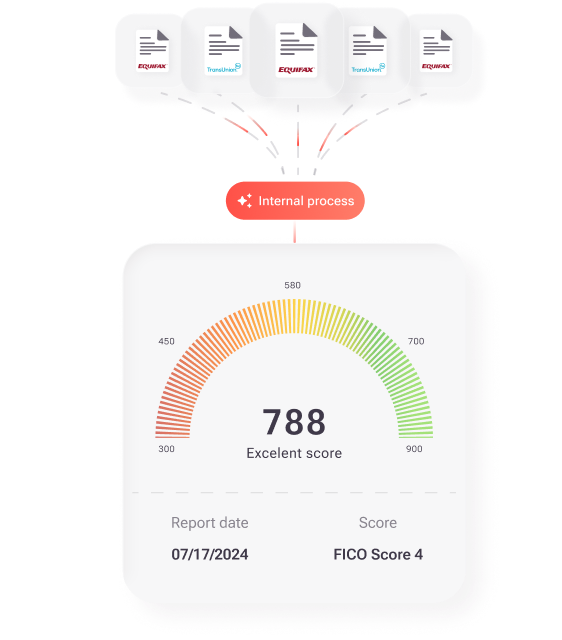
- Direct bureau-sourced credit data from TransUnion or Equifax is more reliable and legally defensible than third-party aggregator reports.
- TenantEvaluation delivers FCRA-first screening, QuickApprove workflows, and 55+ verification designed for Florida HOAs and management companies.
See How FCRA-First Screening Works
How Instant Tenant Screening Solutions Work
Instant tenant screening solutions are online tools that return a tenant background check report quickly. Database-sourced records such as credit history, national criminal databases, and eviction aggregators typically return within minutes. County courthouse record searches, employment verification, and landlord reference checks take longer because they require human or court-level retrieval. Speed depends entirely on which data sources the platform queries.
A typical screening report includes:

- Identity verification (SSN trace, address history)
- Credit history and score
- Criminal background check
- Eviction history
- Income and employment verification
- Rental references from prior landlords
- Fraud and identity checks
What Instant Tenant Screening Actually Checks
The word “instant” describes the database portion of a report, not the full package. Two different data sources power tenant screening, and they operate on very different timelines.
Database-sourced results query national aggregations of court records, credit bureau files, and eviction databases. These results return in minutes to a few hours. A ninety-second screening result does not search court records. It queries a national database that county courts feed on their own schedule, and that feed can lag actual courthouse records by three to six months or more in certain jurisdictions.
County courthouse record searches require a human researcher or electronic court access to pull records directly. County criminal checks typically take one to three business days depending on whether the court offers digital access or requires in-person retrieval. Eviction history is faster when a specialized database covers the jurisdiction, but eviction and public record checks commonly take one to three business days contingent on court and records office processing times. In practice, the slowest component in the package sets the total turnaround.
The table below shows the practical consequence of that split. Database-sourced components return in minutes to hours, while anything requiring courthouse or manual retrieval adds one to seven business days to the total turnaround.
| Data Component | Database-Sourced (Instant) | Courthouse / Manual Verification |
|---|---|---|
| Criminal records | Minutes to hours (national aggregator) | 1–3 business days (county-level direct search) |
| Eviction history | Same day to 24 hours (specialized database) | 1–3 business days if manual retrieval required |
| Credit report | Same day (direct bureau pull) | Not applicable, because credit data is pulled electronically from the bureau and has no manual counterpart |
| Employment / income verification | Hours if payroll database available | 2–7 business days (manual employer outreach) |
| Landlord references | Not available via database | 1–5 business days depending on responsiveness |
Bureau-sourced credit data, pulled directly from TransUnion or Equifax, is more reliable than data assembled by third-party aggregators. That reliability gap matters twice over. It reduces the odds of a wrong decision on an applicant, and it gives the association a cleaner audit trail if a denial is ever challenged under the FCRA.
Who Is Legally Allowed To Run A Tenant Background Check
The Fair Credit Reporting Act (FCRA) governs who may obtain a consumer report and under what conditions. The FTC’s “Using Consumer Reports: What Landlords Need to Know” outlines the core obligations for any landlord or property manager requesting a screening report.
Permissible purpose. Under FCRA § 604, a consumer report may be obtained for tenant screening only when there is a permissible purpose tied to the review of a rental application in connection with a legitimate business transaction initiated by the applicant. A landlord cannot run a report on someone who has not submitted an application.
Written authorization. Most tenant screening services require the applicant to provide written authorization before running a report, and this authorization is usually embedded in the rental application form. The disclosure must stand alone, and it cannot be buried in a lease or general application language.
Adverse action notices. Under FCRA § 615, if a landlord takes any adverse action against an applicant, including denying the application, requiring a co-signer, increasing the deposit, or charging a higher rent, based in whole or in part on information in a consumer report, the landlord must provide the applicant with an Adverse Action Notice. That notice must identify the consumer reporting agency, state that the agency did not make the decision, and inform the applicant of their right to a free copy of the report within 60 days and to dispute inaccuracies.
Separation of roles. The FCRA draws a clear line between the data provider, which is the consumer reporting agency, and the decision-maker, which is the landlord or association. The association sets the criteria and makes the call. The screening platform supplies the data. Conflating these roles creates liability.
Applicant rights. Under FCRA § 612, a renter is entitled to one free consumer report from any CRA if an adverse action was taken against them based on that report, and may dispute inaccurate information directly with the reporting agency. Under FCRA § 611, a CRA must investigate a written dispute within 30 days of receiving it.
Landlords who fail to send a required adverse action notice face potential lawsuits from applicants, regulatory enforcement by the FTC or CFPB, and exposure to fair housing law violations. No page-one competitor in the instant screening space addresses this compliance layer plainly. This gap is the most consequential one in the market.
How Fast Instant Screening Works For HOAs And Condos
Compliance is only half the picture. Generic landlord screening tools are built for a single decision-maker reviewing one application for a single-family rental, and that assumption breaks down once a community association enters the process. Community associations operate differently, and no mainstream screening platform accounts for that difference.
In Florida, a typical HOA rental approval window is 15 to 30 days after receiving a complete application, with board review cycles often running every two to three weeks. HOA tenant approval adds 14–21 days to the leasing timeline and requires a multi-item documentation package, where a non-HOA rental needs only a standard screening package and no board approval. The bottleneck rarely comes from the background check itself. Board workflow, document collection, and approval sequencing usually create the delay.
Florida condominiums operate under Chapter 718 of the Florida Statutes, while single-family HOAs fall under Chapter 720, and the screening, transfer approval, and common-element access rules differ between those regimes. Age-restricted 55+ communities carry additional documentation requirements that generic tools do not address. TenantEvaluation’s 55+ Communities Verification helps standardize handling of these requirements without replacing legal guidance.

TenantEvaluation is built specifically for community associations and management companies, with FCRA compliance as the foundation. Three capabilities make it a strong fit for HOA and condo workflows where generic tools fall short:
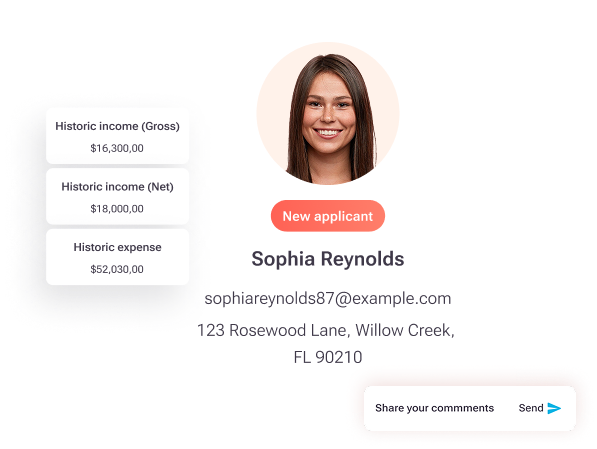
- QuickApprove accelerates resident approvals inside one connected platform. Real-time application tracking, a board-ready approval process, automated communication, customized approval letters, and a personalized welcome package keep high-volume seasons and complex onboarding under control without sacrificing compliance or visibility.
- IDVerify+ embeds biometric identity verification directly into the screening workflow. Government ID validation, AI-powered liveness detection, and biometric facial matching move communities from document-based review to verified physical identity confirmation before approval decisions.
- 55+ Communities Verification helps Florida condos and HOAs standardize how age-restricted requirements are handled across applications. This support reduces manual work, improves documentation consistency, and increases operational efficiency for CAMs and boards managing age-restricted communities.
Explore HOA Approval Workflows
What Instant Tenant Screening Solutions Cost
Once you know what to look for in a provider, the next question is what you will pay. Three pricing models dominate the market:
- Pay-per-applicant: The landlord or association pays a flat fee for each report ordered. Tenant screening costs run from about $17 to $55 per report depending on what is included, with basic credit-only reports at the lower end and comprehensive packages including criminal, eviction, and income verification at the higher end.
- Monthly subscription: The platform charges a recurring fee that may include a set number of screenings or unlimited access. Platforms like Buildium offer plans starting at $62 per month, with screening bundled into the subscription tier.
- Applicant-paid: The applicant pays the screening fee directly to the provider. TransUnion SmartMove uses pay-as-you-go pricing with no subscription fee, ranging from $25 to $49 per screening depending on the tier selected, with the landlord choosing whether to absorb the cost or pass it to the applicant.
TenantEvaluation operates on a pay-per-application model with no upfront fees. Its revenue-sharing model deducts the service fee from the collected application fee and rebates the remainder to the association or management company. This structure turns application processing into a compliant, controlled income stream rather than a cost center.
Choosing A Tenant Screening Provider
The right instant tenant screening solution depends on four factors: bureau sourcing, FCRA role and permissible-purpose controls, community-association fit, and identity fraud prevention.
| Criteria | TenantEvaluation | Generic Single-Family Alternatives (SmartMove, Zillow, Rentec Direct, Avail) |
|---|---|---|
| Bureau sourcing | Direct reseller of TransUnion and Equifax data; no gray-market or offshore sources | Varies; some pull from a single bureau or third-party aggregators |
| FCRA role and controls | FCRA-first design; built-in adverse action workflows, audit trails, and permissible-purpose controls | FCRA-compliant for single-family use; adverse action support varies by platform |
| Community-association fit | Built exclusively for HOAs, condos, and management companies; board dashboards, Florida-specific workflows, 55+ documentation, QuickApprove | Built for individual landlords and single-family rentals; no board approval workflow or association-specific features |
| Identity fraud prevention | IDVerify+ biometric verification: government ID validation, AI liveness detection, facial biometric matching, native to the platform | Document upload or basic identity check; biometric liveness detection not standard |
Generic alternatives such as TransUnion SmartMove, Rentec Direct, and Avail serve individual landlords and small property managers, including those managing single-family rentals. They answer “how fast” and “how much” but do not address board approval workflows, association-specific document collection, or Florida-specific compliance requirements. For a CAM or condo board, those gaps represent the entire workflow.
Frequently Asked Questions
Can I Run A Tenant Background Check On Myself
Yes. Applicants have the right to request a copy of their own consumer report directly from the consumer reporting agency that compiled it. This report is sometimes called a “self-screen” or portable tenant screening report. Reviewing your own report before applying allows you to identify and dispute errors before a landlord or association sees them. The same 60-day free-copy and 30-day dispute rules described above apply.
Is Tenant Screening Legit
Tenant screening is legitimate when conducted for a permissible purpose under the FCRA. Tenant screening is a standard and legally recognized practice in residential housing. The key requirements are that the applicant has submitted an application, written authorization has been obtained, the report is used only for evaluating that application, and any adverse action triggers the required notice. Screening conducted outside these parameters, such as running a report on someone who has not applied, creates legal exposure for the landlord or association.
What Will Disqualify You From Renting
Disqualifying criteria vary by community and are set by the landlord or association, not by the screening platform. Common criteria include minimum credit score thresholds, income-to-rent ratios (typically 2.5x to 3x monthly rent), prior eviction judgments, and certain criminal history. Florida HOAs and condominiums may impose their own criteria within the limits of their governing documents and applicable law. Blanket bans unconnected to documented community criteria, or criteria that produce disparate impact on a protected class under the Fair Housing Act, create legal risk for the association. The association sets the standards. The screening report supplies the data to evaluate them.
What Actually Predicts Reliable Rent Payments
No single data point reliably predicts payment behavior on its own. The strongest combination for predicting reliable rent payments is verified rental payment history combined with credit scores, with Experian RentBureau data showing applicants with negative prior rental payments have a 25 percent chance of defaulting again. A credit score alone can mislead. An applicant with a thin credit file but strong rental references and documented income may be more reliable than one with a high score and a recent eviction. Income verification that connects directly to payroll or bank data, rather than relying on uploaded documents, produces more accurate results. Eviction history is most meaningful when the search covers all jurisdictions where the applicant has lived, not just the addresses they disclosed.
Conclusion: Instant Screening As A Defensible Choice
The right instant tenant screening solution is the one that is legally defensible, sourced from a legitimate credit bureau, and built for the workflow of the organization running it. For Florida community associations and management companies, that means a platform that understands board approval cycles, collects the right documents, handles 55+ age-restricted requirements, and maintains FCRA compliance as a foundation rather than a checkbox.
TenantEvaluation is the FCRA-first, direct bureau-reseller platform built specifically for Florida community associations and management companies, serving 5,000+ communities and processing approximately 100,000 applications per year. TenantEvaluation was built for the HOA and condo workflow from the start, rather than adapted from a generic landlord tool.
Talk To Our Team About Your Community
