Written by: Luis Teran, Co-founder, CEO, TenantEvaluation | Last updated: July 8, 2026
Key Takeaways for Florida Condo HOA Software Costs
- Florida condo associations face rising 2026 software costs, new Chapter 718 mandates, and a choice between self-managed or CAM-managed operations.
- Per-unit pricing dominates for mid-size and large associations, while flat-rate models favor very small communities but become expensive per unit as size grows.
- TenantEvaluation uses a revenue-sharing model that can be cost-neutral or revenue-positive, unlike competitors that require separate compliance add-ons.
- Chapter 718 compliance adds significant costs for milestone inspections, SIRS documentation, secure portals, director training, and expanded official records.
- Consolidate your HOA management software costs and Chapter 718 compliance workflows with TenantEvaluation, and request a platform walkthrough.
How Much Does HOA Management Software Cost in Florida?
Condo association management software usually follows a per-unit or flat-rate model. Total annual costs for a mid-size association vary based on the platform and the services included.
Per-unit pricing scales with community size and is the dominant model for mid-size and large associations. Flat-rate pricing favors very small communities but becomes expensive per unit as the community grows.
Very small associations with 10 to 25 units often pay a flat monthly fee that can range from about $39 to $275, depending on features and support. Mid-size associations around 50 to 100 units may see a mix of flat-rate and per-unit pricing, with annual totals driven by included tools such as portals and payment processing. Large associations with 100 to 200 units and above almost always use per-unit pricing, which often falls between $0.50 and $2.00 per unit per month. Enterprise communities with 300 or more units typically negotiate custom per-unit or enterprise contracts.
Per-unit pricing scales proportionally with community size and is the dominant model for mid-size and large associations, while flat-rate pricing favors very small communities but becomes expensive per unit as the community grows. These figures cover platform licensing only. Compliance add-ons, portal hosting, and audit fees increase the total cost.
Comparing Property Management Software Pricing for Florida Condos
Price alone does not determine total cost. Platforms that exclude Florida-specific compliance tools, FCRA-native screening, or lease tracking force associations to buy extra point solutions, which erases apparent savings.
The table below illustrates this point. It compares starting prices and also shows whether each platform includes the Florida-specific tools that would otherwise require separate subscriptions.
| Platform | Starting Price | Florida Chapter 718 Tools | FCRA-Native Screening |
|---|---|---|---|
| TenantEvaluation | Revenue-sharing model, often cost-neutral or revenue-positive | Yes, built for Florida community associations | Yes, direct TransUnion & Equifax reseller |
| PayHOA | $49–$275/mo | Partial | No |
| ManageCasa | $39–$250/mo (flat-rate) | Partial | No |
| Buildium | $58–$400/mo | Partial | No |
| AppFolio | ~$280/mo + per-unit, 50-unit minimum | No | No |
| HOA Cloud | Contact for pricing | Partial | No |
TenantEvaluation’s revenue-sharing model deducts its service fee from collected application fees and rebates the remainder to the association or management company. This structure makes TenantEvaluation the only platform in this comparison that can be cost-neutral or revenue-positive. Associations serving 5,000+ communities and processing 100,000+ applications annually benefit from a platform built specifically for community associations, not adapted from generic rental software.
See how TenantEvaluation’s revenue-sharing model compares for your association size and budget.
Self-Managed Versus CAM-Managed Cost Scenarios
Board members in self-managed HOAs often spend 10 to 30 hours monthly on financial reporting, vendor coordination, compliance issues, and resident communication. At scale, that time cost becomes significant.
A Florida-based management company that switched to TenantEvaluation documented connected outcomes. Automated workflows freed 50 hours of staff time per day, which cut processing time by 50 percent and delivered $10 in savings per hour per property. Those efficiency gains produced $240,000 in total annual savings. The switch also removed paper-based handling of sensitive resident data, which reduced liability exposure.
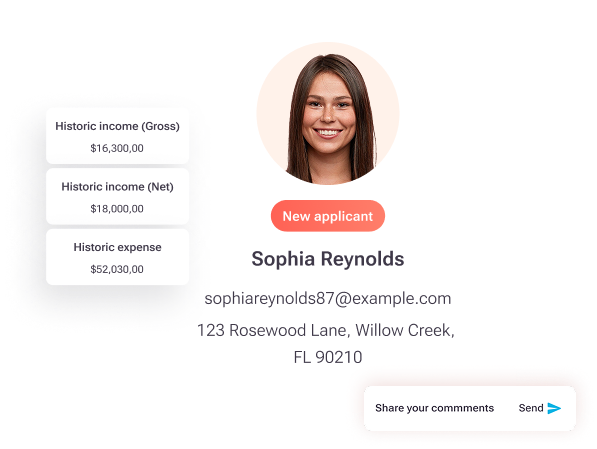
For CAM-managed associations, TenantEvaluation’s QuickApprove accelerated approval workflow reduces manual follow-ups, delivers real-time application tracking, and supports a board-ready approval process inside one connected platform. Boards keep control, compliance, and visibility while CAMs gain speed.
How to Evaluate Accounting and Compliance Software for HOAs
The decision matrix below evaluates platforms across six dimensions that matter to Florida condo associations in 2026. TenantEvaluation ranks first for FCRA-native screening and lease tracking, which generic accounting platforms do not provide.
| Evaluation Dimension | TenantEvaluation | Generic Platforms (Buildium, AppFolio) |
|---|---|---|
| FCRA compliance readiness | Foundation-level, direct bureau reseller, automated adverse action | Add-on or absent |
| Operational efficiency | Up to 70% reduction in approval cycle time, 50 hours per day freed | Partial automation |
| Transparency for boards | Dedicated board voting dashboard with real-time visibility | Limited board-specific tools |
| Scalability | Supports 5,000+ communities and 100,000+ applications per year | General portfolio scaling |
| Auditability | Built-in audit trails, PCI Level 1, end-to-end encryption, auto-redaction | Varies by platform |
| Risk controls | Biometric IDVerify, FCRA adverse action, lease tracking | Basic screening integrations |
Condo association management software must include tools for Florida Statute 718 compliance, including support for structural reserve fund tracking and state-specific condo requirements, whereas standard HOA software does not always provide these features. Platforms that miss these requirements create risk for Florida condo boards.
Chapter 718 Compliance Add-Ons and 2026 Pricing Impact
Most Florida condo boards run two or three parallel tools: an accounting tool, a dedicated Chapter 718 compliance tool, and sometimes a separate operations tool for work orders and payables. Each tool creates a separate budget line item and separate training burden.
Key 2026 compliance cost drivers under Chapter 718 include several recurring obligations that software must support.
- Milestone inspection reporting: Florida condo and cooperative buildings of three or more habitable stories must undergo milestone structural inspections under §553.899 when they reach 30 years of age, or 25 years in certain coastal areas, and every 10 years after that. Software must track the 2026 cohort, store engineer reports, and surface SIRS line items in budgets.
- SIRS documentation: Associations must notify unit owners within 45 days of receiving their SIRS report and submit it to the Division of Florida Condominiums within the same window. Platforms must support timely notifications and record storage.
- Website and portal mandates: Florida condominium associations with 25 or more units must operate a password-protected website or secure member portal under amended Florida Statute 718.111(12)(g) effective January 1, 2026. A realistic annual budget for a compliant portal for small-to-mid-sized Florida condominiums ranges from $1,200 to $3,500.
- Director-training trackers: Newly elected or appointed Florida condo directors must complete a written certification or approved educational course within 90 days of election under §718.112(2)(d)4.b, which compliance software tracks per director.
- Expanded official records: Chapter 718 expanded the definition of official records to include all invoices, transaction receipts, building permits, and board member education certificates, requiring associations to maintain searchable, accessible digital repositories.
Get a compliance cost breakdown for your association’s unit count and Chapter 718 obligations.
How the 5-Year Rule Shapes Florida HOA Software Needs
The “5-year rule” in the Florida condo context refers to the structural integrity reserve study, or SIRS, planning cycle. Florida condominium associations that govern buildings three or more habitable stories tall must complete a Structural Integrity Reserve Study conducted by a licensed engineer, with DBPR maintaining SIRS reporting via an online portal effective July 1, 2025.
SIRS reports must be updated at least every 10 years. The funding obligations they establish take effect on a rolling basis, so boards must begin reserving for identified components within the study cycle. This pattern creates a practical 5-year planning and reporting horizon for capital expenditures.
For 300+ unit buildings, the software implications are significant. Platforms must store engineer reports, surface SIRS line items in annual budgets, and produce audit-ready documentation on demand. Florida’s SB 4-D requires structural integrity reserve studies for most condos, making reserve study integration a critical software feature for self-managed Florida community associations. TenantEvaluation’s Lease Tracking and audit-ready record infrastructure support the documentation consistency that SIRS compliance requires.
How the 80/20 Rule Affects Florida HOA Reporting and 55+ Communities
The 80/20 rule in Florida refers to reserve funding thresholds and financial reporting tiers that govern how associations must fund and disclose their reserves. Florida HOAs must produce tiered annual financial reports based on revenue: cash receipts reports under $150,000, compiled statements between $150,000 and $300,000, reviewed statements between $300,000 and $500,000, and full audits at $500,000 or more, with associations of 1,000+ parcels requiring audited financials regardless of revenue.
In practice, the 80/20 principle also applies to age-restricted communities. A 55+ community must show that at least 80 percent of its occupied units are occupied by at least one person aged 55 or older to maintain its exemption status. TenantEvaluation’s 55+ Communities Verification is a built-in capability that helps Florida condos and HOAs standardize how age-restricted requirements are handled across applications. This approach reduces manual work, improves documentation consistency, and strengthens operational control.

Software features that automate compliance with both the financial reporting tiers and age-restriction documentation requirements work together as a single control system. Accrual-basis accounting with reserve fund tracking keeps budgets aligned with projections. Tiered financial report generation aligns output to revenue thresholds. Standardized age-verification workflows for 55+ communities support fair and consistent processing. Audit-ready digital records keep everything accessible on demand.
Frequently Asked Questions
How much does HOA management software cost per unit for a Florida condo association in 2026?
Pricing for Florida condo association management software typically follows a per-unit or flat-rate model that varies by association size and included features. TenantEvaluation’s revenue-sharing model can make resident screening and onboarding cost-neutral or revenue-positive by rebating a portion of collected application fees back to the association.
What does the 5-year rule mean for HOA software requirements in Florida?
The 5-year rule refers to the planning and funding cycle tied to Florida’s Structural Integrity Reserve Study requirements for condo buildings three stories or taller. Associations must complete a SIRS conducted by a licensed engineer or architect and begin funding identified reserve components on a schedule the study establishes. Software must store SIRS reports, surface reserve line items in annual budgets, and produce audit-ready documentation for DBPR review. For 300+ unit buildings, the platform must support multi-component reserve tracking, engineer report storage, and compliant financial reporting, which generic accounting tools often lack without costly add-ons.
How does the 80/20 rule affect HOA software and financial reporting in Florida?
The 80/20 rule applies in two Florida contexts. For financial reporting, Florida law requires tiered annual reports based on association revenue, ranging from basic cash receipts statements under $150,000 to full audits at $500,000 or more. Software must generate the correct report tier automatically and maintain audit-ready records. For age-restricted communities, a 55+ designation requires that at least 80 percent of occupied units house at least one resident aged 55 or older. TenantEvaluation’s 55+ Communities Verification standardizes how age-restricted application requirements are handled across communities, improving documentation consistency and reducing manual work for CAMs and boards, while still leaving legal guidance to counsel.
Is TenantEvaluation compliant with Florida Chapter 718 requirements?
TenantEvaluation is built specifically for Florida community associations and management companies, with FCRA compliance as the foundation. The platform includes FCRA-native screening through direct TransUnion and Equifax reseller relationships, automated adverse action workflows, built-in audit trails for every application, PCI Level 1 security, and end-to-end encryption with automatic redaction of sensitive data. Its Lease Tracking capability connects resident onboarding, unit data, approvals, and lease documentation into one audit-ready workflow, supporting the recordkeeping obligations Chapter 718 imposes. TenantEvaluation serves 5,000+ communities and processes 100,000+ applications annually, with a 4.8/5 Google rating.
What is the difference between self-managed and CAM-managed HOA software pricing?
Self-managed boards typically pay flat monthly or annual software fees directly, often between $39 and $250 per month depending on the platform and unit count. CAM-managed associations pay per-unit fees that management companies pass through as part of their service contract, typically $0.50 to $2.00 per unit per month, plus management company overhead. A meaningful comparison must also factor staff time. Many self-managed board members spend 10 to 30 hours monthly on compliance, financial reporting, and vendor coordination. A Florida management company that switched to TenantEvaluation documented $240,000 in annual savings by automating workflows that previously consumed 50 hours of staff time per day.
Conclusion: Why Florida Condo Boards Choose TenantEvaluation
Florida condo association boards and CAMs evaluating 2026 software budgets face a clear choice. They can continue paying for fragmented tools that handle accounting, compliance, screening, and lease tracking separately, or they can consolidate onto a single platform built for Florida community associations.
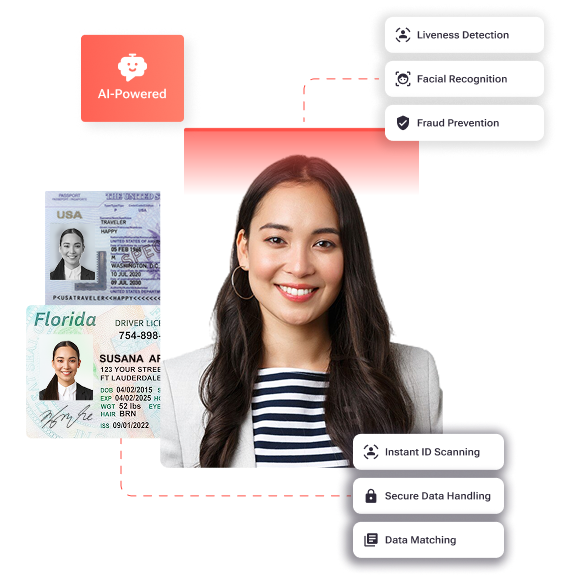
TenantEvaluation delivers resident screening, QuickApprove accelerated approvals, biometric IDVerify identity verification, 55+ Communities Verification, and centralized Lease Tracking inside one connected platform. FCRA compliance sits at the core of the system. Its revenue-sharing model means the platform can be cost-neutral or revenue-positive, which makes it the only option in this comparison that can effectively pay for itself.
With the scale described earlier, including $150M generated for communities and partnerships with firms such as FirstService Residential, Associa, and Campbell Property Management, TenantEvaluation offers cost control, regulatory defensibility, and operational efficiency in a single platform.
Calculate your potential savings with TenantEvaluation’s cost-neutral pricing model.
