Written by: Luis Teran, Co-founder, CEO, TenantEvaluation | Last updated: July 14, 2026
Key Takeaways for Small Florida Associations
- The strongest property management software for small Florida condo and HOA boards under 200 units focuses on dues collection, accounting, and communication without requiring full-time staff.
- Platforms such as PayHOA, Buildium, Condo Control, and QuickBooks manage financial tasks but leave gaps in FCRA-compliant screening, biometric verification, board approval workflows, and lease tracking.
- Hidden compliance risks and volunteer labor costs make generic or low-cost tools expensive when screening and lease management stay manual.
- FCRA rules require written authorization, uniform criteria, adverse action notices, and audit trails, which creates liability when these steps are missing.
- TenantEvaluation completes this stack as the specialized screening and onboarding layer. Schedule a demo today to see how it fits alongside your current tools.
How PayHOA, Buildium, Condo Control, and QuickBooks Compare by Community Size
The table below compares four commonly used platforms across three unit-count tiers. Pricing and feature data come from published 2026 sources. Gaps in resident screening, FCRA compliance, board approval dashboards, and lease visibility appear clearly because none of these platforms handles those needs natively.
| Platform | Under 25 Units | 25–100 Units | 100–200 Units |
|---|---|---|---|
| PayHOA | starts at $49/mo for up to 25 units on annual billing, with online payments, invoicing, accounting, and violation tracking. No resident screening, no FCRA workflows, no board voting dashboard, and no lease tracking. | Scales to $275/month and adds SMS or voice broadcast plus a website builder. Screening and lease lifecycle gaps remain. | Works for dues and communication. No biometric verification, no adverse action automation, and no centralized lease visibility. |
| Buildium | from $62/month, with accounting, violations, maintenance, and payments. No FCRA-compliant screening layer, no board approval workflow, and no lease tracking. | Scales to $400/month and includes Resident Center and a message board. Identity verification and adverse action workflows are still missing. | Delivers broad property management coverage. Screening remains generic instead of community-association-specific, and there is no biometric ID layer. |
| Condo Control | Pricing is not publicly tiered for micro-communities and targets mid-size condos. Communication and amenity booking are included. No FCRA screening, no board voting panel, and no lease lifecycle tracking. | Provides amenity booking, parcel tracking, and visitor management. Resident screening and lease visibility stay manual. | Offers a stronger feature set for larger condos. Still lacks FCRA-compliant adverse action, biometric verification, and centralized lease records. |
| QuickBooks Online | plans range from $19/mo to $137.50/mo (discounted rates) or $38 to $275/mo (standard rates), with general ledger, bank reconciliation, and budget reporting. It requires manual data entry. There are no HOA-specific features, no screening, no lease tracking, and no board workflows. | Works for bookkeeping only. All resident-facing operations, screening, and compliance require separate tools. | Is not designed for community associations. At this unit count, boards face significant manual overhead without a dedicated HOA platform beside it. |
The shared gap: Every platform above manages money. None provides FCRA-compliant resident screening, biometric identity verification, automated adverse action notices, a board-ready approval dashboard, or centralized lease lifecycle tracking. That gap is where compliance risk concentrates for self-managed Florida boards.
Schedule a demo today to see how TenantEvaluation fills the screening and onboarding gaps your PM platform leaves open.
Accounting Tools That Work for Small HOAs
Now that the platforms are compared by size, the accounting layer deserves a closer look because this is the one area these tools handle well. Core financial capabilities for community association software include assessment billing, late fee automation, ACH and credit card processing, delinquency tracking, general ledger accounting, bank reconciliation, budget-versus-actual reporting, and reserve fund tracking. PayHOA and Buildium cover most of these at their mid-tier price points. QuickBooks Online covers general ledger and reconciliation but needs manual HOA-specific configuration and offers no homeowner portal, violation tracking, or board communication tools.
A community of 100 units can generally expect to pay $60 to $250 per month for a full-featured community association platform. The accounting side is well-served by existing tools. The resident intake side remains exposed, including who is moving in, whether identity has been verified, whether the board has formally approved the resident, and whether the lease is tracked in a searchable, audit-ready record.
Finding the Lowest-Cost Property Management Stack
Headline pricing for small HOA platforms often looks attractive. PayHOA offers the lowest entry point at $49 monthly, HOA Start’s Premium tier is priced at $49/month when billed annually, and TownSq provides a free communication tier. The true cost calculation for self-managed boards also includes hours of volunteer labor spent on manual screening, document chasing, and lease expiration tracking across spreadsheets.
The gap between communities using integrated platforms and those still using spreadsheets is widening operationally. These manual processes do more than consume time; they create compliance exposure. That exposure carries real financial consequences. Fair Housing complaints often originate from the screening process, with first-offense penalties starting at $16,000 before damages. A single compliance misstep can erase years of savings from choosing low-cost software.
TenantEvaluation uses a pay-per-application model with no upfront subscription fees. Its revenue-sharing structure sends application fee income back to the association, which can make the screening layer cost-neutral or even revenue-generating for many communities.
Resident Screening and Onboarding Rules Florida Boards Must Meet
Under the Fair Credit Reporting Act, landlords must obtain written, signed authorization from the applicant on a form separate from the rental application before pulling any credit or background report. Any denial based on that report requires an adverse action notice that identifies the screening agency, confirms the agency did not make the decision, and informs the applicant of the right to dispute the report and obtain a free copy within 60 days.
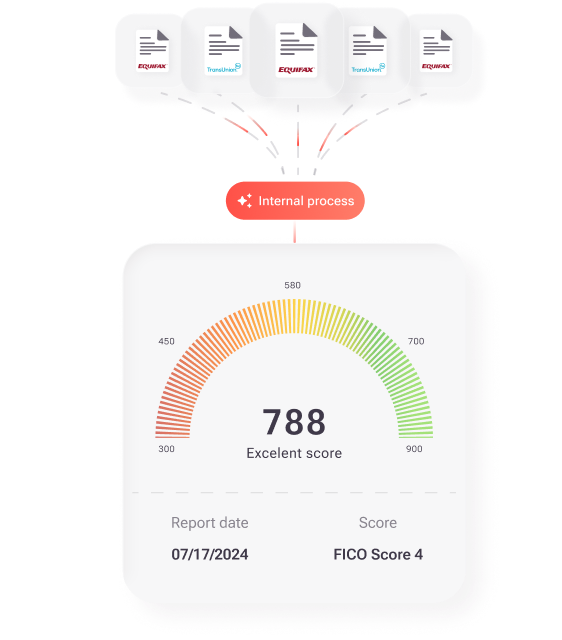
One inconsistency in how screening criteria are applied is all a plaintiff’s attorney needs. Self-managed boards without a documented, automated workflow face particular risk.
TenantEvaluation is built specifically for community associations and management companies, with FCRA compliance as the foundation rather than an afterthought. The platform addresses the complete screening lifecycle through five integrated capabilities. First, FCRA-compliant background checks provide the data foundation, and TenantEvaluation is a direct reseller of TransUnion and Equifax data accessed under strict bureau rules with no gray-market sources. That data is only as reliable as the identity behind it, so biometric identity verification through IDVerify uses AI-powered liveness detection, government ID validation, and biometric selfie-to-ID comparison to confirm physical identity before any approval decision.
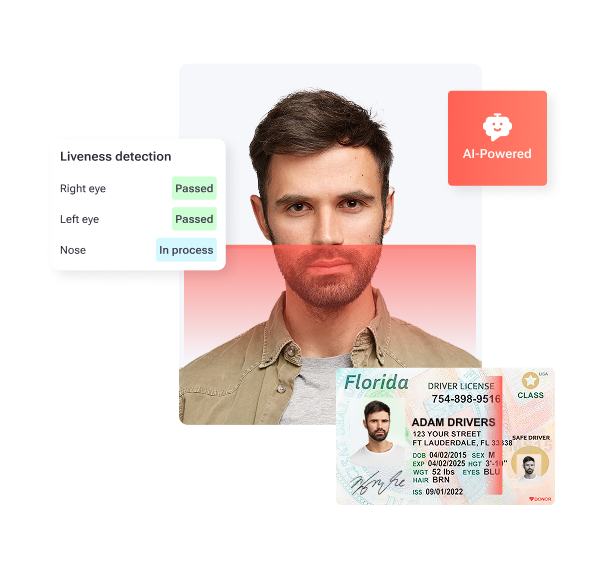
When the data reveals issues that require denial, automated adverse action workflows generate compliant notices and keep the association’s decision-making role separate from TenantEvaluation’s data provision role. Verified applications then move into QuickApprove, the board-ready approval dashboard that gives boards real-time application tracking, a dedicated voting panel, automated communication support, customized approval letters, and a personalized welcome package. Finally, approved residents and their lease documentation are captured in centralized Lease Tracking, which connects onboarding, unit data, approvals, and lease documentation into one streamlined, audit-ready workflow with real-time lease status visibility.

Schedule a demo today and see TenantEvaluation’s FCRA-first screening workflow in action.
Checklist for Screening and Compliance in Florida Communities
Self-managed Florida boards should confirm that their screening process satisfies each of the following requirements before approving any resident application.
- Written applicant authorization obtained on a form separate from the rental application, before pulling any consumer report
- Permissible purpose documented and certified to the screening company
- Screening criteria applied uniformly to all applicants regardless of protected class status under the Fair Housing Act
- Criminal history evaluated on a case-by-case basis per HUD guidance, not through blanket denial policies, and arrest records alone never used as a valid basis for denial
- Adverse action notice issued in writing for any denial or adverse condition based on a consumer report, identifying the agency and the applicant’s dispute rights
- Complete audit trail maintained for every application, approval, and denial decision
- Sensitive applicant data such as SSNs and financial details redacted and stored with PCI-level encryption
- Identity verified through biometric confirmation, not document upload alone, to address synthetic identity and impersonation risk
- Florida Condominium Act (Chapter 718) screening fee cap of $150 per applicant observed for condo associations
Florida 55+ communities: Age-restricted communities face additional documentation requirements that are often handled through fragmented manual processes, including inconsistent emails, PDFs, and follow-ups. TenantEvaluation’s 55+ Communities Verification is a built-in capability that standardizes how age-restricted requirements are handled across applications, reduces manual work, supports documentation consistency, and improves operational efficiency for Florida condos and HOAs while still leaving room for legal guidance.

Frequently Asked Questions
Can a self-managed HOA board be held liable for FCRA violations during the screening process?
Yes. When a community association uses consumer report data such as credit, criminal background, or eviction history to make residency decisions, the association becomes a “user” of consumer reports under the FCRA and carries direct compliance obligations. These obligations include obtaining written authorization before pulling a report, issuing adverse action notices when a report contributes to a denial or adverse condition, and maintaining records of every decision. Willful violations can expose the association to statutory penalties per instance, plus actual damages and attorney fees. A documented, automated screening workflow with built-in adverse action notices gives volunteer boards a practical way to manage this exposure without dedicated legal staff.
What hidden costs should small HOA boards watch for when evaluating property management software?
Published monthly subscription fees rarely reflect total cost. Common hidden costs include per-unit overage charges when a community grows past a pricing tier, onboarding and data migration fees at setup, per-transaction fees on ACH or credit card payments, and add-on charges for features listed as standard in marketing materials. Boards also absorb the labor cost of manual processes the software does not automate. For screening, boards that rely on generic tenant screening tools instead of community-association-specific platforms often carry the burden of manual document review, follow-up calls, and compliance errors that a purpose-built platform would prevent. TenantEvaluation’s pay-per-application model with revenue sharing allows associations to offset or eliminate net screening costs through application fee income.
Do Florida HOA and condo boards need separate software for screening and property management, or can one platform handle everything?
In practice, most full PM platforms handle accounting, dues collection, and resident communication effectively but leave resident screening, identity verification, board approval workflows, and lease lifecycle tracking as manual gaps. Replacing a working accounting platform is rarely necessary. The more efficient approach for small Florida associations is a layered stack that uses a PM platform for financial operations and a specialized screening and onboarding layer for everything from application intake through lease tracking. TenantEvaluation integrates as that specialized layer and handles FCRA-compliant screening, biometric identity verification via IDVerify, board-ready approvals via QuickApprove, and centralized lease tracking without displacing the accounting tools boards already use.
How does Florida’s 55+ community designation affect the resident screening process?
Florida age-restricted communities operating under the Housing for Older Persons Act (HOPA) must document that at least 80% of occupied units have one resident age 55 or older and must maintain age verification records for all residents. When this documentation is handled manually through emails, PDFs, and individual follow-ups, records become inconsistent and difficult to produce during audits or disputes. TenantEvaluation’s 55+ Communities Verification addresses these documentation challenges through a standardized workflow built directly into the application process. It is designed specifically for Florida condos and HOAs and supports, rather than replaces, legal guidance on HOPA eligibility determinations.
What should a small HOA board look for in a lease tracking solution?
An effective lease tracking solution for a self-managed Florida association should provide centralized lease records that are accessible without searching across folders and inboxes, along with real-time lease status visibility that shows whether each unit’s lease is active, pending, expired, or missing. It should automate lease document collection during resident onboarding, tie unit-level tracking directly to occupancy records, and maintain a searchable digital history that remains audit-ready at any time. The key differentiator is whether lease data connects to the screening and approval workflow or lives in a separate system. When lease records are disconnected from onboarding, boards face occupancy blind spots, missed expirations, and compliance risk from incomplete documentation. TenantEvaluation’s Lease Tracking connects applications, approvals, unit data, and lease documentation into one platform, keeping the path from application to occupancy fully connected.
Conclusion: Completing the Stack for Small Florida Associations
In 2026, HOA compliance with regulations around building safety, reserve funding, and homeowner protections is no longer episodic. It requires reliable records, standardized financial controls, and clear documentation. Full PM platforms such as PayHOA, Buildium, Condo Control, and QuickBooks serve the accounting and communication layer effectively. None of them resolves the screening, identity verification, board approval, or lease visibility gaps that create the most significant compliance and operational risk for self-managed Florida boards under 200 units.
TenantEvaluation supplies the missing layer with a community-association-first design and an FCRA-compliant foundation. It handles the full resident intake lifecycle in one connected platform, from compliant screening and biometric verification through board approvals and lease tracking, while working alongside the accounting tools already in place.
With 5,000+ communities served, 100,000+ applications processed annually, and $150M generated for communities, TenantEvaluation functions as the specialized screening and onboarding layer that completes the stack for small Florida associations.
Schedule a demo today and see how TenantEvaluation closes the gaps your current PM platform leaves open.
