Written by: Luis Teran, Co-founder, CEO, TenantEvaluation
Key Takeaways
- FCRA rules apply directly to Florida HOAs and condos that use consumer reports, so boards and managers share responsibility for compliant screening practices.
- Clear disclosures, written consent, and accurate adverse action notices form the core of legally sound tenant screening workflows.
- Recent and proposed laws are reshaping how associations can use credit history and criminal records, which makes documented, individualized criteria more important.
- Technology and AI tools can improve accuracy, documentation, and data security when paired with strong oversight and clear policies.
- Tenant Evaluation offers a purpose-built platform that helps Florida associations simplify FCRA compliance and onboarding; get started with Tenant Evaluation here.
Why FCRA Compliance Matters for Florida HOAs
Florida HOAs and condos act as decision makers when they use background checks and credit data to approve residents. That role brings direct FCRA obligations and exposure to lawsuits if processes fall short.
Paper-heavy, manual workflows increase the risk of lost documents, inconsistent decisions, and missing disclosures. These gaps can trigger FCRA and fair housing claims, slow move-ins, and delay revenue.
Regulators and courts now hold housing providers and screening companies to high standards for accuracy, notice, and data security. Associations that modernize their screening processes reduce liability and protect community reputation.
Schedule a demo today to see how Tenant Evaluation supports compliant resident onboarding for Florida communities.
Essential FCRA Concepts for Community Associations
How the FCRA Applies to Florida HOAs and Condos
The FCRA governs how consumer information is collected, shared, and used for housing decisions. Associations that rely on tenant screening reports qualify as users of consumer reports and must follow the law.
Consumer Reporting Agencies supply the data, but boards and managers remain responsible for permissible purpose, proper disclosure, consent, and fair use of the information.
Clear Purpose, Disclosure, and Written Consent
FCRA rules allow tenant screening only for defined permissible purposes, including housing decisions. Associations must be able to show that each report was obtained for a valid, documented reason.
Applicants need a standalone disclosure that states a consumer report will be obtained and used in the decision. This notice should be separate from the application and easy to understand.
Written consent must also be obtained before ordering a report. Forms should explain what data may be collected and how it may affect approval, and associations should keep records of signed or electronically accepted consents.
Adverse Action Notices as a Required Step
Any decision that denies, delays, or conditions approval in whole or in part because of a consumer report counts as adverse action. Examples include denials, higher deposits, or extra guarantor requirements.
The written adverse action notice must:
- List the Consumer Reporting Agency and its contact details
- State that the CRA did not make the decision
- Explain the right to a free copy of the report and to dispute errors
Timely notices reduce legal risk and help applicants correct inaccurate data.
Evolving Tenant Screening Regulations in 2025
Balancing Federal Preemption and Florida-Specific Rules
Recent federal guidance clarifies how the FCRA preempts some state laws while still allowing stronger consumer protections that do not conflict with federal standards.
Florida HOAs must meet both the federal baseline and any stricter state or local rules. This layered structure means the safest path is to follow the most protective standard that applies.
Associations benefit from screening partners and legal advisors who track changes across federal, state, and municipal levels.
Changes Around Credit Checks and Criminal History
A 2025 bill in the U.S. House would modify the FCRA to ban the use of credit checks in tenant screening.
The bill has not passed, but it signals growing concern that credit scores may block access to housing. Florida communities should plan for screening models that rely less on traditional credit metrics.
Boards that document how they weigh factors such as offense type, age of the record, and rehabilitation steps reduce fair housing risk.
Higher Scrutiny of Accuracy and Bias
Recent court decisions show that screening companies can face liability for inaccurate or biased reports under both FCRA and local consumer protection statutes.
This trend increases pressure on associations to choose vendors with strong matching, verification, and dispute processes. AI tools must be monitored to avoid unfair patterns or hidden bias in decision-making.
Practical Steps for FCRA-Compliant Screening in Florida
Creating Clear, Objective Screening Criteria
Written criteria help boards make consistent, defensible decisions. Policies should cover:
- Minimum income standards and acceptable income documentation
- How rental history and evictions are evaluated
- Which types of criminal records may affect approval and for how long
Criteria should avoid vague language and automatic bans that may create disparate impact. Documented exceptions and appeal processes support fair, case-by-case review.
Improving Disclosure and Consent Workflows
Separate, simple disclosure forms reduce confusion and legal exposure. Applicants should see and sign disclosures before paying fees or submitting applications.
Electronic workflows can capture time-stamped disclosures, consents, and acknowledgments. Associations should store these records securely in case of future disputes or audits.
Using Technology to Support Compliance
Modern identity and screening tools use AI-driven matching and data validation to reduce errors in consumer reports.
Effective platforms automate disclosures, consent collection, and adverse action notices, while logging every step for audit purposes.
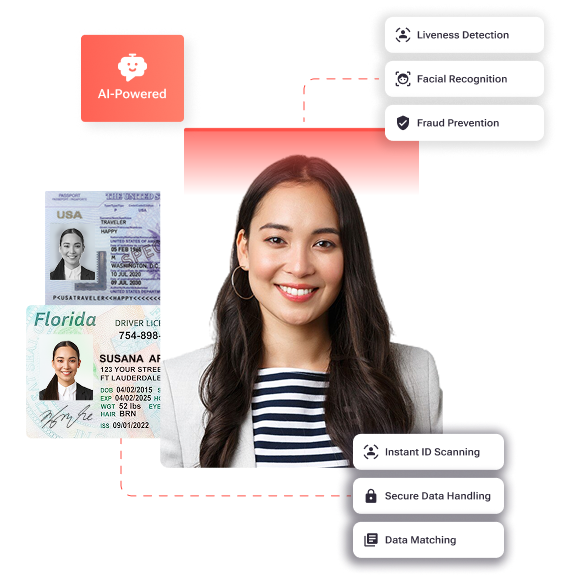
Boards should confirm that any AI tools are transparent, tested for bias, and subject to human review for edge cases or disputed results.
Schedule a demo today to see how Tenant Evaluation automates key FCRA steps for Florida HOAs.
Common Compliance Risks for Florida Associations
Inaccurate or Outdated Consumer Report Data
Errors such as mixed files, outdated criminal records, or incomplete employment history can lead to wrongful denials and legal claims.
Boards can reduce risk by:
- Reviewing reports for obvious mismatches
- Seeking clarification before denying in close cases
- Documenting how contested information was evaluated
Missing Disclosures or Adverse Action Notices
Skipped steps often occur in manual workflows where staff must remember each requirement. Common issues include buried disclosures, no written consent, or failure to send notices after conditional approvals.
Checklists and automation help ensure every applicant receives the same required forms and communications at the right time.
Fair Housing and Discrimination Concerns
Even neutral policies can create fair housing risk if they disproportionately screen out members of protected classes without a strong business justification.
Regular audits of approval and denial patterns, paired with legal review of criteria, help keep policies aligned with fair housing guidance.
Data Security and Applicant Privacy
Consumer reports contain Social Security numbers, dates of birth, and financial history. Unsecured files, shared email accounts, and printed copies increase breach risk.
Effective programs include:
- Role-based access controls and encryption
- Secure disposal of paper and digital records
- Staff training on phishing, password hygiene, and privacy
Best Practices for FCRA-Compliant Screening in 2025
Choosing the Right Consumer Reporting Agency
Vendor selection directly affects legal risk. Strong CRAs offer:
- Clear FCRA compliance programs and dispute procedures
- Documented data sources and matching logic
- Detailed logs and reporting for audits
Associations should request information on accuracy rates and ask how the CRA handles disputes and corrections.
Documented Screening Policies and Training
Written policies ensure consistency across boards, managers, and staff. Effective policies include:
- Defined criteria and decision trees
- Steps for handling borderline applications
- Timelines for decisions and notices
Regular training keeps team members up to date on FCRA basics, fair housing, and data security.
Automating Core Compliance Tasks
Screening platforms can handle repetitive compliance steps while freeing staff to focus on judgment calls. Helpful automations include:
- Automatic collection and storage of disclosures and consents
- Template-driven adverse action notices sent on time
- Centralized, secure storage of all application records
How Tenant Evaluation Compares to Manual Screening
|
Feature |
Manual/Traditional Screening |
Tenant Evaluation Platform |
Compliance Impact |
|
FCRA Compliance |
High risk of missed steps |
Workflows aligned to FCRA rules |
Lower exposure to claims |
|
Disclosure & Consent |
Paper forms and ad hoc storage |
Automated collection and archiving |
Consistent documentation |
|
Adverse Action Notices |
Manual preparation and mailing |
Automated templates and tracking |
Fewer notice-related violations |
|
Data Security |
Email and shared drives |
Encrypted, access-controlled platform |
Reduced breach and privacy risk |
Schedule a demo today to see how Tenant Evaluation helps Florida HOAs apply these best practices.
Frequently Asked Questions (FAQ) About FCRA-Compliant Tenant Screening
Can HOAs and condos in Florida use credit checks in 2025?
Yes. Credit checks remain allowed when associations provide proper FCRA disclosures, obtain written consent, and use the results in a consistent, documented way. Boards should track proposed federal changes that could limit or remove this tool and start identifying alternative indicators of financial reliability.
What counts as adverse action and when is a notice required?
Any denial, conditional approval, higher deposit, or similar negative outcome that relies in whole or in part on a consumer report counts as adverse action. Written notices are required each time this occurs and must include CRA information, a statement that the CRA did not make the decision, and an explanation of the applicant’s rights to a free report and dispute.
Do Florida-specific rules affect tenant screening beyond the FCRA?
Florida communities must comply with federal rules while also following any state or local requirements related to screenings, fees, and use of criminal history. Some municipalities have added protections or limits, especially on how arrest and conviction records are considered. Legal counsel familiar with Florida association law can help boards keep policies aligned with current requirements.
How can AI and automation support FCRA compliance?
AI tools can improve identity verification, reduce false matches, and standardize workflows for disclosures, consent, and adverse action notices. Automation also creates detailed audit trails that show how decisions were made. Boards should confirm that automated systems remain explainable, are monitored for bias, and include human review for complex cases.
What financial risks come with FCRA non-compliance?
Violations can lead to statutory and actual damages, punitive damages for willful violations, and payment of the applicant’s legal fees. Associations may also face fair housing claims, breach-related costs, and reputational harm that affects property values. Investing in clear policies, training, and technology is often far less expensive than defending even one lawsuit.
Conclusion: Strengthen Your Florida Community with Compliant Screening
FCRA-compliant tenant screening protects your association from lawsuits, supports fair treatment of applicants, and speeds up move-ins. Florida HOAs and condos that combine clear policies, trained staff, and modern technology are better positioned to keep pace with changing laws.
Manual, fragmented processes increase the odds of mistakes in disclosures, notices, and data handling. A structured program and dedicated platform help boards manage risk while giving applicants a transparent experience.
Get started with Tenant Evaluation to streamline tenant screening, support FCRA compliance, and protect your Florida community’s future.
