Written by: Luis Teran, Co-founder, CEO, TenantEvaluation
Key Takeaways for Florida HOA Payment Compliance
- Florida HOAs stay compliant when payments move straight from applicants to the association’s bank account, without any third party holding funds.
- State statutes require detailed recordkeeping, financial reporting, and audit-ready ledgers for all onboarding payments, including application fees and deposits.
- ACH authorization, PCI DSS controls, and biometric identity checks must be in place before processing any payment to meet regulatory standards.
- Direct-to-association payment flows reduce commingling risk, speed up reconciliation, and lower audit exposure tied to third-party fund handling.
- TenantEvaluation streamlines Florida HOA onboarding compliance with integrated payment workflows; learn more at TenantEvaluation.
How Payment Compliance Works in Florida Community Associations
Payment compliance covers every legal, procedural, and technical requirement a Florida HOA or condominium association must follow when collecting money during onboarding. It extends beyond accepting a payment and includes fund routing, record storage, and identity confirmation before any transaction runs.
LCAMs and CAMs face audit exposure, board liability, and statutory risk when payment collection sits outside the onboarding workflow or runs through intermediaries that hold funds before sending them to the association. Integrated, direct routing keeps these risks contained and easier to manage.
Schedule a demo today to see how TEpayments by Zinc routes funds directly to your association’s designated account inside the TenantEvaluation onboarding workflow.
Florida Statutory Checklist for Onboarding Payments
Florida law sets clear expectations for HOA and cooperative association records and financial reporting. These requirements shape how onboarding payments must be collected, documented, and stored.
- Fla. Stat. §720.303 requires HOA records to be available to homeowners within 10 business days of a written request.
- Fla. Stat. §720.303(7) requires HOAs to complete a financial report for the prior fiscal year within 90 days after year end, or by a bylaw-defined date, and make it available to members under tiered rules and petition rights.
- Fla. Stat. §720.303(7) also sets tiered annual financial reporting levels for HOAs based on total annual revenue.
- Florida Statute 719.104(2)(a)9 requires cooperative associations to maintain accounting records with accurate, itemized receipts and expenditures and a current account for each unit, with no minimum retention period after the 2018 amendments removed the prior seven-year rule.
- HB 1203 includes additional requirements for HOA financial management and recordkeeping.
- HB 1203 mandates full audited financial statements for HOAs with 1,000 or more parcels, regardless of revenue.
- Reserve funds must sit in dedicated accounts and be used only for authorized reserve purposes.
ACH Authorization and Regulation Z Rules for Resident Payments
ACH is the primary method for HOA payment collection because it is cost-effective, automatable, and routes funds directly without the 2–3 percent card processing fees. Bank ACH transfers support predictable collections and create audit-ready records without third-party intermediaries.
For recurring ACH payments such as dues and deposits, associations must obtain written authorizations, store them securely, refresh them when terms change, and stop debits as soon as a resident revokes authorization. Missing encryption or two-factor authentication can trigger ACH rejections under network rules.
Key ACH authorization obligations for Florida associations follow a clear lifecycle.
- Before any debit, obtain written or electronic authorization from the resident.
- Before initiating transactions, verify routing and account numbers to avoid rejections from incorrect or closed accounts.
- Once authorized, store authorization records securely for the full duration of the payment relationship.
- Throughout the relationship, maintain front-end validation and ongoing account-data hygiene to reduce fraud-triggered rejections.
- After any revocation or unauthorized debit notice, stop debits immediately when return code R07 or R10 appears.
PCI DSS Requirements for Application Fee Card Payments
Any association that accepts application fees by credit or debit card, whether through a web portal or integrated platform, falls under PCI DSS. PCI DSS Level 1 compliance requires end-to-end encryption, strict access controls, and recurring security audits of cardholder data environments.
TenantEvaluation operates at PCI Level 1 with end-to-end encryption and automatic redaction of sensitive personal identifiable information. TEpayments by Zinc collects application fees and deposits inside the onboarding workflow so funds move directly from the applicant to the association’s account while TenantEvaluation manages the process without ever holding the money.
AML and KYC Identity Checks During Payment Intake
As of August 2026, the FinCEN Residential Real Estate Rule, which would have imposed AML program duties on persons involved in closings and settlements, was vacated by the U.S. District Court for the Eastern District of Texas on March 19, 2026. Reporting persons do not need to file Real Estate Reports with FinCEN and face no liability for not filing while the vacatur order remains in effect. FinCEN has appealed this decision.
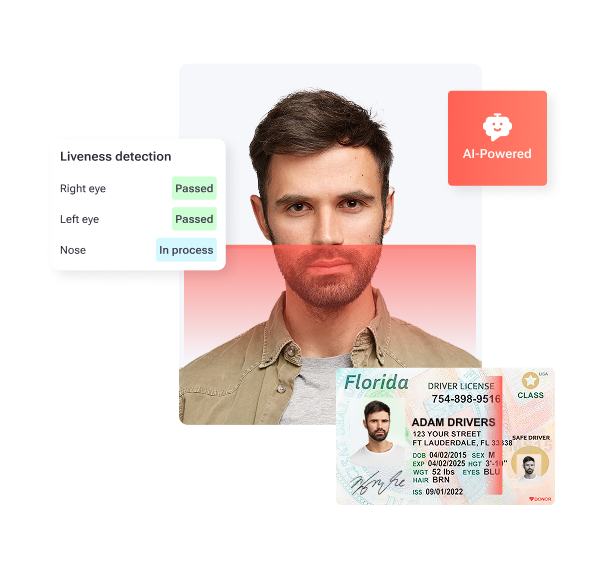
Routine HOA dues collection does not qualify as a reportable transfer of residential real property. KYC identity verification during payment intake still serves as a strong control for fraud prevention and audit defensibility.
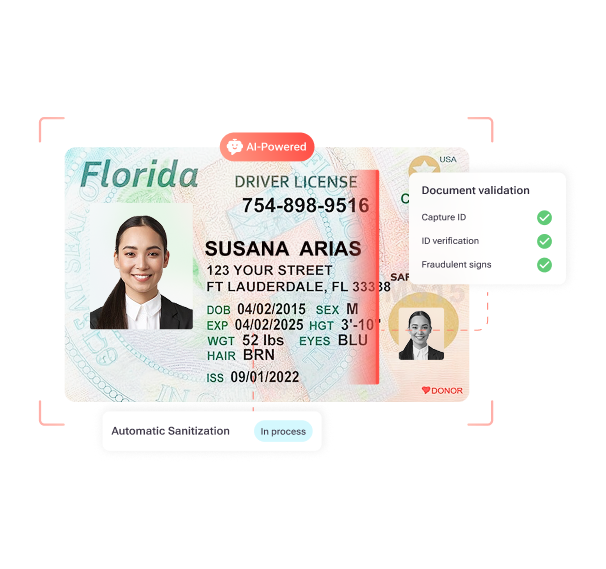
TenantEvaluation’s IDVerify embeds biometric identity checks directly into onboarding. The system validates government-issued IDs, confirms physical presence with AI-powered liveness detection, and performs biometric selfie-to-ID comparison before any payment or screening authorization moves forward.

Direct Fund Flow and Why Associations Avoid Third-Party Holding
Third-party fund handling during onboarding creates commingling risk, slows reconciliation, and increases audit exposure. A non-integrated payment portal only shifts manual work from opening envelopes to matching deposits, so the compliance burden remains.
Residents should treat unexpected payment requests by text or email, or peer-to-peer transfer requests, as red flags. These methods bypass direct-to-association routing controls and are common fraud channels.
TEpayments by Zinc keeps a connected payment workflow inside TenantEvaluation while preserving direct-to-account routing described earlier. TenantEvaluation organizes each step but never holds funds, which removes intermediary holding, reduces commingling risk, and creates a clear record from payment initiation through posting.
Schedule a demo today to see direct fund flow in action inside the TenantEvaluation platform.
Audit-Ready Ledgers and Immutable Payment Records
Florida cooperative association accounting records must include accurate, itemized, and detailed records of all receipts and expenditures plus a current account and regular statements for each unit. These records must show unit owner names, assessment due dates and amounts, payments received, and balances.
Audit preparation for onboarding payments relies on a connected set of records that show both payment detail and board oversight.
- Owner payment ledgers, delinquency reports and aging schedules, assessment schedules and rate history, and special assessment documentation including board resolutions and member approvals
- Timestamped payment records linked to individual applicant files
- Separate bank accounts for operating and reserve funds
- Board-approved expenditure documentation captured in meeting minutes
Compliant and Non-Compliant Payment Flows Compared
| Compliance Factor | Compliant Payment Flow | Non-Compliant Payment Flow |
|---|---|---|
| Fund routing | Payments move directly from the applicant to the association’s designated account | Funds sit with a third-party intermediary before remittance |
| ACH authorization | Written authorization stored before any debit; routing and account numbers verified before each transaction | No written authorization and unverified account data |
| PCI DSS | End-to-end encryption, PCI Level 1 compliant portal, and automatic redaction of PII | Unencrypted card data, weak access controls, and manual handling of cardholder data |
| Identity verification | KYC and biometric verification completed before payment authorization | No identity check before payment and document-only review |
| Recordkeeping | Records available within 10 business days of written request with an immutable, timestamped ledger | Spreadsheet tracking with no centralized audit trail |
| Fund separation | Operating and reserve funds kept in separate association accounts | Commingled funds with no clear separation |
| Financial reporting | Financial report prepared within 90 days of fiscal year end, or as bylaws specify, and made available to members | No annual report and no CPA involvement at required revenue levels |
Step-by-Step Onboarding Payment Workflow in TenantEvaluation
- Configure payment requirements per association. Each association defines which fees and deposits apply and at which onboarding stage they are collected. TEpayments by Zinc adapts to the property’s process instead of forcing a single sequence.
- Verify applicant identity. Before any payment starts, IDVerify validates the applicant’s government-issued ID, confirms physical presence with liveness detection, and runs biometric selfie-to-ID comparison inside TenantEvaluation.
- Capture ACH authorization and disclosures. The applicant provides written electronic authorization for ACH debits. Routing and account numbers are validated before the transaction, and authorization records are stored securely in the platform.
- Collect payments inside the onboarding workflow. Application fees, deposits, and other required payments are collected in the same workflow the applicant already uses, without any redirect to an external portal.
- Route funds directly to the association account. Payments move straight from the applicant to the association’s designated account while TenantEvaluation manages the workflow without holding funds.
- Create immutable ledger entries with timestamps. Each payment generates a timestamped, itemized record tied to the applicant’s file, including unit owner name, due date, amount, and balance, satisfying Florida Statute 719.104(2)(a)9.
- Provide board visibility and reporting. CAMs and board members see payment status in real time. Records remain searchable, audit-ready, and retained for the required statutory period.
Board Visibility and Real-Time Reporting Duties
The 90-day financial reporting requirement in §720.303(7) becomes difficult to meet without real-time payment visibility. Boards need current data to prepare accurate reports on schedule.
The board’s duty to keep accurate financial records continues with electronic payments. TEpayments by Zinc gives boards traceable records and clear insight into where funds go, with payment status tied directly to each resident’s onboarding record in TenantEvaluation.
Common Compliance Pitfalls and Practical Fixes
Several recurring mistakes create most audit issues for Florida HOAs and condominium associations during onboarding payment collection.
- Third-party fund holding. Using a processor that holds funds before remitting increases commingling risk and slows reconciliation. Direct routing to the association’s account removes this exposure.
- No written ACH authorization. Resubmitting transactions after revocation or an unauthorized debit notice violates ACH rules and can trigger return codes. Written authorization must exist and remain on file before any debit.
- Commingled operating and reserve funds. Florida law requires reserve funds to stay in dedicated accounts. Separate accounts and documented transfers protect both compliance and board members.
- Spreadsheet-based payment tracking. Manual ledgers rarely meet Florida’s itemized, unit-level record standards. Centralized, timestamped digital records support audits and owner inspection rights.
- No identity verification before payment. Processing payments without KYC checks raises fraud risk and weakens audit defensibility. Biometric verification before authorization closes this gap.
- Debit card use for association funds. Associations should rely on ACH or compliant card processing and avoid debit card practices that blur personal and association spending.
- Destruction of accounting records. Immutable digital records preserve history and support both statutory compliance and future audits.
Schedule a demo today to see how TenantEvaluation addresses these pitfalls with a single connected payment workflow built for Florida community associations.
Frequently Asked Questions
What is the difference between a compliant and non-compliant payment flow for Florida HOA onboarding?
A compliant payment flow routes funds directly from the applicant to the association’s bank account without any intermediary holding the money. It also includes written ACH authorization, identity verification before payment, PCI-compliant encryption, and timestamped records retained under applicable statutes. A non-compliant flow often relies on third-party fund holding, lacks written authorization, uses spreadsheet tracking, and omits an audit trail, which increases exposure under Florida Statutes 720.303 and 719.104.
Does TEpayments by Zinc hold association funds at any point?
TEpayments by Zinc does not hold association funds at any stage. It operates as a connected payment workflow inside TenantEvaluation, routing payments directly from the applicant to the association’s designated account. This direct routing removes intermediary holding risk and creates a traceable record from payment initiation through posting, which supports board visibility and audit readiness.
What financial reporting is required for Florida HOAs, and how does payment recordkeeping support it?
Florida HOAs must prepare annual financial reports, with the level of CPA involvement based on total annual revenue. HOAs with 1,000 or more parcels must obtain full audited statements regardless of revenue. Detailed payment records support these duties by maintaining itemized, unit-level ledgers that show assessment amounts, due dates, payments received, and balances, which can be produced within the statutory window for member inspection.
What are the ACH authorization requirements for collecting resident payments in Florida community associations?
Associations must secure written or electronic authorization before initiating any ACH debit and store that authorization securely for the full payment relationship. They must verify routing and account numbers before each transaction to reduce rejections. Associations must stop debiting immediately if a resident revokes authorization or disputes a transaction as unauthorized and must update recurring authorizations when payment terms change.
How does identity verification during payment intake reduce compliance risk for Florida HOAs?
Identity verification before payment authorization lowers fraud risk, strengthens audit defensibility, and supports permissible-purpose checks for later screening. Biometric verification combines government ID validation, AI-powered liveness detection, and selfie-to-ID comparison to confirm that the person initiating payment matches the submitted identity documents. This approach reduces synthetic identity fraud, impersonation, and unauthorized payment attempts entering the onboarding record.
