Written by: Luis Teran, Co-founder, CEO, TenantEvaluation | Last updated: June 24, 2026
Key Takeaways
- Florida condo associations must follow Chapter 718 governance rules and FCRA requirements during screening, which creates unique legal and operational demands.
- Generic property management platforms lack board dashboards, biometric verification, and Florida-specific customization that condo associations need for efficient workflows.
- TenantEvaluation tackles identity fraud, approval delays, and scattered lease records with purpose-built automation and compliance tools.
- QuickApprove and IDVerify+ cut processing time by up to 70% while keeping records audit-ready and preserving board control.
- Associations can create compliant revenue and streamline operations with TenantEvaluation; learn more today.
Florida Condo Market Pressures on CAMs and Boards
Florida’s condominium market ranks among the most active in the United States. Miami-Dade, Broward, Palm Beach, Hillsborough, and Pinellas counties contain hundreds of thousands of condo units, each governed by an elected board with legal authority over resident approvals. Community Association Managers (CAMs) sit between boards and applicants, coordinating document collection, background checks, board review, and final decisions.
The administrative load on CAMs has grown sharply. A single application cycle can require multiple follow-ups with applicants, realtors, and owners, manual document review, coordination of board member availability, and email or physical routing of approvals. When this repeats across dozens of active applications during peak seasons, the operational cost becomes significant. One Florida-based management company documented freeing 50 hours per day after moving to TenantEvaluation’s automated platform.
Identity fraud has become a parallel risk. Traditional screening that relies on uploaded document images cannot reliably detect synthetic identities, impersonation attempts, or stolen credentials. Boards that approve fraudulent applicants face liability exposure and community security concerns that paper-based processes cannot manage. The shift toward digital, biometric-backed screening platforms responds directly to these operational and security realities. Beyond efficiency and fraud prevention, these platforms must also navigate the complex compliance landscape that governs Florida condo associations.
Compliance, Risk, and Governance for Florida Condos
Florida condo associations carry specific compliance obligations that generic screening tools often miss. Under Chapter 718, boards must follow defined procedures for approving or denying applicants, maintain records of decisions, and meet notice requirements. Inconsistent documentation of decisions creates audit exposure and potential fair housing liability.
FCRA compliance adds a federal layer. Associations that use consumer reports in screening decisions must establish permissible purpose, provide required disclosures, and issue adverse action notices when denials rely on report data. TenantEvaluation addresses this directly as a legitimate reseller of TransUnion and Equifax data accessed under strict bureau rules. The platform maintains automated adverse action workflows, built-in audit trails for every application, and a clear separation between data provision by TenantEvaluation and decision-making authority by the association.
Data security forms another core governance concern. Manual handling of Social Security numbers, financial records, and identity documents increases breach risk. TenantEvaluation operates at PCI Level 1 compliance with end-to-end encryption and automatic redaction of sensitive personal information, which removes that liability from association staff.
Operational Pain Points in Florida Condo Screening
Florida condo screening problems usually fall into five operational categories. First, incomplete applications appear frequently when applicants submit forms with missing documents or unsigned leases, which triggers manual follow-up cycles and slows the entire pipeline. Second, fragmented lease records occur when lease copies sit across email inboxes, shared drives, and physical folders, creating occupancy tracking gaps and compliance risk.
Third, approval delays arise when board members lack centralized access to application data and rely on email chains and spreadsheets, which slows decisions during high-volume periods. Fourth, identity fraud exposure persists because document-only verification cannot confirm physical presence or detect biometric mismatches between an applicant and their submitted ID. Fifth, administrative overhead grows as CAMs who manage multiple communities face unsustainable manual workloads without automation.
These challenges connect tightly. An incomplete application triggers manual follow-up, which delays board review and extends the approval timeline. Longer timelines increase applicant uncertainty and realtor friction. Addressing a single point in isolation produces limited improvement. Addressing the full workflow produces the 70% reduction in processing time that TenantEvaluation clients report.
Best Practices for Florida Condo Screening and Onboarding
Effective resident screening in Florida condo associations follows several operational principles. The foundation is workflow standardization that uses consistent application forms, document checklists, and approval sequences across all units and applicants. This structure reduces errors and creates defensible audit records.
Building on this standardized foundation, intelligent form logic adjusts required fields based on applicant type, such as tenant versus purchaser or adult child versus primary resident. This approach removes irrelevant questions and improves the odds of complete data collection at submission.
Stronger identity verification methods now function as a baseline expectation rather than a premium feature. Specifically, biometric confirmation that combines government ID validation, liveness detection, and facial matching provides fraud prevention that document review alone cannot match. Once identity is confirmed, centralized documentation becomes critical. Housing all application materials, approvals, and lease records in one searchable platform supports operational efficiency and audit readiness.
This centralized approach also enables transparent approval structures. Board members gain direct, real-time access to application status, which reduces decision latency and closes information gaps that create bottlenecks.
How to Evaluate Tenant Screening Platforms in 2026
Florida condo associations evaluating tenant screening software in 2026 should assess candidates across six criteria. First, Florida-specific customization matters. The platform must support Chapter 718 workflows, community governing documents, and age-restricted community requirements without manual workarounds.
Second, board dashboard access is essential. Board members need a dedicated interface for reviewing applications, casting votes, and tracking decisions, rather than relying on email forwarding. Third, the revenue model should favor the association. Applicant-paid fee structures with revenue sharing remove subscription costs and generate income.
Fourth, biometric fraud prevention must extend beyond document uploads to include liveness detection and facial biometric matching. Fifth, auditability should provide comprehensive auditability as described in the compliance section, not partial logs. Sixth, scalability must support high-volume application seasons without extra headcount or added complexity.
TenantEvaluation meets all six criteria. Generic platforms typically satisfy only one or two.
QuickApprove Workflow for Faster Board Decisions
QuickApprove is TenantEvaluation’s accelerated approval workflow for CAMs, boards, and property management teams inside one connected platform. It replaces email chains, spreadsheets, and disconnected follow-ups with real-time application tracking, automated communication support, customized approval letters, and a personalized welcome package.

The board-ready approval process within QuickApprove gives board members a dedicated review and voting dashboard with AI-generated applicant summaries, real-time status visibility, and a structured voting workflow. This structure removes information gaps that delay decisions. CAMs gain reduced manual follow-ups and clearer application visibility across their entire portfolio. Applicants experience fewer delays and more consistent communication throughout the process.
QuickApprove supports high-volume seasons and communities with complex onboarding requirements. It accelerates resident approvals without sacrificing control, compliance, or visibility. This balance separates it from generic workflow tools that chase speed at the expense of governance. The result is faster, clearer, and more consistent approvals for every stakeholder.
IDVerify+ Biometric Identity Verification for Condos
IDVerify+ is TenantEvaluation’s biometric identity verification layer embedded directly into the screening workflow. It combines government-issued ID validation, AI-powered liveness detection, facial landmark recognition, and biometric selfie-to-ID comparison into a single native verification step, with no external portals and no workflow disruption.
Applicants complete a guided verification sequence during the application. They upload their government ID and complete a selfie verification that confirms physical presence. CAMs see verification results directly in the screening report, including ID authenticity confirmation, liveness status, biometric match result, and a redacted ID copy for compliance documentation. This shift moves communities from document-based review to biometric-confirmed identity verification, which provides a meaningful security upgrade given the rise of synthetic identity fraud in residential communities.
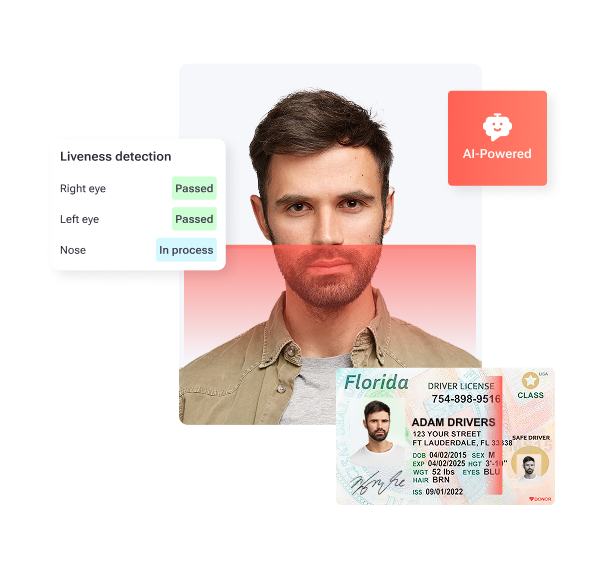
IDVerify+ is configurable per community and per property portfolio, so it adapts to each association’s risk profile instead of forcing a single standard. It also strengthens permissible-purpose validation by confirming identity before screening authorization, which reinforces FCRA-aligned workflows and audit defensibility. No comparable biometric verification capability exists natively within Buildium, AppFolio, RentSpree, Verify Screening Solutions, or ApplyCheck.
TenantEvaluation vs. Buildium, AppFolio, RentSpree, Verify Screening Solutions, and ApplyCheck
| Feature | TenantEvaluation | Buildium / AppFolio | RentSpree | Verify Screening Solutions / ApplyCheck |
|---|---|---|---|---|
| Application Processing Time | 5–10 minutes (automated, end-to-end) | Multiple days (manual coordination required) | Multiple days (manual coordination required) | Multiple days (background check focus only) |
| Board Dashboard Access | Dedicated board voting and review panel with real-time visibility | Not available | Not available | Not available |
| Biometric Identity Verification | Native IDVerify+ with liveness detection, facial matching, and government ID validation | Not available | Not available | Not available |
| Revenue Model | Applicant-paid fees with revenue sharing back to the association, no upfront subscription | Monthly subscription fees | Per-report fees, no revenue sharing | Per-report fees, no revenue sharing |
| Florida Chapter 718 Compliance Depth | Purpose-built for Florida condo and HOA workflows, FCRA-first design, direct credit bureau reseller | Generic property management, limited Florida-specific customization | Generic rental screening, no HOA-specific workflows | Background check platforms (TazWorks-based), no Florida association customization |
Decision Framework for Florida Condo Boards
Florida condo boards evaluating screening platforms in 2026 face four recurring decision points. For Chapter 718 rule alignment, the platform must support the board’s statutory authority to approve or deny applicants, maintain required records, and follow defined notice procedures. TenantEvaluation configures each community’s governing documents and screening criteria directly into the platform.
For 2026 regulatory readiness, associations need audit trails, data security, and adverse action workflows that meet both state and federal standards. TenantEvaluation’s FCRA-first design and PCI Level 1 compliance address these requirements. For board approval timelines, the QuickApprove accelerated approval workflow replaces email-based routing with a real-time board voting dashboard, cutting approval time significantly, as noted earlier.
For revenue-sharing options, TenantEvaluation’s applicant-paid fee model with revenue sharing back to the association converts a cost center into a compliant income stream. Subscription-based competitors cannot match this structure. Boards should also examine how platforms handle age-restricted communities. TenantEvaluation’s 55+ Communities Verification standardizes application handling for age-restricted requirements, reduces manual work, supports documentation consistency, and improves operational efficiency across Florida condos and HOAs that manage 55+ communities.

Frequently Asked Questions
What does Chapter 718 require from Florida condo associations during the tenant screening process?
Chapter 718 of the Florida Statutes establishes the legal framework for condominium governance, including board authority over tenant approvals, required notice periods, and recordkeeping obligations. Associations must follow their governing documents when approving or denying applicants and maintain consistent records of decisions. TenantEvaluation is configured to each community’s specific governing documents and screening criteria, which creates a structured workflow that supports these operational requirements and produces audit-ready records for every application.
How does FCRA compliance apply to Florida condo associations using screening software?
The Fair Credit Reporting Act applies whenever a community association uses consumer reports, including credit, criminal, and eviction records, in screening decisions. Associations must establish permissible purpose, provide required disclosures to applicants, and issue adverse action notices when a denial is based on report data. TenantEvaluation is a direct reseller of TransUnion and Equifax data, accessed under strict bureau rules, with automated adverse action workflows and built-in audit trails that help keep associations protected from liability exposure.
How long does board approval typically take, and how can it be accelerated?
In communities that use manual processes such as email routing, spreadsheets, and physical document review, board approval can take five to ten days or longer. TenantEvaluation’s QuickApprove accelerated approval workflow shortens this timeline by giving board members a dedicated review and voting dashboard with real-time application visibility, AI-generated applicant summaries, and a structured voting process. Clients report approval time reductions of up to 70% after implementing the platform.
Can tenant screening software generate revenue for a Florida condo association?
TenantEvaluation can generate revenue for Florida condo associations. The platform operates on an applicant-paid fee model with revenue sharing back to the association or management company. TenantEvaluation deducts its service fee from the collected application fee and rebates the remainder to the community, which converts what is typically an operational cost into a compliant income stream. TenantEvaluation has already generated $150 million for communities through this model. Subscription-based competitors like Buildium and AppFolio do not offer this structure.
What is biometric identity verification, and why does it matter for condo associations?
Biometric identity verification confirms that an applicant is physically present and matches their submitted identification documents by using AI-powered liveness detection, facial landmark recognition, and government ID validation. For condo associations, this matters because traditional document-based screening cannot reliably detect synthetic identities, impersonation attempts, or stolen credentials. TenantEvaluation’s IDVerify+ embeds this verification natively into the application workflow, which provides a multi-layer fraud prevention system that strengthens approval confidence and reduces board liability before residents enter the community.
Conclusion: Why Florida Condos Choose TenantEvaluation
Florida condo associations in 2026 need a screening platform that covers the full complexity of their operating environment. That environment includes Chapter 718 governance requirements, FCRA compliance obligations, board approval workflows, identity fraud exposure, fragmented lease records, and the administrative burden on CAMs who manage multiple communities. Generic platforms address fragments of this problem. TenantEvaluation addresses the complete picture.
With QuickApprove accelerating board decisions, IDVerify+ preventing identity fraud, centralized Lease Tracking connecting onboarding to occupancy, and a revenue-sharing model that generates income instead of adding subscription costs, TenantEvaluation combines speed, compliance, board control, fraud prevention, and revenue generation for Florida condo associations. Trusted by leading management companies including FirstService Residential, Campbell Property Management, and Associa, TenantEvaluation stands out as a leading tenant screening platform for Florida condo associations in 2026.
Schedule a demo today and see why Florida’s leading condo associations choose TenantEvaluation.
