Written by: Luis Teran, Co-founder, CEO, TenantEvaluation
Key Takeaways for Florida CAMs Handling One-Time Fees
- Generic accounting platforms push Florida CAMs into manual workarounds and spreadsheets that increase reconciliation risk and create documentation gaps for one-time HOA fees.
- Purpose-built HOA application fee tracking software connects fee collection directly to the resident onboarding workflow and routes funds straight to the association’s account.
- TEpayments by Zinc offers configurable collection stages, real-time board visibility, and a revenue-sharing model with no upfront fees, unlike subscription-based alternatives.
- Florida-specific requirements, including estoppel certificate disclosures and 55+ community documentation, require audit-ready records that fragmented manual processes rarely deliver.
- Streamline HOA fee collection and eliminate payment chasing with TenantEvaluation’s integrated workflow at TenantEvaluation.
The Daily Pain of Chasing One-Time HOA Fees
One-time fees such as application, transfer, and review fees behave differently from recurring dues. HOA Buddy’s dues collection guide explains that even automated billing platforms built for recurring dues need separate configuration for one-time charges, including charge generation, multi-channel reminders, and ledger tracking. When that configuration is missing, managers fall back on email and phone follow-up.
This fallback creates a fragmented process. Payment confirmations land in personal inboxes, amounts are logged in spreadsheets disconnected from the onboarding file, and boards lose real-time visibility into what has been collected. Florida associations must maintain itemized accounting records, payment histories tied to each unit, and supporting documentation for charges. If documentation cannot be produced, a fee may face legal challenge under Chapter 718. Manual tracking makes that documentation gap more likely.
Florida’s estoppel certificate requirements intensify the risk. Under Florida law, estoppel certificates must disclose whether certain fees are due. Associations that rely on spreadsheets struggle to produce this disclosure accurately and on time.
What Application-Fee Tracking Software Delivers for Florida Communities
Application-fee tracking software forms a distinct category from full HOA accounting ledgers or recurring dues platforms. It focuses on one-time resident onboarding fees collected once per application cycle and connects payment collection to the application workflow instead of a separate billing module.
TEpayments by Zinc operates as a connected payment workflow integrated directly into the TenantEvaluation platform. Associations and property management companies collect application fees, deposits, and other required resident payments inside the onboarding process they already use. Payments go directly from the applicant to the association’s designated account. TenantEvaluation organizes the workflow but never holds the funds. Each association defines what is collected and at which stage, and the capability adapts to the property’s process instead of forcing a universal sequence.
This capability is not a standalone payment processor, accounting software, or generic online payment tool. It functions as a configurable part of resident onboarding, creating one workflow and removing the need to chase payments.
TenantEvaluation has processed 100,000+ applications annually across 5,000+ communities, generating $150M for those communities through this connected payment workflow.
Top HOA Application-Fee Options Compared
The table below compares TEpayments by Zinc against commonly evaluated alternatives on metrics that matter most to Florida CAMs collecting one-time application fees.
| Feature | TEpayments by Zinc (TenantEvaluation) | PayHOA | ManageCasa | Generic Accounting Tools (e.g., QuickBooks) |
|---|---|---|---|---|
| Direct-to-association payment flow | Yes, funds route directly to the association’s designated account, and TenantEvaluation never holds funds | Platform-intermediated, funds flow through PayHOA’s payment processing layer | Platform-intermediated, ManageCasa processes payments before disbursement | No native HOA payment routing, requires manual bank transfer setup |
| No-funds-held mechanics | Yes, explicitly designed so TenantEvaluation never holds funds | Not confirmed, payment processing involves a platform custody period | Not confirmed, disbursement timelines apply | Not applicable, QuickBooks records transactions but does not process payments natively |
| Configurable collection stages per association | Yes, each association defines what is collected and at which onboarding stage | Limited to platform-defined billing cycles, primarily built for recurring dues | Configurable for recurring dues, one-time fee staging requires workarounds | Manual invoice creation required per transaction, no onboarding stage logic |
| Revenue sharing model | Yes, pay-per-application revenue sharing, no upfront fees, service fee deducted from collected application fee | Monthly subscription pricing, no revenue sharing | Monthly subscription pricing, no revenue sharing | Per-user or per-company subscription, no revenue sharing |
TEpayments by Zinc is built specifically for Florida community associations and includes board visibility dashboards, 55+ community support, and FCRA-compliant onboarding. PayHOA and ManageCasa operate as general-purpose tools that are not designed for Florida-specific requirements, and QuickBooks provides no HOA or CAM-specific workflow.
How TEpayments Fits Into the Resident Onboarding Journey
The resident journey with TEpayments by Zinc follows the same onboarding workflow CAMs already use inside TenantEvaluation.

- Application begins: The applicant receives the property code from the association and starts the TenantEvaluation application online or via mobile.
- Fee collection at the configured stage: Required application fees and deposits appear inside the application at the stage the association has defined. The applicant pays directly within the workflow.
- Funds route to the association: Payment goes directly from the applicant to the association’s designated account, maintaining the no-funds-held model described earlier.
- Visibility for managers and boards: Payment status is visible inside the platform in real time, which removes the need for email confirmation or spreadsheet updates.
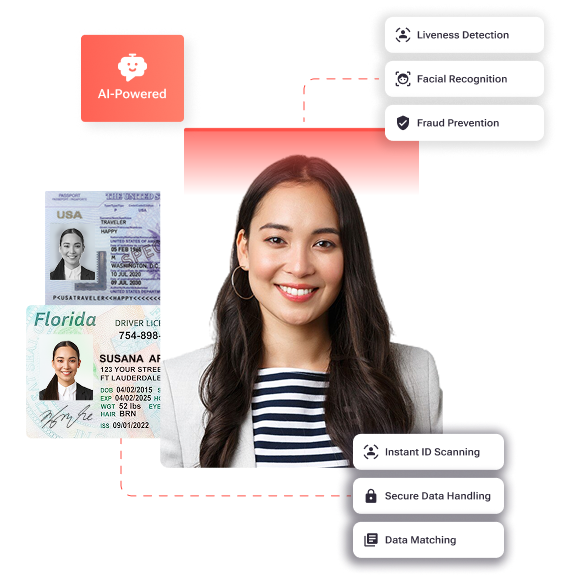
- Onboarding continues: Identity verification via IDVerify, document collection, background screening, and board review through QuickApprove proceed within the same connected workflow.
This structure creates a single workflow for fee and deposit collection inside resident onboarding. Boards receive traceable records, managers avoid manual reconciliation, and applicants see clear guidance on what to pay, when to pay, and where to pay.
Florida-Specific Requirements for 55+ Communities
Age-restricted communities in Florida face additional documentation requirements that affect the application and fee collection process. 55+ Communities Verification is a built-in capability within TenantEvaluation that helps Florida condos and HOAs standardize how age-restricted requirements are handled across applications. This standardization reduces manual work and improves documentation consistency.

Florida law requires HOA records to be maintained and made available to homeowners for inspection upon request. For 55+ communities, this record-keeping obligation includes age-verification documentation collected during onboarding. Fragmented manual processes such as PDFs, email threads, and follow-up calls make meeting this standard operationally difficult.
TenantEvaluation’s 55+ Communities Verification supports documentation consistency and improves operational efficiency for CAMs and boards managing age-restricted communities. It does not replace legal guidance or guarantee compliance with HOPA or any other statute.
Under Florida Statute §718.112, condo associations may charge transfer-related fees only when the governing documents authorize the fee and the association has approval authority over the transaction. CAMs should confirm fee authorization in governing documents before configuring any fee collection workflow, regardless of the platform used.
Pricing Models: Revenue Sharing Compared to Monthly Subscriptions
Generic HOA accounting platforms and broader property management tools typically charge monthly subscriptions regardless of application volume. For associations with seasonal or variable application activity, a fixed monthly cost creates overhead during low-volume periods.
TEpayments by Zinc uses a pay-per-application revenue sharing model. TenantEvaluation deducts its service fee from the collected application fee, and the remainder goes to the association or management company. There are no upfront fees. This model aligns TenantEvaluation’s incentives with the association’s onboarding activity and turns application processing into a revenue-generating function rather than a cost center.
For management companies overseeing multiple associations, this structure also removes the need to negotiate separate subscription tiers as portfolio size changes.
Implementation Steps for CAMs Evaluating Fee Software
Before selecting HOA application fee collection software, evaluate each option against a sequence of criteria that build on one another.
Start with the legal foundation. Confirm that fee authorization exists in the association’s governing documents before configuring any collection workflow. Without this authorization, no platform can legally collect the fees.
Next, review payment mechanics. Confirm that payment routing goes directly to the association’s designated account without a platform custody period. Direct routing protects the association from disbursement delays and keeps funds immediately available.
Then examine workflow integration. Verify that the platform supports configurable collection stages so fees can be collected at the correct point in the onboarding workflow. This configuration prevents applicants from being asked to pay before they complete prerequisite steps.
After that, align pricing with operations. Evaluate whether the pricing model, subscription or revenue sharing, fits the association’s application volume and budget structure.
Finally, confirm visibility and records. Assess whether the platform provides real-time payment visibility for both managers and board members, produces audit-ready payment records that support estoppel certificate disclosures under Florida statute, and integrates with existing onboarding, screening, and approval processes without requiring a separate login and reconciliation step.
Frequently Asked Questions
What does HOA application fee tracking software cost?
Pricing varies by model. Subscription-based platforms charge a fixed monthly fee regardless of application volume, which can range from under $100 to several hundred dollars per month depending on portfolio size and features. Revenue sharing models, like the one used by TEpayments by Zinc, deduct a service fee from each collected application fee and return the remainder to the association, with no upfront cost. For associations with variable application volume, a revenue sharing model can reduce overhead during slower periods.
Can QuickBooks handle HOA application fee collection?
QuickBooks is a general accounting platform designed for business bookkeeping. It can record application fee transactions after the fact, but it does not provide a native workflow for collecting fees inside a resident application, routing payments directly to an association account, or connecting payment status to an onboarding file. CAMs using QuickBooks for application fee tracking typically rely on manual invoice creation, separate payment links, and spreadsheet reconciliation. Purpose-built HOA application fee tracking software removes this friction.
Are there free HOA application fee tracking tools?
Fully free tools with direct-to-association payment routing, configurable collection stages, and real-time board visibility are not widely available. Some platforms offer free tiers with limited features, but these usually lack the onboarding integration and audit-ready record-keeping that Florida associations need. Revenue sharing models offer a practical alternative to upfront costs because the platform is funded by a portion of the application fee instead of a separate subscription charge.
What are the most common complaints about generic HOA payment platforms on forums like Reddit?
Common complaints include funds being held by the platform before disbursement to the association, limited visibility into payment status for board members, and an inability to configure collection stages for one-time fees separately from recurring dues. Users also report reconciliation errors when payment data lives in a system disconnected from the application file. Florida CAMs describe difficulty producing payment documentation quickly enough to meet estoppel certificate deadlines when records are stored across multiple systems.
How does condo application fee tracking differ from HOA application fee tracking?
The operational workflow remains similar. Both require collection of a one-time fee during the application process, routing that fee to the association’s account, and maintaining a traceable record. The regulatory context differs. Florida condominium associations are governed primarily by Chapter 718 of the Florida Statutes, while HOAs fall under Chapter 720. Fee authorization requirements, record-keeping obligations, and estoppel certificate disclosures have statute-specific details under each chapter. Software used for condo application fee tracking should support documentation practices consistent with Chapter 718 requirements, and CAMs should confirm fee authorization in the condominium’s declaration before configuring any collection workflow.
Conclusion: Turning One-Time Fees Into a Structured Workflow
Generic HOA accounting platforms treat one-time application fees as an afterthought. CAMs end up with manual workarounds, spreadsheet reconciliation, and email-based payment chasing that create documentation gaps and board visibility problems. Purpose-built HOA application fee tracking software connects fee collection to the resident onboarding workflow, routes funds directly to the association’s account, and produces the audit-ready records Florida associations need.
TEpayments by Zinc delivers the integrated approach described throughout this article. It is configurable per association, routes payments directly to the association account, and uses a revenue sharing model with no upfront fees. The platform’s track record, more than 100,000 applications annually across 5,000+ communities, shows that this approach scales for real portfolios.
See TEpayments by Zinc in action inside the TenantEvaluation platform.
