Written by: Luis Teran, Co-founder, CEO, TenantEvaluation
Key Takeaways
- Florida master associations can grow multi-community HOA fee revenue by layering regular assessments, special assessments, amenity and telecom leases, and application fee revenue sharing across sub-associations without raising dues.
- Application fee revenue sharing is the only non-dues stream that scales automatically with resident turnover, generating recurring income with zero additional overhead once configured.
- TEpayments by Zinc integrates directly into TenantEvaluation to collect application fees during onboarding and rebates a share to the association while maintaining FCRA-compliant audit trails.
- Integrated workflows eliminate manual payment tracking, reduce vacancy-related assessment losses, and provide real-time board visibility across multi-community portfolios.
- Master associations can activate these revenue streams today by configuring TEpayments by Zinc inside TenantEvaluation, start here.
The Revenue Pressure Facing Florida Master Associations
Florida CAMs and HOA boards managing multi-community portfolios face a persistent tension as operating costs rise each year while boards resist raising monthly assessments. Assessment fatigue is real, and in competitive markets across Miami, Tampa, and Orlando, communities that raise dues risk losing prospective residents to neighboring developments. Flat or declining net revenue then collides with growing maintenance, insurance, and administrative obligations.
Boards can relieve this pressure by layering revenue streams that already exist within the legal framework governing Florida associations instead of relying on a single large dues increase.
What Multi Community HOA Fee Revenue Includes in Practice
Multi community HOA fee revenue refers to the total income a master association and its sub-associations collect across all revenue categories, not just monthly dues. Common non-dues revenue streams include amenity rentals, storage and parking fees, investment income, late fees, vendor partnerships, cell tower leases, and application fees.
Master association fee revenue is the subset of that total collected at the master level and allocated across sub-associations according to governing documents. Under Fla. Stat. §720.303(1), an association may operate more than one community, which provides the statutory foundation for master association structures in Florida.
How Tiered Assessments Work Across Sub-Associations
Florida master associations typically operate on a two- or three-tier assessment structure. The master association collects a community-wide fee covering shared infrastructure, main thoroughfare landscaping, and regional amenities. Sub-associations collect a separate fee for neighborhood-specific services such as private pools, gated access, and interior maintenance. A third layer may apply to premium amenity access such as clubhouses or golf facilities.
Under Fla. Stat. §720.308, assessment authority for regular assessments, special assessments, and individual charges must be grounded in the governing documents. For communities created after October 1, 1995, governing documents must describe how expenses are shared and specify each member’s proportional share, which may differ among classes of parcels based on services received or other relevant factors.
Condominium associations are governed by Chapter 718, and cooperative associations by Chapter 719, each with parallel but distinct assessment authority provisions. Boards operating across all three entity types within a single master plan must confirm that each sub-association’s governing documents authorize the specific fee being levied.
Using Special Assessments to Support Master Association Revenue
Special assessments provide a targeted way to fund major expenses that exceed reserve fund capacity without permanently raising regular assessments. Special assessments are a one-time charge levied when a major expense exceeds reserve fund capacity. Special assessments can range from a few hundred dollars per unit to several thousand, subject to governing documents and state law requirements.
Fla. Stat. §720.303(2) requires written notice to all members describing the nature of a special assessment at least 14 days before the meeting at which it will be considered. For condominium associations, Section 718.116(10) of the Florida Condominium Act requires that funds collected from a special assessment may only be used for the specific stated purpose, and any excess must be returned to unit owners or credited against future assessments.
Boards should also note that Fla. Stat. §720.315 prohibits a developer-controlled board from levying a special assessment without majority approval from non-developer parcel owners before turnover.
Non-Dues Income From Amenities and Telecom Leasing
Amenity rentals such as clubhouses, event spaces, pool areas, and meeting rooms generate recurring non-dues income. Florida HOAs can also generate revenue through ticketed events, vendor sponsorships with local businesses, and private event rentals of community facilities.
Cell tower leasing offers a higher-yield option for associations with suitable rooftop or common-area space. Associations in high-coverage-demand areas can negotiate multi-year cell tower lease agreements as a commercial arrangement. Tax treatment matters for these agreements. Under IRC Section 528, cell tower leases and billboard leases are treated as non-member income taxable at a flat 30 percent rate on Form 1120-H. Boards should consult tax counsel before executing any commercial lease.
Application Fee Revenue Sharing as the Fastest Scaling Stream
Application fee revenue sharing is the only non-dues income stream that scales automatically with resident turnover, with no new amenities, no capital investment, and no board vote to raise dues. Every time a unit turns over and a new resident applies, the association earns a share of the application fee collected during onboarding.
The table below models three communities of different sizes to show how layered revenue compounds across a master association portfolio. All figures are illustrative estimates for planning purposes.
| Revenue Stream | Community A (150 units, 18% annual turnover) | Community B (300 units, 15% turnover) | Community C (500 units, 12% turnover) |
|---|---|---|---|
| Regular Assessments (est. $250/unit/mo) | $450,000/yr | $900,000/yr | $1,500,000/yr |
| Special Assessments (est. $500/unit, levied every 3 yrs) | $25,000/yr avg | $50,000/yr avg | $83,333/yr avg |
| Amenity & Telecom Leases (est.) | $8,000/yr | $14,000/yr | $22,000/yr |
| Application Fee Revenue Sharing (est. $50 rebate/application) | $1,350/yr (27 apps) | $2,250/yr (45 apps) | $3,000/yr (60 apps) |
| Estimated Total Non-Dues Income | $34,350/yr | $66,250/yr | $108,333/yr |
Application fee revenue sharing is the lowest-effort stream to activate and the only one that grows proportionally as portfolio turnover increases. Across all three communities combined, the master association captures over $6,600 annually in application fee revenue sharing alone, with zero additional overhead once the workflow is configured.
How TEpayments by Zinc Turns Screening Into Recurring Income
TEpayments by Zinc is a connected payment workflow integrated directly into the TenantEvaluation platform. It allows associations and property management companies to collect application fees, deposits, and other required resident payments within the onboarding process they already use. Payments go directly from the applicant to the association’s designated account, and TenantEvaluation organizes the workflow without ever holding the funds.

The revenue-sharing model works in a simple sequence. TenantEvaluation deducts its service fee from the collected application fee. The remainder is rebated directly to the association’s account. There is no upfront cost to the association, and the model scales with transaction volume rather than charging a fixed monthly subscription.
Every payment transaction generates an FCRA-compliant audit trail. TenantEvaluation is built specifically for community associations with FCRA compliance as the foundation, not an afterthought. The platform maintains built-in audit trails for every application, supports documentation consistency, and strengthens internal controls. This supports, but does not guarantee, compliance with applicable regulations. Boards and CAMs retain full decision-making authority, and TenantEvaluation provides data and workflow infrastructure.
Manual Tracking Compared to an Integrated Workflow
The operational cost of manual payment tracking often stays invisible until it becomes a liability. The table below contrasts manual processes with an integrated workflow using TEpayments by Zinc.
| Dimension | Manual Tracking | Integrated Workflow (TEpayments by Zinc) | Estimated Impact |
|---|---|---|---|
| Payment confirmation method | Email and phone follow-up | Automated within onboarding workflow | Eliminates manual follow-up per application |
| Fee tracking location | Spreadsheets or disconnected systems | Centralized inside TenantEvaluation | Single source of truth for all fee records |
| Board payment visibility | Limited, requires manual reporting | Real-time dashboard with traceable records | Reduces audit preparation time |
| Fund flow | Variable, depends on staff process | Direct from applicant to association account | No funds held by platform, reduces embezzlement risk |
TenantEvaluation has processed 100,000+ applications annually across 5,000+ communities and has generated $150M for communities, which shows the scale at which integrated payment workflows outperform manual alternatives.
QuickApprove Protects Assessment Income by Reducing Vacancy Days
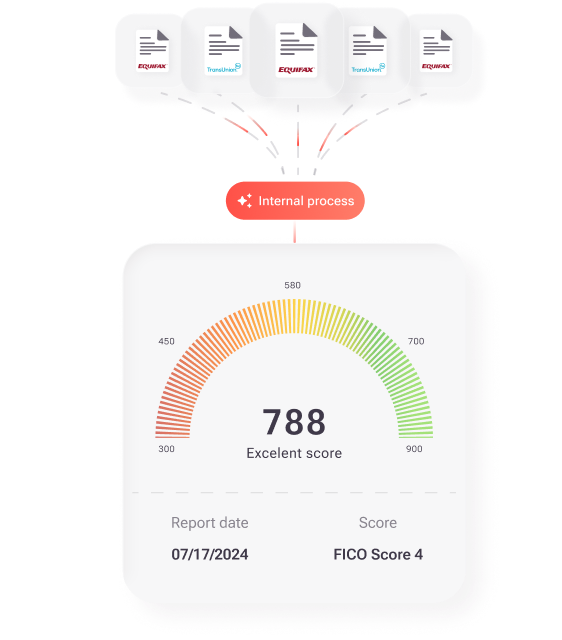
Vacancy days represent lost assessment income for every community. Every week a unit sits empty between residents creates a gap in regular assessment revenue that no amenity lease or application fee can fully offset. QuickApprove is TenantEvaluation’s accelerated approval workflow built for CAMs, boards, and property management teams inside one connected platform.
QuickApprove delivers real-time application tracking, a board-ready approval process with a dedicated voting dashboard, automated communication support, customized approval letters, and a personalized welcome package. It reduces manual follow-ups and is designed for high-volume seasons and communities with complex onboarding requirements, while preserving control, compliance, and visibility. TenantEvaluation clients have reported approval time savings of up to 70 percent, which directly reduces the vacancy window that erodes assessment income.
Addressing Board Concerns About Transparency and Embezzlement
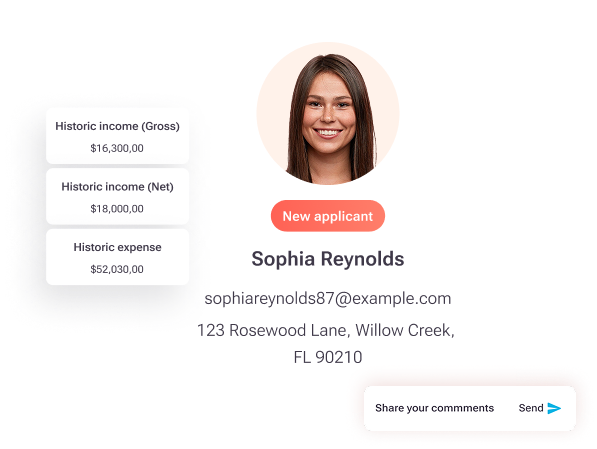
Board members managing multi-community portfolios frequently cite payment transparency and embezzlement risk as top concerns. TEpayments by Zinc addresses both directly through the direct-to-association payment flow described earlier. Every transaction generates an automated receipt and a timestamped record inside the platform.
Board members access a real-time dashboard showing payment status, application progress, and approval history. This visibility replaces the email chains and spreadsheet reconciliations that create audit gaps. The result is traceable records, operational clarity, and confidence around where funds go, without requiring additional staff or external auditing tools.
Practical Checklist to Launch Application Fee Revenue Sharing
The following steps outline how a Florida master association can activate application fee revenue sharing through TenantEvaluation.
- Audit current fee structures across all sub-associations to identify existing application fees, their amounts, and how they are currently collected and tracked. This baseline shows what you collect today and highlights gaps the new workflow can close.
- Map annual turnover volume by community to estimate the number of applications per year and calculate potential application fee revenue sharing at current turnover rates. These projections, grounded in the fee data from step 1, quantify the revenue opportunity and prepare you for governance review.
- Review governing documents for each sub-association to confirm that application fee collection authority is established and that any revenue-sharing arrangement is permissible under the declaration and applicable Florida statutes. This legal check confirms that the revenue projections from step 2 can be implemented.
- Schedule a compliance review with association counsel to confirm disclosure requirements under Florida fair housing statutes including Fla. Stat. §760.23 and any applicable HUD guidance on application fee transparency. This step aligns your fee practices with fair housing and disclosure rules.
- Configure TEpayments by Zinc within TenantEvaluation, defining what is collected at each stage of the onboarding process for each community in the portfolio. This configuration turns your policy decisions into a consistent, automated workflow.
- Brief the board on the real-time dashboard, automated receipts, and audit trail capabilities so members understand how payment visibility is maintained. This briefing builds trust and prepares board members to answer owner questions.
- Monitor application volume and revenue share monthly using TenantEvaluation’s reporting tools, and adjust fee structures as turnover patterns shift. This ongoing review keeps the revenue stream aligned with market conditions and community needs.
Schedule a demo today and walk through this checklist with a TenantEvaluation specialist.
Frequently Asked Questions
What is application fee revenue sharing and how does it work for Florida HOAs?
Application fee revenue sharing is a model in which a portion of the application fee collected from a prospective resident during the onboarding process is rebated to the association after the platform deducts its service fee. In TenantEvaluation’s model, TEpayments by Zinc collects the fee within the onboarding workflow, the platform deducts its service fee, and the remainder goes directly to the association’s designated account. TenantEvaluation never holds the funds. The stream scales automatically with resident turnover, which makes it particularly valuable for master associations managing high-turnover sub-communities.
How long does it take to change application fee structures across a multi-community portfolio?
Timeline depends on the governing documents of each sub-association and whether board approval is required for fee changes. Regular assessment changes typically require a budget adoption process with member notice under Fla. Stat. §720.303. Application fee changes that fall within existing board authority can often be implemented more quickly, but associations should confirm the specific requirements in their declaration and bylaws with legal counsel before making changes. Once the governance review is complete, configuring TEpayments by Zinc within TenantEvaluation is a workflow setup process that does not require lengthy technical implementation.
What board approval is required to levy a special assessment in a Florida HOA?
Under Fla. Stat. §720.308, special assessments require written notice to all members at least 14 days before the meeting at which the assessment will be voted on. The notice must describe the purpose and exact amount. For developer-controlled boards, Fla. Stat. §720.315 requires majority approval from non-developer parcel owners before a special assessment can be levied. Condominium associations follow Section 718.116 of the Florida Condominium Act, which also restricts the use of special assessment funds to the stated purpose. Boards should work with association counsel to confirm the specific approval threshold required under their governing documents.
How does TenantEvaluation’s FCRA-compliant audit trail support multi-community operations?
TenantEvaluation maintains built-in audit trails for every application processed through the platform. These records include timestamped payment confirmations, screening report access logs, adverse action workflow documentation, and board voting history through QuickApprove. The platform is a direct reseller of TransUnion and Equifax data, accessed under strict bureau rules with regular compliance reviews. This infrastructure supports documentation consistency and strengthens internal controls across multi-community portfolios, though it does not replace legal guidance or guarantee compliance with any specific regulation.
Is there a difference between HOA and condominium portfolio structures for application fee revenue sharing?
Yes. HOAs are governed primarily by Chapter 720 of the Florida Statutes, while condominium associations fall under Chapter 718 and cooperatives under Chapter 719. Each chapter has distinct provisions governing assessment authority, fee disclosure, and board approval requirements. In a master association that includes both HOA sub-associations and condominium sub-associations, each entity type must be configured according to its own governing statute and declaration. TenantEvaluation is built for Florida-specific regulations and can be configured per community within a portfolio, which allows each sub-association to follow its own rules while the master association maintains centralized visibility through a single platform.
Conclusion: Turning Resident Turnover Into Sustainable Revenue
Flat dues revenue does not have to define the financial ceiling for Florida master associations. By layering regular assessments, special assessments, amenity and telecom leases, and application fee revenue sharing, multi-community portfolios can build sustainable income streams that grow with turnover rather than relying on perpetual dues increases. The infrastructure to activate these streams, including FCRA-compliant audit trails, connected payment workflows, accelerated approvals, and real-time board visibility, already exists inside TenantEvaluation.
TenantEvaluation has generated $150M for communities across 5,000+ associations, processing 100,000+ applications annually with a 4.8/5 Google rating. It is built specifically for community associations and management companies, with FCRA compliance as the foundation, not an afterthought.
