Written by: Luis Teran, Co-founder, CEO, TenantEvaluation
Key Takeaways for Florida HOA Tenant Screening
- Florida HOAs may screen renters only when their governing documents expressly grant that authority. Without recorded approval rights, boards lack a legal basis to demand screening or charge fees.
- FCRA compliance is mandatory. Associations must obtain written applicant authorization before pulling credit or background reports and must issue proper adverse-action notices when decisions rely on consumer reports.
- Fair-housing compliance requires written qualification standards published in advance and applied uniformly to every applicant to reduce disparate-impact risk.
- Key 2026 statutory limits include a $100 cap on condominium screening fees, a 7-day processing requirement for servicemember applications, and state preemption of most local tenant-protection ordinances.
- TenantEvaluation centralizes FCRA-compliant screening, biometric identity verification, adverse-action automation, and lease tracking in one platform built for Florida community associations. Request a TenantEvaluation demo to see the workflow in action.
Why Florida HOAs Need a Structured Screening Workflow
Florida’s community association landscape is one of the most legally layered in the United States. CAMs, LCAMs, and HOA board members manage overlapping obligations from federal statute, state statute, and their own governing documents at the same time. Manual screening processes create administrative burden, FCRA exposure, fair-housing liability, and fragmented lease and payment visibility. A defensible, scalable workflow requires all three legal prerequisites to operate in concert, not in isolation.
See how TenantEvaluation connects all three legal layers in one platform built exclusively for Florida community associations.
Core Legal Layers Governing Florida HOA Screening
To navigate this landscape effectively, Florida HOAs must understand the three legal layers that govern tenant screening in 2026.
- Governing document authority. A genuine tenant-approval right in a Florida HOA exists only where the recorded declaration or bylaws expressly grant it. If the documents are silent, a board that demands to approve tenants and charges for the review lacks authority.
- FCRA compliance. Under 15 U.S.C. § 1681b, Florida HOAs must obtain written authorization from an applicant before running credit or background reports. The background check qualifies as a formal consumer report under 15 U.S.C. § 1681a(d) when a consumer reporting agency compiles it for use in a rental housing decision.
- Fair housing consistency. Florida landlords and community associations must put written qualification standards in place before advertising a unit and apply those standards uniformly to every applicant.
TenantEvaluation is built specifically for community associations and management companies, with FCRA compliance as the foundation, not an afterthought. As a direct reseller of TransUnion and Equifax data, the platform enforces strict permissible-purpose controls and maintains built-in audit trails for every application.
Key 2026 Statutes Affecting Florida HOA Screening
As of mid-2026, Florida law does not require landlords or HOAs to accept portable or reusable tenant screening reports. Certain proposed legislation addressing application fees and portable screening reports did not become law.
Key 2026 statutory reference points include:
- Fla. Stat. § 718.112 caps condominium transfer and approval fees, including screening, at $100 per applicant, with spouses or a parent and dependent child treated as one applicant. Section 720.306 imposes no statutory cap on such fees for homeowners associations.
- Fla. Stat. § 83.683 requires a landlord to process a servicemember rental application and notify the applicant in writing of approval or denial, with reasons if denied, within 7 days. Absent a timely denial, the landlord must lease the unit if all other application and lease terms are met.
- Under Chapter 83, local municipalities are largely prohibited from passing tenant-protection ordinances that exceed state law, which reinforces state preemption for screening rules statewide.
- In late 2025, HUD rescinded specific guidance documents on criminal records in tenant screening, though the Fair Housing Act’s Disparate Impact standard remains fully enforceable.
How a Florida HOA Screening Policy Works Day to Day
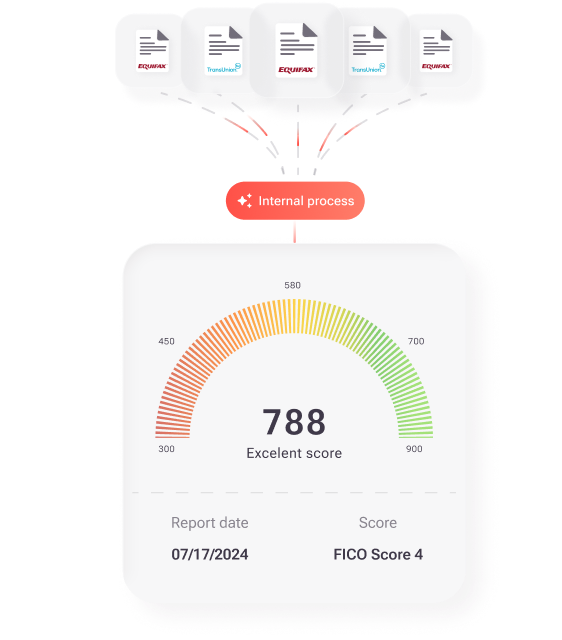
A practical Florida HOA screening policy can include:
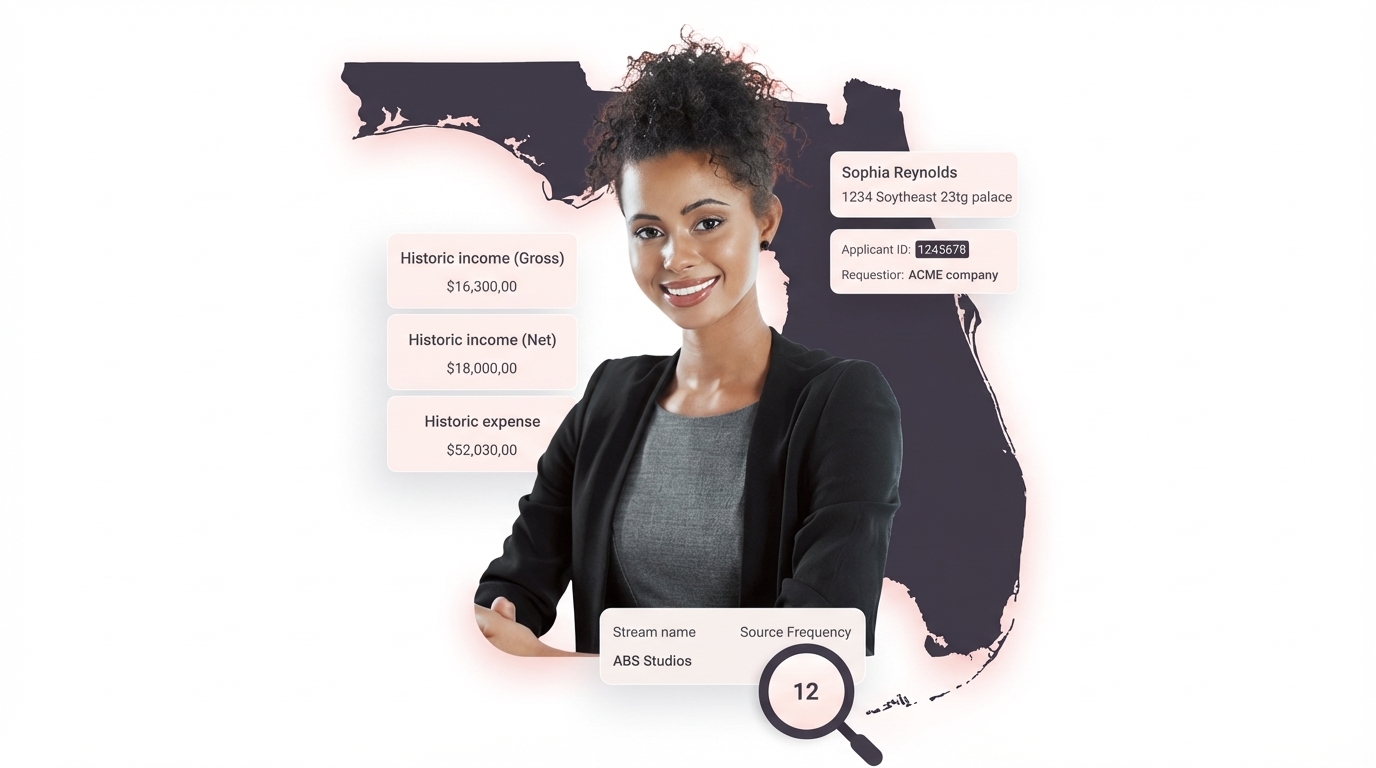
- Gross monthly income at least three times the rent
- Minimum credit score of 600–650
- Employment verification via pay stubs or tax returns
- Rental history and eviction record review
- Individualized criminal background assessment weighing offense nature, recency, and rehabilitation
TenantEvaluation’s QuickApprove accelerates resident approvals inside one connected platform. CAMs, boards, and property management teams gain real-time application tracking, automated communication support, and a board-ready approval process without losing control, compliance, or visibility.

Florida HOA Authority and Eviction Limits
Florida HOAs generally do not hold a direct landlord-tenant relationship with renters, which limits their direct eviction authority. Eviction typically remains the owner’s legal responsibility. However, Florida law allows HOAs to adopt rules that limit or regulate rentals within a community, provided those restrictions appear in the association’s governing documents. Where governing documents grant the association authority to enforce lease compliance, the association may pursue remedies against the owner, including fines, suspension of use rights, or referral to legal counsel, when a tenant violates community rules.
Associations should consult qualified Florida legal counsel before taking any action that could be construed as eviction-adjacent. The legal pathway runs through the owner, not the tenant directly.
High-Risk Areas in Florida HOA Screening Programs
Three specific risk areas require structured controls in every Florida HOA screening program.
Adverse-action notices. Florida HOAs must provide an adverse-action notice when denying an application, requiring a higher deposit, requesting a co-signer, or imposing less favorable lease terms based in whole or in part on information in a consumer report. The notice must include the consumer reporting agency’s name and contact information, a statement that the agency did not make the decision, and notice of the applicant’s rights to dispute the report and obtain a free copy within 60 days. This requirement builds on the FCRA framework introduced earlier and applies to both HOA-ordered and applicant-supplied reports.
Reusable screening reports. Even when a Florida HOA accepts a portable tenant screening report provided by the applicant, FCRA adverse action notice requirements under 15 U.S.C. § 1681m still apply if the association denies the application based on information in that report.
Sealed and expunged records. Common FCRA violations in tenant screening include reporting the wrong person’s eviction due to mixed files, using sloppy matching procedures that fail to assure maximum possible accuracy, and re-reporting an error already corrected. Associations relying on consumer reporting agencies must confirm those agencies apply proper record-suppression protocols.
TenantEvaluation’s automated adverse-action workflows and built-in audit trails address each of these risk areas directly. IDVerify strengthens permissible-purpose validation by confirming applicant identity through biometric facial matching and AI-powered liveness detection before screening authorization proceeds.

Renter Rights Inside Florida HOAs
Florida housing providers must comply with the seven protected classes under both the federal Fair Housing Act and the mirroring Florida Fair Housing Act (Chapter 760): race, color, religion, sex, national origin, disability, and familial status.
Renters in Florida HOAs also hold the following rights under federal law:
- The right to written notice before any consumer report is pulled on them
- The right to receive an adverse-action notice naming the CRA if a denial is based on a screening report
- The right to dispute inaccurate or incomplete information in a consumer report directly with the CRA under FCRA § 611, which requires the CRA to investigate within 30 days
- The right to a free copy of the report within 60 days of an adverse action
Common Screening Mistakes Florida HOAs Make
The most frequent failure points in Florida HOA tenant screening are structural, not incidental.
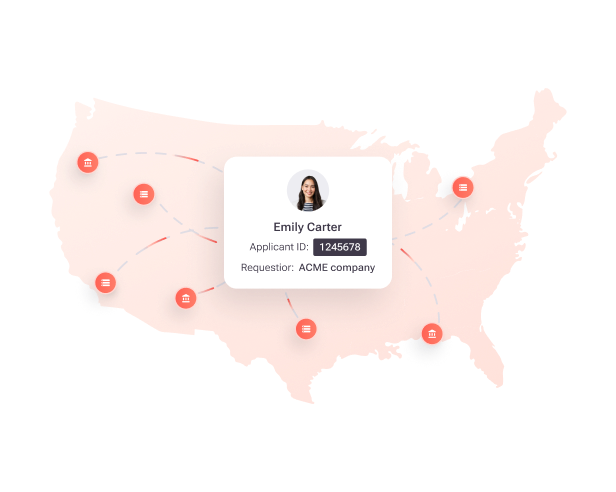
- No governing document authority. Boards that demand approval without express recorded authority expose the association to legal challenge.
- Inconsistent criteria application. A single bad tenant placement on a $1,900 Florida rental can cost $6,000 to $8,000 in unpaid rent, court costs, turnover repairs, and re-leasing time, yet inconsistent criteria application creates fair-housing liability that can exceed that figure many times over.
- Blanket criminal history exclusions. HUD guidance warns that blanket criminal history exclusions in tenant screening can constitute unlawful disparate impact under the Fair Housing Act.
- Missing adverse-action notices. Failing to provide proper notices after an adverse decision is among the most common FCRA violations in tenant screening.
- Fragmented lease and payment records. Disconnected spreadsheets and email chains create audit gaps that compound legal exposure.
TenantEvaluation’s Lease Tracking capability connects resident onboarding, unit data, approvals, and lease documentation in one centralized, real-time, audit-ready workflow. This approach eliminates spreadsheets and scattered email chains from application to occupancy. TEpayments by Zinc collects application fees and deposits during resident onboarding, with payments going directly to the Association’s designated account. TenantEvaluation never holds the funds.
Best Practices and 2026 Technology Standards
A recommended FCRA-compliant workflow for Florida HOAs includes publishing objective rental criteria in advance, collecting written consent, reviewing the consumer report, documenting the decision, and sending adverse-action notices when required. This workflow builds on the earlier step-by-step sequence and turns it into a repeatable policy.
Emerging standards in 2026 also include:
- Biometric identity verification to move communities from document-based review to confirmed physical identity before approval
- Centralized lease lifecycle tracking connected directly to the onboarding workflow
- Configurable payment collection embedded in the application process to eliminate disconnected fee tracking
- Charging only what governing documents authorize, tying any screening fee to a real cost such as staff time or background checks, and applying the fee identically to every rented unit
How to Evaluate Tenant Screening Platforms
Florida CAMs and HOA boards evaluating a tenant screening platform should assess against criteria that progress from legal compliance to operational control and risk mitigation.
- Governing document configurability. Can the platform encode your specific community’s screening criteria, approval thresholds, and document requirements? Without this foundation, the platform cannot enforce your association’s unique authority limits.
- FCRA workflow automation. Does the platform automate written consent collection, adverse-action notice generation, and audit trail creation? These automated workflows protect against the most common compliance failures.
- Credit bureau sourcing. Is the platform a direct reseller of bureau data, or does it rely on third-party aggregators that introduce accuracy risk? Direct bureau relationships reduce mixed-file errors that trigger FCRA liability.
- Board-ready approval process. Does the platform provide boards with a dedicated review and voting dashboard that replaces email chains? Centralized review improves transparency and speeds decisions.
- Identity verification depth. Does the platform confirm physical presence and biometric identity, not just document upload? Strong identity checks reduce fraud and unauthorized occupancy.
- Lease and payment integration. Are lease tracking and fee collection connected to the same onboarding workflow, or are they separate systems? Integrated records create a complete audit trail from application through move-out.
TenantEvaluation satisfies all six criteria for Florida community associations. See how the platform addresses each criterion in a live demo.
FAQ
Can a Florida HOA require tenant screening if the governing documents are silent on the topic?
No. A Florida HOA’s authority to screen or approve tenants must be expressly granted in the recorded declaration or bylaws. If the governing documents do not address tenant approval, the board has no legal basis to demand it or charge a fee for it. Associations seeking to add this authority must amend their governing documents through the process required by Florida law and their own documents, which typically requires a member vote.
What must a Florida HOA include in an adverse-action notice after denying a rental applicant?
When a denial is based in whole or in part on information in a consumer report, the adverse-action notice must identify the consumer reporting agency that supplied the report, provide that agency’s contact information, state that the agency did not make the rental decision, and inform the applicant of the right to obtain a free copy of the report within 60 days and to dispute any inaccuracies. This requirement applies whether the HOA ordered the report itself or relied on a portable report provided by the applicant.
How does TenantEvaluation help Florida HOAs stay FCRA-compliant at scale?
TenantEvaluation is a direct reseller of TransUnion and Equifax data, operating under strict bureau rules with regular compliance reviews. The platform automates written consent collection, enforces permissible-purpose controls, generates adverse-action notices, and maintains built-in audit trails for every application. IDVerify+ adds a biometric identity confirmation layer before screening authorization proceeds, reinforcing FCRA-aligned workflows. QuickApprove gives boards a dedicated review and voting dashboard that replaces email chains, and Lease Tracking connects every lease record to the onboarding workflow in one audit-ready system.
Are Florida HOAs required to accept portable tenant screening reports in 2026?
No. As of mid-2026, Florida law does not require HOAs or landlords to accept portable or reusable tenant screening reports. Proposed legislation that would have mandated acceptance of portable reports, including House Bill 43 and Senate Bill 362, did not become law. Associations may establish their own report requirements within the bounds of their governing documents and applicable statute.
What screening fee limits apply to Florida HOAs and condominium associations in 2026?
Fla. Stat. § 718.112 caps condominium transfer and approval fees, including screening, at $100 per applicant, with spouses or a parent and dependent child typically treated as one applicant, as discussed earlier in this article. Florida Statutes § 720.306 does not impose a statutory cap on HOA screening fees, though fees must still be authorized by governing documents and reasonably related to actual costs. Associations should consult qualified Florida legal counsel to confirm the applicable limits for their specific community type and governing documents.
Conclusion and Next Steps for Florida CAMs and Boards
Florida HOA tenant screening in 2026 operates at the intersection of governing document authority, FCRA obligation, and fair housing consistency. No single element is optional. Associations that lack express governing document authority have no legal basis to screen. Associations that screen without written consent, consistent criteria, or proper adverse-action notices face federal liability. Associations that apply criteria inconsistently face fair housing exposure regardless of intent.
The structural takeaways for Florida CAMs and HOA boards are:
- Confirm governing document authority before implementing any screening program
- Obtain written FCRA consent before pulling any consumer report
- Publish and apply written criteria consistently to every applicant
- Issue adverse-action notices that meet FCRA § 615 requirements whenever a consumer report contributes to a denial or less favorable terms
- Retain complete applicant files for at least two years
- Use a platform that automates consent, adverse action, audit trails, and board approval in one connected workflow
This article provides general educational information and does not constitute legal advice. Florida community associations should consult qualified legal counsel for guidance specific to their governing documents and circumstances.
Request a demo of TenantEvaluation’s FCRA-first platform and see how it handles every step, from written consent and biometric identity verification through board approval, lease tracking, and connected payment collection, inside one system built exclusively for Florida community associations.
