Written by: Luis Teran, Co-founder, CEO, TenantEvaluation
Key Takeaways
- Resident onboarding software for community associations must handle the full lifecycle, from application intake through identity verification, background screening, board approval, lease tracking, and payment collection. Generic rental tools rarely cover this end to end.
- Fragmented workflows across email, spreadsheets, and disconnected tools create delays, errors, and compliance gaps. Purpose-built platforms replace these scattered steps with one connected process.
- FCRA compliance, biometric identity verification, and board-ready dashboards are essential features for modern resident onboarding. Generic HOA platforms rarely include these capabilities by design.
- Key operational challenges include manual bottlenecks, identity fraud risk, fragmented lease records, disconnected payments, and lengthy board approvals. These issues slow community association management and increase risk.
- TenantEvaluation offers a unified FCRA-first platform built for Florida community associations. Schedule a demo today to see how it replaces fragmented tools with one integrated solution.
Florida Community Association Pressures in 2026
Community association management in 2026 operates under compounding pressure. CINC Systems’ 2026 State of the Industry Report, drawn from 418 survey respondents across residents, board members, CAMs, and executives, identifies staffing shortages, manager burnout, and rising resident expectations as the defining pressures reshaping the sector. Many CAM executives report open positions they are struggling to fill, and 53% of community association managers rate their burnout at 7 or higher out of 10.
The gap between associations using consolidated platforms and those on fragmented tools continues to widen. Most larger associations have adopted dedicated software, and those consolidating functions into a single platform operate more efficiently in 2026. Resident expectations reinforce this shift. Homeowners in 2026 expect digital portals for checking balances, viewing documents, and paying dues from mobile devices, and communities still relying on paper notices and email routing face higher call volumes and complaints.
These digital expectations intersect with Florida-specific regulatory changes that add further urgency to platform consolidation. Florida legislation effective in 2024 introduced structural inspection mandates for condominiums following the Surfside collapse, creating new compliance obligations that community association managers must track with dedicated tools. Identity fraud risk has also escalated across condo and HOA communities, with synthetic identities and impersonation attempts increasingly targeting traditional document-based screening workflows, a gap that generic platforms have not addressed.
Digital adoption is one of eight major themes identified in CINC Systems’ 2026 State of the Industry Report as shaping the future of community association management. For CAMs evaluating Florida CAM onboarding tools, the decision now centers on which platform covers the full onboarding lifecycle without introducing new compliance gaps.
Resident Onboarding Workflows in Real Communities
A typical CAM onboarding workflow spans application intake, document collection, identity verification, background screening, board review, approval communication, lease documentation, and payment collection. When these steps run across email, spreadsheets, and disconnected third-party tools, each handoff introduces delay and error.
Fragmented platforms force new residents to log into multiple portals for parking, utilities, and pet registration in their first week, signaling disorganization, while a unified platform with automated task journeys reduces this friction and staff support calls. The same fragmentation affects managers. Missing documents require manual follow-up, board members receive applications through email chains with no structured voting mechanism, and lease records accumulate across folders and inboxes with no centralized status visibility.
Board involvement is a structural requirement in community associations, not an optional step. For governance and board involvement, automation enables virtual review and e-voting so board members can participate remotely, while the system automatically distributes meeting minutes, financial reports, and compliance notices. Platforms that lack a dedicated board review panel push this step back into email, creating the bottlenecks that delay approvals and frustrate applicants.
Purpose-built solutions have emerged to address this structural gap in board review. TenantEvaluation’s QuickApprove accelerated approval workflow illustrates this approach. Before QuickApprove, approval workflows lived across email chains, spreadsheets, and manual follow-ups, with applications stuck waiting for board review and limited visibility for all parties. After QuickApprove, CAMs, boards, and property management teams operate inside one connected platform with real-time application tracking, automated communication support, customized approval letters, a personalized welcome package, and a board-ready voting panel, while maintaining control, compliance, and visibility.

Compliance, Risk, and Governance in Florida Screening
FCRA-compliant resident screening requires more than running a background check. It demands permissible purpose controls, adverse action workflows, data handling standards, and a clear separation between the entity providing data and the entity making decisions. Generic HOA platforms that bolt on screening as a secondary feature rarely satisfy these requirements by design.
TenantEvaluation is built specifically for community associations and management companies, with FCRA compliance as the foundation, not an afterthought. As a direct reseller of TransUnion and Equifax data, TenantEvaluation accesses bureau data under strict bureau rules, with regular compliance reviews and no gray-market or offshore data sources. Automated adverse action workflows, built-in audit trails for every application, and strict permissible purpose controls keep community associations protected from liability exposure.
Document management automation that includes ESIGN/UETA-compliant e-signatures with audit trails and centralized searchable storage with version history supports the compliance documentation requirements that boards and auditors increasingly expect. PCI Level 1 compliance and end-to-end encryption with automatic redaction of sensitive PII further reduce the data breach exposure that manual document handling creates.
Common Onboarding Challenges for CAM Teams
The operational failure points in community association onboarding cluster around five recurring problems.
- Manual bottlenecks: Incomplete applications, missing documents, and manual follow-up with applicants, realtors, and owners consume staff hours that could be redirected to higher-value work. One Florida-based management company switching to TenantEvaluation freed up 50 hours per day for their team and cut processing time by 50%.
- Identity fraud risk: Traditional screening relies on uploaded documents, which cannot reliably detect stolen IDs, synthetic identities, or impersonation attempts. While no-code automation can reduce manual process errors in document handling, it cannot verify that the person submitting documents is who they claim to be, which is why document-only workflows leave a fraud gap that automation alone does not close without biometric verification.
- Fragmented lease records: Missing or outdated lease copies, manual expiration tracking, and disconnected spreadsheets create operational blind spots and compliance risk tied to incomplete records.
- Disconnected payment collection: Fees and deposits tracked outside the onboarding workflow require managers to chase confirmations through email and phone calls, with boards having limited visibility into payment status.
- Lengthy board approvals: Without a structured review and voting mechanism, board decisions stall in email chains, extending approval timelines and creating uncertainty for applicants and realtors.
Operational Best Practices for Florida Associations
The emerging operational standard for Florida community associations in 2026 centers on four capabilities that generic platforms have not prioritized. These capabilities define how leading CAM teams handle risk, speed, and resident experience.
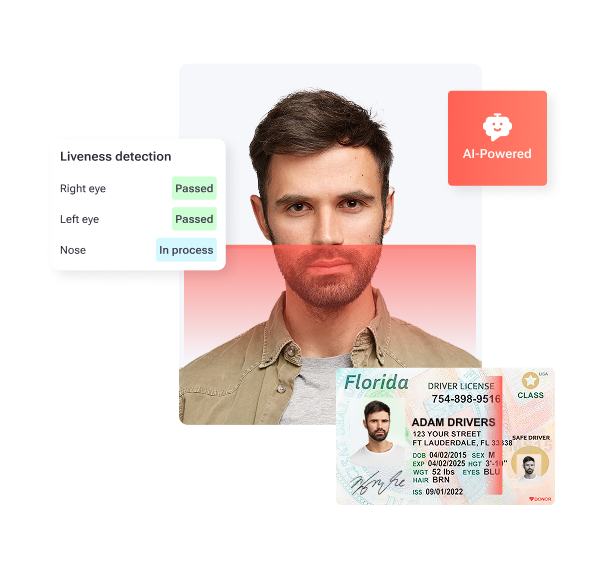
- Biometric identity verification: IDVerify moves communities from document-based review to biometric-confirmed identity verification, combining government ID validation, AI-powered liveness detection, and facial biometric comparison natively inside the TenantEvaluation workflow. Before IDVerify, verification relied on document uploads with no biometric confirmation. After IDVerify, every applicant is confirmed as real, present, and matched to their identification before approval decisions are made.
- Board-ready dashboards: Boards require direct access to summarized applicant reports and a structured voting workflow, not forwarded emails. QuickApprove provides this through a dedicated review and voting panel built for high-volume seasons and communities with complex onboarding requirements.
- Standardized 55+ handling: Florida condos and HOAs managing age-restricted communities need a structured, consistent process for handling eligibility documentation. 55+ Communities Verification standardizes application handling, supports documentation consistency, reduces manual work, and improves operational efficiency across communities, built specifically for Florida CAMs and boards.
- Centralized lease lifecycle control: Lease Tracking connects resident onboarding, unit data, approvals, and lease documentation into one real-time, audit-ready workflow. It delivers centralized lease records with real-time status visibility (active, pending, expired, or missing) and automated lease document collection during onboarding.
Organizations deploying workflow automation report an average 43% reduction in process cycle time, a benchmark consistent with TenantEvaluation’s reported reduction in approval times of up to 70%.
Schedule a demo today to see IDVerify, QuickApprove, Lease Tracking, and TEpayments operating inside one connected platform.
How to Evaluate Resident Onboarding Platforms
CAMs and operations leads evaluating resident onboarding software alternatives should assess platforms across five dimensions.
- Onboarding time: Generic platforms report onboarding cycles measured in days. TenantEvaluation processes applications in 5–10 minutes with up to 70% reduction in approval time, a difference illustrated by a Florida management company whose manual process previously required days of back-and-forth. After switching to TenantEvaluation, the same workflow runs in hours with automated notifications keeping all parties informed.
- Board access: Platforms without a dedicated board dashboard push approval decisions into email. QuickApprove addresses this gap with the board-ready approval process described earlier, eliminating the email-based bottlenecks that delay decisions.
- Fraud prevention: Document-only screening is insufficient against synthetic identity fraud. IDVerify adds a biometric layer that confirms physical presence and identity authenticity before approval, configurable per community risk profile.
- Florida fit: TenantEvaluation is built for Florida-specific regulations and workflows, serving 5,000+ communities with 100,000+ applications processed annually. 55+ Communities Verification and FCRA-first design address requirements that generic platforms do not cover.
- Revenue model: TenantEvaluation operates on a pay-per-application model with revenue sharing. Application processing becomes a compliant, controlled income stream for associations rather than a cost center. TEpayments collects application fees, deposits, and other required resident payments within the onboarding process, with payments going directly from the applicant to the Association’s designated account. TenantEvaluation never holds the funds.
Associations still using spreadsheets or generic HOA software for any of these five functions carry operational and compliance risk that a purpose-built platform eliminates.
Frequently Asked Questions
What makes resident onboarding software different from general HOA management software?
General HOA management software is designed primarily for accounting, maintenance requests, and resident communications. Resident onboarding software handles the specific workflow of moving a prospective resident from application submission through identity verification, background screening, board approval, lease documentation, and payment collection. Platforms like TenantEvaluation are built exclusively for this lifecycle, with FCRA compliance, biometric verification, board dashboards, and lease tracking integrated by design rather than added as secondary features. Generic platforms that include onboarding as a module typically lack the depth required for Florida community associations managing complex screening criteria, age-restricted requirements, or high application volumes.
How does FCRA compliance apply to community association resident screening in Florida?
The Fair Credit Reporting Act governs how consumer reports, including credit, criminal, and eviction records, are obtained and used in screening decisions. Community associations and management companies that use consumer reports must have permissible purpose, provide required disclosures, and follow adverse action procedures when a decision is made based on the report. Platforms that access bureau data through third-party aggregators rather than direct reseller relationships introduce additional compliance risk. TenantEvaluation is a direct reseller of TransUnion and Equifax data, with automated adverse action workflows, built-in audit trails, and strict permissible purpose controls, keeping associations protected from liability exposure without requiring CAMs to manage compliance manually.
What is the role of biometric identity verification in community association onboarding?
Biometric identity verification confirms that the person submitting an application is physically present and matches the government-issued ID they provided. Traditional document-based screening cannot detect stolen IDs, synthetic identities, or impersonation attempts. IDVerify+ inside TenantEvaluation combines government ID validation, AI-powered liveness detection, and facial biometric comparison natively within the screening workflow, with no external portals or redirects. Verification results, including ID authenticity confirmation, liveness status, and biometric match result, appear directly in the screening report for CAMs and boards. IDVerify+ is configurable per community, allowing each association to apply the verification layer according to its own risk profile.
How does Lease Tracking inside TenantEvaluation differ from storing leases in a shared drive?
Shared drives and email folders store documents but provide no operational visibility into lease status, expiration timelines, or the connection between an active lease and the onboarding record that created it. Lease Tracking inside TenantEvaluation delivers centralized, real-time lease visibility and lifecycle control, connecting resident onboarding, unit data, approvals, and lease documentation in one audit-ready workflow. CAMs can see real-time lease status (active, pending, expired, or missing) for every unit, access automated lease document collection tied to the application, and retrieve searchable digital history without searching across folders or inboxes. Boards gain a clearer operational picture of occupancy and resident activity across communities, with audit-ready records that support compliance readiness.
Can TenantEvaluation support both large management company portfolios and smaller self-managed communities?
TenantEvaluation serves community associations ranging from small self-managed HOAs to enterprise-level management companies with extensive portfolios. The platform’s custom setup for rules and compliance configures each community’s specific governing documents, screening criteria, and association workflows individually. Features like IDVerify+, 55+ Communities Verification, and TEpayments by Zinc are configurable per community, allowing each association to apply the capabilities that match its size, risk profile, and onboarding requirements. With the scale mentioned earlier, TenantEvaluation’s infrastructure is built to handle portfolios of many sizes without requiring management companies to add headcount as their portfolio grows.

Conclusion
Operational and compliance gaps in community association resident onboarding are well-documented in 2026, including manual bottlenecks, identity fraud exposure, fragmented lease records, disconnected payments, and board approval delays. Generic HOA platforms address some of these gaps partially, while purpose-built resident onboarding software addresses them by design.
CAMs and operations leads evaluating their current onboarding process should assess whether their existing tools cover FCRA-first compliance, biometric identity verification, board-ready approval workflows, standardized 55+ handling, centralized lease lifecycle control, and connected payment collection, or whether those functions still run across email, spreadsheets, and disconnected systems.
TenantEvaluation’s track record, the 100,000+ applications and 5,000+ communities noted above, demonstrates proven operational capacity at scale, generating $150M for those communities with a 4.8/5 Google rating. It is the only platform in this category that combines FCRA-first design as a direct TransUnion and Equifax reseller, biometric IDVerify+, QuickApprove board-ready workflows, 55+ Communities Verification, real-time Lease Tracking, and TEpayments by Zinc in one Florida-specific platform.
Schedule a demo today to evaluate TenantEvaluation against your current onboarding process.
