Written by: Luis Teran, Co-founder, CEO, TenantEvaluation
Key Takeaways for Florida Association Onboarding Fees
- Florida community associations collect multiple onboarding fees, including application, move-in, transfer, estoppel, and convenience fees. Each fee type has specific statutory caps and recordkeeping rules under Chapters 718 and 720.
- Fragmented collection methods such as spreadsheets and disconnected portals create compliance exposure, revenue leakage, and board visibility gaps. Integrated platforms close these gaps and centralize oversight.
- Regulatory updates for 2026 require electronic payment acceptance, immutable audit trails, and compliant websites for associations that meet defined size thresholds.
- Resident package fees, convenience fees, and similar charges must be authorized by governing documents and tied to identifiable administrative costs to remain enforceable.
- TenantEvaluation delivers an FCRA-compliant, end-to-end workflow that connects screening, approvals, and fee collection for Florida associations. See the integrated workflow in action.
How Florida Law Defines Resident Onboarding Fees
Resident onboarding fees are charges a community association or its management company assesses when a new resident applies to occupy a unit. These fees support specific administrative, financial, and governance tasks, and Florida law treats them as distinct categories rather than interchangeable charges.
Understanding these fee categories is essential because each carries different statutory caps, refund rules, and documentation requirements. Confusing them increases legal risk and complicates daily operations. The primary fee categories Florida CAMs and boards encounter are:
- Application or approval fees: Nonrefundable charges collected before the association reviews an application. Under Florida Statute § 718.112(2)(k), condominium associations may charge an approval fee only when the association has approval authority and the fee appears in the governing documents.
- Move-in deposits: Refundable amounts the association holds to cover damage to common elements such as elevators, hallways, or loading zones. The association returns these deposits if no damage occurs.
- Move-in or move fees: Nonrefundable charges that cover elevator padding, hallway wear, and cleanup after a move.
- Transfer or processing fees: Administrative charges assessed at closing or lease commencement to cover document handling and account setup.
- Estoppel certificate fees: Fees for preparing the document that discloses all amounts owed on a unit. Under § 718.116(8), estoppel fees are capped at $299 base, plus up to $119 for expedited requests and up to $179 more if the account is delinquent.
- Convenience fees: Surcharges applied when residents pay by credit card to offset card processing costs.
- Resident benefits packages: Bundled amenity or service fees sometimes collected at move-in, with enforceability governed by the declaration.
Each fee type connects directly to screening, approval governance, and association revenue. Modern Florida associations treat these fees as one connected workflow instead of isolated transactions.
How New Resident Onboarding Works in Florida Communities
New resident onboarding is the end-to-end process by which a Florida community association evaluates an applicant, collects required fees and documents, conducts background screening, obtains board approval, and grants occupancy. The process has grown more complex due to recent regulatory updates, rising fraud concerns, and the shift to digital workflows.
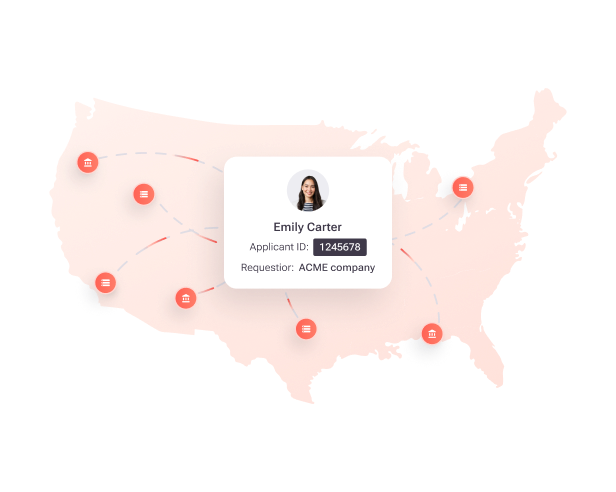
These regulatory changes directly affect how associations collect fees, maintain records, and provide transparency to residents. A simple payment step now functions as part of a compliance-heavy workflow that must withstand audits and owner scrutiny. Key regulatory developments shaping onboarding in 2026 include:
- Florida condominium associations with 25 or more units must accept electronic payment of assessments and make payment history available to owners electronically, per HB 1021 amending Florida Statute 718.111(12), with full compliance required by January 1, 2025.
- Florida HOA leaders must comply with new regulations under HB 1203 and HB 59, including website requirements by 2025, post-tragedy reforms in safety, inspections, and reserves, and specific notice rigor.
- Florida HOAs with 100 or more parcels must maintain a compliant website that provides homeowners access to governing documents, meeting minutes, budgets, financial reports, and current insurance policies.
These statutory requirements shape how fees are collected in daily operations. Fees appear at multiple stages, including application submission, board review, and move-in, and each stage carries distinct compliance obligations. The board sets permissible fee types through governing document authority and board resolution. CAMs track payment receipt, confirm clearance before scheduling board review, and maintain records for audit. Reliance on manual processes such as unintegrated spreadsheets for tracking billing changes creates the greatest opportunity for billing errors including human error and missing data. When payment collection sits outside the application workflow, those errors compound across every application cycle.
Resident Package Fees and Operational Challenges
A resident package fee, sometimes called a welcome packet fee, orientation fee, or access setup fee, covers the administrative cost of issuing gate fobs, parking permits, amenity access credentials, and onboarding documentation. HOA move-in fees commonly cover administrative processing and document handling, setup fees for gate fobs, parking permits or amenity access, move-in coordination such as elevator reservations, reserves funding for common areas, and contributions to capital improvements.
Common operational challenges in collecting these fees include:
- Chasing payment confirmations through email and phone calls after the application is submitted
- Applicants receiving unclear instructions about what to pay, when to pay, and where to send funds
- Inconsistent processes across properties within the same management portfolio
- Limited board visibility into which applicants have paid and which have not
- Payment records stored in spreadsheets disconnected from the application file
The challenges described above, such as payment chasing, unclear instructions, and inconsistent processes, all stem from fragmented workflows. Best practices center on three principles that remove that fragmentation. First, standardize the workflow so every applicant encounters the same payment steps inside the same onboarding process. Second, route funds directly to the association’s designated account without intermediary holding. Third, maintain clear documentation that connects each payment to the corresponding application record.
Why Resident Portals Add Convenience Fees
Convenience fees on card payments exist because credit card networks charge associations a processing cost, typically 2–3 percent, that associations may pass through to the payer rather than absorb in operating funds. Florida’s anti-surcharge statute was struck down as unconstitutional in 2015, which makes these fees potentially permissible when handled correctly. Collecting any payment, including convenience fees, also triggers broader compliance obligations that affect how associations store records and demonstrate oversight.
From a compliance and audit standpoint, several requirements govern how associations handle all collected payments:
- FCRA permissible purpose: Application fees collected in connection with background screening must be tied to a permissible purpose under the Fair Credit Reporting Act. TenantEvaluation uses FCRA compliance as the foundation, with strict permissible purpose controls, automated adverse action workflows, and direct credit bureau reseller relationships with TransUnion and Equifax.
- Fund segregation: Florida statutes define requirements for operating funds and reserve contributions, so payment workflows must respect those boundaries.
- Audit trail requirements: Florida HOA treasurers must maintain an immutable audit trail of electronic payments exported and archived quarterly, perform monthly three-way reconciliation of bank statements, ledger, and assessment roll, and ensure processor or lockbox deposits go directly to the bank without board members handling funds alone.
- Board oversight: Florida boards must review delinquency and accounts receivable reports regularly as part of their fiduciary duty to maintain collection compliance and avoid personal liability.
- Financial reporting thresholds: Florida associations must follow financial reporting requirements based on annual revenues, which depend on accurate and complete payment records.
Comparison of Fee-Collection Methods for Florida Associations
Florida associations currently use three main approaches to collect resident onboarding fees and payments. The comparison below reveals a clear pattern. Manual and generic approaches may reduce some administrative burden, but only an integrated platform closes compliance gaps and visibility blind spots that create board liability and revenue leakage. The table evaluates each approach across five operational criteria, with all figures drawn from cited sources.
| Criterion | Manual Spreadsheets | Generic Resident Portals | Integrated Platform (TenantEvaluation + TEpayments by Zinc) |
|---|---|---|---|
| Compliance Readiness | No built-in FCRA controls, and the audit trail depends on staff discipline. Manual processes create the greatest opportunity for billing errors. | Partial readiness. The portal may accept electronic payments but lacks permissible-purpose controls or adverse action automation. | FCRA-first design with direct TransUnion and Equifax reseller status, automated adverse action, built-in audit trails, and PCI Level 1 compliance. |
| Operational Efficiency | High manual burden. Finance teams spend 30% of their time on manual data entry. | Reduces some manual entry, yet payment and onboarding remain disconnected. | End-to-end automation that reduces application processing from days to hours and can free up to 50 staff hours per day. |
| Transparency | Limited visibility. Board reporting depends on manual updates. Many HOAs are moving toward near-cashless operations with real-time dashboards replacing static reports. | Moderate visibility. Payment status appears in the portal but remains disconnected from application or approval records. | Real-time board dashboard with payment status, application status, and lease records in one connected view. |
| Scalability | Does not scale effectively. Errors multiply with volume. Nationwide, approximately 12% of homeowners are behind on their HOA dues at any given time, and manual tracking worsens this risk. | Scales payment acceptance but not approval workflows or compliance documentation. | Supports more than 100,000 applications per year across over 5,000 communities without added headcount. |
| Auditability | No immutable trail. Florida HOA treasurers must maintain an immutable audit trail of electronic payments exported and archived quarterly, and spreadsheets do not satisfy this requirement. | Transaction logs exist but are not connected to application or board decision records. | Full audit trail that connects payment, application, identity verification, board vote, and lease documentation in one searchable record. |
The comparison shows that integrated platforms uniquely deliver the compliance readiness, transparency, and auditability Florida associations now require. The next step is understanding how that integration works in daily operations.
How TenantEvaluation Connects Screening, Payments, and Approvals
The compliance gaps, revenue leakage, and visibility blind spots highlighted in the comparison table share one root cause: disconnected systems that treat payment collection as separate from the onboarding workflow. TenantEvaluation removes that disconnect by connecting resident screening, onboarding, board approvals, lease tracking, and fee collection into a single FCRA-compliant workflow built exclusively for Florida community associations and management companies.
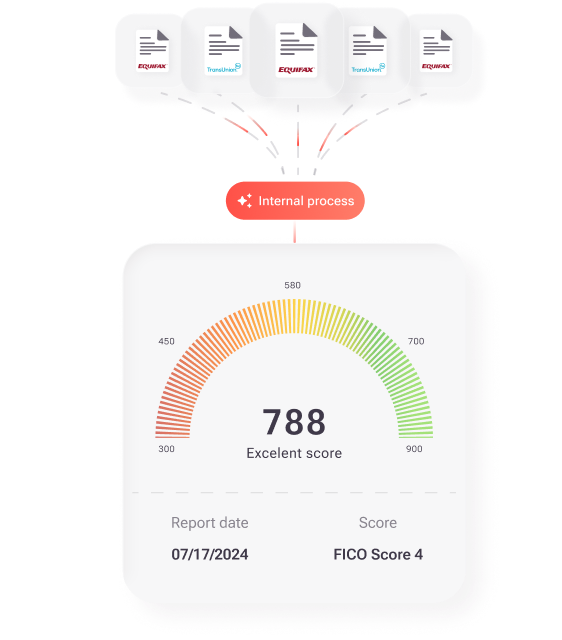
Founded in 2007 and processing more than 100,000 applications annually across over 5,000 communities, TenantEvaluation has generated $150 million for communities through its integrated approach. TEpayments by Zinc is the configurable payment workflow inside the TenantEvaluation platform. It allows associations and property management companies to collect application fees, deposits, and other required resident payments within the onboarding process they already use. Payments move directly from the applicant to the association’s designated account, while TenantEvaluation organizes the workflow and provides the audit trail without ever holding the funds.
Key capabilities of the connected workflow include:
- Configurable per association: Each association defines what is collected and at which stage. The capability adapts to the property’s process instead of forcing a universal sequence.
- Direct-to-account fund flow: Funds move from applicant to the association’s designated account with no intermediary holding by TenantEvaluation.
- Real-time payment visibility: CAMs, LCAMs, and board members see payment status alongside application status in one dashboard, without a separate portal login.
- Full audit trail: Every payment event is timestamped and connected to the corresponding application, identity verification via IDVerify, board vote via QuickApprove, and lease record via Lease Tracking.
- Applicant clarity: Required fees and deposits appear inside the application process applicants already use, which removes confusion about what to pay, when to pay, and where to pay.
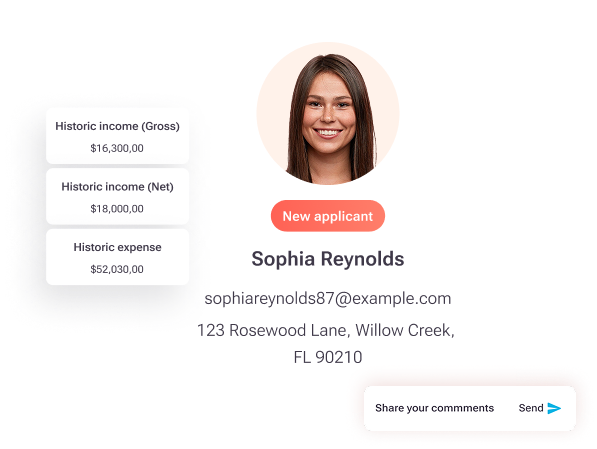
Community associations are shifting from stand-alone tools toward integrated systems that connect homeowner billing, digital payments, financial reporting, reserve visibility, audit-ready records, and centralized communication and document access. TEpayments by Zinc delivers that integration inside the resident onboarding workflow Florida associations already operate.
Five Criteria for Evaluating Fee-Collection Platforms
The regulatory requirements, audit trail mandates, and board fiduciary duties described above converge on five evaluation criteria that separate compliant, scalable solutions from those that create exposure. CAMs, board presidents, and regional property management leaders should apply these criteria consistently across any platform they consider.
- Compliance readiness: The platform should maintain FCRA permissible-purpose controls, automated adverse action workflows, and direct credit bureau data access. It also needs to support Florida’s electronic payment and fund-segregation requirements.
- Operational efficiency: The solution should eliminate manual payment chasing, reduce staff hours spent on data entry, and connect payment collection to the application workflow without extra logins or systems.
- Transparency: Boards should receive real-time visibility into payment status, application progress, and fund flow without relying on manual reports from management.
- Scalability: The platform must handle high-volume application seasons and multi-property portfolios without adding headcount or creating inconsistent processes across communities.
- Auditability: The platform should produce an immutable, searchable audit trail that connects every payment to the corresponding application, identity verification, approval decision, and lease record, while supporting Florida’s tiered financial reporting requirements.
TenantEvaluation meets each of these criteria. Its FCRA-first architecture, direct bureau reseller status, TEpayments by Zinc direct-to-association fund flow, QuickApprove board-ready approval workflow, IDVerify biometric identity verification, and Lease Tracking visibility combine into an end-to-end integrated platform purpose-built for Florida community associations.

Frequently Asked Questions
What are typical Florida condo and HOA approval fee amounts?
For Florida condominiums governed by Chapter 718, approval fees must be authorized by governing documents and are subject to statutory provisions. In practice, fees in Florida condo communities commonly range from $50 to $150 per adult applicant. For HOAs governed by Chapter 720, there is no equivalent statewide cap on transfer or approval fees. Move-in deposits are held to cover potential damage and are refundable depending on the condition of common areas, and nonrefundable move fees cover costs such as wear and cleanup, depending on the governing documents. Associations may not charge an approval fee on lease renewals with the same lessee under Chapter 718.
Can Florida associations charge convenience fees on card payments?
Yes. Florida’s anti-surcharge statute was struck down as unconstitutional in 2015, which makes credit card convenience fees potentially permissible. To keep these fees enforceable, associations should ensure the fee is disclosed before payment and authorized by the association. Boards should document the authorization in minutes and ensure the disclosure appears clearly in any payment portal or onboarding workflow before the payer confirms the transaction.
How should boards oversee onboarding payment records?
Florida law imposes a fiduciary duty on boards to collect every dollar owed and maintain accurate financial records. For payment oversight, boards should require monthly three-way reconciliation of bank statements, the payment ledger, and the assessment roll. Electronic payment records must be archived in an immutable format and exported quarterly. Associations must follow statutes regarding operating funds and reserve contributions under both Chapter 718 and Chapter 720. Boards with 100 or more parcels must post financial reports on a compliant website or app. For onboarding-specific payments such as application fees and deposits, boards benefit most from a platform that connects payment status directly to the application record, so board members can confirm payment clearance before voting on an application without requesting a separate report from management.
What happens to funds collected through TEpayments by Zinc?
TEpayments by Zinc is a configurable payment workflow integrated into the TenantEvaluation platform. When an applicant submits a required fee or deposit through the onboarding process, the payment is processed by TEpayments by Zinc and deposited directly into the association’s designated bank account. TenantEvaluation coordinates the workflow and provides the audit trail, but at no point does TenantEvaluation hold, escrow, or control the funds. Each association defines what is collected and at which stage of the onboarding process, and the workflow adapts to the property’s existing process rather than imposing a universal sequence. Boards receive traceable payment records with operational clarity about where funds go, and CAMs eliminate the manual tracking and confirmation chasing that characterize disconnected payment systems.
Conclusion: Ending Disconnected Onboarding Payments in Florida
Manual, disconnected fee collection creates compliance exposure, revenue leakage, and operational blind spots for Florida community associations. Spreadsheets cannot produce the immutable audit trails Florida law requires. Generic portals accept payments but leave them disconnected from applications, approvals, and lease records. CAMs end up chasing confirmations, boards lack visibility, and applicants stay confused about what they owe.
The integrated platform described above, which connects screening, approvals, identity verification, and fee collection, is the only solution purpose-built for Florida associations that removes the compliance gaps and operational blind spots created by disconnected systems. Payments move directly from the applicant to the association’s designated account, while TenantEvaluation orchestrates the workflow and audit trail. One workflow replaces scattered tools and reduces payment chasing.
See the connected workflow in action and schedule your demo to eliminate payment chasing for good.
