Written by: Luis Teran, Co-founder, CEO, TenantEvaluation
How Florida HOA Management Companies Really Make Money
- Florida HOA management companies earn revenue through base fees, 10–20% vendor markups, resale and estoppel packages, project oversight, and resident screening revenue-sharing.
- Per-door fees in 2026 range from roughly $100–$400 monthly for mid-size communities, while smaller associations pay higher effective rates because fixed costs spread across fewer units.
- Markups on maintenance and on-site staffing can generate tens of thousands in additional annual revenue that never appears on the base management fee line.
- Ancillary fees such as estoppel letters, resale packets, and capital project oversight often add 30–60% to a community’s total management cost.
- TenantEvaluation gives Florida management companies a compliant, zero-upfront-cost way to capture screening revenue. Request a TenantEvaluation demo to see how the model works in practice.
Per-Door HOA Management Fees in Florida for 2026
Florida management companies rely on three main pricing structures: flat monthly retainers, per-unit rates, and percentage-of-budget models. Each structure produces different margins based on community size and service scope.
In the Tampa Bay market, per-unit benchmarks in 2026 vary by community size. Smaller communities pay higher effective per-door rates because fixed costs, such as accounting, licensing, insurance, and software, spread across fewer units.
Per-door pricing in 2026 varies significantly by community size and service scope. For 50–200-unit communities, Tampa Bay market data shows monthly rates roughly between $100–$400 per month depending on property type, reflecting total management cost rather than a strict per-unit calculation. Smaller communities under 50 units usually pay higher effective rates because the same fixed costs support fewer owners, while larger communities with 200 or more units benefit from volume discounts. At least one Florida provider offers flat monthly retainers ranging from $475 to over $925 per month, with pricing tied to association size and service tier instead of a simple per-door formula.
Florida HOA management fees can run above national averages because of post-Surfside compliance requirements, insurance crisis workloads, CAM licensing obligations, and legislative complexity under Chapter 720. A 100-unit community paying $3,000 per month in base management fees incurs $36,000 per year in base management overhead before any ancillary fees apply.
Markup Revenue from Maintenance and On-Site Staffing
Vendor invoice markups form one of the largest profit centers beyond base fees. Management companies commonly apply markups of 10% or more on contractor and maintenance invoices, billed separately from the base management fee. These charges appear on vendor invoices instead of the management fee line, so boards see them less clearly.
The math stays simple but meaningful. On $50,000 in annual maintenance spending, a 10–20% coordination markup generates $5,000–$10,000 in additional annual revenue for the management company. At the higher end of the range, a 75-door community spending $80,000 per year on outside vendors at a 20% markup produces $16,000 per year in additional revenue that never appears on the management fee line.
Industry markup ranges vary by contract structure:
- Vendor invoice markups range from 0% pass-through, with 10–20% most common.
- Maintenance coordination markups typically fall between 10–20% on contractor invoices.
- On-site staffing markups typically range from 25% to 50% on W-2 employee payroll.
To illustrate the revenue impact of staffing markups at scale, consider a community with $200,000 in annual on-site payroll. A 25–50% staffing markup generates $50,000–$100,000 per year in additional revenue for the management company. Ancillary on-site services can represent a large share of total revenue compared to base property management fees, which shows how dominant markup-driven income has become for mature portfolios.
Resale, Administrative, and Project-Management Fees in Florida
Transaction-based and project-based fees create substantial revenue beyond base management and markups. The 30–60% ancillary fee burden mentioned earlier comes primarily from transaction-based and project-based charges, while the base monthly management fee covers the remaining share of what a community ultimately pays.
Common 2026 Florida ancillary fee ranges include:
- Estoppel letters: Florida HOA estoppel certificates are statutorily capped at $299 for a standard 2026 request, with optional $119 expedited or $179 delinquency surcharges, usually paid by the seller during resale transactions.
- Resale and welcome packets: In 2026 Florida, HOA resale and estoppel certificates cost $200–$400, capped at $299, with typical totals of $300–$660 including transfer and portal fees as a transaction-based ancillary fee.
- Additional board meetings: Extra meetings often carry per-meeting charges, and annual meetings can have separate fees.
- Capital project oversight: Oversight fees usually equal a percentage of total project cost.
- After-hours emergency calls: Emergency response can incur per-call fees.
- Violation processing: Some contracts include per-letter fees for violation notices.
- Lien filing and collections: Associations may pay per-lien or per-account fees for collections support.
For major capital projects, project management fees based on a percentage of project cost often apply because of the heavier oversight burden. Large capital projects can therefore generate meaningful project management revenue. On-demand fees for resale certificates, extra meetings, special assessment setup, and special projects can further increase the all-in annual cost beyond the base monthly management fee.
Revenue-Sharing from Resident Screening and Onboarding
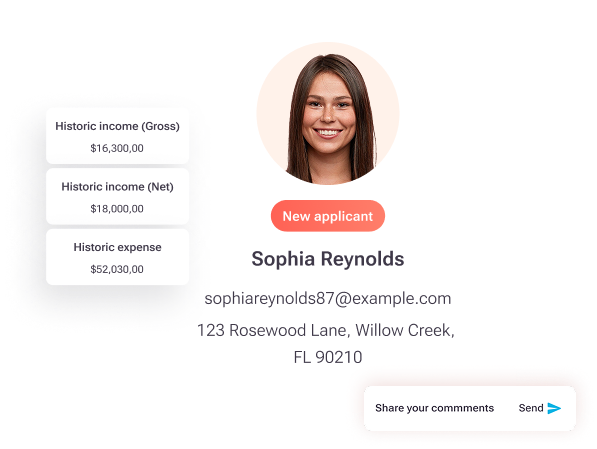
Resident screening and onboarding now form a fast-growing ancillary revenue category that requires no upfront investment and produces income on every application cycle. TenantEvaluation’s revenue-sharing model serves Florida community associations and management companies by collecting application fees within the onboarding workflow, deducting its service fee, and returning the remainder to the association or management company.
The payment infrastructure behind this model is TEpayments by Zinc, a connected payment workflow integrated directly into the TenantEvaluation platform. Payments move directly from the applicant to the association’s designated account, while TenantEvaluation organizes the workflow but never holds the funds. Each association defines what to collect and at which stage, so the platform adapts to the property’s process instead of forcing a single sequence.
The direct-payment architecture functions as a compliance safeguard, not just a technical detail. HB 1021 added criminal penalties making kickback arrangements a third-degree felony. Because TEpayments by Zinc routes funds directly to the association’s account and TenantEvaluation never holds the funds, the model avoids the fund-holding and kickback exposure that less structured arrangements create.
TenantEvaluation’s platform also supports revenue capture through faster application throughput. QuickApprove accelerates resident approvals for CAMs, boards, and property management teams inside one connected platform. Real-time application tracking, automated communication support, reduced manual follow-ups, customized approval letters, and a personalized welcome package all help complete more application cycles per period, which increases fee-based revenue without raising base management fees.
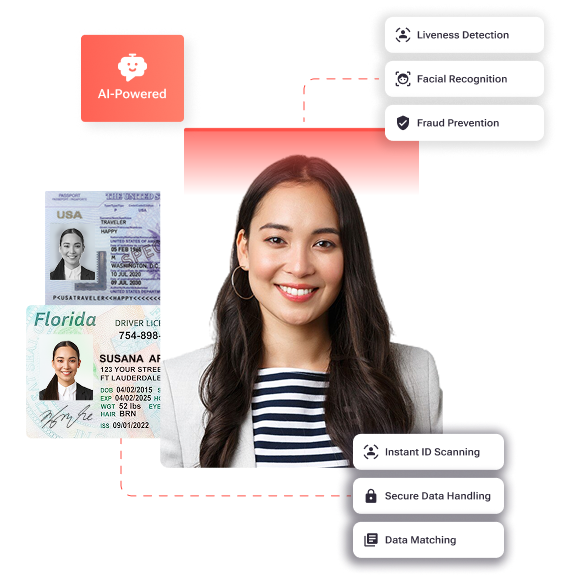
For communities that require identity verification before screening authorization, IDVerify embeds biometric identity verification directly into the workflow. Government ID validation, AI-powered liveness detection, and biometric facial matching reinforce FCRA-aligned workflows and audit defensibility. For age-restricted communities, 55+ Communities Verification standardizes how age-restricted requirements are handled across applications, which reduces manual work and improves documentation consistency.
TenantEvaluation has already generated $150M for communities, processing more than 100,000 applications annually across 5,000+ communities, with FCRA compliance as the foundation.

Florida Compliance Rules That Shape Fee and Markup Structures
Florida’s regulatory environment directly determines which fee and markup structures management companies can use. Key rules affecting management company revenue in 2026 include:
- CAM licensing: Florida Statutes Section 468.432 requires any person managing a community association with more than 10 units or an annual budget above $100,000 to hold a DBPR license. Management firm licenses expire on September 30 of odd-numbered years and require renewal every two years.
- HB 1021 kickback rules: The third-degree felony penalties mentioned earlier extend to new conflict-of-interest disclosure requirements that directly restrict how management companies can structure vendor markups, rebates, and ancillary revenue from preferred vendors.
- Contract bidding thresholds: Under F.S. 720.3055, if a management contract exceeds 10% of the annual budget, including reserves, competitive bids are required. Contract terms still vary by association.
- Payment application order: Florida statutes specify the order in which any HOA payment received must be applied to outstanding balances, so payment platforms must enforce this order automatically.
- Late fee caps: Florida Statute 720.3085 caps late fees at the greater of $25 or 5% of the delinquent installment, which limits ancillary revenue from collections workflows.
- Electronic payment mandates: Under Florida Statute 718.111(12) as amended by HB 1021, condominium associations with 25 or more units must accept electronic payment of assessments and provide owners electronic access to payment history.
Six Criteria for Evaluating New Revenue Tools
Adding a new revenue stream works best when tools are evaluated against six criteria that build from financial viability through legal compliance to operational fit.
- Zero upfront cost: The tool should generate revenue without capital investment or subscription fees that erode margin before the first dollar arrives. Without this foundation, even compliant tools can weaken profitability.
- Florida compliance alignment: Once cost structure passes review, the tool must operate within HB 1021 kickback rules, FCRA requirements, and Florida’s payment application order statutes. Any platform that holds funds or creates undisclosed financial arrangements between the vendor and the management company introduces legal exposure that can outweigh revenue.
- Board visibility: Compliance alone does not satisfy board obligations. Boards have fiduciary duties and need traceable records. Revenue tools that route payments directly to the association’s designated account, with full audit trails, support board transparency and reduce governance friction.
- Direct payment flow: After transparency, payment routing becomes critical. Funds should move from the applicant to the association’s account without passing through a third-party holding account. This structure eliminates commingling risk under F.S. 720.303(6) and removes the management company from the fund-custody chain.
- Integration with existing workflows: Even a compliant, transparent tool fails if it creates extra work. Tools that require separate logins, parallel data entry, or disconnected processes add administrative burden. Platforms embedded in the existing onboarding workflow, covering application intake, document collection, screening, approvals, and payment, generate revenue without adding headcount.
- Scalability across the portfolio: Finally, the tool must scale. A solution that works for one community but requires custom configuration for each additional community limits growth. Configurable platforms that adapt to each association’s rules and fee structures scale across a full management portfolio without proportional cost increases.
Frequently Asked Questions
Do HOA fees count as management fees?
HOA fees and management fees function as separate categories. HOA fees, also called assessments or dues, are charges the association levies on homeowners to fund the community’s operating budget, reserves, and amenities, and those funds belong to the association, not the management company. Management fees form a subset of what HOA fees pay for, because the association uses a portion of collected dues to compensate the management company for its services. Florida management fees represent a portion of a community’s total operating budget that varies by community size, and the management company earns its fee from the association’s operating account rather than retaining HOA dues directly.
Can you write off management fees for a rental property in Florida?
For rental property owners in Florida, management fees paid to a community association management company or property manager are generally deductible as an ordinary and necessary business expense under IRS Schedule E. This treatment usually applies to fees paid for managing rental units within an HOA or condo community, including base management fees, leasing fees, and maintenance coordination charges. HOA assessments paid by a rental property owner are also typically deductible as a rental expense, although assessments allocated to capital improvements may need to be capitalized instead of expensed in the year paid. Owners should consult a qualified tax professional for guidance specific to their property structure and income classification, because deductibility depends on how the property is used and reported.
Who profits from HOA fees?
HOA fees are collected by the association and held in operating and reserve accounts controlled by the board of directors, so the association itself receives the funds. The management company profits indirectly by earning its contracted management fee from the association’s operating budget, along with ancillary revenue from markups, transaction fees, and project oversight charges. In 2026, Florida management companies derive a significant share of total revenue from sources beyond the base fee, reflecting the ancillary fee burden described earlier. Homeowners do not profit from HOA fees, because those funds support the community’s shared expenses and reserve contributions. Vendors, contractors, and service providers also receive payment from HOA fee revenue when the association contracts for maintenance, landscaping, insurance, and other services.
