Written by: Luis Teran, Co-founder, CEO, TenantEvaluation
Key Takeaways for Florida CAMs
- Peak-season condo rental approvals in Florida often stretch from 2 to 14 days or longer because of incomplete packets, board schedules, and rental caps.
- Manual processes that rely on email chains and spreadsheets commonly extend real approval timelines to 3–4 weeks.
- TenantEvaluation brings document collection, biometric verification, board voting, and lease tracking into one FCRA-first workflow.
- QuickApprove and IDVerify reduce approval cycles by up to 70% while maintaining compliance and removing most manual follow-ups.
- Eliminate occupancy blind spots and speed up peak-season approvals with TenantEvaluation’s connected platform, and schedule a demo today.
Peak-Season Approval Timeline Compression
Orlando-area associations document processing windows of 2–6 weeks once a complete packet is received. Investors still budget 3–4 weeks from tenant selection to move-in because of rental caps, waitlists, and board-meeting cadence. South Florida buildings range from 1 to 4 weeks for approval, with some requiring a personal interview. A practical planning window of 30–60 days helps account for association processing and move-in coordination.
The following table shows where time disappears in a manual process and how QuickApprove compresses each stage during peak season:
| Stage | Manual Process (Before) | QuickApprove Benchmark (After) |
|---|---|---|
| Packet submission to completeness confirmation | 1–3 days (email follow-up loops) | Same session (smart form logic rejects incomplete submissions instantly) |
| Document review and screening | 2–5 business days | Hours (automated workflows, real-time tracking) |
| Board review and vote | 3–14 days (tied to meeting schedule) | Accelerated via board-ready dashboard with summarized reports and voting panel |
| Approval letter and welcome package | 1–2 days (manual drafting) | Automated on decision (customized approval letters, personalized welcome package) |
The manual state keeps approval workflows scattered across email chains, spreadsheets, and one-off follow-ups. Applications sit in queues waiting for board review while applicants keep asking for status updates. The connected state delivers real-time application tracking, automated communication, and fewer manual follow-ups. Teams keep applications moving while maintaining control, compliance, and visibility.
Schedule a demo today and see how QuickApprove compresses your peak-season approval timeline.
HOA Rental Restrictions That Kill Applications
Even when you compress processing time, applications can stall before they reach the board. Florida statutes create structural constraints that CAMs must verify on every application before processing begins. Under Florida Statute §720.306(1)(h), HOA amendments requiring a minimum lease term of six months or prohibiting more than three rentals per calendar year apply to all parcel owners regardless of when they acquired title. Under Florida Statute §718.110(13), condominium amendments that prohibit rentals or alter rental duration apply only to owners who consent or acquire title after the amendment’s effective date, but six-month minimums and three-transaction caps still apply retroactively. CAMs must confirm these details on every application regardless of purchase date.
Common restrictions that generate bottlenecks during Florida condo rental delays in peak season include:
- Rental caps limiting the percentage of units that may be leased simultaneously, placing owners on waitlists
- Minimum lease terms of 6 months or 90 days that block non-conforming applications outright
- Post-purchase no-leasing periods of up to two years enforced in some Central Florida communities
- Municipal registration and occupancy requirements in Fort Lauderdale and Pompano Beach that add compliance steps on top of HOA approval
Each restriction requires its own verification step before the application can advance, which compounds delays when volume spikes from May through August.
Complete Document Checklist That Prevents Rejections
Florida condo associations in Miami-Dade and Broward Counties must provide written notice within 15 days after receiving an incomplete rental application, which means incomplete packets trigger immediate delays. To avoid that 15-day reset, a complete Florida condo or HOA rental packet must include:
- Owner’s notice of intent to lease and written association approval request
- Executed lease agreement or draft
- Government-issued photo ID for each adult occupant
- Credit and criminal background check authorizations
- Nonrefundable application fees (capped at $150 per applicant under Florida Statute §718.112(2)(k), subject to possible CPI inflation adjustments published by DBPR every five years)
- Mandatory lease addenda such as Crime Free and Peace and Quiet addenda signed by all adult occupants
- Vehicle and parking registration details
- Pet information where applicable
- Refundable security deposit of up to one month’s rent held in escrow for common-element damage where required
TenantEvaluation’s smart form logic rejects incomplete submissions automatically, so reviewers only see files that contain every required element. Standard rental application templates are frequently insufficient for HOA or condominium properties because they do not address the additional approval layers required by associations. TenantEvaluation’s community-specific configuration closes that gap by default.
Board Voting Bottlenecks and How to Remove Them
Once a complete packet is assembled, the next delay point is board review. Buildings that require board votes at scheduled meetings often take several weeks or longer, while those allowing administrative approval can finish faster. Manual review of large document volumes takes time and increases the risk of errors. Board members also frequently lack a clear view of which applications need immediate attention.
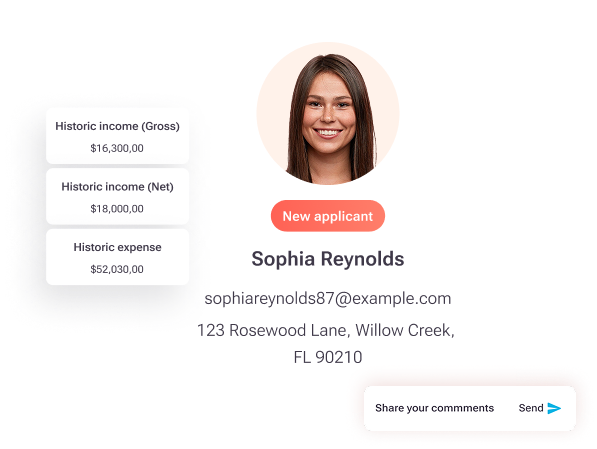
QuickApprove addresses this directly. Its board-ready approval process gives board members real-time access to application status, AI-generated summaries of each applicant, and a dedicated voting panel. Email chains and spreadsheets give way to a connected approval process inside TenantEvaluation. Boards decide faster while keeping control, compliance, and visibility, and every action is timestamped and auditable.
Biometric Identity Verification During High-Volume Seasons
Synthetic identity fraud grew 311% in North America in Q1 2025 compared to Q1 2024, with fraudsters using generative AI to fabricate passports, IDs, and biometric data. An NMHC survey found that 84.3% of apartment owners, developers, and managers who experienced fraud in the past 12 months reported applicants fabricating pay stubs, employment references, or other income documents. Single-source document review no longer provides enough protection.
IDVerify moves Florida condo and HOA communities from document-based validation to biometric-confirmed identity verification. The before and after comparison is direct:
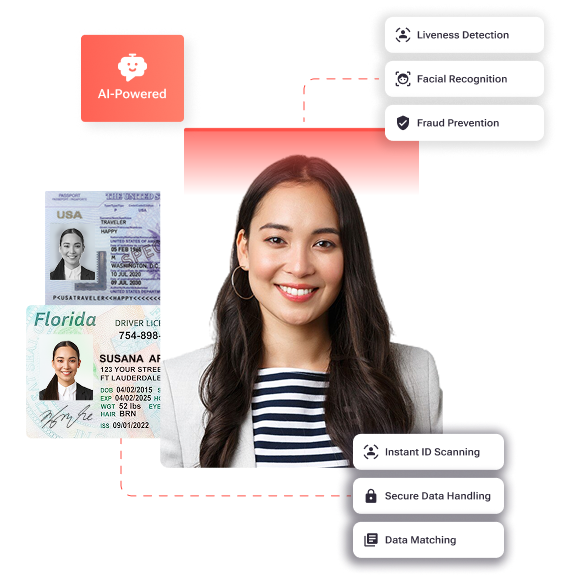
- Before IDVerify: Applicants uploaded ID documents, and verification relied on document review alone with no biometric confirmation or liveness validation, which increased fraud exposure.
- After IDVerify: Automated government ID authenticity validation, AI-powered liveness detection confirming physical presence, facial landmark biometric mapping, and selfie-to-ID comparison all run natively inside TenantEvaluation with no external portals.
IDVerify can be enabled per condo or HOA and configured per property portfolio, which supports different community risk profiles without a one-size-fits-all approach. It also strengthens permissible-purpose validation by confirming identity before screening authorization, reinforcing FCRA-aligned workflows and audit defensibility.
Lease Tracking to Avoid Occupancy Blind Spots
Lease management across many Florida community associations is fragmented and heavily manual. Lease copies go missing or become outdated because expiration tracking happens in disconnected spreadsheets. Without centralized visibility, teams cannot easily connect approved applications to active leases. This fragmentation creates operational blind spots, slows teams, and increases compliance risk tied to incomplete records.
TenantEvaluation’s Lease Tracking delivers centralized, real-time lease visibility and lifecycle control from application to occupancy in one place. Built for CAMs, boards, property management companies, and community operations teams, it connects resident onboarding, unit data, approvals, and lease documentation into one streamlined, audit-ready workflow that replaces spreadsheets and scattered email chains. Key capabilities include:
- Real-time lease status visibility (active, pending, expired, or missing)
- Automated lease document collection during onboarding
- Unit-level tracking connected to occupancy records
- Searchable digital history of leases, resident activity, and document trails
- Audit-ready digital lease records that support compliance readiness
Schedule a demo today to see Lease Tracking eliminate your occupancy blind spots in real time.
55+ Community Verification Standardization
Age-restricted communities in Florida face a distinct layer of application complexity. Manual handling of eligibility requirements through emails, PDFs, and follow-ups creates inconsistent documentation, growing risk exposure in audits or disputes, and unnecessary administrative burden for CAMs and boards.
55+ Communities Verification is a built-in capability that reduces manual work, standardizes application handling, and supports documentation consistency for Florida condos and HOAs. It improves operational efficiency and strengthens internal processes for community operations teams managing age-restricted requirements across large portfolios. The feature creates a more structured and scalable process while leaving legal guidance in place for age-restriction compliance.
Before/After Comparison: Manual Process vs. TenantEvaluation
The following table summarizes the operational shift across four critical workflow areas. It shows how TenantEvaluation replaces manual bottlenecks with automated, connected processes that keep peak-season approvals moving:
| Workflow Area | Manual Process | TenantEvaluation Platform | Impact |
|---|---|---|---|
| Application completeness check | Manual review, incomplete packets discovered after submission | Smart form logic rejects incomplete submissions instantly | Removes back-and-forth delays at intake |
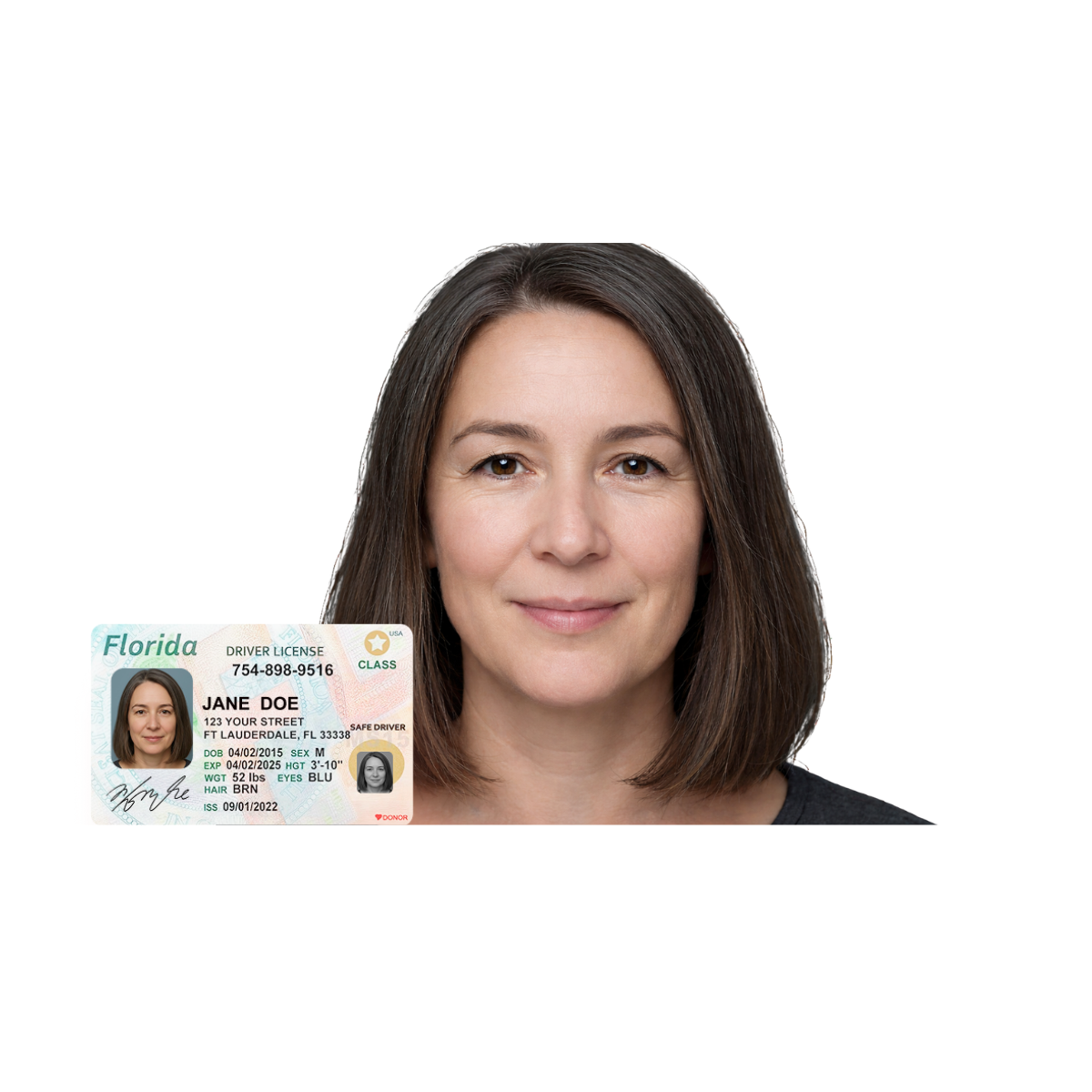
| Identity verification | Document upload only, no biometric confirmation | IDVerify+ biometric liveness detection and selfie-to-ID matching | Moves from document-based to biometric-confirmed identity |
| Board review and voting | Email chains, tied to scheduled meeting cadence (3–14 days) | QuickApprove board-ready dashboard with summarized reports and voting panel | Accelerates decisions while preserving compliance and visibility |
| Lease management | Spreadsheets, scattered email chains, manual expiration tracking | Centralized Lease Tracking with real-time status and audit-ready records | Up to 70% reduction in overall approval cycle time |
Frequently Asked Questions
How long does a Florida condo or HOA rental approval typically take during peak season?
The actual processing window once a complete packet is received can range from a few days to several weeks, depending on the association’s governing documents and whether administrative or board approval is required. In practice, the full timeline from tenant selection to move-in commonly runs 3–4 weeks because of rental cap checks, waitlists, mandatory advance-notice periods of up to 15 days, and board meeting schedules. Some buildings require a personal interview, which can extend the window. Communities using TenantEvaluation’s QuickApprove accelerated approval workflow compress this cycle significantly by automating document collection, enabling real-time board review, and eliminating manual follow-up loops.
What documents are required for a Florida condo or HOA rental application, and what happens if the packet is incomplete?
A complete Florida condo or HOA rental packet typically requires the owner’s notice of intent to lease, an executed or draft lease agreement, government-issued photo ID for every adult occupant, credit and criminal background check authorizations, application fees (capped at $150 per applicant as described earlier for condominiums), mandatory lease addenda such as Crime Free and Peace and Quiet addenda, vehicle and parking registration details, and a refundable security deposit where required. As noted earlier, Miami-Dade and Broward County associations must provide written notice within 15 days of receiving an incomplete application. In some communities, occupancy without written approval can render the lease void and trigger association-initiated eviction actions with costs charged back to the owner. TenantEvaluation’s smart form logic rejects incomplete submissions automatically, so only complete, reviewable files reach the CAM or board.
What board-level bottlenecks most commonly delay HOA rental approval during high-volume periods?
The most common board-level bottleneck is the gap between application submission and the next scheduled board meeting. Buildings that require formal board votes rather than administrative approval can take several weeks depending on the board meeting schedule regardless of how quickly the application packet was assembled. Board members also frequently lack a centralized view of which applications are pending, what documentation is complete, and what action is required. TenantEvaluation’s QuickApprove addresses this with a dedicated board-ready approval process that provides summarized applicant reports, a voting panel, and real-time application tracking, all inside one connected platform, so boards can act between scheduled meetings without losing compliance or visibility.
How does TenantEvaluation handle 55+ community age-verification requirements in Florida?
Florida age-restricted communities face documentation and consistency challenges that generic screening tools are not designed to address. TenantEvaluation’s 55+ Communities Verification is a built-in capability that reduces manual work, standardizes application handling across all applicants, and supports documentation consistency for Florida condos and HOAs. It improves operational efficiency and strengthens internal processes for CAMs and boards managing age-restricted portfolios at scale. This capability supports documentation and workflow consistency and does not replace legal guidance on age-restriction compliance.
What is the difference between TenantEvaluation and generic tenant screening tools for Florida condos?
Generic tenant screening tools are built for standard landlord-tenant relationships and do not account for the multi-stakeholder approval structure of Florida condos and HOAs, including board voting workflows, rental cap verification, mandatory lease addenda, 55+ documentation requirements, and FCRA-compliant adverse action processes specific to community associations. TenantEvaluation is built exclusively for community associations and management companies, with FCRA compliance as the foundation rather than an afterthought. It is a direct reseller of TransUnion and Equifax data, includes biometric identity verification through IDVerify+, provides a board-ready approval dashboard through QuickApprove, and connects the full lifecycle from application intake through lease tracking and occupancy, capabilities not available in generic screening platforms.
Conclusion: Review Your Workflow Against the Checklist
Florida CAMs and property management teams processing 50 or more applications monthly during peak season face a compounding set of structural delays. Incomplete packets, rental cap checks, board meeting cadence, mandatory advance-notice periods, and fragmented lease records all add days to timelines that competing communities are already shortening. TenantEvaluation consolidates every stage, including smart intake, biometric identity verification via IDVerify+, accelerated board review via QuickApprove, and centralized lease lifecycle control via Lease Tracking, into one FCRA-first platform built specifically for Florida condos and HOAs. The result is the documented time savings shown in the comparison above, with full audit trails, no spreadsheets, and no operational guesswork from application to occupancy.
