Written by: Luis Teran, Co-founder, CEO, TenantEvaluation
Key Takeaways for Florida Condo ROFR
- Florida condo ROFR rights come from each building’s declaration and bylaws, not from a statewide statute. Precise procedures are the main compliance challenge for boards, CAMs, and sellers.
- A typical ROFR workflow lasts about 30 days from contract delivery through board decision and written waiver. Missed deadlines usually mean the association’s right is automatically waived.
- Associations generally cannot reject buyers outright. Under ROFR they must either match the exact contract price and terms or waive the right and let the sale close.
- Manual workflows create recurring bottlenecks, including incomplete packages, undocumented decisions, and missed deadlines. Each issue increases compliance risk on every transaction.
- TenantEvaluation centralizes ROFR workflows inside one audit-ready platform, helping Florida condo boards and CAMs reduce delays and maintain compliance. Schedule a demo today.
How ROFR Timelines Work in Florida Condos
Florida condominium ROFR timelines are controlled by each building’s declaration and bylaws. These documents specify the required notice method, the decision window, and the waiver mechanics. There is no single statewide deadline.
A ROFR usually activates after the unit owner accepts a bona fide third-party offer and delivers the signed contract to the association in the exact manner required by the governing documents.
The declaration sets the applicable ROFR response window, commonly measured in days from receipt of a complete application. Closings should not be scheduled until that window closes or a written waiver is issued. Lenders and title underwriters typically require a written waiver, so verbal board decisions do not satisfy closing requirements.
Boards and CAMs should pull the declaration at the time of listing, not at contract. This early review confirms the ROFR language, the contractual trigger, and the exact decision window. Failure to act within the required time and manner can result in waiver or permanent loss of the right for that specific transaction.
Board Buyer Rejection Limits Under ROFR
Florida condominium associations generally lack authority to impose absolute restraints on an owner’s ability to sell. They rely on the narrower ROFR mechanism instead of open-ended buyer rejection.
Under a ROFR, the board faces a simple choice. It can match the exact price and terms of the existing contract, or it can waive the right and allow the sale to proceed to the third-party buyer.
When exercising ROFR, the association must purchase on the identical price and terms stated in the original buyer’s contract and cannot add new fees, buyer obligations, or renegotiate economics. The board cannot use ROFR to screen out an undesirable buyer unless it is prepared to purchase the unit.
Miami condo association approval criteria are typically focused on financial qualifications and application completeness, applied consistently with federal and state fair housing laws that prohibit screening on the basis of race, color, religion, sex, disability, familial status, national origin, or other protected characteristics. Boards that apply inconsistent or undocumented criteria face significant fair housing liability, separate from any ROFR issue.
Practical Downsides of ROFR for Boards and Owners
ROFR provisions create meaningful risks for associations, sellers, and buyers.
For associations, the main downside is financial. Exercising ROFR requires the Florida condo association to have sufficient liquidity and a clear operational plan to complete the purchase on the same terms as the original buyer. Most associations cannot or will not make that commitment.
The procedural burden is also substantial. Many Florida condo associations rarely exercise ROFR and routinely waive it, yet boards must still follow formal submission, notice, and decision procedures for every transaction.
For sellers and buyers, ROFR often creates closing delays. ROFR mechanics can delay closing even though associations rarely exercise the right in practice.
Ways to Reduce ROFR Delays and Friction
No party can unilaterally remove a ROFR that appears in a recorded declaration. Sellers, buyers, and boards can still take practical steps that reduce delays and uncertainty.
For sellers, early preparation works best. Pull the declaration before listing, identify the ROFR language and required notice method, and build the association’s decision window into the contract timeline. Boards and buyers should also pull the declaration early to confirm whether a ROFR exists and build the document-based response window into the contract timeline.
For buyers, submitting a complete application package on day one is the most effective way to keep the review clock moving. Review periods are building-specific and depend on whether the submitted file is complete. An incomplete package gives the association grounds to pause the clock.
For boards and CAMs, the key is a documented, consistent workflow. Digital tracking of submission dates, decision deadlines, and written waivers creates an audit trail that protects the association in two ways. It prevents unintentional waiver of the right due to missed deadlines, and it provides evidence of consistent application that helps defend against fair housing claims.
HOA ROFR Rights Compared to Condos
HOA and condominium ROFR rights operate under different legal frameworks in Florida. In Florida, ordinary condominium resale ROFR rights are created by a building’s declaration and bylaws rather than by statute. The same document-first principle applies to HOAs. Any ROFR held by a homeowners association must appear in the community’s declaration of covenants, conditions, and restrictions (CC&Rs).
Florida Statute Chapter 718 governs condominiums, while Chapter 720 governs HOAs. Neither chapter mandates a ROFR for resale transactions, and both allow governing documents to create one. Condominium declarations usually include more detailed transfer-approval and ROFR provisions than typical HOA CC&Rs, reflecting the higher-density, shared-ownership structure of condominiums.
Any board, condo or HOA, should confirm whether a ROFR exists in its recorded governing documents before assuming it does or does not have one. The estoppel certificate process provides one formal checkpoint. Florida Statute 718.116(8) governs the contents of condominium estoppel certificates.
2026 Florida Condo Laws and ROFR
Florida condo estoppel certificates still address whether board approval is required for unit transfers and whether any right of first refusal exists.
Florida’s post-Surfside condominium-law reforms focus on inspections and reserve funding requirements and do not alter ROFR procedures or timelines for unit resales. Boards that assumed 2026 brought new ROFR rules should confirm with qualified legal counsel that their procedures remain governed by their existing declaration language.
ROFR Workflow: Roles and Responsibilities
With the legal framework established, the next step is understanding how ROFR works in practice. A compliant ROFR process involves four distinct stakeholder groups, each with defined responsibilities across five sequential stages. The stakeholders are the seller, the CAM, the board, and the buyer.
- Seller delivers the executed contract. The seller or listing agent delivers the signed purchase contract to the association in the exact method and to the exact recipient specified in the declaration. Sending the contract to the wrong person or by an unauthorized method may fail to trigger the ROFR review period.
- CAM logs receipt and opens the application file. The community association manager timestamps the submission, confirms the package is complete, and notifies the board that the decision window has begun.
- Board reviews and votes. Directors review the application, screening results, and financial documents within the declaration’s specified window. The board votes to waive or exercise the ROFR. All votes and supporting materials should be documented for the audit trail.
- Written decision is delivered. The CAM delivers a written waiver or notice of exercise to the seller and buyer. Lenders and title underwriters may require a written waiver, so documentation of this step is essential.
- Closing proceeds or association completes purchase. If the ROFR is waived, the original transaction closes. If exercised, the association must complete the purchase as described earlier.
Schedule a demo today to see how TenantEvaluation’s board-ready dashboard keeps every stakeholder aligned through each stage of this process.
Core ROFR Documents and Florida Statutes
The legal foundation for Florida condo ROFR decisions rests on governing documents, not a single statute. The relevant framework includes the following elements.
Governing documents: The declaration of condominium is the primary source of ROFR authority. It specifies whether the right exists, how it is triggered, the decision window, and the waiver method. Bylaws may supplement the declaration with procedural detail.
Standard application package: Florida condo approval packages commonly include a completed application for each adult occupant, government identification, consent to background and credit screening, references, the executed purchase contract, and at some buildings an interview.
Florida Statute 718.116(8): Governs the contents of condominium estoppel certificates.
Florida Statute 718.112: A condominium association may charge a transfer or approval fee only if authorized in the governing documents.
Common ROFR Pitfalls and Better Practices
Florida condo boards and CAMs encounter five recurring operational problems when processing ROFR decisions.
Incomplete application packages. Missing documents stall the review clock and create ambiguity about when the decision window actually began. Associations that accept partial packages without logging the deficiency lose the ability to defend their timeline later.
Communication gaps between CAMs, boards, and parties. When status updates travel through email chains and phone calls, information is lost, duplicated, or delayed. Boards may vote without complete information, and sellers and buyers receive inconsistent updates.
Manual administrative burden. Post-Surfside Florida condo-law reforms on inspections and reserves have increased procedural scrutiny by associations on all matters, including unit transfers, raising the administrative burden and potential for delays when handling ROFR decisions. CAMs managing multiple communities face compounding workloads with each transaction.
Identity fraud risk. Traditional document-based screening cannot reliably confirm that the person submitting an application is the person named in the documents. Impersonation and synthetic identity fraud are increasing across Florida condo communities.
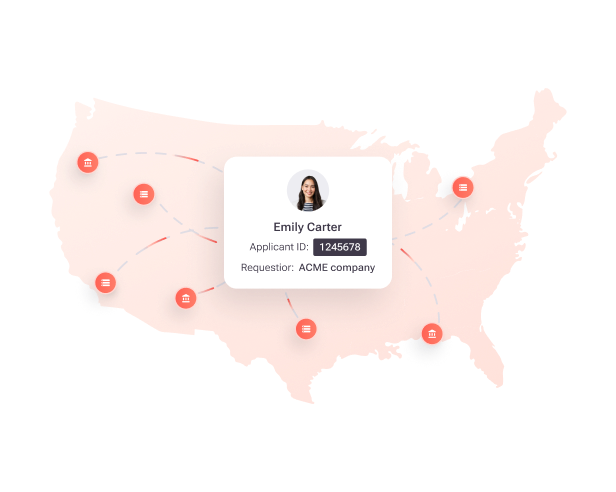
Inconsistent board decisions. Without a standardized review framework, boards apply different criteria across transactions. This inconsistency creates fair housing exposure and audit vulnerabilities.
Best-practice approaches to each challenge include the following.
- Require complete packages before logging the submission date and starting the decision clock.
- Use a centralized digital platform to track submission dates, decision deadlines, and written waivers in real time.
- Adopt biometric identity verification to confirm applicant identity before the board review stage.
- Standardize board review criteria in writing and apply them uniformly across all transactions.
- Maintain a complete, timestamped audit trail for every application, vote, and communication.
Manual vs Digital ROFR Governance
Governance quality in ROFR decisions depends on the consistency and auditability of the process, not on the outcome of any single transaction. The comparison below shows the operational difference between manual and digital board review processes.
| Process Stage | Manual Review | Digital Review (TenantEvaluation) | Operational Impact |
|---|---|---|---|
| Application intake | Paper or email submission, CAM manually checks completeness | Smart form logic rejects incomplete submissions automatically | Reduces back-and-forth, starts the clock only on complete packages |
| Document verification | Manual ID review, no biometric confirmation | IDVerify biometric liveness detection and government ID validation | Reduces identity fraud exposure before board review begins |
| Board review and voting | Email chains, board members review PDFs individually with no shared status | QuickApprove board-ready dashboard with AI-summarized reports and voting panel | Faster, clearer decisions with a documented vote record |
| Audit trail | Scattered across email inboxes, spreadsheets, and paper files | Centralized, timestamped, searchable digital records inside TenantEvaluation | Supports compliance readiness and reduces liability exposure |
Boards that adopt written, consistently applied procedures and document every step are better positioned to defend their decisions during a fair housing complaint, a title dispute, or an association audit.
How TenantEvaluation Supports Compliant ROFR Decisions
TenantEvaluation is built for community associations and management companies, with FCRA compliance as the foundation, not an afterthought. The platform connects every stage of the ROFR workflow, from application intake through board decision and written waiver, inside one audit-ready system.
QuickApprove is TenantEvaluation’s accelerated approval workflow for CAMs, boards, and property management teams. It replaces email chains and spreadsheets with real-time application tracking, automated communication support, customized approval letters, and a board-ready approval process inside one connected platform. Boards access a dedicated review and voting dashboard with AI-summarized applicant reports, so directors can decide faster without losing control, compliance, or visibility. QuickApprove supports high-volume seasons and communities with complex onboarding requirements, delivering faster, clearer, and more consistent approvals without skipping any required step.
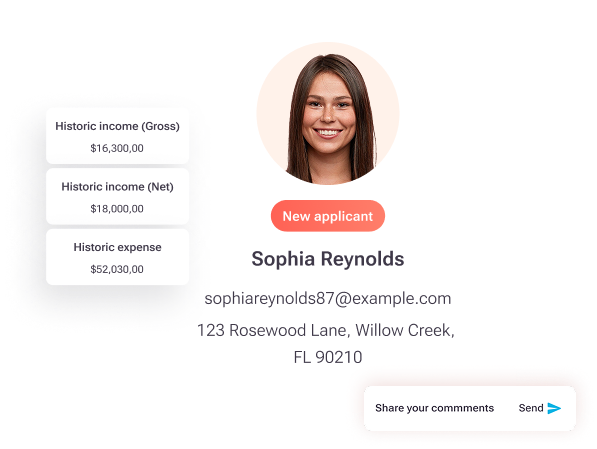
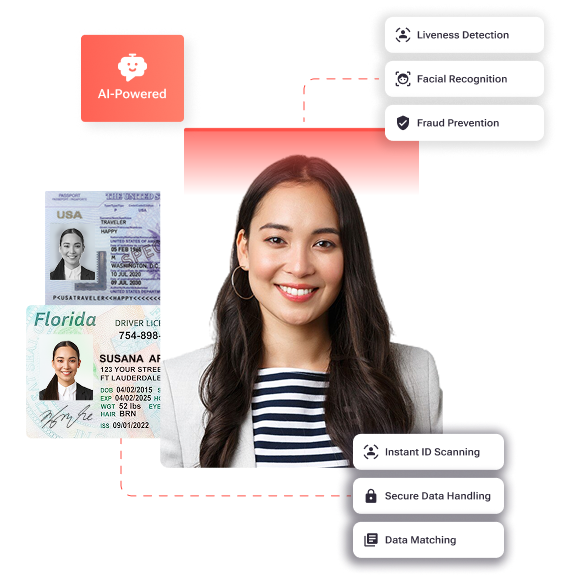
IDVerify introduces biometric identity verification directly into the screening workflow before the board review stage. It combines government-issued ID validation, AI-powered liveness detection, and biometric selfie-to-ID comparison, all natively inside TenantEvaluation, with no external portals or workflow disruption. CAMs see verification results embedded directly in the screening report, including ID authenticity confirmation, liveness status, and biometric match result. This shift moves communities from document-based validation to biometric-confirmed identity verification and reduces fraud exposure before approval decisions.
TenantEvaluation’s Lease Tracking capability connects resident onboarding, unit data, approvals, and lease documentation into one centralized, real-time workflow. CAMs and boards gain full visibility over lease-related activity from application submission through occupancy, supported by audit-ready digital records that replace spreadsheets and scattered email chains.
With 5,000+ communities served, approximately 100,000 applications processed annually, and $150M generated for communities, TenantEvaluation gives Florida condo boards and CAMs a faster, more transparent, and audit-ready path for ROFR decisions.
Schedule a demo today and see how QuickApprove and IDVerify work together inside one connected platform.
Frequently Asked Questions
What is a condo board right of first refusal and how does it differ from buyer rejection?
A right of first refusal is a contractual mechanism, created by a condominium’s declaration and bylaws, that gives the association the option to purchase a unit on the exact same price and terms as an accepted third-party offer. It does not grant a general power to reject buyers. The board faces a binary choice: match the contract terms and complete the purchase, or waive the right and allow the original sale to proceed. Florida condo associations generally cannot impose absolute restraints on an owner’s ability to sell, so ROFR is the primary transfer-control tool available to boards.
Who is responsible for managing the ROFR process in a Florida condo community?
Responsibility is shared across three parties. The seller or listing agent must deliver the executed contract to the association in the exact method and to the exact recipient specified in the governing documents. The community association manager (CAM) must log the submission date, confirm package completeness, notify the board, and track the decision deadline. The board of directors must review the application, conduct a vote within the declaration’s specified window, and ensure the decision is documented and delivered in writing. Failure at any stage, by any party, can result in procedural waiver of the ROFR or fair housing liability.
What documents does a Florida condo association typically require from a buyer during the ROFR review period?
Standard application packages typically include a completed application form for each adult occupant, government-issued identification, consent to background and credit screening, employment and income information, rental or purchase history, references, and the executed purchase contract. Some buildings also require an in-person interview, vehicle information, pet information, and income verification documentation. The exact combination is determined by each community’s governing documents and screening criteria. Florida law limits transfer or approval fees to amounts authorized by the governing documents.
How does a digital platform like TenantEvaluation improve ROFR compliance for Florida condo boards?
A digital platform addresses the three primary failure points in manual ROFR workflows: incomplete packages, undocumented decisions, and missed deadlines. TenantEvaluation’s smart form logic rejects incomplete submissions before they enter the review queue, so the decision clock starts only on complete packages. QuickApprove gives board members a dedicated review and voting dashboard with AI-summarized applicant reports, replacing email chains with a documented, timestamped vote record. IDVerify+ adds biometric identity confirmation before the board review stage and reduces fraud exposure. Lease Tracking connects the entire workflow, from application to occupancy, in one centralized, audit-ready system. Together, these capabilities reduce the administrative burden on CAMs, accelerate board decisions, and produce the audit trail that lenders, title underwriters, and regulators expect.
Does the 2026 Florida legislative session change how condo boards handle ROFR?
No. The 2026 Florida regular legislative session adjourned in March 2026 without enacting any major condominium or HOA reform bills. No new statute governing right of first refusal for condominium unit resales took effect on July 1, 2026. ROFR procedures remain governed exclusively by each community’s declaration and bylaws. Florida’s post-Surfside reforms, focused on structural inspections and reserve funding, do not alter ROFR timelines or procedures. Boards should confirm their current governing document language with qualified legal counsel and ensure their internal workflows are documented and consistently applied, because procedural scrutiny across all association governance actions has increased in the post-Surfside environment.
Conclusion: Making ROFR Workable in 2026
Florida condo boards, CAMs, and sellers face a ROFR process that is both legally precise and operationally demanding. Timelines come from governing documents, not statute. Decisions must be documented, consistently applied, and delivered in writing. Incomplete packages stall the clock. Missed deadlines waive the right. Manual workflows that rely on email chains, spreadsheets, and paper files introduce errors and liability at every stage.
TenantEvaluation removes many of those vulnerabilities. QuickApprove accelerates resident approvals with a board-ready dashboard, real-time application tracking, and automated communication support inside one connected platform, without sacrificing control, compliance, or visibility. IDVerify adds biometric identity verification before the board review stage and moves communities from document-based validation to confirmed physical identity. Lease Tracking connects every workflow from application to occupancy in one centralized, audit-ready system. Built for Florida community associations, with FCRA compliance as the foundation, TenantEvaluation gives boards a faster, more transparent, and compliant way to handle ROFR decisions in 2026.
Schedule a demo today and see how Florida’s leading condo boards and CAMs are replacing manual ROFR workflows with one connected, audit-ready platform.
