Written by: Luis Teran, Co-founder, CEO, TenantEvaluation
Key Takeaways for Florida Lease Tracking
- Lease visibility helps Florida HOAs and condos meet Chapters 720 and 718 F.S. record-keeping requirements and reduce legal risk.
- Effective lease tracking software provides centralized digital repositories, real-time status visibility, automated expiration alerts, unit-level occupancy tracking, and audit-ready records.
- Connecting lease tracking directly to resident screening and approvals removes disconnected records and keeps every lease searchable and compliant from application through occupancy.
- Board dashboards with real-time visibility, voting panels, and audit trails support faster decisions while maintaining governance and compliance standards under Florida law.
- TenantEvaluation delivers purpose-built lease tracking inside one connected platform for Florida associations; see how lease tracking connects to your onboarding workflow.
Core Lease Tracking Features Florida Associations Need
Effective lease tracking software maps directly to the workflows CAMs and property managers execute every day. The following capabilities represent the minimum viable feature set for a Florida community association managing rental activity at any scale. Each feature addresses common failure points in manual lease management such as scattered records, missed expirations, and compliance gaps that increase statutory risk.
- Centralized digital repository with automated document collection. Lease documents collected during onboarding stay in one searchable location, which removes the need to search across folders, inboxes, and shared drives. TenantEvaluation automates lease document collection as part of the onboarding workflow, so records are captured at the point of application rather than chased afterward.
- Real-time lease status visibility. Every unit displays a current status, such as active, pending, expired, or missing, without manual updates. In high-turnover Miami communities, lease tracking automation can reduce missed recurring violations that occur under manual spreadsheet systems.
- Critical date and expiration alerts. Best practice alert cadence includes notifications at 180, 90, 60, and 30 days before lease expiration, with each alert routed to a named action owner rather than a generic inbox. Florida condo management systems can send alerts before lease expiration to support re-approval processes.
- Unit-level occupancy tracking. Lease status ties to individual units, not just resident names. Boards and managers can confirm occupancy at a glance across the entire portfolio.
- Searchable digital history. Every lease record, document trail, and resident activity log should be retrievable instantly. A properly documented digital lease tracking platform preserves institutional knowledge and audit-ready documentation when managers leave, unlike manually maintained spreadsheets.
- Audit-ready records. Florida law requires that accounting records, financial reports, contracts, and insurance policies for both condominiums (§718.111(12)(b)) and HOAs (§720.303(4)) be retained for 7 years and stored inside the state of Florida. Lease records should meet the same standard so associations can respond confidently to records requests.
The table below compares manual spreadsheet-based lease tracking against a purpose-built platform across four operational dimensions.
| Dimension | Manual Spreadsheets | Lease Tracking Software | Operational Impact |
|---|---|---|---|
| Data accuracy | More prone to errors | Improved accuracy through automation | Fewer missed expirations and compliance gaps |
| Staff time on data entry | Higher time investment | Reduced time after automation | Staff capacity redirected to higher-value tasks |
| Missed expiration windows per quarter | Higher incidence of missed windows | Lower incidence of missed windows | Reduced turn expenses and vacancy loss |
| Audit defensibility | Inconsistent, dependent on individual manager habits | Timestamped, searchable, centralized records | Reduced legal exposure under Florida statutes |
These features deliver full value only when lease data flows automatically from the onboarding process. Without that connection, even strong tracking tools still rely on manual data entry that reintroduces the same errors they aim to prevent.
Connecting Lease Tracking with Screening and Approvals
The most significant operational gap in manual lease management is the disconnection between the application process and the resulting lease record. When screening, approval, and lease documentation live in separate systems, associations face missing records, delayed follow-ups, and occupancy data that cannot be verified without manual cross-referencing.
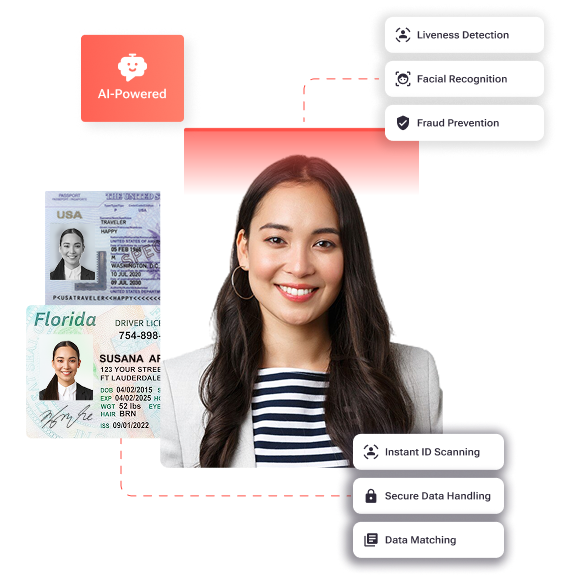
Purpose-built platforms address this by connecting the full resident lifecycle inside one workflow. TenantEvaluation’s Lease Tracking connects resident onboarding, unit data, approvals, and lease documentation into a single streamlined, real-time workflow. When an application is submitted, screened via IDVerify for biometric identity confirmation, and moved through the QuickApprove accelerated approval workflow, the resulting lease record links automatically to that unit’s occupancy history. Staff avoid manual re-entry and reduce data errors.
This integration removes the root cause of many lease management failures: lease data that sits apart from the onboarding process itself. A strong leasing process using onboarding software automates rental applications, performs background checks, issues e-sign leases, and provides real-time applicant status tracking, shortening approval times from multiple days to a few hours.
For Florida CAMs managing portfolios across multiple communities, this connected workflow keeps every lease searchable, trackable, and audit-ready from the moment an application is submitted through the full occupancy period. Teams can move away from spreadsheets, scattered email chains, and operational guesswork.
See how connected onboarding eliminates disconnected lease records in a live demo of TenantEvaluation’s workflow.
Board Dashboards and Digital Voting for Lease Decisions
Board members require direct visibility into lease and occupancy activity without depending on manager-prepared reports or email summaries. To deliver that visibility, a modern board dashboard must meet the following standard for Florida HOA and condo operations.
- Real-time lease status visibility by unit. Boards should see active, pending, expired, and missing lease statuses across the portfolio without requesting a report.
- Application review and voting panel. Florida HB 913 (effective July 1, 2025) amends electronic voting procedures solely for condominium associations under Chapter 718, which creates a clear legal pathway for board voting on lease approvals inside a digital platform. Electronic voting can increase voter participation and improve quorum success rates.
- Audit trail for every board action. Strong HOA governance tools require configurable workflows that guide processes such as lease approvals from start to finish with structured steps, with every step documented and timestamped from intake to resolution.
- Summarized applicant reports. Board members reviewing applications benefit from AI-generated summaries that surface key screening data without manual document review.
TenantEvaluation’s QuickApprove includes a dedicated board-ready review and voting dashboard that gives directors direct, real-time access to application status, summarized screening reports, and a voting panel for approvals. The platform replaces email chains and spreadsheets with a connected approval process inside TenantEvaluation, so boards can decide faster while maintaining control, compliance, and visibility.

Stronger board visibility also supports compliance, because directors can confirm that approvals, denials, and conditions align with governing documents and documented criteria.
Compliance and Risk Management for Florida Lease Records
Florida’s statutory framework creates specific compliance obligations that manual lease tracking cannot reliably satisfy. Under §718.111(12), Florida associations must produce requested official records within 10 business days; failure to do so exposes the association to statutory damages of $50 per calendar day, capped at $500 per records request per owner. Associations that store lease records across spreadsheets, email inboxes, and physical folders face meaningful exposure every time a records request arrives.
Property management platforms can maintain records of applications, communications, and outcomes to support compliance with federal and state fair housing laws (F.S. 760). Lease tracking software that connects directly to the screening and approval workflow supports this by design rather than through manual documentation effort.
Common failure points in Florida association lease management create both operational friction and legal risk.
- Missing or outdated lease copies stored across personal email accounts and local drives
- Manual expiration tracking that produces missed renewal windows and unconfirmed occupancy
- Disconnected records that cannot demonstrate consistent application of screening criteria
- No direct link between approved applications and active lease records
- Institutional knowledge loss when managers depart, leaving compliance gaps in historical records
When evaluating lease tracking software for a Florida association, the following criteria provide a neutral framework for comparison.
- Operational efficiency: The platform should reduce manual follow-ups, automate document collection, and surface expiration alerts without manual intervention.
- Transparency: Boards and managers should access real-time lease status without requesting reports.
- Scalability: The platform should handle higher onboarding volume without adding administrative complexity.
- Auditability: All records should be timestamped, searchable, and producible within Florida’s statutory response windows.
- Risk controls: The platform should include permissible-purpose controls, FCRA-aligned workflows, and separation between data provision and association decision-making.
TenantEvaluation is built specifically for community associations and management companies, with FCRA compliance as the foundation rather than an add-on. As a direct reseller of TransUnion and Equifax data, TenantEvaluation maintains strict permissible-purpose controls, automated adverse action workflows, and built-in audit trails for every application. These controls help keep associations protected from liability exposure tied to incomplete or disconnected records.
Frequently Asked Questions
What are the 4 types of leases?
In residential community association contexts, the four most commonly referenced lease types are fixed-term leases, month-to-month leases, short-term or vacation leases, and sublease agreements. Fixed-term leases cover a set duration, typically 12 months, with defined start and end dates. Month-to-month leases renew automatically each month until either party provides notice. Short-term or vacation leases run under 30 days and face Florida-specific restrictions in many HOA and condo governing documents. Sublease agreements occur when an existing tenant re-leases the unit to a third party, which typically requires board approval under Florida association rules. Each type carries different expiration tracking requirements, renewal workflows, and documentation obligations for community associations. Lease tracking software must accommodate all four types within a single centralized repository to maintain accurate occupancy records.
What is the 90% rule in leasing?
In the context of Florida community associations, the 90% rule most commonly refers to the Housing for Older Persons Act (HOPA) requirement that at least 80% of occupied units in a 55+ community must be occupied by at least one person aged 55 or older, while some associations reference a 90% threshold in their own governing documents as a more conservative internal standard. In lease accounting under ASC 842 and IFRS 16, the 90% rule is a classification test: if the present value of lease payments equals or exceeds 90% of the fair value of the leased asset, the lease is classified as a finance lease rather than an operating lease. For Florida HOAs and condominiums, the more operationally relevant application is the age-verification and documentation requirement for age-restricted communities, which TenantEvaluation addresses through its built-in 55+ Communities Verification capability.

What software do leasing agents use?
Leasing agents and community association managers in Florida use a range of platforms depending on portfolio type and operational complexity. Broad property management platforms such as AppFolio, Buildium, Yardi, and RealPage handle rent rolls, maintenance, and accounting for general rental portfolios. For community associations specifically, including HOAs and condominiums, platforms must also support board approval workflows, governing document compliance, age-restricted community requirements, and Florida-specific statutory record-keeping. TenantEvaluation is purpose-built for this segment, offering an all-in-one resident screening and onboarding platform that connects applications, identity verification, board approvals, and lease tracking inside one ecosystem designed exclusively for community associations and management companies in Florida.
What are the key features of property management software?
Property management software for Florida community associations should include online application processing, resident screening with FCRA-compliant background and credit checks, document collection and e-signature workflows, lease storage and expiration tracking, board approval dashboards with voting capabilities, automated critical date alerts, unit-level occupancy tracking, audit-ready record retention, and financial reporting. For community associations specifically, the platform must also support Florida-specific statutory requirements under Chapters 718 and 720 F.S., including record production timelines, board governance workflows, and age-restricted community documentation. TenantEvaluation delivers these capabilities within a single connected platform, adding biometric identity verification through IDVerify, accelerated approvals through QuickApprove, and standardized age-restricted application handling through 55+ Communities Verification.
Conclusion: How to Evaluate Lease Tracking Software
Manual lease tracking through spreadsheets and email chains creates missing records, missed expirations, and operational guesswork that exposes Florida community associations to statutory liability, compliance gaps, and board-level blind spots. Many multifamily operators report challenges with missed lease expirations when they rely on manual processes.
When evaluating lease tracking software for a Florida HOA or condominium, the platform should deliver the following capabilities.
- Centralized, real-time lease visibility with active, pending, expired, and missing status at the unit level
- Automated lease document collection connected directly to the resident onboarding workflow
- Critical date alerts with sufficient lead time to act before statutory deadlines
- Board-ready dashboards with direct visibility and voting capabilities
- Audit-ready digital records that satisfy Florida’s 7-year retention and 10-business-day production requirements
- Integration with resident screening and approvals so lease data stays connected to the full onboarding lifecycle
TenantEvaluation Lease Tracking delivers these capabilities inside one connected platform built exclusively for Florida community associations and management companies. The system connects resident onboarding, unit data, approvals, and lease documentation into a streamlined, audit-ready workflow that replaces spreadsheets and scattered email chains. With 5,000+ communities, approximately 100,000 applications processed annually, and FCRA compliance as the foundation, TenantEvaluation connects applications, approvals, unit occupancy, and lease records inside one ecosystem aligned with how Florida associations operate.
Request a TenantEvaluation demo and see real-time lease visibility from application to occupancy.
