Written by: Luis Teran, Co-founder, CEO, TenantEvaluation
Key Takeaways for Florida CAMs
- Florida CAMs still rely on email chains and spreadsheets, which causes delayed approvals, incomplete applications, and higher fraud exposure.
- Digital workflows replace manual steps with a structured, technology-driven sequence that connects every stage of resident onboarding in one platform.
- TenantEvaluation’s seven-stage workflow covers intake, biometric verification, background screening, board review, approval, and lease documentation.
- Key capabilities include FCRA compliance, direct credit bureau access, biometric ID verification, board voting dashboards, and centralized lease tracking.
- See how TenantEvaluation streamlines onboarding for Florida communities in a live demo.
Digital Workflows for CAMs: How They Replace Email and Spreadsheets
A digital workflow for CAMs is a structured, technology-driven sequence of steps that replaces manual processes across the full resident onboarding lifecycle, from application intake through identity verification, board review, approval, and lease documentation. Instead of routing information across email threads and spreadsheets, a digital workflow connects every stage inside one platform, giving managers, boards, and applicants real-time visibility and automated handoffs at each step.
TenantEvaluation is a complete solution for Florida community associations. The platform is built specifically for CAMs and boards, not generic rentals, and delivers FCRA compliance as the foundation with direct TransUnion and Equifax reseller relationships, built-in adverse action workflows, and audit trails on every application. The system covers the full onboarding stack: application intake, biometric identity verification via IDVerify, accelerated approvals via QuickApprove, age-restricted handling via 55+ Communities Verification, and centralized lease lifecycle control via Lease Tracking.
See the connected platform in action and explore how TenantEvaluation replaces fragmented tools with one connected system.
The Solution: TenantEvaluation’s Seven-Stage Resident Onboarding Workflow
TenantEvaluation’s onboarding workflow maps across three operational phases, Intake & Setup, Verification & Review, and Execution & Approval, broken into seven discrete stages that eliminate manual handoffs and keep every application moving. Each stage represents a specific automation point that replaces a manual process.
- Application Submission
- Document Collection & Smart Validation
- Biometric Identity Verification
- Background Screening & Report Generation
- Board Review & Voting
- Approval Decision & Communication
- Lease Documentation & Occupancy Tracking
Stage 1–2: Intake & Setup with Smart Online Applications
Manual application intake forces managers to email PDF forms, chase incomplete submissions, and manually sort documents by unit and applicant type. A single incomplete application can generate five or more follow-up exchanges before it is ready for review.
With TenantEvaluation, applicants receive a property code, create an account, and complete a fully online application on web or mobile. Intelligent form logic adjusts fields based on applicant type, such as tenant, purchaser, or adult occupant. Smart validation automatically checks for executed leases, valid IDs, and required documents, then rejects incomplete submissions before they reach the manager’s queue. This automation removes the administrative drag that limits portfolio capacity, a pattern reflected in AppFolio’s 2026 Benchmark Report, which found that firms broadly adopting AI-native platforms expect 31% portfolio growth, nearly triple non-implementers.
Stage 3–4: Verification & Review with Biometric Screening
Synthetic identities and impersonation attempts now appear frequently in community association applications, and traditional document-based screening cannot reliably detect them. Fraudsters can present convincing documents, yet document uploads alone cannot confirm that the person applying is the person on the ID.
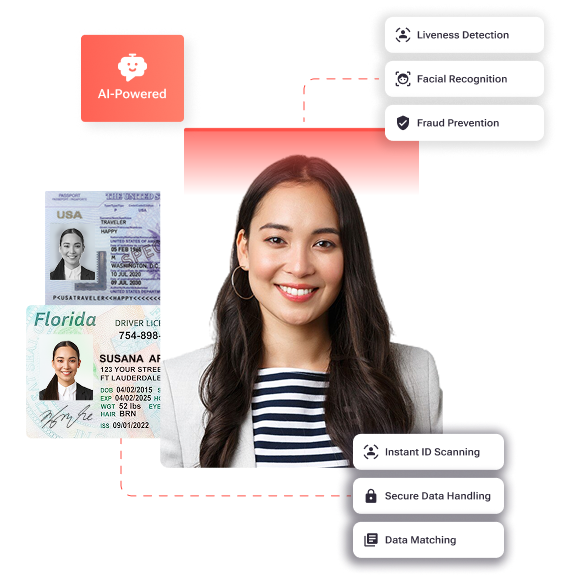
TenantEvaluation’s IDVerify introduces biometric identity verification natively inside the screening workflow. Applicants complete a guided step, uploading a government-issued ID and a selfie, and automated AI-powered liveness detection, facial landmark recognition, and biometric selfie-to-ID comparison run instantly. Managers see ID authenticity confirmation, liveness status, and biometric match results embedded directly in the screening report, alongside a redacted ID copy for compliance documentation.
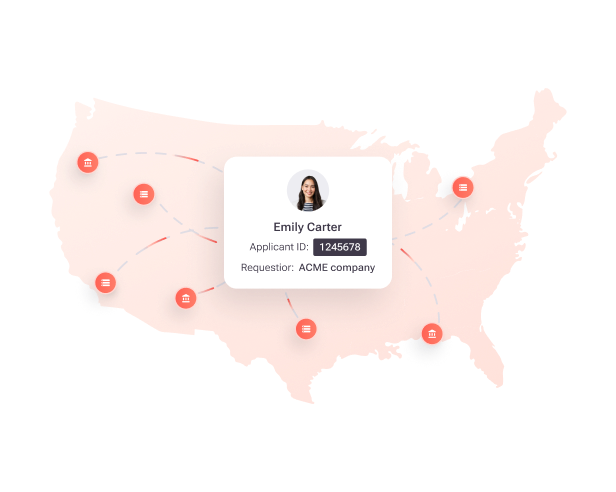
Background screening through SafeCheck+ then runs against nationwide criminal, eviction, and credit data sourced directly from TransUnion and Equifax, with no gray-market data and no third-party scraping. Structured adverse action notices are automated, protecting associations from the statutory damages of $100–$1,000 per violation that willful procedural failures can trigger under FCRA Section 616 (15 U.S.C. § 1681n).
Stage 5–7: Execution & Approval with Connected Board Decisions
Board approval is often where manual workflows stall most visibly. Without a centralized dashboard, board members receive application packets by email, vote asynchronously with no audit trail, and require managers to manually compile results and draft approval letters.
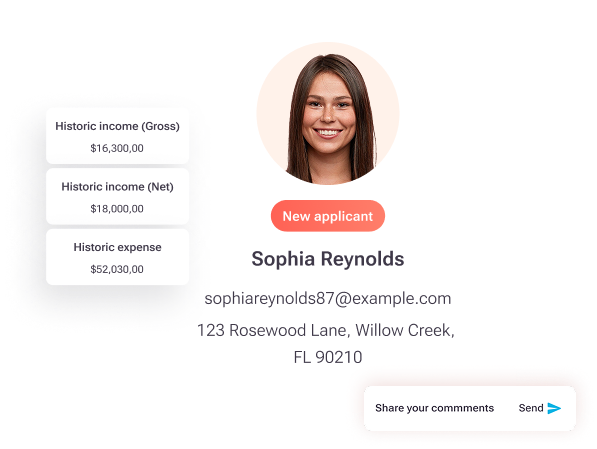
TenantEvaluation’s QuickApprove replaces that process with a board-ready approval workflow inside one connected platform. Boards access a dedicated panel with AI-generated applicant summaries and a structured voting interface, which means managers no longer compile packets manually or chase votes by email. Instead, managers track application status in real time, trigger automated communication, and generate customized approval letters and personalized welcome packages, all without manual follow-ups.
Once approved, Lease Tracking connects the completed application to lease documentation, unit-level occupancy records, and a searchable digital history, keeping information connected from application to occupancy. Auto-populated lease abstracts can reduce acquisition timelines from weeks to days, and TenantEvaluation applies the same principle to community association lease lifecycle management.
See the seven-stage workflow in action with a personalized demo.
QuickApprove: Advanced Board Approval Controls and Automation
QuickApprove is TenantEvaluation’s accelerated approval workflow built for CAMs, boards, and property management teams. It moves resident applications from submission to decision faster by providing real-time application tracking that eliminates status check emails, automated communication support that reduces manual follow-ups, and customized approval letters with personalized welcome packages, all inside one connected platform so CAMs maintain full control, compliance, and visibility throughout the process. QuickApprove extends the board approval capabilities described in the workflow with configurable voting thresholds, reusable approval letter templates, and automation that supports high-volume seasons and communities with complex governance rules.
IDVerify: Configurable Biometric Identity Controls for Florida Communities
IDVerify is TenantEvaluation’s biometric identity verification layer embedded directly into the screening workflow. Beyond the core liveness detection and facial matching described in the workflow, IDVerify provides configurable verification thresholds, multi-language support for international IDs, and integration with state-specific ID security features, giving Florida CAMs granular control over verification requirements. This moves Florida communities from document-based review to biometric-backed identity confirmation, strengthening approval confidence and reducing liability exposure before residents enter the community.
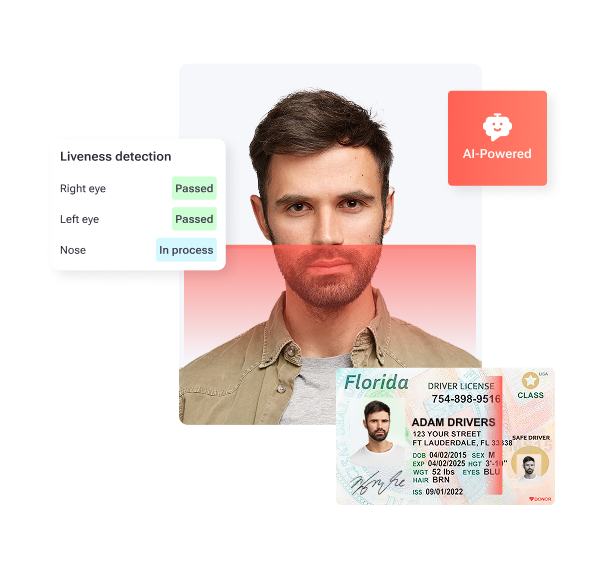
IDVerify is configurable per community and per portfolio, supporting different risk profiles without a one-size-fits-all approach. Under FIPA’s 2023 amendment, biometric data is now classified as protected personal information, which makes a platform that handles biometric verification with built-in redaction and encryption a compliance necessity, not a luxury.
55+ Communities Verification: Consistent Age-Restricted Workflows
55+ Communities Verification is a built-in capability within TenantEvaluation that helps Florida condos and HOAs standardize how age-restricted requirements are handled across applications. It reduces manual work, supports documentation consistency, and improves operational efficiency for community association managers and boards managing age-restricted communities.
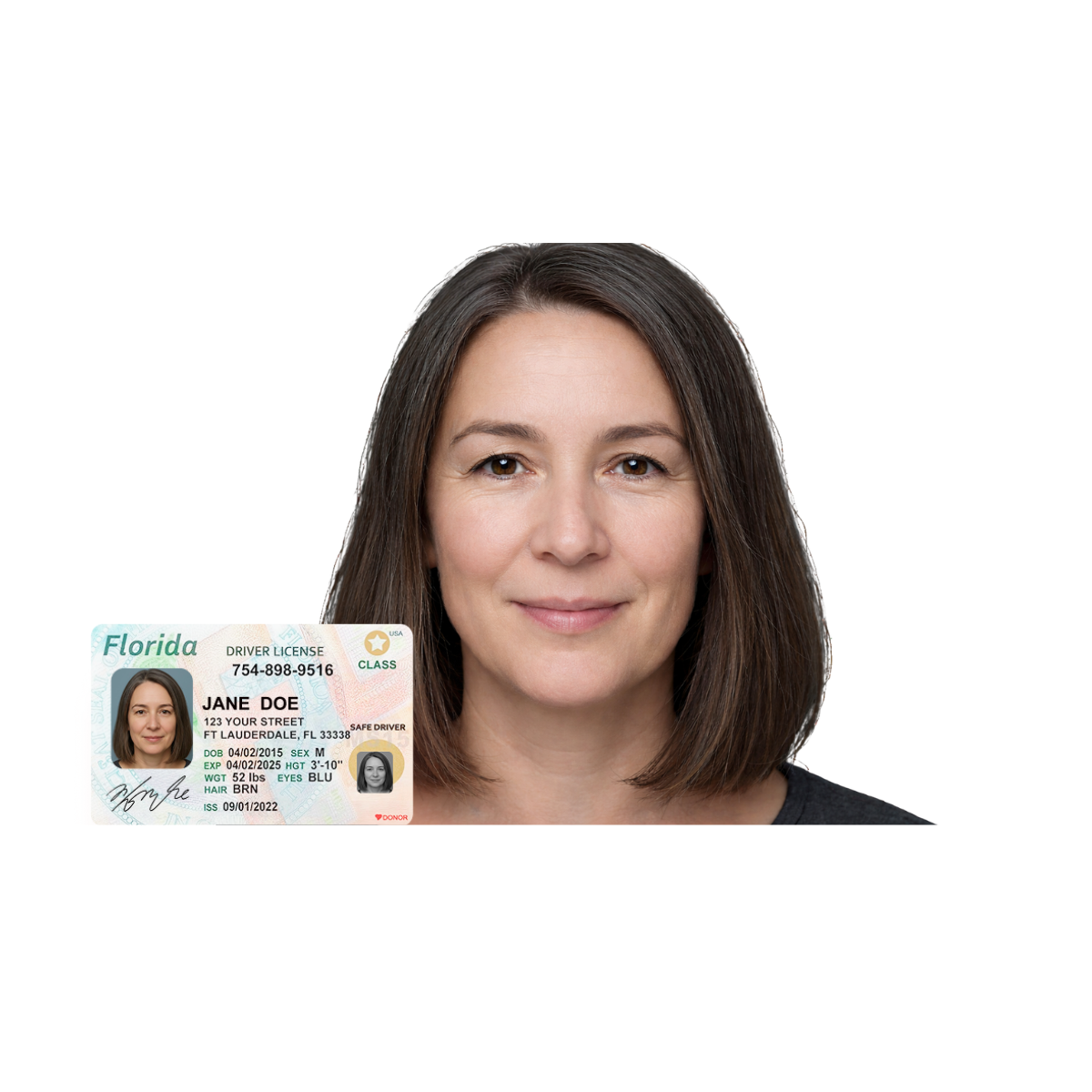
Instead of fragmented emails, PDFs, and manual follow-ups, CAMs gain a structured and scalable process for handling 55+ application requirements. This strengthens internal controls while still leaving room for legal guidance where needed.
Lease Tracking: Centralized Lease Lifecycle and Occupancy Insight
Lease Tracking is a centralized operational capability inside TenantEvaluation that connects resident onboarding, unit data, approvals, and lease documentation into one streamlined, audit-ready workflow. It delivers real-time lease status visibility, including active, pending, expired, or missing, automated lease document collection during onboarding, unit-level tracking tied to occupancy records, and a searchable digital history of leases and resident activity.
Built for CAMs, boards, property management companies, and community operations teams, Lease Tracking reduces manual follow-ups, spreadsheets, and scattered email chains. This improvement increases operational efficiency, supports scalability, and strengthens compliance readiness from application to occupancy.
What to Look for When Evaluating Digital Workflow Tools
Florida CAMs evaluating digital workflow platforms should assess each solution against the following criteria, using the capabilities described above as a practical benchmark.
- FCRA-first design: Compliance must be built into the platform architecture, including adverse action automation, permissible purpose controls, and audit trails, not added as a feature layer.
- Direct credit bureau access: Platforms that resell TransUnion and Equifax data directly eliminate gray-market data risk and protect associations from liability exposure.
- Board access and voting dashboard: A dedicated board panel with real-time application visibility and a structured voting workflow is a differentiator most generic tools do not offer.
- Biometric fraud prevention: Document-based screening is insufficient against synthetic identity fraud, so biometric liveness detection and facial matching now function as baseline requirements for high-risk community environments.
- Revenue-sharing model: Platforms that return application fee revenue to the association turn onboarding from a cost center into a compliant income stream.
- Florida-specific configuration: Governing documents, screening criteria, and 55+ age-restricted workflows vary by community, so the platform must support custom setup aligned to Florida regulations.
- Centralized lease lifecycle management: Lease tracking must connect directly to the onboarding workflow, not operate as a separate system, to eliminate operational blind spots.
Frequently Asked Questions
What is a digital workflow for CAMs?
A digital workflow for community association managers is a structured, technology-driven sequence of steps that automates and connects every stage of resident onboarding, from application intake and document collection through identity verification, background screening, board review, approval, and lease documentation. Instead of managing these steps across email chains, spreadsheets, and manual follow-ups, a digital workflow routes information automatically between stages inside one platform. For Florida CAMs, this means faster approvals, fewer manual errors, real-time visibility for boards, and audit-ready records that support FCRA compliance and Florida data protection requirements.
How does QuickApprove help boards?
QuickApprove gives board members a dedicated review and voting dashboard inside TenantEvaluation, replacing the email-based approval process most communities still use. Board members access AI-generated applicant summaries, review screening reports, and cast votes through a structured panel with a timestamped audit trail. Managers see application status in real time and can trigger automated communication and customized approval letters without manual follow-up.
The result is faster, clearer, and more consistent board decisions, with full visibility and compliance maintained throughout the process. QuickApprove is designed for high-volume application seasons and communities with complex onboarding requirements, while still preserving board oversight and due diligence.
How does Lease Tracking replace spreadsheets?
Lease Tracking is built directly into the TenantEvaluation ecosystem, connecting lease documentation to the same workflow that handles applications, approvals, and unit data. As described in the workflow section, it links each approved application to unit-level occupancy records and a searchable digital history. Instead of storing lease copies across folders, inboxes, and spreadsheets, CAMs and property managers access centralized lease records with real-time status visibility from a single platform.
Automated lease document collection during onboarding means leases are captured at the point of approval, not chased afterward. Unit-level tracking ties occupancy records to lease history, and a searchable digital archive makes audit preparation faster and more reliable. This setup removes spreadsheet-based tracking, reduces time spent locating records, and strengthens compliance across the full lease lifecycle.
Conclusion: Move to a Single Connected Platform
Florida CAMs managing resident onboarding in 2026’s regulatory and operational environment cannot afford the inefficiencies of manual processes. The seven-stage digital workflow, covering application submission, document validation, biometric verification, background screening, board review, approval communication, and lease tracking, now represents the operational standard that high-performing communities adopt.
TenantEvaluation delivers every stage inside one FCRA-first platform built specifically for Florida community associations. QuickApprove accelerates board decisions. IDVerify+ confirms identity biometrically before approval. 55+ Communities Verification standardizes age-restricted handling. Lease Tracking connects every lease to the onboarding record. Together, these capabilities replace fragmented tools, reduce approval times by up to 70%, free up to 50 hours of staff time per day, and have already generated $150 million for communities.
Transform your resident onboarding and schedule a demo to see TenantEvaluation’s seven-stage digital workflow in your Florida community.
