Written by: Luis Teran, Co-founder, CEO, TenantEvaluation
Key Takeaways for Florida 55+ Communities
- The 80/20 rule under HOPA requires at least 80% of occupied units in Florida 55+ communities to have one resident aged 55 or older, while the remaining 20% may house younger occupants if the governing documents allow it.
- Younger spouses, partners, or adult children may live in a qualifying unit when the community’s governing documents permit it, but some Florida HOAs require every permanent occupant to be 55 or older.
- Communities must keep reliable age-verification procedures, including periodic surveys and documentation such as driver’s licenses or passports, to preserve their HOPA exemption from familial status protections.
- Associations that let the 80% threshold slip or fail to maintain accurate, audit-ready records risk legal claims and potential loss of age-restriction rights.
- Simplify age-verification and lease tracking for your Florida 55+ community with TenantEvaluation.
How the 80/20 Rule Works in Florida 55+ Communities
HOPA, codified at 42 U.S.C. § 3607(b), sets three conditions a community must meet to qualify as a legitimate 55+ housing community. First, at least 80 percent of occupied units must have at least one occupant who is 55 years of age or older. Second, the community must publish and follow policies that show an intent to be housing for persons 55 and older. Third, the community must comply with HUD’s age-verification procedures.
The 80/20 threshold applies only to occupied units, not total units. A vacant unit does not count against the 80 percent calculation. Florida communities that satisfy all three HOPA conditions are exempt from the Fair Housing Act’s familial status protections, so they may lawfully restrict occupancy based on age. Communities that fail to maintain the 80 percent threshold or allow their verification procedures to lapse lose that exemption and become subject to familial status discrimination claims.
Florida’s statutes do not independently define 55+ community eligibility and instead defer to the federal HOPA framework. Community governing documents such as declarations, CC&Rs, and bylaws may impose stricter age requirements than HOPA’s minimum, but they cannot be more permissive than federal law while still retaining the exemption.
Spouses Under 55 in Florida 55+ Communities
HOPA does not require every occupant of a qualifying unit to be 55 or older. The statute requires only that at least one occupant per unit meet the age threshold. A spouse, domestic partner, or cohabitant who is younger than 55 may legally reside in the unit with the qualifying 55+ resident when the community’s governing documents do not impose a stricter standard.
Some Florida communities adopt governing documents that require all permanent occupants to meet the age minimum. In those communities, a younger spouse would not be permitted to reside in the unit even though HOPA itself would allow it. Buyers and renters should review the specific declaration and rules of the community, not rely solely on the federal floor.
Adult and Minor Children Living in a 55+ Community
Adult children are not automatically excluded from 55+ communities under HOPA, but their eligibility depends on the community’s 80/20 occupancy status and the language of its governing documents. If the governing documents restrict all occupants to age 55 or older, an adult child of any age would not qualify as a permanent resident. If the documents require only one qualifying occupant per unit, an adult child may be permitted to reside there with the 55+ parent, subject to the community’s written policies.
Minor children raise a different concern. HOPA’s 55+ exemption specifically excludes communities that permit minors as permanent residents. A community that allows children under 18 to reside permanently risks losing its age-restricted exemption entirely. Temporary visits by grandchildren or minor relatives are usually treated differently from permanent occupancy, but communities should have written policies that define this distinction.
When a 26-Year-Old Can Live in a 55+ Community
A 26-year-old may reside in a 55+ community only when the community’s governing documents permit occupants below the age threshold and the unit already has at least one qualifying resident aged 55 or older. The 26-year-old’s presence would place the unit within the 20 percent allowance rather than the 80 percent qualifying side. If the community has already reached or is near the 20 percent ceiling for non-qualifying occupants, the application would likely be denied regardless of individual circumstances.
Communities track this ratio on an ongoing basis. A unit that pushes the community below 80 percent creates a compliance exposure for the entire association, so boards and CAMs tend to treat these applications cautiously.
Example: When One Spouse Is 48
A buyer or renter who is 55 or older and whose spouse is 48 can usually qualify for residency in a HOPA-compliant 55+ community, because HOPA requires only one occupant per unit to meet the age threshold. The unit would count toward the 80 percent qualifying side of the ratio. However, if the community’s governing documents require all permanent occupants to be 55 or older, the 48-year-old spouse would not be permitted as a permanent resident.
The outcome turns on the specific language of the community’s declaration and rules, not on HOPA alone.
How Florida HOAs Verify Age Requirements
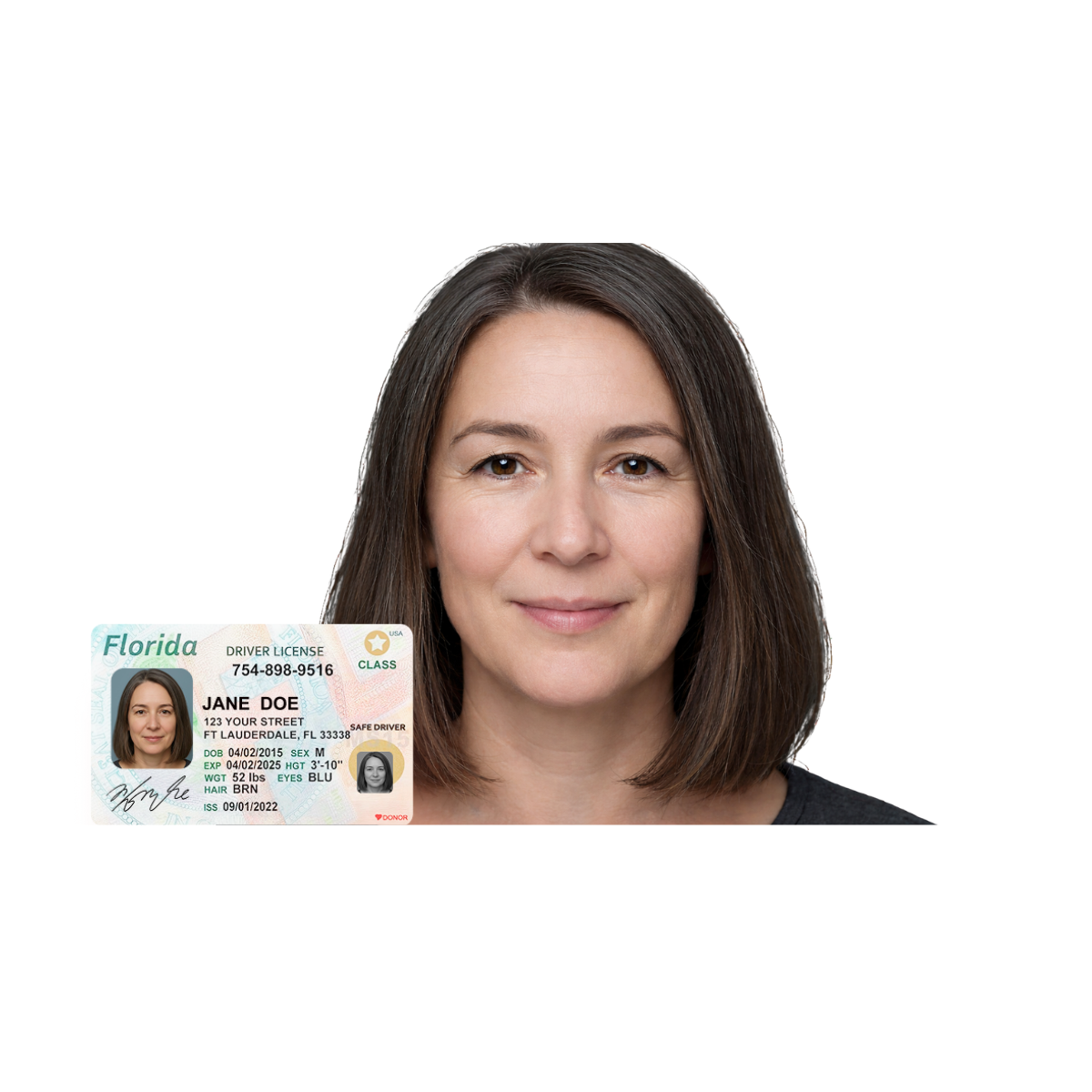
HOPA requires communities to keep reliable age-verification procedures and records. Acceptable documentation typically includes driver’s licenses, passports, birth certificates, and similar government-issued documents. Communities must survey their residents periodically, and HUD guidance has historically referenced surveys conducted every two years, to confirm that the 80 percent threshold is maintained.
Florida HOAs and condominiums usually handle this verification through the application process. Each applicant household must submit documentation confirming the age of all intended occupants. The association or its Community Association Manager (CAM) reviews those documents, records the qualifying occupant’s age, and updates the community’s occupancy ratio.
Understanding how different household compositions are evaluated helps buyers and CAMs anticipate approval outcomes before submitting applications. The following table maps common mixed-age scenarios to typical HOA outcomes under a standard HOPA-compliant community and shows how the presence of a qualifying 55+ occupant determines whether a unit counts toward the 80 percent threshold. Outcomes may differ if governing documents impose stricter requirements.
| Scenario | Qualifies Under HOPA? | Counts Toward 80% Side? | Typical HOA Outcome |
|---|---|---|---|
| Buyer age 62, spouse age 48 | Yes (one occupant 55+) | Yes | Approved if governing docs allow younger co-occupants |
| Buyer age 55, adult child age 26 | Conditional | Yes (qualifying occupant present) | Approved if docs permit; adult child counted in 20% allowance |
| Buyer age 70, live-in caregiver age 32 | Conditional | Yes | Many communities permit caregivers; verify governing docs |
| Buyer age 50, spouse age 58 | Yes (spouse is 55+) | Yes | Approved if one qualifying occupant is confirmed |
Check your governing documents — a step-by-step process: (1) Obtain the community’s Declaration of Covenants, Conditions, and Restrictions (CC&Rs) from the county recorder’s office or the association directly, because this document forms the legal foundation that defines all age restrictions. (2) Locate the age-restriction article or section within the CC&Rs, which typically defines qualifying occupant age, permitted co-occupants, and any exceptions; this section shows whether the community follows HOPA’s minimum or applies stricter standards. (3) Review the community’s Rules and Regulations for any supplemental age policies that refine or expand on the CC&R provisions. (4) Request the association’s current HUD-compliant age-verification policy in writing so you understand what documentation you must provide. (5) Confirm the community’s current 80/20 occupancy ratio with the CAM before submitting an application, because even if you qualify individually, the community may have reached its 20 percent non-qualifying unit cap. When questions remain, consult a licensed Florida real estate attorney for interpretation specific to your situation.
Practical Drawbacks of 55+ Communities in Florida
Age-restricted communities offer lifestyle benefits, but they also create practical limits. Resale pools are narrower because buyers must meet age requirements. Families with children or younger relatives cannot use the property as a permanent shared residence. Some communities set strict rules on the duration and frequency of guest visits by non-qualifying individuals.
HOA fees in amenity-rich 55+ communities can be substantial. Boards and CAMs also carry a continuous administrative obligation, because maintaining HOPA compliance requires ongoing age verification, periodic surveys, and accurate record-keeping. When associations fail to maintain those records, they create legal exposure for the entire community, not just individual units.
Operational Challenges for CAMs and Boards Managing Age Verification
The verification process described above seems straightforward but becomes demanding at scale. Many Florida associations still rely on fragmented manual processes such as email requests for documents, PDFs stored in shared drives, follow-up calls to applicants or realtors, and spreadsheets tracking the 80/20 ratio. This approach creates inconsistent documentation across applications, gaps in the audit trail, and growing risk exposure that often surfaces during disputes or regulatory reviews.
When documentation is inconsistent, records become difficult to defend. One applicant may submit a passport, another may submit an informal letter, and a third may submit nothing while the CAM relies on a verbal confirmation. Boards that cannot produce reliable age-verification documentation for every occupied unit face significant exposure if the community’s HOPA status is challenged.
Standardized verification workflows now represent an emerging best practice for Florida associations that manage this risk. Instead of treating each application as a one-off manual task, associations that adopt structured processes collect consistent documentation types, maintain organized records, and produce audit-ready files without relying on individual staff memory or email chains.
This is the operational gap that TenantEvaluation’s 55+ Communities Verification was built to close. It is built for Florida Condos and HOAs and designed for Community Association Managers. It reduces manual work, standardizes application handling, supports documentation consistency, improves operational efficiency, and strengthens internal processes without replacing legal guidance. For CAMs managing multiple communities or high application volumes, this creates a more scalable and defensible process than manual handling alone.
See how the platform works in a live Florida community workflow — schedule a demo today.
A Five-Dimension Framework to Review Your Verification Process
Before adopting any new process or tool, CAMs and boards should first understand where their current system is weakest. The following five-dimension framework helps associations audit their existing age-verification process and identify which operational gaps create the most risk, whether they address those gaps with TenantEvaluation or another approach.
Compliance readiness: Does the community have a written, HUD-aligned age-verification policy, and are records current and accessible? Has the 80/20 ratio been calculated and documented within the past two years?
Operational efficiency: How many staff hours per application are consumed by manual document collection and follow-up, and do those hours scale during peak application seasons?
Transparency: Can the board access the current occupancy ratio and supporting documentation on demand, and do applicants receive clear written guidance on what documentation is required?
Scalability: Does the current process hold up when application volume increases, and are procedures consistent across all units and all staff members who handle applications?
Auditability: If the community’s HOPA status were challenged today, could the association produce a complete, organized record of age verification for every occupied unit, stored in a format that is searchable and retrievable without manual reconstruction?
Communities that identify weaknesses in any of these five areas are carrying operational and legal risk that a standardized workflow can reduce. TenantEvaluation’s 55+ Communities Verification addresses each dimension of this framework through the structured workflow described above.
TenantEvaluation has processed over 100,000 applications annually across 5,000+ communities and has generated $150 million for those communities, with FCRA compliance as the foundation, not an afterthought. The platform’s track record reflects its focus on community associations rather than generic rental tools.
Walk through the five-dimension framework inside the platform — schedule a demo to see it in action.
Conclusion: Turning HOPA Rules into Daily Practice
Florida 55+ HOA age requirements follow HOPA’s 80/20 rule and are supplemented by each community’s governing documents. The federal floor permits one qualifying occupant per unit, allows younger spouses and co-occupants in many cases, and requires ongoing age-verification procedures and records. Florida communities that fail to maintain those records or allow their processes to become inconsistent risk losing their HOPA exemption and the legal protections that come with it.
For buyers and renters, the key step is reviewing the specific governing documents of any community before applying, because HOPA sets the minimum while individual declarations may be stricter. For realtors, understanding the 80/20 ratio and the community’s current occupancy status before submitting an offer helps prevent application rejections and timeline delays. For CAMs and boards, the main challenge is not learning the rule but maintaining consistent, audit-ready documentation across every application, every cycle, at scale.
Standardized workflows give associations a practical way to meet that challenge. TenantEvaluation’s 55+ Communities Verification uses a Florida-specific design and CAM-focused workflow to address the operational issues outlined throughout this article.
Frequently Asked Questions
Does every resident in a 55+ community in Florida need to be 55 or older?
No. HOPA requires only that at least one occupant per unit be 55 or older and that at least 80 percent of occupied units have at least one such qualifying resident. The remaining 20 percent of occupied units may have no qualifying occupant. Within a qualifying unit, a spouse, domestic partner, or other co-occupant who is younger than 55 may reside there if the community’s governing documents permit it. Some Florida communities adopt stricter rules in their declarations that require all permanent occupants to meet the age minimum, so the answer depends on the specific community’s documents, not HOPA alone.
What documentation does a Florida 55+ HOA typically require to verify age?
Most HOPA-compliant communities require government-issued documentation confirming the qualifying occupant’s date of birth. Acceptable documents commonly include a driver’s license, state-issued ID card, passport, or birth certificate. Communities must also conduct periodic surveys of their residents, typically every two years, to confirm that the 80 percent threshold is maintained. The specific documentation requirements are set by each community’s written age-verification policy, which should be provided to applicants in writing before or during the application process.
What happens to a 55+ community in Florida if it falls below the 80 percent threshold?
A community that falls below the 80 percent occupancy threshold loses its HOPA exemption from the Fair Housing Act’s familial status protections. The community can no longer lawfully restrict occupancy based on age and becomes subject to familial status discrimination claims. Restoring the exemption requires bringing the occupancy ratio back above 80 percent and demonstrating that the community has maintained and followed its age-verification procedures. The risk is not theoretical, because associations that allow their records to lapse or their processes to become inconsistent may struggle to demonstrate compliance if the ratio is challenged.
Can a Florida 55+ HOA deny an application because the buyer’s spouse is under 55?
Under HOPA, a community cannot deny an application solely because one occupant is under 55 when the unit has at least one qualifying occupant aged 55 or older. However, if the community’s governing documents require all permanent occupants to be 55 or older, which is stricter than HOPA’s minimum, the association may lawfully deny the application on that basis. Buyers should request and review the community’s declaration and age-restriction policies before applying. Realtors representing buyers in mixed-age couples should confirm the community’s specific occupant age requirements early in the transaction to avoid delays or rejections.
How does TenantEvaluation’s 55+ Communities Verification help Florida associations manage age-restricted applications?
TenantEvaluation’s 55+ Communities Verification is a built-in capability within the TenantEvaluation platform that helps Florida Condos and HOAs standardize how age-restricted requirements are handled across applications. It reduces manual work, standardizes application handling, supports documentation consistency, improves operational efficiency, and strengthens internal processes for Community Association Managers and boards. Instead of relying on fragmented email chains, PDFs, and manual follow-ups, associations using this capability work within a more structured and consistent workflow designed specifically for Florida’s age-restricted community environment. It supports internal compliance-related processes without replacing legal guidance or guaranteeing any specific regulatory outcome.
