Written by: Luis Teran, Co-founder, CEO, TenantEvaluation
Key Takeaways for Florida Lease Approvals
- The lease documentation approval process in Florida community associations follows a structured sequence of steps from application intake through board approval and lease record activation.
- Document review moves through four distinct stages, including submission screening, identity validation, background review, and board voting, each with specific legal and operational requirements.
- Manual workflows create significant challenges including missing lease records, board bottlenecks, disconnected tracking systems, and compliance risks under Florida’s seven-year retention rules.
- Effective practices include standardizing application packets, using AI-generated summaries for board review, maintaining digital audit trails, and automating lease expiration alerts.
- TenantEvaluation’s Lease Tracking centralizes lease visibility and lifecycle control, so you can see how Lease Tracking works.
Step-by-Step Leasing Workflow for Florida Associations
Florida community associations follow a defined sequence from application intake through occupancy authorization. Each step assigns documentation, a responsible party, and a clear handoff to the next stage.
- Governing Document Review: The CAM or board confirms the unit’s applicable rental restrictions under the association’s CC&Rs, bylaws, and any amendments. Under Florida law, associations must maintain per-unit “amendment vintage” records showing which rental rules apply based on the owner’s acquisition date.
- Application Intake: The prospective tenant submits a complete application packet including the executed lease agreement, personal identification, and any required administrative fees. Under Florida Statute 718.112, condo associations may charge a lease approval fee capped at $150 per applicant, with no fee permitted for renewals involving the same lessee.
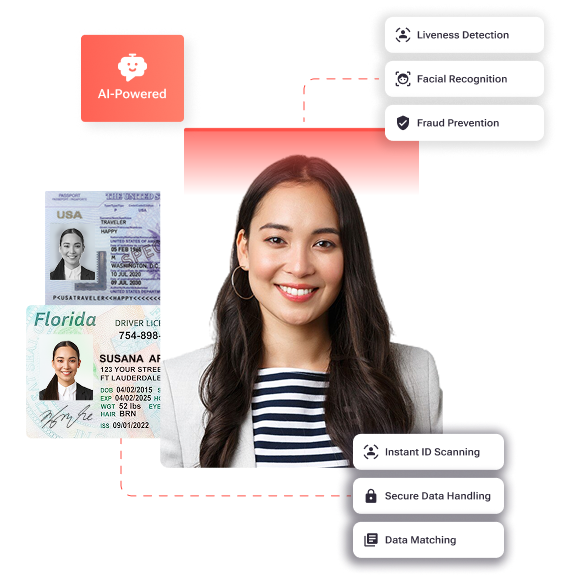
- Identity Verification: The association confirms applicant identity before the file advances to screening. TenantEvaluation’s IDVerify performs biometric identity verification, including government ID validation, AI-powered liveness detection, and selfie-to-ID biometric comparison, natively inside the platform.
- Tenant Screening: The association completes background checks covering criminal history, credit evaluation, eviction history, and reference verification. Screening policies must be applied consistently to all applicants to avoid fair housing violations.
- Document Collection and Completeness Check: Staff confirm that all required documents, including the executed lease, valid ID, income verification, and community-specific forms, are present and complete before the file moves to board review.
- Board Review and Voting: The board evaluates the application against association policies. TenantEvaluation’s QuickApprove provides a board-ready voting dashboard with summarized applicant reports and real-time application tracking, which replaces email chains with a connected approval process.
- Written Approval or Denial: The association issues a written decision. Renting without written approval violates Florida HOA rental restrictions and can trigger fines, legal action, suspension of amenities, or liens.
- Lease Record Activation and Occupancy Tracking: The approved lease is stored in a centralized, searchable digital record system. TenantEvaluation’s Lease Tracking connects the approved application directly to an active lease record, with real-time lease status visibility, including active, pending, expired, or missing, from that point forward.
Track every step of your lease approval workflow in one platform and explore the platform.
Four Core Stages Inside Lease Document Review
Within the broader lease approval process outlined above, document review follows four stages that occur mainly during steps three through six. Each stage carries specific legal and operational requirements for Florida associations.
Stage 1 — Submission and Completeness Screening: The CAM confirms the application packet contains all required items, including an executed lease agreement, government-issued ID, income documentation, and any community-specific forms. Staff return incomplete submissions before screening begins, which prevents downstream delays.

Stage 2 — Identity and Fraud Validation: The association authenticates identity documents. TenantEvaluation’s IDVerify moves this stage from manual document review to biometric-backed identity confirmation, validating physical presence and matching the applicant’s face to their government-issued ID before the file advances.
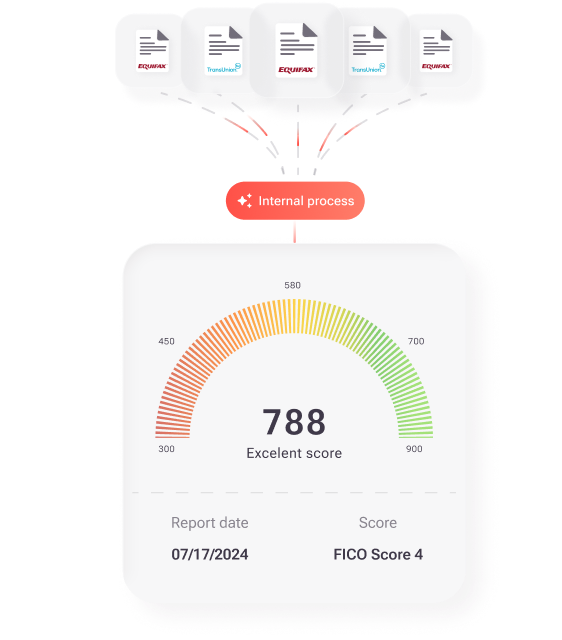
Stage 3 — Background and Compliance Review: Screening results, including criminal history, credit, eviction records, and references, are evaluated against the association’s governing criteria. Under Florida Statutes 718.111 and 720.303, lease documentation and written communications tied to the approval process are official records subject to retention and inspection requirements.
Stage 4 — Board Voting Dashboard Review: Board members access a dedicated review panel with AI-generated applicant summaries and cast timestamped votes. This stage replaces unstructured email threads with a structured, auditable decision record. Under HB 913, virtual board meetings are authorized in Florida when proper notice, access, and recording requirements are met, which makes a digital voting record both convenient and operationally necessary.

Lease Paperwork Timelines for Florida Associations
Approval timelines in Florida community associations often range from several days to several weeks, depending on the association and its processes. Delays most often stem from fragmented document handling, board meeting schedules, and incomplete screening submissions.
The administrative burden on staff and volunteers is substantial. Property managers spend dozens of hours annually on leasing tasks for a single property, and automation can reduce leasing task time by over 60%. For associations managing dozens or hundreds of units, that time compounds quickly across a portfolio.
TenantEvaluation shortens approval cycles by up to 70% by automating document collection, identity verification, screening, and board notification inside one connected platform. Managers report freeing up to 50 hours of staff time per day, time previously consumed by manual follow-ups, missing documents, and status inquiries from applicants and realtors.
The efficiency gains compound across a portfolio. Property managers report saving up to 20 hours per listing by automating tenant screening and document preparation. For Florida CAMs managing peak-season application volumes, that efficiency gap between manual and automated workflows often separates a multi-week process from a five-to-ten-day one.
Operational Challenges in Lease Documentation Approval
Florida CAMs and boards consistently encounter the same operational failures across the lease documentation approval process. These recurring issues reflect structural weaknesses in manual workflows rather than isolated mistakes.
- Missing or outdated lease copies: Lease agreements stored across email inboxes, shared drives, and physical folders are difficult to locate and frequently incomplete, which creates gaps in the official record.
- Manual expiration tracking: Without automated alerts, lease expirations go unnoticed until a unit is already out of compliance, triggering retroactive follow-up and potential disputes.
- Disconnected spreadsheets: Spreadsheet-based tracking has no direct connection to the application or approval record, so occupancy status and lease data are always one step behind reality.
- Board bottlenecks: Without a dedicated review interface, board members receive application materials through email, lose track of pending votes, and delay decisions, particularly during high-volume seasons.
- No centralized lease visibility: CAMs cannot easily confirm occupancy status, verify which rental rules apply to a given unit, or produce a complete leasing file on demand without searching across multiple systems.
- Compliance risk from incomplete records: Official records, including leasing files, must be maintained for at least seven years. Fragmented records make this requirement difficult to satisfy.
Best-practice approaches address these challenges through audit-ready digital records, automated lease document collection during onboarding, and unit-level tracking that connects each lease to its corresponding application and approval. Associations gain reduced manual follow-ups, fewer compliance gaps, and a searchable digital history that satisfies Florida’s inspection and retention requirements under Florida Statutes 718.111 and 720.303.
Eliminate missing leases and manual tracking gaps and explore the platform.
Board Lease Approval Workflow and Practical Safeguards
A structured board lease approval process assigns clear ownership to each step, defines required actions, and maintains real-time status visibility across the workflow. The table below maps the core approval stages to responsible parties and status indicators.
| Step | Responsible Party | Required Action | Status Visibility |
|---|---|---|---|
| Application Intake | CAM / Management Team | Confirm completeness, collect executed lease, ID, fees | Pending / Incomplete |
| Identity Verification | Platform (Automated) | Biometric ID validation and liveness detection | Verified / Failed |
| Screening Review | CAM / Screening System | Background check, credit, eviction, reference review | In Review / Complete |
| Board Vote | Board of Directors | Review summarized report, cast timestamped vote | Pending Vote / Approved / Denied |
The workflow follows a linear path. An application submission triggers automated document collection and identity verification, which feeds a completed screening report to the board’s review dashboard. The board votes within the platform and generates a timestamped decision record. After approval, the system activates the lease record with real-time status tracking, including active, pending, expired, or missing, connected to the unit’s occupancy record from that point forward.
Beyond the core workflow structure, associations should implement several operational safeguards that address common failure points. First, standardize the application packet requirements across all units to prevent inconsistent submissions that delay intake. Once applications are complete, use a board-ready voting dashboard that provides AI-generated applicant summaries, which removes the need for board members to read full application files.
Each vote should generate a digital audit trail with timestamps and voter identity to satisfy Florida’s official records requirements. After approval, automate lease expiration alerts so renewals start before the current term ends, which prevents compliance gaps. Finally, ensure all lease records are posted to the association’s website or portal within the timeframes required by Section 718.111(12)(g)2, Florida Statutes, which requires condominiums with 25 or more units to post official records within 30 days of creation or receipt.
Give your board a purpose-built approval workflow and book your demo.
How TenantEvaluation Lease Tracking Supports Florida Compliance
TenantEvaluation is built specifically for community associations and management companies, with FCRA compliance as the foundation rather than an afterthought. Lease Tracking operates as a centralized operational capability inside the TenantEvaluation ecosystem for CAMs, boards, property management companies, and community operations teams that need full visibility over lease-related activity from application submission through occupancy.
The platform connects resident onboarding, unit data, approvals, and lease documentation into one streamlined workflow. Every lease becomes connected, searchable, trackable, and audit-ready from application to occupancy. Teams no longer rely on spreadsheets, missing leases, or operational guesswork.
Key capabilities delivered inside one connected platform include the following.
- Centralized lease records that replace folders, inboxes, and disconnected spreadsheets.
- Real-time lease status visibility, including active, pending, expired, or missing, at the unit level.
- Automated lease document collection during onboarding, which removes manual follow-ups with owners and tenants.
- Unit-level tracking tied to occupancy records and connected to the original application and approval.
- Searchable digital history of lease records, resident activity, and document trails, which satisfies Florida’s seven-year retention requirement and on-demand inspection obligations.
- Audit-ready digital lease records that support compliance readiness and reduce risk exposure tied to incomplete or disconnected records.
TenantEvaluation has processed 100,000+ applications annually across 5,000+ communities and has generated $150M for those communities through its revenue-sharing model. The platform operates alongside QuickApprove for accelerated board approvals, IDVerify for biometric identity confirmation, and 55+ Communities Verification for age-restricted community documentation, which creates one end-to-end operational experience instead of multiple disconnected systems.
See TenantEvaluation’s Lease Tracking in action and schedule a demo today.
Frequently Asked Questions
What is the lease documentation approval process for Florida community associations?
The lease documentation approval process is the structured sequence of steps a Florida condo or HOA follows to collect, verify, and authorize a lease agreement before a tenant occupies a unit. It typically includes governing document review, application intake, identity verification, tenant screening, document completeness review, board voting, written approval or denial, and lease record activation. Lease records must be retained as official association records in accordance with Florida law.
What documents are required for lease approval in a Florida HOA or condo?
Required documents typically include the executed lease agreement, government-issued photo identification for all adult occupants, a completed association application form, income or employment verification, and any community-specific forms such as pet addenda or vehicle registration. Some associations also require a security deposit placed in escrow of up to one month’s rent when authorized by governing documents. The specific requirements vary by community and are defined in the association’s CC&Rs, bylaws, and rules.
How long does the board lease approval process take in Florida?
Florida associations typically complete the lease approval process within several weeks for manual workflows. Associations using automated platforms like TenantEvaluation can reduce that timeline significantly, by up to 70%, by eliminating manual document collection, automating screening, and providing boards with a dedicated review and voting dashboard that removes email-based delays.
What are Florida associations’ record retention requirements for lease files?
Under Florida’s Condominium Act (Chapter 718) and HOA Act (Chapter 720), lease files are official records and must be retained for at least seven years. Condominiums with 25 or more units must post official records, including lease records, to a password-protected association website or portal within 30 days of creation or receipt. Associations must also be able to produce lease files for owner inspection within 10 business days of a written request, subject to exclusions for sensitive personal information.
What is the difference between self-managed and professionally managed associations in the lease approval process?
Self-managed associations handle the entire lease documentation approval process internally, with board members directly managing application intake, document review, screening coordination, and record retention. This structure increases the administrative burden on volunteer board members and raises the risk of inconsistent application of policies. Professionally managed associations delegate day-to-day process management to a Community Association Manager (CAM), who coordinates intake, screening, and board communication. Both models benefit from a centralized platform like TenantEvaluation that standardizes the workflow, maintains audit-ready records, and gives boards real-time visibility without requiring manual coordination across email and spreadsheets.
Conclusion: Moving from Manual Risk to Connected Control
The lease documentation approval process in Florida community associations is a multi-step, legally governed workflow with defined timelines, retention obligations, and board involvement requirements. Manual execution of this process through spreadsheets, email chains, and disconnected document folders creates audit risk, board bottlenecks, and compliance exposure that grows more consequential as Florida’s records and transparency mandates expand under HB 1021, HB 1203, and HB 913.
TenantEvaluation’s Lease Tracking delivers centralized, real-time lease visibility and lifecycle control built for CAMs, boards, property management companies, and community operations teams. The platform connects resident onboarding, unit data, approvals, and lease documentation into one streamlined, audit-ready workflow, so every lease stays connected, searchable, trackable, and inspection-ready from application to occupancy.
