Written by: Luis Teran, Co-founder, CEO, TenantEvaluation
Key Takeaways for Florida 55+ Communities
- Florida 55+ HOAs must meet HOPA’s 80/20 rule, publish age-restriction policies, and conduct ongoing age verification to keep their exempt status.
- Acceptable age documentation includes government-issued IDs, passports, birth certificates, and military IDs collected at application.
- Common pain points for CAMs include incomplete submissions, inconsistent standards, and disconnected records that increase audit risk.
- A repeatable workflow that collects documentation at intake, verifies the qualifying occupant, and stores records with the application keeps communities audit-ready.
- TenantEvaluation’s 55+ Communities Verification standardizes these steps inside one connected platform; learn more about 55+ Communities Verification.
The 80/20 Rule: Featured Snippet Definition
Under HOPA (42 U.S.C. § 3607(b)(2)(C)), a community qualifies as 55+ housing when at least 80 percent of its occupied units are occupied by at least one person aged 55 or older. The remaining 20 percent of units may be occupied by residents under 55 without causing the community to lose its age-restricted status, provided all other HOPA requirements are also satisfied.
Florida 55+ Age Rules and 2026 Enforcement Trends
To qualify and maintain 55+ status under HOPA, a Florida community association must satisfy three concurrent requirements.
- At least 80 percent of occupied units must meet the threshold described above.
- The community must publish and follow policies that demonstrate an intent to be housing for persons 55 and older.
- The community must conduct age verification to confirm ongoing compliance with the 80 percent threshold.
Florida’s § 760.29, Florida Statutes is part of the state-level framework under the Florida Fair Housing Act. Communities that fail to maintain the 80 percent threshold or allow their published policies to lapse risk losing their exemption status. Loss of exemption exposes them to familial-status discrimination claims under both federal and state law.
As of July 2026, Florida enforcement trends reflect increased scrutiny of survey documentation and the adequacy of written age-verification policies. Communities relying on informal or paper-based processes are particularly vulnerable during audits or litigation. Standardizing documentation at the point of application, rather than reconstructing records after a complaint, provides a more reliable operational approach.
Ready to see how a structured workflow handles age verification from day one? See the platform in action.
Ownership vs. Occupancy in Florida 55+ Communities
HOPA distinguishes between ownership and occupancy. A person under 55 may own a unit in a 55+ community without affecting the community’s exempt status. The restriction applies to who occupies the unit, not who holds title. This distinction matters for inheritance situations, divorce settlements, and investment purchases where the owner does not reside in the unit.
One common question that arises when implementing these verification requirements is whether ownership and occupancy are treated the same under HOPA. They are not. HOPA treats ownership and occupancy as separate concepts for compliance purposes.
The table below summarizes the key ownership-versus-occupancy distinctions under HOPA:
| Scenario | Ownership Permitted? | Occupancy Permitted? | Effect on 80% Threshold |
|---|---|---|---|
| Person under 55 owns, does not occupy | Yes | No (unless unit is in the 20% allowance) | Unit counts as unoccupied, no impact if vacant |
| Qualifying resident (55+) owns and occupies | Yes | Yes | Counts toward the 80% threshold |
| Spouse under 55, qualifying resident (55+) also occupies | Yes | Yes, unit still qualifies | Unit counts toward the 80% threshold |
| Adult child under 55 occupies without a qualifying resident | Yes (if inherited or purchased) | Only within the 20% allowance | Counts against the 20% non-qualifying allowance |
A spouse under 55 may occupy a unit alongside a qualifying resident aged 55 or older without disqualifying that unit from the 80 percent count. If the qualifying resident vacates or passes away, the community must reassess whether the unit continues to satisfy occupancy requirements or falls into the 20 percent allowance.
Guest Stays for Minors in Florida 55+ HOAs
HOPA does not set a specific maximum number of days for guests under 18. Guest policies are governed by each community’s own recorded rules and restrictions, provided those policies are consistently applied and do not cross into familial-status discrimination. Most Florida 55+ communities address minor guests through their governing documents, typically limiting continuous stays to 30, 60, or 90 days per calendar year.
The critical operational requirement is that guest policies must be written, published, and enforced uniformly. A community that allows extended minor-guest stays for some residents but not others creates both a fair housing exposure and an internal documentation inconsistency. CAMs should ensure that guest-stay limits appear in the community’s declaration or rules and regulations, and that any verification or acknowledgment of those limits is collected as part of the application process.
Verification Requirements and Census Obligations
Communities conduct age-verification surveys to confirm ongoing compliance with the 80 percent threshold. The survey must document the age of at least one occupant per unit across all occupied units. Acceptable forms of age verification include:
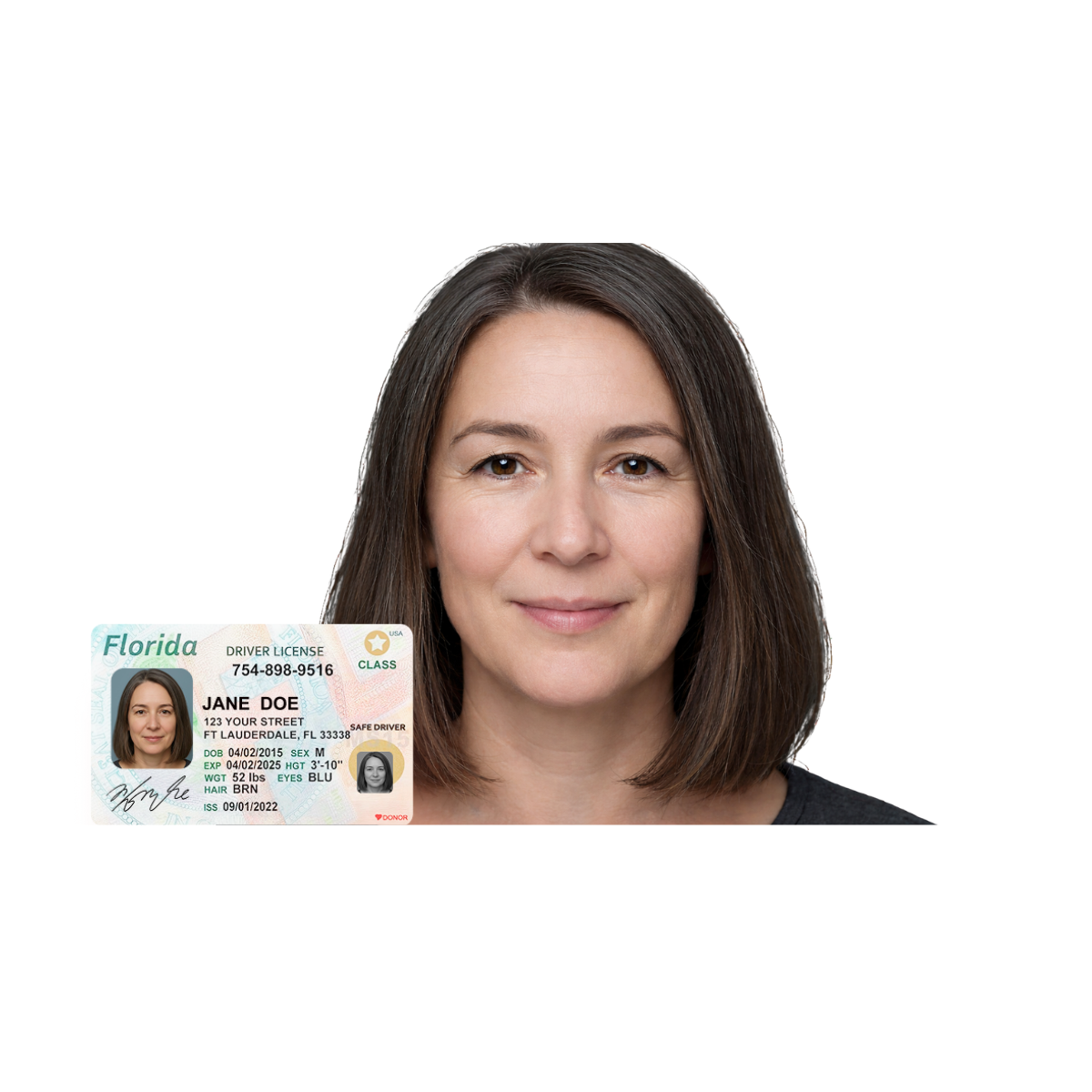
- Driver’s license or state-issued identification card
- Passport or birth certificate
- Immigration documents showing date of birth
- Military identification
- Any other government-issued document showing date of birth
The HUD regulations implementing HOPA (24 C.F.R. Part 100, Subpart E) specify that communities must maintain reliable age-verification records and make them available for inspection. A community that cannot produce documentation supporting its 80 percent threshold during a complaint investigation faces a significant evidentiary disadvantage.
Beyond periodic surveys, best practice requires collecting age documentation at the point of every new application. Waiting until the survey cycle to identify gaps creates a retroactive documentation problem that is difficult and time-consuming to correct.
Operational Challenges in Age-Restricted Applications
CAMs managing 55+ communities consistently encounter the same operational friction points.
- Incomplete submissions: Applicants omit date-of-birth documentation or submit expired IDs, which requires manual follow-up before the file can advance.
- Inconsistent documentation standards: Different staff members or communities within the same portfolio accept different document types, creating uneven records that are difficult to audit.
- Manual tracking across multiple communities: Spreadsheets and email chains make it difficult to confirm which units have current age documentation and which require updated verification.
- No direct connection between applications and census records: Age data collected during onboarding is often stored separately from the community’s ongoing compliance records, which requires duplicate data entry.
- Fragmented communication: Heavy reliance on PDFs, emails, and phone follow-ups increases the administrative burden and creates gaps in the audit trail.
These challenges compound during high-volume application seasons and in portfolios managing multiple age-restricted communities simultaneously.
Workflow Steps to Standardize Age Checks in Screening
A repeatable age-verification workflow for Florida 55+ communities includes the following steps.
- Collect age documentation at application submission. Require at least one government-issued document showing date of birth from every occupant as a condition of a complete application. Reject incomplete submissions automatically rather than advancing them for manual review.
- Verify the qualifying occupant threshold per unit. Once documentation is collected, confirm that at least one occupant per unit meets the 55-or-older requirement before approval. Document this determination in the application record so the unit clearly supports your 80 percent threshold.
- Apply consistent standards across all applications. Use the same document checklist and the same acceptance criteria for every applicant, regardless of unit type, ownership structure, or applicant relationship to the current owner.
- Maintain audit-ready records connected to the application. Store age documentation within the same record as the application, approval decision, and occupancy data, not in a separate folder or spreadsheet.
- Track census obligations at the portfolio level. Monitor which units have current age documentation and flag units that may need updated age verification so survey cycles stay on track.
TenantEvaluation’s 55+ Communities Verification is the only platform built specifically for Florida community associations that standardizes age-restricted application handling inside one connected onboarding workflow. It reduces manual work, supports documentation consistency, improves operational efficiency, and strengthens internal processes for CAMs, boards, and property management companies managing Florida Condos and HOAs. Unlike generic screening tools, it is designed for Community Association Managers and aligned with the real workflows of Florida associations.
Want to see how standardized age-verification workflows work inside a single connected platform? Book a walkthrough of 55+ Communities Verification.
Frequently Asked Questions
What is the 80/20 rule in a Florida 55+ community?
The 80/20 rule refers to the HOPA occupancy threshold detailed earlier in this article. To recap, at least 80 percent of occupied units must have a qualifying resident aged 55 or older, while up to 20 percent may house younger occupants without jeopardizing exempt status. Both the 80 percent threshold and the community’s published age-restriction policies must be maintained continuously. Failure to satisfy either condition can result in the loss of the HOPA exemption, which would expose the community to familial-status discrimination claims.
Can someone younger than 55 live in a 55+ community in Florida?
A person under 55 may occupy a unit in a 55+ community only if that unit falls within the 20 percent allowance or if the person is a spouse or permitted co-occupant of a qualifying resident aged 55 or older. Ownership of a unit does not require the owner to be 55 or older, because the restriction applies to occupancy. Communities must track which units are occupied by qualifying residents and which fall within the 20 percent non-qualifying allowance to maintain accurate census records.
How often must a Florida 55+ community conduct an age-verification survey?
Communities conduct age-verification surveys to confirm ongoing compliance. The survey must document the age of at least one occupant per unit across all occupied units using any of the government-issued documents listed in the Verification Requirements section above. Communities that cannot produce current survey records during a complaint investigation face a significant evidentiary disadvantage. Collecting age documentation at the point of every new application, rather than waiting for the survey, reduces the retroactive documentation burden and supports more consistent records.
What happens if a Florida 55+ community falls below the 80 percent threshold?
A community that falls below the 80 percent occupancy threshold loses its HOPA exemption and becomes subject to the familial-status protections of the Fair Housing Act and the Florida Fair Housing Act. This means the community can no longer lawfully refuse to sell or rent to families with children based on age restrictions. Communities approaching the threshold should consult legal counsel and review their occupancy records to identify corrective options. Maintaining accurate, up-to-date age documentation across all units is the first step in monitoring threshold status before a problem develops.
How does TenantEvaluation’s 55+ Communities Verification support Florida CAMs?
TenantEvaluation’s 55+ Communities Verification is a built-in capability that helps Florida Condos and HOAs standardize how age-restricted requirements are handled across applications. It reduces manual work, supports documentation consistency, improves operational efficiency, and strengthens internal processes for CAMs and boards. It is designed for Community Association Managers and built for Florida Condos and HOAs, not adapted from a generic screening tool. It does not replace legal guidance, but it creates a more structured and scalable process for managing age-restricted application requirements across single communities and large portfolios alike.
Conclusion: Standardize Age-Restricted Onboarding Today
Florida 55+ communities operate under a specific and enforceable legal framework. HOPA’s 80 percent threshold, survey obligations, and published-policy requirement create a documentation standard that manual processes struggle to meet consistently. Inconsistent age documentation across applications creates audit risk, generates extra follow-up work, and leaves communities exposed when complaints arise.
The operational solution is a repeatable, standardized verification workflow applied at the point of every application, not reconstructed after the fact. TenantEvaluation’s 55+ Communities Verification creates a repeatable, audit-ready process that eliminates redundant follow-up and ensures every application meets the same documentation standard. It is built for Community Association Managers and designed to strengthen internal processes across communities of every size.
TenantEvaluation has processed 100,000+ applications annually across 5,000+ communities and has generated $150M for communities, built specifically for Florida community associations with FCRA compliance as the foundation, not an afterthought.
Request a personalized demo and see how TenantEvaluation standardizes age-restricted onboarding inside one connected platform.
