Written by: Luis Teran, Co-founder, CEO, TenantEvaluation
Key Takeaways for Florida Peak Season
- Peak season creates major bottlenecks for Florida CAMs and boards using manual screening, which leads to missed documents, delays, and compliance risks.
- Automated platforms like TenantEvaluation cut approval times by up to 70% and free up to 50 staff hours per day while maintaining full FCRA and Fair Housing compliance.
- Standardized criteria, biometric identity verification, and automated income and employment checks replace common manual workflow failures and reduce fraud exposure.
- Board-ready tools such as QuickApprove and Lease Tracking provide real-time visibility, audit trails, and streamlined approvals from application to occupancy.
- Learn how automated screening can handle your peak-season surge.
Why Peak Season Breaks Manual Condo Screening
Manual screening workflows rely on phone calls, email chains, and spreadsheets that function adequately at low volume. Under peak-season pressure, those same workflows generate compounding failures that slow every decision. Employment and income verification can take multiple business days in manual processes because teams wait on HR coordination and employer responses.
When landlord reference checks add several more days to that timeline, associations face a tradeoff between complete verification and speed. Under peak-season pressure, many teams skip landlord references entirely just to keep up with volume. Even when teams commit to full verification, missing applicant details such as unsigned disclosures, address gaps, or aliases create unpredictable back-and-forth delays that no checklist fully prevents at scale.
The consequences extend beyond slow turnaround. Florida condo and HOA associations must redact protected information before posting or sharing certain records, and manual handling of large volumes of sensitive documents creates measurable data-security and liability exposure. Identity fraud compounds the risk further, because stolen IDs, synthetic identities, and impersonation attempts can enter communities through traditional document-based screening when no biometric layer exists to intercept them.
Automated platforms deliver faster results, with automated tenant screening via platforms like TransUnion or Experian that typically completes in minutes to hours. Full apartment approvals generally take 1–3 business days instead of the multi-day lag of manual verification. TenantEvaluation’s automated workflows reduce processing from days to hours, free up to 50 staff hours per day, and maintain built-in audit trails and permissible-purpose controls that protect associations throughout the surge.
Standardized Screening Criteria That Protect Compliance
Speed alone is not enough during peak season, because associations must also maintain compliance with Florida and federal fair housing requirements while processing high volumes. Florida HOAs and property managers should apply consistent screening criteria to every applicant to support compliance with the Florida Fair Housing Act (Fla. Stat. § 760.23) and the federal Fair Housing Act. Screening criteria must be written, objective, and applied uniformly, and blanket criminal-record bans are discouraged under HUD guidance, with individualized assessments documented when exceptions are considered.
Under the Florida Condominium Act (Chapter 718), associations are capped at a $150 application fee per applicant, with spouses and dependents counted as one. Applicants must sign the rental application before any credit or background screening begins, because the signature provides the required written authorization under FCRA.
The following 7-step checklist standardizes peak-season screening for Florida condos and HOAs while targeting full FCRA and Fair Housing alignment.
- Publish written, objective screening criteria. Document credit score minimums, income thresholds, and background-check standards in the community’s governing documents before the application season opens.
- Collect signed written authorization before any consumer report is pulled. Under FCRA (15 U.S.C. § 1681b), written authorization is required before running a consumer report, and TenantEvaluation captures this digitally at submission.
- Apply criteria uniformly across every applicant. Inconsistent application of standards is the most common source of Fair Housing complaints even when the same form is used for all applicants.
- Verify income and employment through direct employer contact. Automated workflows replace manual phone calls and reduce the multi-day bottleneck to hours.
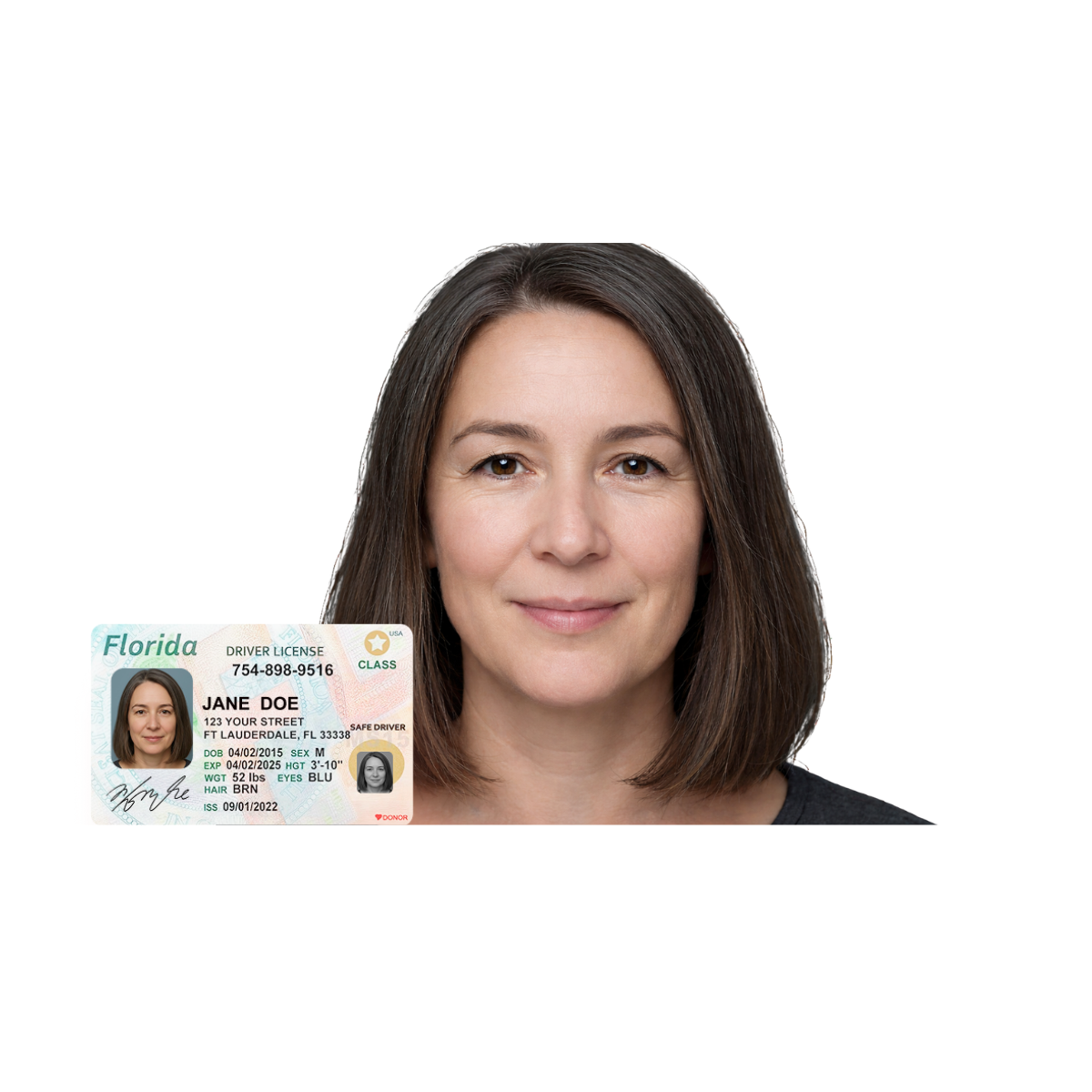
- Run biometric identity verification before screening authorization. IDVerify+ confirms physical presence and identity authenticity before background check initiation and reinforces permissible-purpose controls.
- Collect and redact all required documents automatically. Smart form logic rejects incomplete submissions and auto-redacts sensitive PII, which removes manual redaction errors.
- Issue adverse action notices immediately upon denial. Willful FCRA violations can result in statutory penalties up to $1,000 per instance, and TenantEvaluation’s automated adverse action workflow generates compliant written notices that identify the reporting agency and explain the applicant’s rights.
For 55+ age-restricted communities, TenantEvaluation’s 55+ Communities Verification capability standardizes application handling across communities, reduces manual work, supports documentation consistency, and improves operational efficiency for CAMs and boards managing age-restricted requirements at scale.
Income, Employment, and Rental-History Verification Steps
Income and employment verification create the single largest bottleneck in manual screening workflows. Manual employment verification can take multiple business days because staff must place phone calls and wait for employer responses. During peak season, that delay multiplies across dozens of simultaneous applications and slows every move-in date.
TenantEvaluation’s IncomeEV solution goes beyond self-reported data by contacting employers directly through automated workflows. Smart application form logic dynamically adjusts what each applicant must submit based on their applicant type, such as tenant, purchaser, or additional resident, which eliminates irrelevant fields and ensures all required documentation is captured at submission. Incomplete applications are rejected automatically before they enter the review queue, which prevents the back-and-forth that consumes staff hours during high-volume periods.

Rental history verification follows the same automated path. Instead of waiting several business days for manual landlord callbacks, TenantEvaluation’s SafeCheck+ solution pulls eviction history and reference data through specialized databases and delivers results the same day or within 24 hours where digital court access exists.
Board-Ready Approval Workflow for Faster Decisions
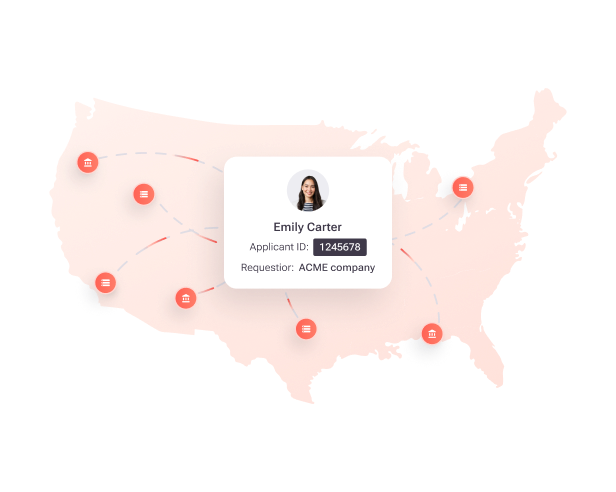
Board bottlenecks create a structural problem in manual approval processes. Applications sit in email inboxes waiting for board members to respond, approval letters require separate manual drafting, and no single source of truth exists for application status. QuickApprove is TenantEvaluation’s accelerated approval workflow built for CAMs, boards, and property management teams inside one connected platform.
QuickApprove delivers real-time application tracking so managers see exactly where each application stands without sending follow-up emails. Board members access a dedicated review and voting dashboard with AI-generated applicant summaries, a voting panel for approvals, and timestamped audit records for every decision. Automated communication support, customized approval letters, and a personalized welcome package complete the onboarding handoff without additional manual work.
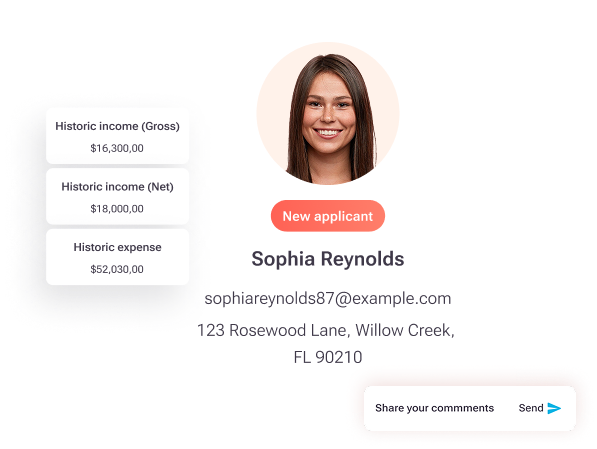
The result is faster, clearer, and more consistent approvals, designed specifically for high-volume seasons and communities with complex onboarding requirements, while preserving control, compliance, and visibility for boards.
See how QuickApprove works for your board.
Biometric Identity Verification Layer for Fraud Prevention
Traditional document-based screening cannot reliably prevent impersonation, stolen IDs, or synthetic identity fraud. As Florida condo and HOA communities absorb higher application volumes during peak season, exposure to fraudulent applicants entering communities through document-only review increases in direct proportion to that volume.
IDVerify+ is TenantEvaluation’s biometric identity verification layer embedded directly into the screening workflow. It combines government-issued ID validation, AI-powered liveness detection, and biometric selfie-to-ID facial matching into a single guided step that applicants complete during the application process, with no external portals or workflow disruption. CAMs see verification results embedded directly within the screening report, including ID authenticity confirmation, liveness verification status, and biometric match result.

IDVerify+ strengthens permissible-purpose validation by confirming identity before screening authorization, which reinforces FCRA-aligned workflows and audit defensibility. CAMs can enable it per condo or HOA and configure it per property portfolio, which supports different community risk profiles without a one-size-fits-all approach. This shift from document-based review to biometric-backed identity confirmation creates a security infrastructure upgrade that generic tenant screening tools do not offer.
Real-Time Lease Visibility from Application to Occupancy
Lease management across many community associations remains fragmented, with missing or outdated lease copies, manual expiration tracking, disconnected spreadsheets, and no direct connection between applications and active leases. During peak season, those gaps become operational blind spots that slow teams and increase compliance risk tied to incomplete records.
Lease Tracking is a centralized operational capability built directly into TenantEvaluation that connects resident onboarding, unit data, approvals, and lease documentation into one streamlined, real-time workflow. It delivers centralized lease records, real-time lease status visibility such as active, pending, expired, or missing, automated lease document collection during onboarding, unit-level tracking tied to occupancy records, and a searchable digital history of lease records and document trails.
Every lease stays connected, searchable, trackable, and audit-ready from application to occupancy, which replaces spreadsheets and scattered email chains with one connected platform built for CAMs, boards, property management companies, and community operations teams.
Frequently Asked Questions
How fast can applications be processed during peak season?
With TenantEvaluation’s automated workflows, application processing time drops from the multi-day lag of manual verification to hours. Smart form logic rejects incomplete submissions at intake, automated income and employment verification contacts employers directly, and background checks run through TenantEvaluation’s direct reseller relationships with TransUnion and Equifax. The full cycle from application submission to final decision reflects the time savings mentioned earlier, and teams reclaim staff hours previously spent on follow-ups, document chasing, and manual redaction.
Can board members access applications and vote directly?
Board members can access applications and vote directly inside TenantEvaluation. QuickApprove includes a dedicated board voting dashboard that gives board members real-time access to application status, AI-generated applicant summaries, and a voting panel for approvals, all inside one platform. Every vote is timestamped and audit-ready, which replaces email chains and spreadsheets with a connected approval process that gives boards clearer visibility into what needs attention while preserving their oversight, compliance, and control over final decisions.
How does TenantEvaluation handle 55+ community age-verification requirements?
TenantEvaluation’s 55+ Communities Verification capability is built specifically for Florida condos and HOAs that manage age-restricted application requirements. It standardizes how age-restricted requirements are handled across applications, reduces manual work for CAMs and boards, supports documentation consistency, and improves operational efficiency. It creates a more structured process for internal operational control across communities, designed for Community Association Managers and aligned with the real workflows of Florida associations, while still supporting legal guidance rather than replacing it.
What compliance protections exist for high-volume screening periods?
TenantEvaluation is built with FCRA compliance as the foundation, not as an afterthought. It maintains strict permissible-purpose controls, automated adverse action workflows, built-in audit trails for every application, and clear separation between decision-making by the association and data provision by TenantEvaluation. As a legitimate reseller of TransUnion and Equifax data accessed under strict bureau rules, TenantEvaluation protects community associations from liability exposure tied to gray-market or offshore data sources. Auto-redaction of sensitive PII, PCI Level 1 compliance, and end-to-end encryption apply to every application regardless of volume, which ensures that peak-season surges do not create compliance gaps.
Conclusion: Turning Peak-Season Volume into a Controlled Workflow
Manual condo screening processes are not designed for peak-season volume. The combination of incomplete documents, board bottlenecks, identity-fraud exposure, and fragmented lease records produces delays, compliance risk, and operational blind spots that compound as application counts rise. TenantEvaluation’s all-in-one, FCRA-first platform, with QuickApprove, IDVerify+, and Lease Tracking, turns peak-season volume into controlled, board-ready onboarding.
Across 5,000+ communities and 100,000+ applications processed annually, TenantEvaluation delivers up to 70% faster approvals, up to 50 staff hours saved per day, and audit-ready records from application to occupancy for Florida CAMs, property managers, and boards.
