Written by: Luis Teran, Co-founder, CEO, TenantEvaluation
Key Takeaways
- A structured HOA tenant approval process in Florida protects associations from fair housing liability, identity fraud, and FCRA violations while creating defensible records for every decision.
- Florida law under Chapters 718 and 720, combined with FCRA and Fair Housing Act requirements, mandates consistent criteria, documented consent, and proper adverse action notices when consumer reports are used.
- Biometric identity verification and digital workflows are now essential to combat rising fraud and meet 2026 regulatory expectations for compliance and audit readiness.
- The seven-step process, from application intake through lease tracking, creates standardized screening, board transparency, and centralized visibility across the tenant lifecycle.
- TenantEvaluation streamlines the entire HOA tenant approval process with compliant, audit-ready tools built for Florida community associations. Schedule a personalized demo to review your community’s specific needs.
Why Florida HOAs Need a Structured Tenant Approval Process
Florida HOAs and condominium associations derive their authority to screen and approve tenants from governing documents, including declarations, bylaws, and rules, that must align with state statutes and federal law. When those documents authorize tenant screening, the association gains the right to collect applications, review background data, and approve or deny prospective residents. That authority carries clear obligations: decisions must be documented, criteria must be applied consistently, and sensitive applicant data must be handled securely.
An unstructured process creates four categories of risk. First, inconsistent application of screening criteria exposes the association to fair housing claims. Second, manual handling of Social Security numbers, financial records, and government IDs creates data breach liability. Third, the absence of an audit trail makes it impossible to defend a denial in litigation. Fourth, fragmented lease records leave boards without visibility into who is actually occupying units.
These risks show up in real disputes, regulatory reviews, and operational breakdowns that consume board time and legal budgets. A structured process addresses all four risks at once by establishing a defined workflow, a permissible-purpose framework for pulling consumer reports, and a centralized record system that survives board turnover and management transitions.
Florida Statutes, Fair Housing, and 2026 Screening Rules
Three statutes form the core of Florida’s HOA tenant approval framework in 2026.
Florida Statutes § 718.112(2)(i) governs condominium associations and caps the lease approval fee at $100 per applicant (subject to inflation adjustment), with spouses and dependent children counted as one applicant. The fee cannot be charged again on renewal with the same lessee.
Florida Statutes § 720.306(1)(h) limits new HOA rental restrictions adopted after July 1, 2021. These restrictions generally apply only to owners who purchase after the effective date or who consent, with a carve-out permitting amendments that prohibit rentals shorter than six months or more than three times per calendar year to apply to all owners.
Florida Statutes § 718.110(13) provides that condominium declaration amendments prohibiting rentals or changing rental term duration generally apply only to consenting owners and owners who purchase after the amendment’s effective date.
Overlaying these statutes are the Federal Fair Housing Act and Florida’s Fair Housing Act under Chapter 760, which prohibit discrimination based on race, color, national origin, sex, disability, familial status, religion, sexual orientation, and gender identity. Florida’s Fair Housing Act mirrors the federal seven protected classes and adds no explicit protections for sexual orientation or gender identity beyond the federal interpretation of “sex.” The Fair Credit Reporting Act (FCRA) governs how consumer reports are obtained, used, and disclosed, including mandatory adverse action notices when a denial is based even in part on a credit or background report.
Chapter 720 HOAs may charge a reasonable fee for screening, which must remain tied to actual processing costs and documented procedures.
Industry Shift to Fraud Prevention and Digital HOA Platforms
Comprehensive background checks now rank as a top screening priority, shifting focus from credit scores alone to identity verification and fraud detection. Falsified IDs, altered pay stubs, and fabricated references appear more often, so rigorous identity verification must occur at the point of application before any approval decision is made.
Regulatory oversight increased in 2025 around building safety, reserve funding, and homeowner protections, with Florida introducing new requirements expected to expand in 2026, making compliance a continuous operational requirement rather than a periodic review. A 2025 survey by the Foundation for Community Association Research found that more than 70% of respondents use AI, signaling broad technology adoption across community association operations.
The shift from paper-based workflows to integrated digital platforms now functions as a core risk management decision. Manual processes cannot produce the audit trails, consistent application of criteria, or real-time lease visibility that regulators and courts expect.
The 7-Step HOA Tenant Approval Process in Florida
The following framework reflects standard practice for Florida HOAs and condominium associations operating under Chapters 718 and 720, aligned with FCRA and Fair Housing Act requirements.
- Application Intake. The prospective tenant receives the community’s property code and completes a 100% online application, uploading all required documents, including government-issued photo ID, Social Security or immigration documentation, executed lease, vehicle registration, and signed screening authorizations. Smart form logic rejects incomplete submissions before they enter the review queue.
- Identity Verification. Each adult applicant completes biometric identity verification through IDVerify, which validates government-issued ID authenticity, confirms physical presence through AI-powered liveness detection, and performs biometric facial matching. This process moves the community from document-based review to verified physical identity confirmation before any consumer report is pulled.
- Document Collection and Screening Authorization. The platform collects signed FCRA-required consent forms, the FTC Summary of Rights, and any community-specific addenda such as crime-free, pet policy, or parking forms. Automated redaction removes sensitive PII from uploaded documents before they reach the review queue.
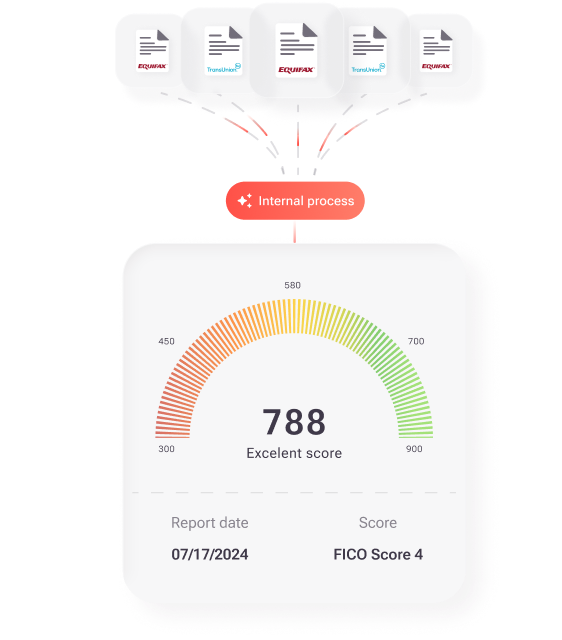
- Background Screening. FCRA-compliant credit, criminal, eviction, income, and reference checks run through direct bureau relationships with TransUnion and Equifax. Results are compiled into a single screening report with AI-generated summaries for board review.
- Board Review and Voting. The board accesses a dedicated dashboard through QuickApprove to review summarized applicant reports, cast votes, and track application status in real time. This approach replaces email chains and spreadsheets with a connected, board-ready approval process inside one platform.
- Decision and Adverse Action. Approved applicants receive a customized approval letter and personalized welcome package. Denied applicants receive a written adverse action notice identifying the reporting agency, the applicant’s right to a free copy of the report, and dispute rights, as required by FCRA. All decisions are timestamped and stored in an audit-ready record.
- Lease Execution and Post-Approval Tracking. Executed lease documents are collected and stored in TenantEvaluation’s centralized Lease Tracking system, which connects resident onboarding, unit data, approvals, and lease documentation into one real-time workflow. Boards gain clear visibility into active, pending, expired, or missing lease status from application through occupancy.
Roles, Required Documents, and Typical Timelines
CAMs configure community-specific screening criteria, manage application intake, coordinate document collection, and communicate status updates to applicants, realtors, and owners. Boards review completed applications and cast approval or denial votes within the timeline established by governing documents.
Standard required documents in Florida HOA and condominium approval packets include:
- Notice of Intent to Lease form
- Government-issued photo ID for each adult applicant
- Social Security or immigration documentation
- Completed application for every adult over 18
- Signed screening authorizations for credit, criminal, and background checks
- Executed lease agreement
- Vehicle and parking registration information
- Signed community addenda such as crime-free, pet policy, or peace-and-quiet agreements
Processing time once a complete packet is submitted typically ranges from 24–72 hours, extending to 5 business days for condominium packets in some Orlando-area communities. Many Central Florida HOAs require a 15-day written notice prior to lease initiation. Board meeting cadence, often monthly, can extend timelines when applications arrive just before or after a scheduled meeting. QuickApprove accelerates resident approvals by giving CAMs, boards, and property management teams real-time application tracking, automated communication support, and a board-ready approval process inside one connected platform, while preserving control, compliance, and visibility.

Compliance, Risk, and Governance in Tenant Screening
FCRA compliance requires that consumer reports be obtained only for permissible purpose, and tenant screening qualifies. Applicants must provide written consent via a separate signature line before any report is pulled. When a denial is based even in part on a consumer report, a written adverse action notice is mandatory. TenantEvaluation automates adverse action workflows and maintains a clear separation between the association’s decision-making authority and TenantEvaluation’s role as data provider.
Screening and application files must generally be retained for at least 1 year under federal law, with a 2-year best practice often recommended, though some states require longer periods such as 4 years to demonstrate consistent application of criteria and defend against discrimination or FCRA claims. TenantEvaluation’s built-in audit trails timestamp every application action, creating searchable digital records that survive management transitions and board turnover.
HUD has taken the position that denials based on criminal background can create a presumption of race discrimination due to statistical correlations, so Florida associations should focus on recent offenses that pose a genuine threat to persons or property rather than blanket exclusions. Any denial of a sale or lease application deserves a call to association counsel first, because denials are where legal exposure grows quickly under fair housing laws.
Common Challenges in Florida HOA Rental Approvals
A primary cause of delay in Florida HOA tenant approvals is submitting an incomplete packet, because processing does not begin until all required items are received. Additional common challenges include:
- Manual document review. CAMs spend hours verifying IDs, leases, and income documents submitted via email or paper, with no automated validation layer.
- Inconsistent screening criteria. Without a standardized workflow, different applications may be evaluated against different standards, creating fair housing exposure.
- Board meeting bottlenecks. Monthly board meeting schedules can add weeks to approval timelines when applications arrive between meetings.
- Fragmented lease visibility. Missing or outdated lease copies, manual expiration tracking, and disconnected spreadsheets leave boards without reliable occupancy data.
- Identity fraud exposure. Traditional document-based screening cannot reliably detect synthetic identities, impersonation attempts, or falsified government IDs.
Best Practices for Florida HOA Tenant Screening Rules
Effective HOA tenant screening in Florida follows four operational principles.
Standardize the workflow. Every application should follow the same sequence of intake, identity verification, document collection, screening, board review, decision, and post-approval tracking. Manual exceptions create inconsistency and weaken defensibility.
Implement biometric identity verification. IDVerify introduces automated KYC verification through government ID validation, AI-powered liveness detection, and biometric facial matching directly inside the TenantEvaluation workflow. This three-layer approach confirms applicants are real, present, and matched to their identification before approval decisions are made, which closes the gap that document review alone cannot address.

Maintain written, consistently enforced criteria. Defensible rejections by Florida HOAs are typically based on written, consistently enforced rules in the governing documents. Income thresholds, credit score minimums, and criminal history criteria must be applied evenly to every applicant.
Build audit-ready records from day one. Every application action, including submission, document upload, screening authorization, board vote, and decision, should be timestamped and stored in a searchable digital record. TenantEvaluation’s platform is built with FCRA compliance as the foundation, with PCI Level 1 compliance, end-to-end encryption, and automatic redaction of sensitive PII.
For age-restricted communities, 55+ Communities Verification standardizes how age-restricted requirements are handled across applications, reduces manual work, improves documentation consistency, and strengthens operational efficiency for Florida condos and HOAs.

How to Evaluate a Tenant Approval Platform
Florida CAMs and boards evaluating tenant approval platforms should assess five dimensions.
Compliance Readiness. Look for direct credit bureau reseller relationships, automated adverse action workflows, built-in FCRA consent processes, and comprehensive audit trails. TenantEvaluation maintains direct TransUnion and Equifax reseller status, automates adverse action notices, and timestamps every application action for audit readiness.
Operational Efficiency. The platform should provide an end-to-end digital workflow from intake to lease tracking with no manual handoffs between systems. TenantEvaluation connects application intake through Lease Tracking in one platform, and QuickApprove accelerates approvals while preserving visibility.
Identity Fraud Prevention. Effective tools include biometric verification native to the platform, liveness detection, and government ID authentication. IDVerify runs natively inside TenantEvaluation, so CAMs and applicants avoid external portals and workflow disruption.
Board Transparency. Boards need a dedicated dashboard with real-time application status, summarized reports, and voting capability. TenantEvaluation delivers a board-ready approval process with a voting panel, AI-generated summaries, and real-time tracking inside QuickApprove.
Lease Lifecycle Visibility. Strong platforms centralize lease records, connect them to onboarding, and provide real-time status tracking with an audit-ready digital history. TenantEvaluation’s Lease Tracking maintains a unified view of unit data, approvals, and lease documentation in a single workflow.
Generic tenant screening tools and broader property management platforms typically address one or two of these dimensions. TenantEvaluation is built exclusively for community associations and management companies, serving 5,000+ communities and processing approximately 100,000 applications annually across Florida.
Frequently Asked Questions
How long does the HOA approval timeline take in Florida?
Processing time in Florida HOAs and condominium associations typically ranges from 24 to 72 hours once a complete application packet is submitted, with some condominium communities extending to 5 business days. Many Central Florida HOAs also require a 15-day written notice prior to lease initiation, which must be built into the move-in schedule. Board meeting cadence, often monthly, can extend the overall timeline when applications arrive between scheduled meetings. The total window from tenant selection to move-in authorization is commonly 3 to 4 weeks in communities with rental caps or waitlists. Incomplete applications remain a frequent cause of delay, because processing does not begin until all required documents are received. Platforms like TenantEvaluation with QuickApprove reduce this timeline by automating communication, enabling real-time board review, and eliminating manual follow-up steps.
What disqualifies a tenant under HOA tenant screening requirements?
Disqualifying criteria must be established in writing within the association’s governing documents and applied consistently to every applicant. Common grounds for denial include failure to meet minimum credit score thresholds, income below the association’s stated requirement, typically a ratio of monthly income to monthly rent, unresolved eviction judgments, criminal history involving offenses that pose a genuine threat to persons or property, dishonesty or material misrepresentation on the application, and prior violations of community rules by the applicant. Blanket criminal record exclusions carry fair housing risk under HUD guidance and should be replaced with individualized assessments of recent, relevant offenses. Any denial based even in part on a consumer report requires a written adverse action notice under FCRA, identifying the reporting agency and the applicant’s right to dispute the report.
What rights do renters have once approved?
Once approved, a tenant has the right to occupy the unit under the terms of the executed lease and in accordance with the association’s governing documents. The tenant is entitled to use common elements and amenities as permitted by community rules. Florida’s Fair Housing Act protects approved residents from discriminatory enforcement of community rules, so rules must be applied consistently regardless of protected class. If the association later seeks to modify rental restrictions, those changes generally apply only to owners who consent or who purchase after the amendment’s effective date, not to existing approved tenants mid-lease. Tenants also retain FCRA rights. If the association takes any adverse action affecting their tenancy based on a consumer report, they are entitled to notice, a free copy of the report, and the right to dispute inaccuracies.
What are common red flags on applications?
Red flags that warrant closer review include inconsistencies between the name, Social Security number, and address on the application and those appearing in the consumer report. Income documentation that does not match employer verification results, prior eviction judgments or unlawful detainer records, and criminal history involving violence, property damage, or drug offenses within a timeframe relevant to the community’s written criteria also require attention. References from prior landlords that cannot be independently verified create additional concern. Identity fraud indicators, such as a government ID that fails authentication or a biometric mismatch between the applicant’s selfie and their ID photo, are increasingly important to detect before the application proceeds to board review. All red flags should be documented, assessed individually against written criteria, and reviewed consistently across all applicants to avoid fair housing exposure.
Conclusion: Modernize and Protect Your HOA Tenant Approval Process
A structured HOA tenant approval process forms the operational foundation that protects Florida community associations from fair housing liability, identity fraud, FCRA violations, and the administrative burden of fragmented manual workflows. The seven-step framework described here, from application intake through post-approval lease tracking, reflects current Florida statutory requirements under Chapters 718 and 720, FCRA obligations, and 2026 industry standards for digital identity verification and centralized lease visibility.
TenantEvaluation is built specifically for community associations and management companies, with FCRA compliance as the foundation. With QuickApprove, IDVerify, 55+ Communities Verification, and centralized Lease Tracking, the platform delivers faster approvals, stronger fraud prevention, board-ready transparency, and real-time lease lifecycle control. These capabilities operate inside one connected system that has already generated $150M for Florida communities and processed over 100,000 applications annually.
