Written by: Luis Teran, Co-founder, CEO, TenantEvaluation
Key Takeaways
- Florida CAMs and boards managing 55+ communities must maintain continuous age verification to preserve HOPA exemption and avoid fair housing liability.
- HOPA requires at least 80% of occupied units to have one resident aged 55 or older, published policies, and biennial surveys with reliable documentation.
- Accepted verification documents include driver’s licenses, passports, birth certificates, Medicare cards, and sworn affidavits when primary ID is unavailable.
- Manual processes create inconsistent records, incomplete submissions, and audit risk across applications and resident surveys.
- TenantEvaluation helps Florida Condos and HOAs standardize age verification, reduce manual work, and keep documentation audit-ready.
Section 1: HOPA Rules That Shape Florida 55+ Age Verification
The federal Housing for Older Persons Act (HOPA) of 1995 creates the legal framework that allows qualifying communities to restrict residency based on age. A community must meet three ongoing requirements at the same time to keep this exemption from the Fair Housing Act’s familial status protections.
First, at least 80% of occupied units must have at least one resident aged 55 or older, which is known as the 80/20 rule. The remaining 20% of occupied units may house residents of any age, including spouses under 55, live-in caregivers, or individuals who inherited property. Importantly, this calculation applies only to occupied units, so vacant units do not affect your compliance threshold.
Second, the community must publish and consistently enforce written policies that show its intent to operate as 55+ housing. Third, the community must maintain age verification procedures and conduct resident surveys on a defined schedule.
The biennial survey requirement is where many Florida associations fall short. HOPA regulations require 55+ communities to re-survey residents at least every two years using reliable methods and to document results in a format that can be produced during a HUD audit or fair housing complaint. Age verification does not end at move-in. It continues across the entire resident population and depends on systematic record-keeping for every occupied unit.
Because each biennial survey cycle requires documentation from every occupied unit, Florida CAMs managing multiple communities face a compounding scalability problem as their portfolios grow. Without a standardized process, each property develops its own informal workflow, and inconsistency across communities creates documentation gaps that are difficult to defend.
Section 2: Accepted Documents and Recordkeeping Standards for HOPA
HOPA compliance depends on collecting, retaining, and organizing age verification documentation in a consistent, repeatable way. HUD considers the following documents reliable for age verification:
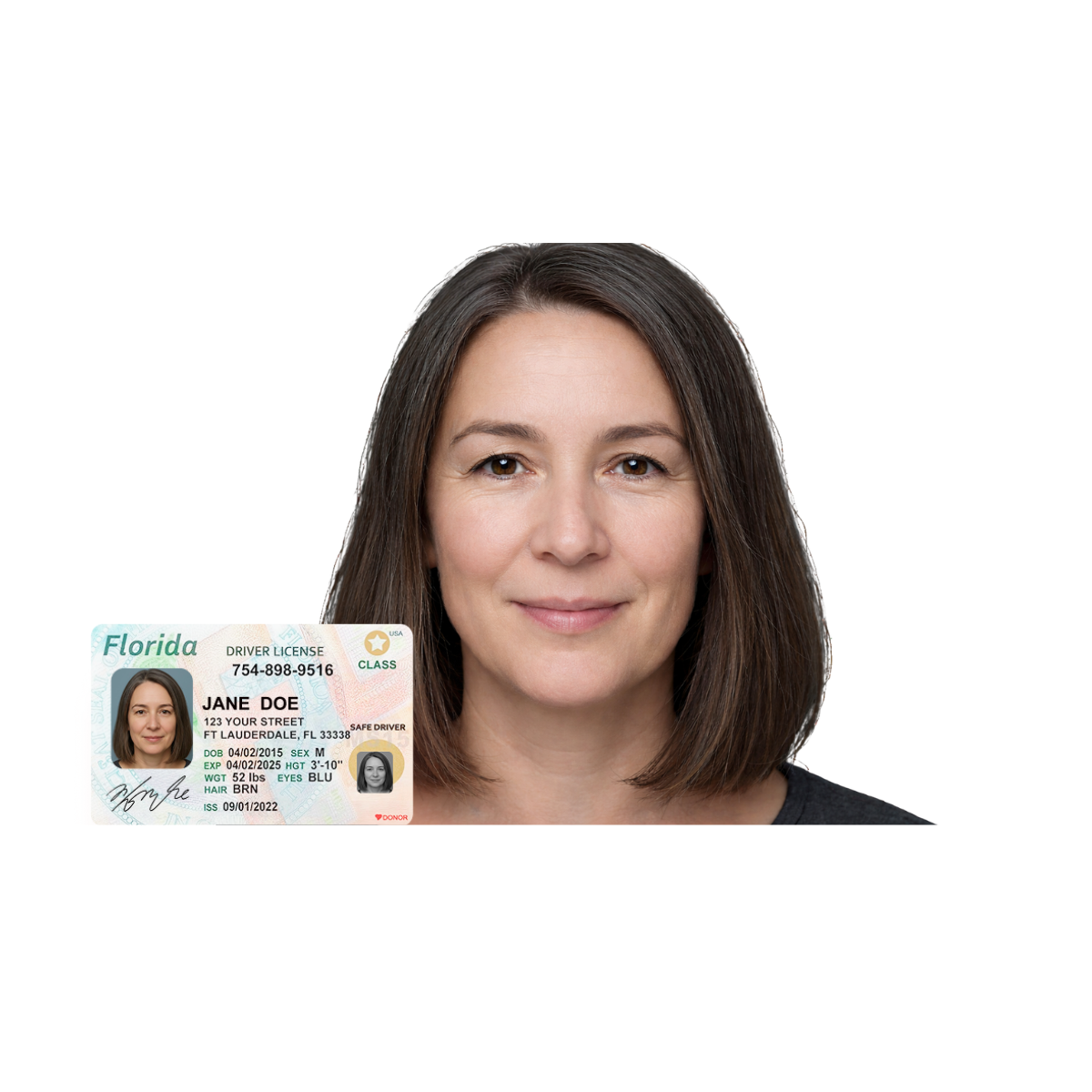
- Driver’s licenses
- Passports
- Birth certificates
- Immigration cards
- Military identification
- Medicare cards
- Other government-issued documents bearing date of birth
Self-certification through a sworn affidavit is acceptable under 24 CFR § 100.307 when other documentation is unavailable. Communities may also accept a lease, application, or affidavit signed by a household member aged 18 or older asserting that at least one person in the unit is 55 or older. If occupants refuse to comply with age-verification procedures, communities may rely on government records, prior forms, or a penalty-of-perjury statement from someone with personal knowledge of the occupants’ ages.
Record retention standards matter as much as document type. Age verification records must include the date of verification, the type of documentation reviewed, and the survey methodology. Shredding records or relying on memory does not meet this standard. Documentation must be retained in a format that allows the community to demonstrate compliance on demand, whether during a HUD audit, a fair housing complaint, or a lender review for FHA, VA, Fannie Mae, or Freddie Mac loan eligibility.
As noted in Section 1, the biennial survey cycle under 24 CFR § 100.307 applies to the entire occupied resident population, not just new applicants. CAMs must treat ongoing surveys and new move-ins as parts of the same documentation system.
Section 3: Operational Risks in Manual Age Verification
The documentation requirements under HOPA are clear, yet consistent execution across a community or portfolio is difficult without a standardized system. Manual workflows often break down at the exact points HUD and lenders review most closely.
Incomplete submissions create the most frequent problem. Applicants and existing residents often submit partial documentation, which forces CAMs to chase missing items. Each follow-up cycle adds time and creates gaps in the record trail. When a biennial survey is due, communities that rely on email and spreadsheet workflows often discover that documentation for many units is missing, outdated, or stored inconsistently across different staff members’ inboxes.
Inconsistent records across units and properties create a second layer of risk. Without a standardized intake process, different staff members collect different document types, record verification dates in different ways, and store files in different locations. Age verification documentation for Florida 55+ communities must be collected, organized, and maintained in audit-ready condition, a standard that fragmented manual processes rarely meet.
Visitor and guest policy enforcement adds further complexity. The 80/20 rule governs permanent residents, not visitors, yet communities still need clear policies and documentation to distinguish between short-term guests and unauthorized long-term occupants. Without a structured intake process, these distinctions are difficult to track and defend when questions arise.
For CAMs managing large portfolios, the cumulative administrative burden is significant. Manual age verification across dozens of communities, each with its own informal process, consumes staff hours that could support higher-value operational tasks. These operational challenges become critical when enforcement standards are tested.
How Strictly Florida 55+ Communities Enforce Age Rules
Enforcement standards in Florida 55+ communities vary by association, but the underlying federal obligation remains the same. If a 55+ community’s age-qualified occupancy drops below 80%, HUD does not automatically revoke the HOPA exemption the day the threshold is crossed, but the community is immediately exposed to fair housing complaints from that point forward, including investigations triggered by a single denied applicant.
Title agents identify weak HOPA enforcement through missing biennial surveys, outdated age verification records, anecdotal reports of unauthorized under-55 residents, and board minutes showing reluctance to enforce age rules. Communities with documentation gaps face real consequences during real estate transactions, because lenders require evidence of HOPA compliance before funding loans.
In practice, the strictness of a 55+ community’s enforcement depends on how consistently its board and management team apply written policies and maintain documentation. Communities with structured, standardized processes are better positioned to demonstrate compliance on demand. Communities that rely on informal manual workflows face greater exposure when documentation is requested.
Adult Children and Under-55 Residents in Florida 55+ Communities
The remaining 20% of occupied units in a HOPA-qualified community may be occupied by residents of any age, which means adult children under 55 can legally reside in a 55+ community if the unit falls within that 20% allowance. Individual HOAs still have full discretion to set their own rules within that allowance, including restrictions on tenant age, lease duration, or rental frequency.
HOPA does not prohibit children from living with a qualifying resident, but individual HOA rules may impose restrictions that vary by community. Many 55+ communities choose not to use the 20% flexibility to allow children to reside full-time, because they prioritize the adult-focused environment their residents expect.
For CAMs, each application involving a resident under 55 requires careful review against the community’s governing documents and current occupancy data. Tracking the 20% allowance across a community, and ensuring that applications are evaluated against real-time occupancy figures, becomes an operational task that benefits from a structured, centralized process rather than manual calculation.
Section 4: Portfolio-Level Best Practices for Age Verification
Standardizing age verification across a portfolio of Florida 55+ communities starts with a defined workflow for both new applications and biennial surveys. The following process reflects operational best practices that align with HOPA requirements.
For new applications:
- Collect age verification documentation at the point of application, before approval, so no applicant advances without meeting HOPA requirements.
- Accept only HUD-recognized document types, such as a driver’s license, passport, birth certificate, immigration card, military ID, Medicare card, or government-issued ID with date of birth, so your records withstand audit review.
- Record the document type, date of collection, and unit number in a centralized system as you collect it to create an immediate audit trail.
- Flag incomplete submissions automatically and require resolution before the application advances, which prevents documentation gaps from accumulating.
- Store documentation in a searchable, audit-ready format tied to the unit record so you can retrieve evidence quickly when requested.
For biennial surveys:
- Initiate the survey cycle no later than 22 months after the previous survey to allow time for follow-up before the two-year mark.
- Send standardized requests to all occupied units with a clear response deadline so residents understand expectations.
- Track response status by unit in a centralized system to see gaps in real time.
- Follow up with non-responding units using documented outreach attempts to show good-faith enforcement.
- Accept sworn affidavits for units where primary documentation is unavailable so you still capture reliable age data.
- Record survey methodology, response rate, and documentation types collected to support future HUD or lender reviews.
- Retain all survey records in audit-ready condition with date stamps so you can demonstrate continuous compliance.
TenantEvaluation’s 55+ Communities Verification is built for this operational context. Designed for Community Association Managers and built for Florida Condos and HOAs, it standardizes application handling, reduces manual work, supports documentation consistency, and improves operational efficiency across age-restricted communities. Instead of managing age verification through scattered emails and spreadsheets, CAMs gain a structured process that keeps documentation organized, consistent, and accessible, while still working alongside legal guidance from the association’s counsel.
TenantEvaluation serves 5,000+ communities and processes approximately 100,000 applications per year, with FCRA compliance as the foundation of the platform, not an afterthought. For Florida associations managing 55+ requirements alongside broader resident screening and onboarding, the platform connects age verification into the same workflow as background checks, identity verification via IDVerify, accelerated approvals via QuickApprove, and lease lifecycle management, creating one connected operational experience.
Frequently Asked Questions
What documents are accepted for age verification in Florida 55+ communities?
The accepted documents are listed in Section 2 above. When primary documentation is unavailable, a sworn affidavit, or a signed statement from a household member aged 18 or older asserting that at least one occupant is 55 or older, is also acceptable. Communities must record the document type collected, the date of verification, and the unit to which it applies, and retain that information in a systematic, audit-ready format.
How often must 55+ communities conduct surveys?
HOPA requires 55+ communities to conduct age verification surveys at least every two years. This biennial requirement applies to the entire occupied resident population, not just new applicants. The survey must use reliable documentation methods consistent with HUD standards, and the results, including methodology, response rates, and document types collected, must be retained so the community can demonstrate compliance during a HUD audit or fair housing complaint. Communities that allow their survey cycle to lapse face immediate exposure to fair housing challenges, even if their actual occupancy remains above the 80% threshold.
What happens if a community falls below the 80% threshold?
If the percentage of occupied units with at least one resident aged 55 or older drops below the 80% threshold discussed in Section 1, the community loses its HOPA exemption. The community can no longer legally exclude buyers or renters under 55, governing documents with age restrictions may become unenforceable, and the community becomes subject to the Fair Housing Act’s familial status protections, including the right of families with minor children to apply. Loss of HOPA status also affects property values, lender eligibility for FHA, VA, Fannie Mae, and Freddie Mac loans, and can expose board members to personal liability for fair housing violations or breach of fiduciary duty. HUD does not automatically revoke the exemption the moment the threshold is crossed, but the community is immediately exposed to complaints from that point forward.
How can boards maintain consistent records across multiple properties?
Consistent record-keeping across multiple 55+ communities requires a standardized intake process applied uniformly at every property. This means using the same document checklist for every application, recording verification dates and document types in a centralized system tied to unit-level records, and initiating biennial surveys on a tracked schedule rather than relying on individual staff members to remember. Boards and CAMs managing portfolios benefit most from a platform that connects age verification documentation to the broader application and onboarding workflow, so records are searchable, audit-ready, and accessible without manual searching across folders and email chains. TenantEvaluation’s 55+ Communities Verification is designed to provide this level of operational structure for Florida Condos and HOAs.
Conclusion
Age verification in Florida 55+ communities is a continuous federal obligation with real consequences for associations that manage it inconsistently. The HOPA framework is clear: 80% occupancy by residents aged 55 or older, biennial surveys with documented methodology, accepted identification types retained in audit-ready condition, and published policies that demonstrate intent. The operational challenge is executing these requirements systematically across every application, every survey cycle, and every unit without letting manual processes overwhelm CAMs and boards.
Standardizing this process is essential for communities that want to protect their HOPA exemption, maintain property values, and remain eligible for conventional lending. Communities need a structured workflow, consistent documentation standards, and centralized record-keeping that can be produced on demand.
TenantEvaluation’s 55+ Communities Verification is designed for Community Association Managers and built for Florida Condos and HOAs. It standardizes application handling, reduces manual work, supports documentation consistency, and improves operational efficiency, giving CAMs and boards the operational control they need to manage age-restricted communities at scale. Founded in 2007 and trusted by leading Florida management companies including FirstService Residential, Campbell Property Management, and Associa, TenantEvaluation brings over 50 years of combined industry experience to every community it serves.
