Florida HOA Income-to-Rent Ratio Standards for 2026
Florida statute does not set a minimum income threshold for rental applicants. A common industry practice is gross monthly income of about three times the monthly rent. The 3x figure gives applicants a buffer above the rent obligation while staying defensible under Fair Housing guidelines when boards apply it consistently.
Boards that pre-disclose the 3x standard in governing documents and application portals remove ambiguity and speed qualified decisions. Faster approvals reduce vacancy days, which protects annual rental income.
TenantEvaluation’s IncomeEv report verifies income directly from source data rather than relying on applicant-uploaded PDFs. Eighty-four percent of multifamily professionals who experienced fraud encountered falsified income information such as fake pay stubs and bank statements, so direct-source data significantly lowers that risk.
Proof of income reports
Tiered Documentation Checklists by Employment Type
Boards need more than a single documentation checklist for every applicant. They should define required documents by employment category in advance and apply those requirements uniformly. The table below reflects documentation standards drawn from Florida property management practice in 2026.
Employment Type
Primary Documents
Supporting Documents
Income Figure Used
W-2 Employee
Two to three consecutive pay stubs
Most recent W-2
Employer verification via independently obtained phone number
Three months of bank statements showing matching net deposits
Two years of federal tax returns (Form 1040 with Schedule C or E)
Year-to-date profit-and-loss statement
Three to six months of business and personal bank statements
1099-NEC or 1099-K forms
Business license or registration
SSA benefit award letter or SSA-1099
Pension distribution statement (1099-R)
Bank statements showing matching deposits
Investment income summaries (1099-INT, 1099-DIV, or brokerage statements)
Two years of federal tax returns including Schedule C
1099-NEC or platform year-end earnings summaries
Two to three months of bank statements showing deposit consistency
Active contracts or invoices corroborating ongoing income
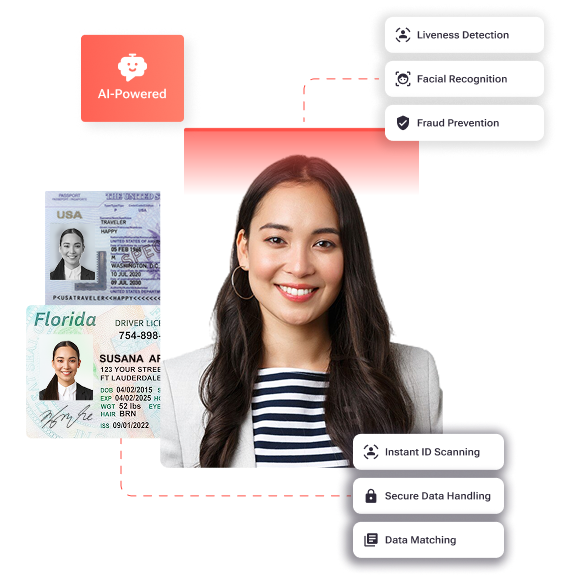
This timeline matters because of the fraud rates described earlier. Rushing the process increases the risk of accepting falsified documents. TenantEvaluation’s IncomeEv addresses this risk by replacing easily altered uploaded PDFs with direct-source income data, and IDVerify adds biometric identity confirmation before any document review begins.
ID Verify
FCRA Pre-Adverse and Final Denial Workflow
The Fair Credit Reporting Act requires a two-step denial sequence whenever a consumer report, including an income verification report, contributes to an adverse decision. Skipping either step creates legal exposure for the association. The numbered sequence below ties each notice to revenue protection by keeping the process moving without unnecessary delay.
Pre-Adverse Action Notice: Before issuing a final denial, provide the applicant with a written pre-adverse action notice that includes a copy of the consumer report used and a copy of the FTC’s “A Summary of Your Rights Under the Fair Credit Reporting Act.” This notice must be delivered before the final decision is communicated.
Reasonable Dispute Period: Allow the applicant a reasonable period, typically five business days, to dispute inaccurate information with the reporting agency. The association does not adjudicate the dispute and instead pauses the final decision.
Final Adverse Action Notice: If the application is denied after the dispute period, issue a final adverse action notice identifying the consumer reporting agency, its contact information, and a statement that the agency did not make the decision and cannot explain it. Include the applicant’s right to a free report within 60 days.
Record Retention: Retain all notices, the consumer report, and the application in an audit-ready file. TenantEvaluation’s built-in audit trails timestamp every action automatically.
CAMs may copy the following language into governing documents or board resolutions:
“All rental applicants must demonstrate gross monthly income of not less than three times (3x) the monthly rent, verified through source documentation as defined in the Association’s Tiered Documentation Checklist. Applications that do not meet this standard will be processed in accordance with the Association’s FCRA Adverse Action Workflow, which includes pre-adverse and final adverse action notices as required by 15 U.S.C. § 1681m. Criteria are applied uniformly to every applicant regardless of protected class. All decisions and supporting documentation are retained for a minimum of five years.”
TenantEvaluation’s automated adverse action workflows execute this sequence without manual intervention, which reduces the risk of a missed notice and protects the association from liability. See how the automated FCRA workflow protects your association.
Application-Fee Revenue Structuring Under Chapter 720
Florida Statute Chapter 720 governs HOA operations and permits associations to charge reasonable application fees as a condition of rental approval. The statute does not prescribe a fixed dollar cap, but fees must be reasonable and disclosed in the governing documents or rules. Boards should document the fee amount, the purpose, and the collection process in a board resolution to create a defensible record.
Structuring application-fee collection as part of the onboarding workflow, rather than as a separate manual step, removes the most common revenue leakage point. Typical leakage comes from applicants who submit documents but never pay, or from payments that arrive through disconnected channels and go untracked. TEpayments by Zinc is a connected payment workflow inside TenantEvaluation that collects application fees and deposits during resident onboarding.
Payments go directly from the applicant to the association’s designated account, and TenantEvaluation never holds the funds. Each association defines what is collected and at which stage, and the workflow adapts to the property’s process rather than forcing a universal sequence.
TenantEvaluation’s revenue-sharing model deducts its service fee from the collected application fee and rebates the net proceeds to the association. This structure creates a cost-neutral or revenue-generating onboarding process. TenantEvaluation has already generated $150 million for communities across its 5,000 plus association network, processing more than 100,000 applications annually.
Quarterly Income-Verification Metrics Dashboard for Boards
Collecting application fees is only half of the revenue equation, and the other half is tracking whether income-verification protocols protect that revenue over time. Income-verification protocols generate value only when their performance is measured and reported to the board. A quarterly metrics dashboard converts operational data into board-ready revenue intelligence.
The following metrics define a complete dashboard for Florida HOA income-verification programs.
Vacancy Days per Unit: Tracks the number of days between lease expiration and new lease commencement. Reductions in vacancy days directly translate to recovered rental income.
Approval Speed (Submission to Decision): Measures the average time from complete application submission to final approval or denial. TenantEvaluation’s QuickApprove accelerated approval workflow reduces this metric by replacing email chains and spreadsheets with a board-ready, real-time approval process inside one connected platform.
Application-Fee Income Collected: Tracks total application-fee revenue received per quarter, net of service fees, credited to the association’s designated account via TEpayments by Zinc.
Income Verification Pass Rate: Shows the percentage of applicants who meet the 3x standard on first submission. A declining pass rate may signal a need to adjust pre-screening communications or documentation guidance.
Denial Workflow Compliance Rate: Shows the percentage of adverse decisions that completed both the pre-adverse and final adverse action notice steps within required timeframes, as recorded in TenantEvaluation’s audit trail.
QuickApprove: Fast, Informed Decisions at the Click of a Button
TenantEvaluation’s Lease Tracking capability connects resident onboarding, unit data, approvals, and lease documentation into one centralized, real-time workflow. This connection delivers the occupancy and lease-status data that feeds vacancy-day calculations and board reporting. Real-time lease status, including active, pending, expired, or missing, is visible at the unit level and replaces spreadsheets and scattered email chains with audit-ready digital records.
Recent Regulatory Changes Affecting Income Verification
Florida statute does not prescribe a specific statutory income minimum for rental applicants. Associations operating under Chapter 720 retain broad authority to set and enforce reasonable screening criteria, as long as those criteria are disclosed in governing documents and applied uniformly. Federal fair-housing guidance continues to emphasize that income-to-rent ratio standards must be applied consistently across all applicant categories, including those with non-traditional income sources such as self-employment, retirement income, disability benefits, and gig-platform earnings, to avoid disparate-impact exposure.
The 3x standard requires that an applicant’s gross monthly income be at least three times the monthly rent. Florida statute does not mandate this specific threshold, but it remains the dominant industry benchmark adopted by property managers and HOAs across the state. Its value lies in uniformity, because when the same standard is applied to every applicant and disclosed in governing documents before the application opens, it creates a defensible basis for approval and denial decisions that limits Fair Housing liability.
Income Verification for Self-Employed and Gig Applicants
Self-employed applicants should submit two years of federal tax returns including the relevant Schedule C or E, a year-to-date profit-and-loss statement, and three to six months of business and personal bank statements. The income figure used for qualification is averaged net profit after expenses, not gross revenue. Gig workers follow a similar package that includes two years of tax returns, 1099 forms, and bank statements showing consistent deposit patterns.
Platform earnings summaries serve as supplemental documentation and not standalone proof. Boards should define these requirements by employment category in a written tiered checklist and apply them uniformly to avoid disparate-impact claims.
Required FCRA Notices for Rental Denials
The Fair Credit Reporting Act requires a two-step process when a consumer report contributes to a denial. First, before issuing a final denial, the association must send a pre-adverse action notice that includes a copy of the consumer report and the FTC’s summary of applicant rights. Second, after a reasonable dispute period, typically five business days, the association issues a final adverse action notice identifying the reporting agency, its contact information, and a statement that the agency did not make the decision.
Both notices must be retained in an audit-ready file. TenantEvaluation automates this sequence and timestamps every step in its built-in audit trail.
Structuring Application Fees Under Chapter 720
Chapter 720 permits HOAs to charge reasonable application fees as a condition of rental approval. The fee amount and purpose must be disclosed in the governing documents or association rules. Structuring collection inside the onboarding workflow, rather than as a separate manual step, removes payment tracking gaps and ensures the association receives funds before the application proceeds to review.
TEpayments by Zinc handles this within TenantEvaluation’s onboarding process, with payments going directly from the applicant to the association’s designated account and TenantEvaluation never holding the funds.
Conclusion: Turning Screening Rules into a Revenue System
Structured income-verification protocols function as a revenue strategy, not just an administrative upgrade. Uniform 3x-rent standards reduce vacancy days, FCRA-compliant denial workflows limit legal exposure, tiered documentation checklists reduce income fraud, and connected application-fee collection turns every application into a traceable revenue event. Each component reinforces the others, and together they create a closed-loop system that protects and grows rental income quarter over quarter.
TenantEvaluation is the only platform that automates every step of this system for Florida community associations, from IncomeEv direct-source verification and IDVerify biometric identity confirmation to QuickApprove board-ready approvals, TEpayments by Zinc connected fee collection, and Lease Tracking real-time occupancy visibility, all inside one FCRA-first platform built exclusively for HOAs and management companies. With the scale and track record described above, TenantEvaluation delivers the infrastructure boards and CAMs need to implement these protocols immediately.