Written by: Luis Teran, Co-founder, CEO, TenantEvaluation
Key Takeaways for Florida 55+ HOAs
- Florida 55+ HOAs must meet three HOPA requirements: 80% occupancy by residents 55+, published intent policies, and ongoing age verification under 24 CFR 100.307.
- Boards should treat age verification as a recurring operational function, not a one-time task, to maintain compliant 55+ status.
- Losing HOPA status exposes HOAs to federal and state Fair Housing Act enforcement through the DOJ, HUD, and Florida Commission on Human Relations.
- Standardizing age-document collection at the application stage reduces administrative work and creates audit-ready records for surveys and complaints.
- TenantEvaluation helps Florida CAMs and boards streamline 55+ age verification with consistent, scalable workflows.
Board Action Items for Maintaining 55+ Status
Boards can protect 55+ status by turning HOPA requirements into clear, recurring tasks.
- Confirm governing documents explicitly state intent to operate as 55+ housing and are current under Chapter 720.
- Verify that at least 80% of occupied units have one resident age 55 or older using current occupancy records.
- Schedule and complete occupancy surveys per 24 CFR 100.307, collecting age-verification documents from units.
- Maintain written policies that show intent to operate as housing for older persons.
- Retain supporting documentation in an organized, audit-ready format.
- Review application workflows to confirm age documentation is collected consistently at the point of application for every new resident.
- Consult legal counsel when governing documents require amendment or when enforcement actions are under consideration.
See how TenantEvaluation supports Florida CAMs and boards managing 55+ communities.
Under-55 Buyers in Florida 55+ Communities
A person under 55 can purchase a unit in a Florida 55+ community, but occupancy restrictions still apply. Under 24 CFR 100.305 (which implements the exemption in 100.304), the 55+ exemption requires that at least 80% of occupied units have one resident who is 55 or older. The rule does not require every owner to meet the age threshold.
The remaining 20% of units may be occupied by residents who do not meet the age requirement. This structure is the basis of what many boards call the 80/20 rule. In practice, a buyer under 55 may purchase within the 20% variance if the community’s total occupancy remains above the 80% threshold.
Florida HOA governing documents often impose stricter occupancy restrictions than the federal floor. HOA covenants operate as private contract rules layered on top of local ordinances, so an association may apply tighter screening, approval, or occupancy rules that do not conflict with HOPA. A board should review its declaration and bylaws under Chapter 720 to see whether community documents permit or restrict under-55 ownership and occupancy beyond the federal minimum.
Children Living in Florida 55+ Communities
Children under 18 generally may not live as permanent residents in a qualifying Florida 55+ community, though individual community rules and limited exceptions may apply. The HOPA exemption under 24 CFR 100.304 permits communities to restrict occupancy to older persons. That permission includes excluding families with minor children from permanent residency.
This exemption allows 55+ communities to lawfully decline applications where a minor would be a permanent occupant. Guest policies for visiting children operate separately and follow the community’s own rules.
Associations often enforce guest rules strictly and recommend that owners provide proactive notification when family members will stay for extended periods to prevent them from being flagged as unauthorized occupants. Boards should define guest-stay limits in governing documents and apply them consistently across all residents to avoid selective enforcement claims before the FCHR.
Consequences When a 55+ HOA Loses HOPA Status
When a Florida 55+ HOA no longer satisfies the three HOPA requirements, it loses the federal exemption from familial-status provisions of the Fair Housing Act. A community that fails to meet the requirements in 24 CFR 100.304 can no longer lawfully exclude families with children on that basis until it regains qualified status. Continuing to enforce age-based occupancy restrictions after losing HOPA status constitutes unlawful familial-status discrimination under the Fair Housing Act (42 U.S.C. 3601 et seq.).
Enforcement consequences can be severe. The Department of Justice may bring civil enforcement actions seeking injunctive relief, monetary damages, and civil penalties, including in cases involving a pattern or practice of discrimination. Individuals may also file complaints with HUD or pursue lawsuits in federal or state court. At the state level, the Florida Commission on Human Relations enforces the Florida Fair Housing Act, which creates dual exposure for associations that fall out of compliance.
Age Verification for New Residents
To maintain the 80% threshold and avoid the enforcement consequences described above, boards must verify age for qualifying residents. Under 24 CFR 100.307, boards must collect reliable age-verification documents for each qualifying occupant in every unit counted toward the 80% threshold.
24 CFR 100.307(f) prohibits a housing facility or community from evicting, refusing to renew leases, or otherwise penalizing families with children in order to achieve the 80 percent occupancy requirement. If an occupant refuses to provide documentation, the community may deem the unit compliant if it possesses sufficient alternative evidence permitted under the regulation. Verification records must be retained and made available as required.
How Boards Enforce 55+ Rules in Daily Operations
Maintaining compliant status requires active, recurring enforcement steps rather than a one-time setup. The following steps work together as a practical enforcement framework for Florida 55+ HOAs.
- Update governing documents. Confirm that the declaration, bylaws, and rules under Chapter 720 explicitly state the community’s intent to operate as 55+ housing. Outdated or ambiguous language weakens the community’s ability to demonstrate intent under HOPA and undermines every later enforcement step.
- Set application criteria. Build on the intent in your governing documents by defining age-documentation requirements in the application process. Require every prospective resident to submit qualifying documents before approval. Consistent criteria support fair treatment and reduce the risk of selective enforcement claims.
- Conduct occupancy surveys. 24 CFR 100.307 requires housing for older persons to develop procedures for routinely determining occupancy and to produce verification of compliance via reliable surveys and affidavits, but does not mandate surveys at least once every two years. Boards should place these surveys on a fixed calendar cycle and document outreach to all units so survey results align with application-stage records.
- Maintain audit-ready records. Under 24 CFR 100.307, housing providers must produce reliable surveys and affidavits verifying compliance with the 80% rule. Records should be organized, timestamped, and accessible without delay so the community can respond quickly to audits or complaints.
Age Verification in the Application Process
The application stage offers the most reliable point to collect age documentation for every new resident. Boards and CAMs that standardize age-verification requirements within the application workflow reduce the administrative burden of retroactive document collection and create stronger records for audit purposes.
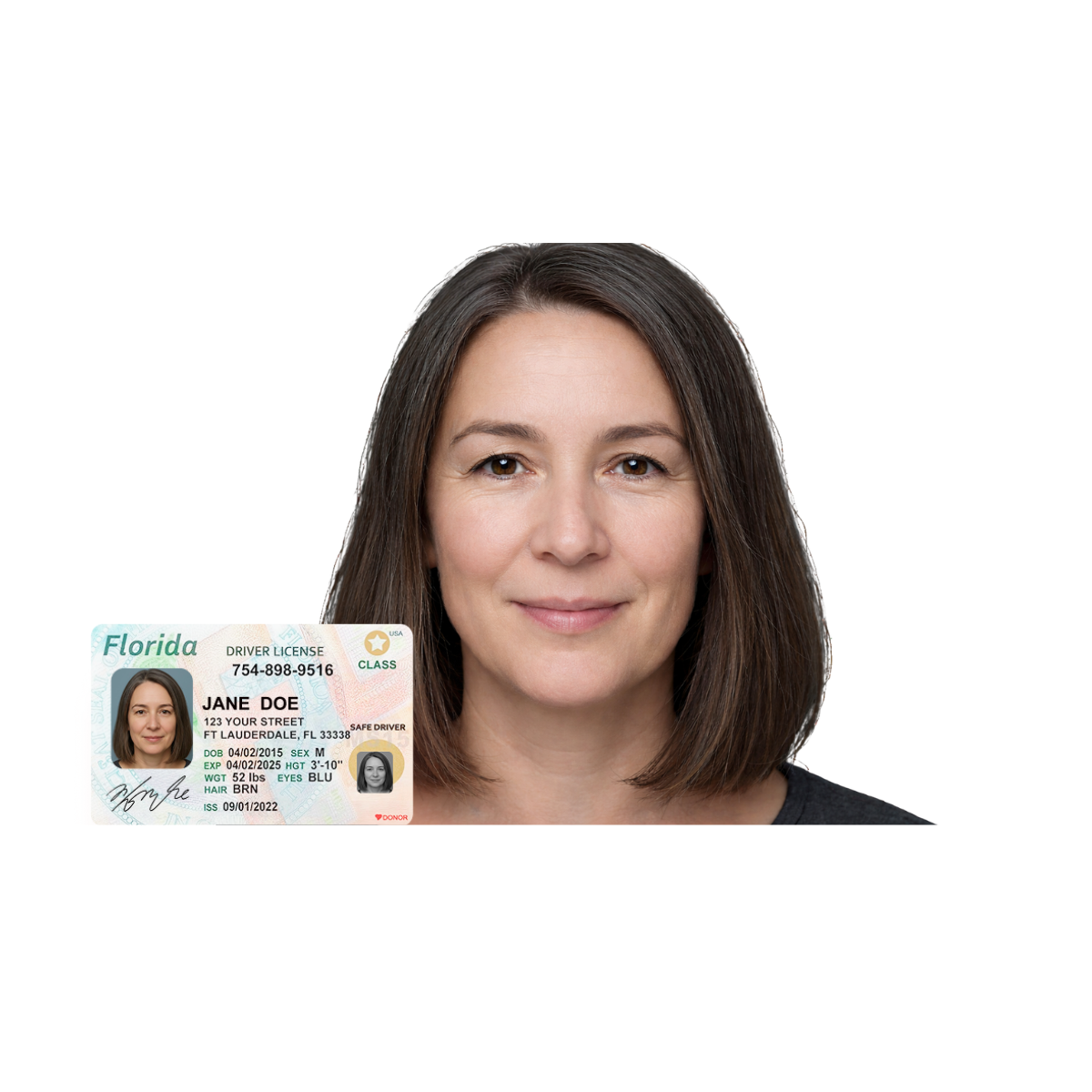
Manual processes that rely on emails, PDFs, and individual follow-ups often produce fragmented documentation and inconsistent outcomes across applicants. TenantEvaluation’s 55+ Communities Verification is a built-in capability that reduces manual work, standardizes application handling, supports documentation consistency, and is built for Florida Condos and HOAs and designed for Community Association Managers. It improves operational efficiency, strengthens internal processes, and creates a more structured and scalable approach to age-restricted application requirements without replacing legal guidance.
How to Evaluate an Age-Verification Workflow
Boards can compare age-verification workflows or platforms by using a simple, neutral checklist.
- Compliance readiness: The workflow should support collection of documents acceptable under 24 CFR 100.307 and align with Chapter 720 requirements.
- Operational efficiency: The process should reduce manual handling and administrative burden for CAMs and boards.
- Transparency: Managers and boards should be able to track application status and documentation completeness in real time.
- Scalability: The workflow should perform consistently within a single community and across a larger portfolio of associations.
- Auditability: Records should be organized, timestamped, and retrievable for inspection under 24 CFR 100.307.
- Risk controls: The process should apply consistent standards across all applicants to reduce selective enforcement exposure.
Conclusion: Turning HOPA Rules into Daily Practice
Florida 55+ HOAs in 2026 operate within the three-part HOPA framework described earlier, layered with Florida-specific enforcement through Chapter 720 and the Florida Commission on Human Relations. Loss of HOPA status removes the Fair Housing Act exemption and creates direct legal exposure at both the federal and state level. Boards and CAMs that treat age verification as a recurring operational function, rather than a periodic administrative task, are better positioned to maintain compliant status and respond to any audit or complaint.
CAMs and boards managing 55+ communities should evaluate their current age-verification workflows against the criteria above. That review includes checking whether documentation is collected consistently at the application stage, whether survey records are audit-ready, and whether the process scales across the portfolio without adding manual overhead.
Frequently Asked Questions
What is the 80/20 rule for 55+ communities in Florida?
The 80/20 rule refers to the federal occupancy threshold under HOPA. At least 80% of occupied units in a qualifying 55+ community must have at least one resident who is 55 years of age or older. The remaining 20% of units may be occupied by residents who do not meet the age requirement without causing the community to lose its age-restricted status.
Florida HOA governing documents may impose stricter requirements than this federal floor, so boards should review their declaration and bylaws under Chapter 720 to understand the specific rules that apply to their community. Maintaining accurate, current occupancy records is essential to demonstrating compliance with this threshold at any point, including during a Fair Housing Act complaint investigation.
How often must a Florida 55+ HOA conduct an age-verification survey?
Federal regulations under 24 CFR 100.307 require housing providers to develop procedures for routinely determining occupancy and to produce verification of compliance via reliable surveys and affidavits. These surveys must use acceptable age-verification documents, and the results must be retained in a format that can be produced in response to a Fair Housing Act complaint.
Boards should treat the survey as a scheduled operational event with defined outreach procedures, document collection standards, and record retention protocols.
What documents are acceptable for age verification in a Florida 55+ community?
Under 24 CFR 100.307, age verification can include official government documents containing a birth date or signed certifications by household members. Communities must establish and maintain written policies for the verification process.
If an occupant refuses to provide documentation, the community may deem the unit compliant if it possesses sufficient alternative evidence. Collecting these documents consistently at the application stage, rather than only during surveys, reduces administrative burden and strengthens the community’s overall documentation record.
Can a Florida 55+ HOA regain its status after losing it?
A Florida 55+ HOA that loses its HOPA status can work toward regaining it by returning to full compliance with the three federal requirements. The board must restore the 80% occupancy threshold, demonstrate intent to operate as 55+ housing through updated policies and governing documents, and re-establish a compliant age-verification process.
Until the community meets all three requirements again, it cannot lawfully enforce age-based occupancy restrictions, and continuing to do so creates the enforcement exposure described earlier in this guide. Boards in this situation should consult legal counsel to assess the path to reinstatement and any interim obligations. Strengthening the application-stage documentation process is a practical first step toward rebuilding a compliant occupancy record.
How does TenantEvaluation’s 55+ Communities Verification support Florida CAMs and boards?
TenantEvaluation’s 55+ Communities Verification is a built-in capability within the TenantEvaluation platform that helps Florida Condos and HOAs standardize how age-restricted application requirements are handled. It reduces manual work, standardizes application handling across applicants and communities, supports documentation consistency, and is built for Florida Condos and HOAs and designed for Community Association Managers.
The capability improves operational efficiency and strengthens internal processes by replacing fragmented manual workflows that rely on emails, PDFs, and individual follow-ups with a more structured and scalable approach. It supports internal compliance-related processes and does not replace legal guidance. CAMs and boards managing 55+ communities can use it to create more consistent records at the application stage, which reduces the administrative burden of retroactive document collection during surveys.
