Written by: Luis Teran, Co-founder, CEO, TenantEvaluation
Key Takeaways
- HOPA allows 55+ Florida communities to enforce age restrictions when at least 80% of occupied units have one resident aged 55 or older.
- Communities must keep clear intent language in governing documents and run biennial age-verification surveys to stay compliant.
- Acceptable age documentation includes government-issued photo IDs, birth certificates, and Medicare cards paired with photo identification.
- Guest policies, hardship exceptions, and younger-spouse rules must be applied consistently and documented to protect the 80/20 ratio.
- TenantEvaluation helps Florida CAMs and boards standardize 55+ age verification and application workflows, so get started today.
How the 80/20 Rule Works for Florida 55+ Communities
Under 24 CFR § 100.305(a), a housing facility qualifies for the HOPA exemption only if at least 80% of its occupied units are occupied by at least one person aged 55 or older. The remaining 20% of units may be occupied by residents of any age, subject to community rules.
An “occupied unit” under 24 CFR § 100.305(b) includes any dwelling unit actually occupied on the date the exemption is claimed, or a temporarily vacant unit where the primary occupant resided in the past year and intends to return. A unit counts as occupied by a qualifying person if at least one current occupant is 55 or older, or, for temporarily vacant units, if at least one occupant immediately before vacancy was 55 or older.
Meeting the 80% occupancy threshold alone does not satisfy HOPA. HOPA-compliant communities must also publish and follow policies that show intent to operate as housing for older persons. Florida governing documents such as CC&Rs, bylaws, and rules must state this intent clearly. Communities that fail to maintain written intent policies risk losing their HOPA exemption even if they meet the 80% occupancy threshold.
Newly constructed housing must also reach the 80% requirement within a reasonable timeframe, so CAMs should track occupancy from the first closings.
Guest Stays, Younger Spouses, and Caregivers in 55+ Communities
HOPA does not set a universal guest-stay limit, so each community’s CC&Rs and rules control guest durations. Policies vary across Florida HOAs and condominiums, but many communities set limits between 14 and 30 consecutive days per visit, with annual caps commonly between 30 and 60 days.
Guest policies in 55+ communities often address how long grandchildren or other younger family members may stay, whether visits can repeat, and when an extended stay needs HOA approval. Extended stays that begin to resemble residency, especially by individuals under 55, can threaten the community’s 80/20 ratio and should be tracked carefully.
Beyond temporary guest stays, communities must also manage permanent or semi-permanent exceptions to the age requirement. Hardship exceptions are the most operationally complex area. A younger spouse or partner is the most common exception allowing an under-55 resident in a 55+ community, as long as at least one household member meets the age requirement and the governing documents permit it. Live-in caregiver exceptions usually require HOA approval, supporting documentation, and often end when the need for care ends.
CAMs should ensure that guest and hardship exception policies appear in governing documents, are applied consistently across all applicants, and are documented in the application file. Informal email approvals or verbal agreements create risk during disputes or audits.
Florida HOPA Age Verification Rules for 55+ Communities
HOPA-compliant 55+ communities must verify age compliance through periodic surveys and by requesting proof of age from residents. The standard verification cadence is biennial, so communities conduct age surveys at least once every two years to confirm ongoing compliance with the 80% occupancy threshold.
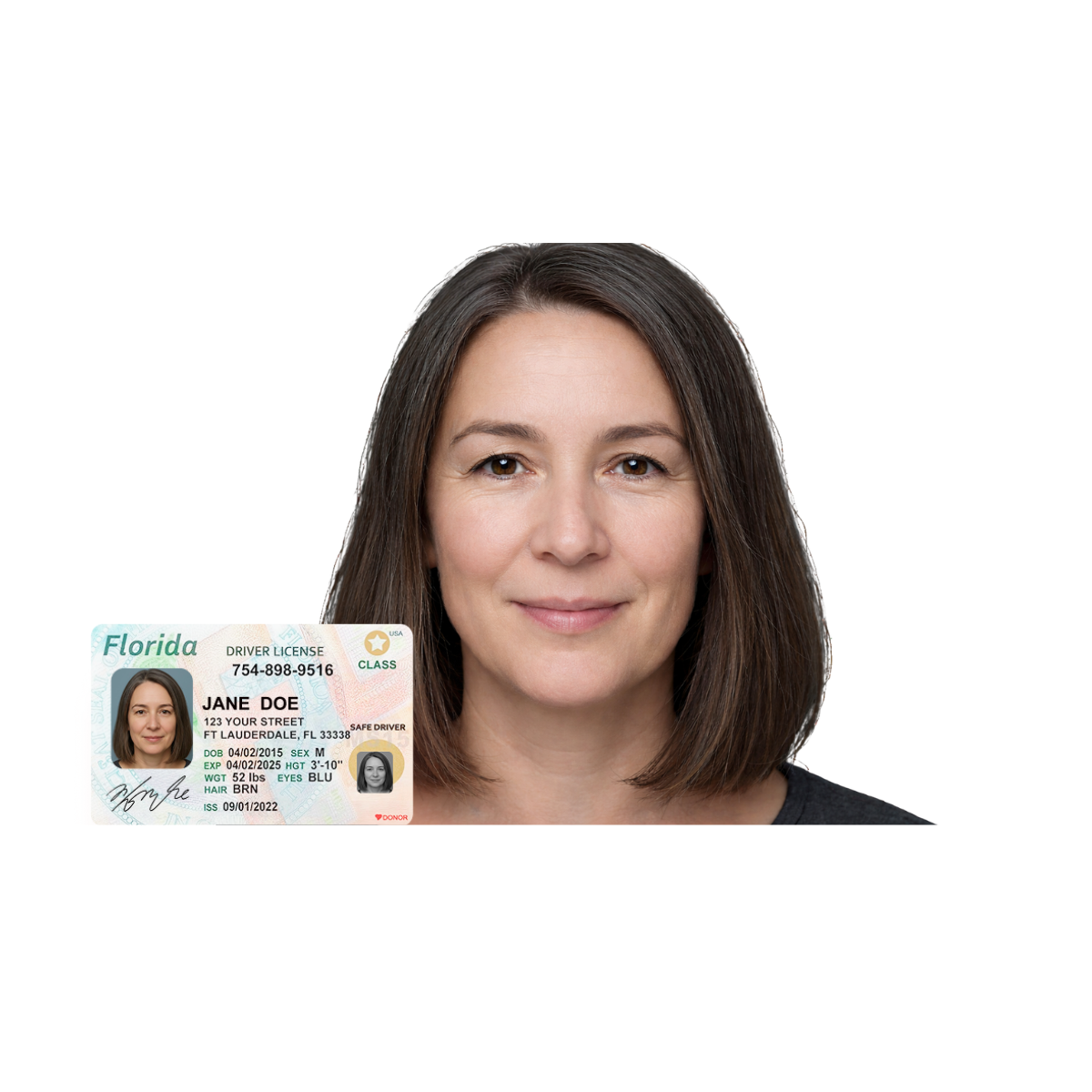
Acceptable documentation for age verification typically includes:
- Government-issued photo ID (driver’s license, passport, state ID)
- Birth certificate
- Medicare or Social Security card combined with a photo ID
- Military discharge papers
- Any other reliable documentation establishing date of birth
Common compliance failures in Florida communities share a few themes. Files often contain missing or expired documentation, and many communities lack a documented biennial survey process. Some apply different verification standards across units, or fail to keep written intent policies in governing documents. Others forget to include age-verification steps in resale buyer workflows, especially when processes rely on manual checklists and email.

5-Step Age-Verification Checklist for Florida 55+ Communities
This checklist gives CAMs and boards a repeatable, audit-ready workflow for managing HOPA age verification requirements in Florida. Adapt these steps to match your community’s governing documents.
- Confirm governing document language. Verify that CC&Rs, bylaws, and community rules clearly state the intent to operate as 55+ housing for older persons and reference the 80/20 occupancy threshold. Update or amend language when it is missing or unclear.
- Collect age documentation at application. Require every applicant to submit a government-issued photo ID that shows date of birth before the application reaches board review. Standardize which documents you accept and apply the same standard to every applicant.
- Calculate and record the 80/20 ratio. Maintain a current unit-by-unit occupancy log that tracks qualifying occupants per unit. Update the log after every new application, resale, or occupancy change so you always know your current ratio.
- Conduct biennial age surveys. Schedule a formal age-verification survey at least once every two years to maintain HOPA compliance. Document the survey date, method, response rate, and results, because this record shows that your community actually conducted the survey if anyone challenges it. Retain survey records for a minimum of three years so you can demonstrate a consistent pattern of compliance during audits.
- Review and update hardship and guest exception files. Audit all active hardship exceptions, such as younger spouses and caregivers, along with guest-stay approvals, at least once a year. Confirm that supporting documentation is current and that each exception still meets the criteria in your governing documents.
Ready to replace manual checklists with a structured digital workflow? Schedule a demo today.
Key Differences Between 55+ and 62+ Housing Rules
| Category | HOPA 55+ Communities | 62+ Communities |
|---|---|---|
| Occupancy Threshold | 80% of units must have one 55+ resident | 100% of occupants must be 62 or older, with no under-62 residents permitted |
| Age Verification Standard | Biennial surveys required, with proof of age collected at application and periodically | Age verification required for all occupants, with no biennial survey requirement under HOPA |
| Younger Spouse / Caregiver | Permitted if at least one household member meets the 55+ requirement and governing documents allow it | Generally not permitted, because all occupants must be 62 or older |
| Marketing Implications | Must publish and follow policies that show intent to be housing for older persons | Must be exclusively for persons 62 or older, and marketing must reflect this restriction accurately |
How TenantEvaluation Standardizes 55+ Application Workflows
Manual age-verification workflows that rely on emails, PDFs, and individual follow-ups create inconsistent handling and documentation gaps. For CAMs managing multiple Florida communities, the administrative burden grows with every application cycle.
TenantEvaluation’s 55+ Communities Verification is a built-in capability that helps Florida condos and HOAs standardize how age-restricted requirements are handled across applications. It reduces manual work, supports documentation consistency, improves operational efficiency, and strengthens internal processes for Community Association Managers and Florida associations.
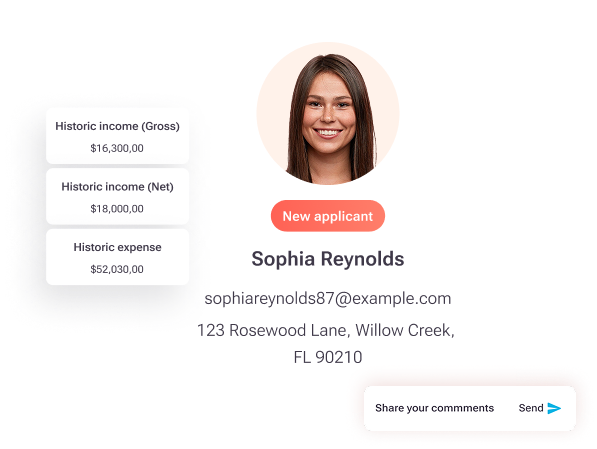
Within the same platform, IDVerify adds a biometric identity verification layer by validating government-issued IDs through AI-powered liveness detection and biometric facial matching. This confirms that the identity behind every age document is real before the application advances to board review and shifts communities from document-only review to verified identity confirmation.
After documentation is collected and identity is confirmed, QuickApprove accelerates resident approvals inside one connected platform. It gives CAMs, boards, and property management teams real-time application tracking, a board-ready approval process, automated communication support, customized approval letters, and a personalized welcome package. Communities gain speed during high-volume seasons without losing control, compliance, or visibility.
TenantEvaluation is not a legal guidance system and does not replace association counsel. It is a workflow standardization platform and documentation-first onboarding solution that supports internal operational control for CAMs and boards managing 55+ communities across Florida.
Frequently Asked Questions
What happens if a Florida 55+ community falls below the 80% occupancy threshold?
A community that falls below the 80% threshold loses its HOPA exemption and becomes subject to the Fair Housing Act’s familial-status protections. The community can no longer legally enforce age restrictions against families with children. Communities approaching the threshold should consult association counsel and review their occupancy logs immediately. Maintaining accurate, current records of qualifying occupants per unit provides the first line of operational defense.
Who is responsible for conducting biennial age verification surveys in a Florida HOA or condo?
Responsibility usually falls to the Community Association Manager or the board of directors, as defined in the community’s governing documents. The CAM generally coordinates the survey process, collects documentation, updates occupancy records, and retains results, while the board maintains oversight. In communities managed by a management company, the management agreement should state which party initiates and documents the biennial survey.
Can a Florida 55+ community deny an application from a buyer whose spouse is under 55?
In most cases, a younger spouse or live-in partner may reside in a HOPA-qualified 55+ community when at least one household member meets the age requirement and the governing documents allow it. Denying an application solely because one occupant is under 55, when a qualifying occupant is also present, may expose the community to a Fair Housing complaint. Boards should review their CC&Rs and consult legal counsel before making eligibility decisions in mixed-age household situations.
What documentation should a Florida 55+ community retain to support a HOPA audit?
Communities should retain completed age-verification forms for every occupied unit, copies of acceptable identification documents or confirmation that they were reviewed, and biennial survey records including dates and response rates. They should also keep written intent policies from governing documents, records of any hardship or caregiver exceptions granted, and a current unit-by-unit occupancy log. Documentation should be retained for at least three years and stored in an accessible, organized format for rapid retrieval during an audit or dispute.
Does TenantEvaluation replace legal counsel for HOPA compliance decisions?
No. TenantEvaluation’s 55+ Communities Verification is a workflow standardization and documentation-consistency tool that supports internal operational processes for CAMs and boards. It does not provide legal advice, interpret HOPA requirements, or make eligibility determinations. Communities should work with qualified association counsel, including firms that focus on Florida community association law, for legal guidance on HOPA compliance, governing document language, and Fair Housing obligations.
Strengthening HOPA Compliance with Standardized Workflows
HOPA requirements for Florida communities are simple on paper and demanding in daily operations. The 80/20 occupancy rule, biennial verification cadence, guest-stay policies, and hardship exception documentation all require repeatable, consistent workflows instead of ad hoc email chains and manual file reviews. CAMs and boards that standardize these processes reduce administrative burden, improve documentation consistency, and build more defensible internal records.
TenantEvaluation’s platform, anchored by 55+ Communities Verification, IDVerify, and QuickApprove, is built for Florida condos and HOAs that need a more structured, scalable approach to age-restricted application handling. With 5,000+ communities and 100,000+ applications processed annually, TenantEvaluation brings the operational depth that Florida CAMs and boards require.
See TenantEvaluation in action for your 55+ community. Schedule a demo today.
