Written by: Luis Teran, Co-founder, CEO, TenantEvaluation | Last updated: August 6, 2026
Key Takeaways for Florida 55+ HOA Leasing
- Florida 55+ HOAs must keep at least 80% of occupied units with one resident aged 55+ to preserve age-restricted status under HOPA and Florida Statute Chapter 760.
- Many communities use rental-frequency caps and minimum lease terms in their governing documents to control turnover and support compliance.
- Florida’s 2024 HOA reform legislation carries into 2026 and adds stricter recordkeeping, transparency, and uniform screening requirements for lease approvals.
- Post-July 2021 rental restrictions generally cannot bind existing owners, so boards must track amendment dates and owner purchase timelines to enforce rules consistently.
- TenantEvaluation streamlines age verification and lease tracking for Florida CAMs and boards, so schedule a demo today.
Florida’s 80/20 Rule for 55+ Communities
The 80/20 rule sets the occupancy threshold that qualifies a Florida community for the age-restricted exemption under HOPA and Florida Statute § 760.29. At least 80% of occupied units must have one resident who is 55 or older. The remaining 20% of units may house residents under 55 without losing age-restricted status, as long as the community also meets HOPA’s published-intent and age-verification requirements.
Key requirements for maintaining the 80/20 threshold include:
- At least one occupant per qualifying unit must be 55 or older at the time of occupancy.
- The community must keep written policies and procedures that show its intent to operate as 55+ housing.
- Age verification must rely on reliable documentation, such as a driver’s license, passport, or birth certificate, and records must be retained.
- The community must complete an age survey at least every two years to confirm ongoing compliance with the 80% threshold.
- The community must publish its age-verification procedures and follow them consistently for every applicant.
Florida 55+ HOAs also often adopt rental-frequency caps in their governing documents to control turnover and protect age-restricted status. The table below compares common rental-frequency structures used by Florida 55+ communities. Specific caps come from each community’s governing documents, not state statute, and the figures below reflect typical market practice.
| Rental Frequency Cap | Minimum Lease Term | Common Rationale | CAM Documentation Burden |
|---|---|---|---|
| Once per year | 12 months | Limits turnover, easiest to track | Low, one lease cycle per unit annually |
| Twice per year | 6 months | Balances owner flexibility with stability | Moderate, two approval cycles per unit |
| Three times per year | 4 months | Supports seasonal rental markets such as Southwest Florida | High, multiple age-verification events per unit |
| No cap (governed by minimum term only) | 30 days (minimum per governing documents) | More owner flexibility, higher administrative risk | Very high, near-continuous verification required |
Standardize your 55+ lease-approval workflow and schedule a demo today.
Understanding the 80/20 threshold and rental caps covers only part of the compliance picture. Florida’s evolving HOA legislation adds new recordkeeping and enforcement rules that shape how CAMs document and apply age-restricted leasing requirements.
Florida HOA Leasing Rules and 2026 Legislation
Florida’s recent legislative sessions have produced rapid changes that affect HOAs. The 2024 omnibus HOA reform bill (HB 1203, codified in Chapter 720) introduced new transparency, recordkeeping, and board-conduct requirements that continue into 2026 enforcement. Several provisions directly affect leasing and tenant approval.
Key requirements that touch leasing and approvals include:
- HOAs must maintain official records and provide them to members within 10 business days of a written request.
- Florida HOA boards may charge fees only to cover the actual costs of providing copies of official records, including copying and personnel retrieval time exceeding one-half hour.
- Rental restrictions, including frequency caps and minimum lease terms, must appear clearly in the recorded declaration to bind a new owner.
- Post-July 2021 rental-restriction amendments generally cannot bind existing owners, except under two statutory carve-outs, so many rules apply only to new owners.
- Background screening criteria must be applied uniformly, because selective denial based on undisclosed criteria can create fair housing risk.
A repeatable seven-step lease-approval workflow helps CAMs and boards apply these requirements the same way for every application.
- Receive application and fee. Confirm the unit is eligible to lease under the governing documents, including rental-frequency caps and any outstanding violations.
- Collect required documents. Gather the executed lease, government-issued ID for all occupants 18 and older, and age-verification documentation for the qualifying 55+ occupant.
- Verify age eligibility. Confirm that at least one occupant meets the 55+ threshold and record the verification method and date.
- Run background screening. Apply the community’s uniform screening criteria, such as credit, criminal, and eviction history, consistently across all applicants.
- Board review and vote. Route the complete application package to the board through a structured approval workflow with a clear decision deadline.
- Issue approval or denial letter. Document the decision, state the basis for approval or denial, and retain a copy in the unit’s file.
- Record the lease and update occupancy status. Store the executed lease, update the unit’s occupancy record, and flag the lease expiration date for future follow-up.
Of these seven steps, Step 7, recording the lease and updating occupancy status, fails most often in manual workflows. This step requires ongoing tracking instead of one-time verification, so standardizing documentation at every stage protects communities during audits and disputes.
Florida HOA 5-Year Rule and Rental Amendments
Florida Statute § 720.306 limits how amended rental restrictions apply to existing owners. In Florida HOAs, a rental restriction adopted after July 1, 2021, cannot be enforced against an existing non-consenting owner, except for limits on rentals shorter than six months or more than three times per year. CAMs and boards in 55+ communities must translate this rule into daily enforcement decisions.
Key practical implications include:
- Rental restrictions recorded in the original declaration at the time of purchase usually apply to all owners from their purchase date.
- Restrictions adopted by amendment after July 1, 2021 generally do not bind existing non-consenting owners, except under two statutory carve-outs.
- Age-restriction requirements tied to HOPA operate under federal law and follow a separate timeline from state rental-amendment rules.
- Boards should consult association counsel before applying new rental caps to existing owners to avoid selective-enforcement claims.
- Accurate records of each restriction’s recording date and each owner’s purchase date are essential for consistent enforcement.
Common Resident Concerns in 55+ Communities
Prospective residents and their realtors often research disadvantages of 55+ communities before applying. CAMs and boards that understand these concerns can better anticipate applicant questions and potential documentation disputes.
- Restricted occupancy for younger household members. Adult children or grandchildren under 55 may not qualify as permanent occupants, which limits multigenerational living.
- Resale market limitations. The eligible buyer pool is smaller than in non-age-restricted communities, which can affect property values and time on market.
- Stricter lease-approval processes. Each rental requires age verification, board approval, and document review, which often lengthens timelines compared with non-restricted communities.
- Governing document complexity. Rental-frequency caps, minimum lease terms, and age-verification rules add layers of requirements for owners and tenants.
- Ongoing survey obligations. Biennial age surveys are required to maintain HOPA qualification, which creates recurring administrative work for CAMs and boards.
55+ Communities Verification Workflow
Manual handling of age-restricted application requirements through emails, PDFs, and follow-up calls creates fragmented records and inconsistent outcomes. TenantEvaluation’s 55+ Communities Verification feature addresses these issues with a structured digital workflow.
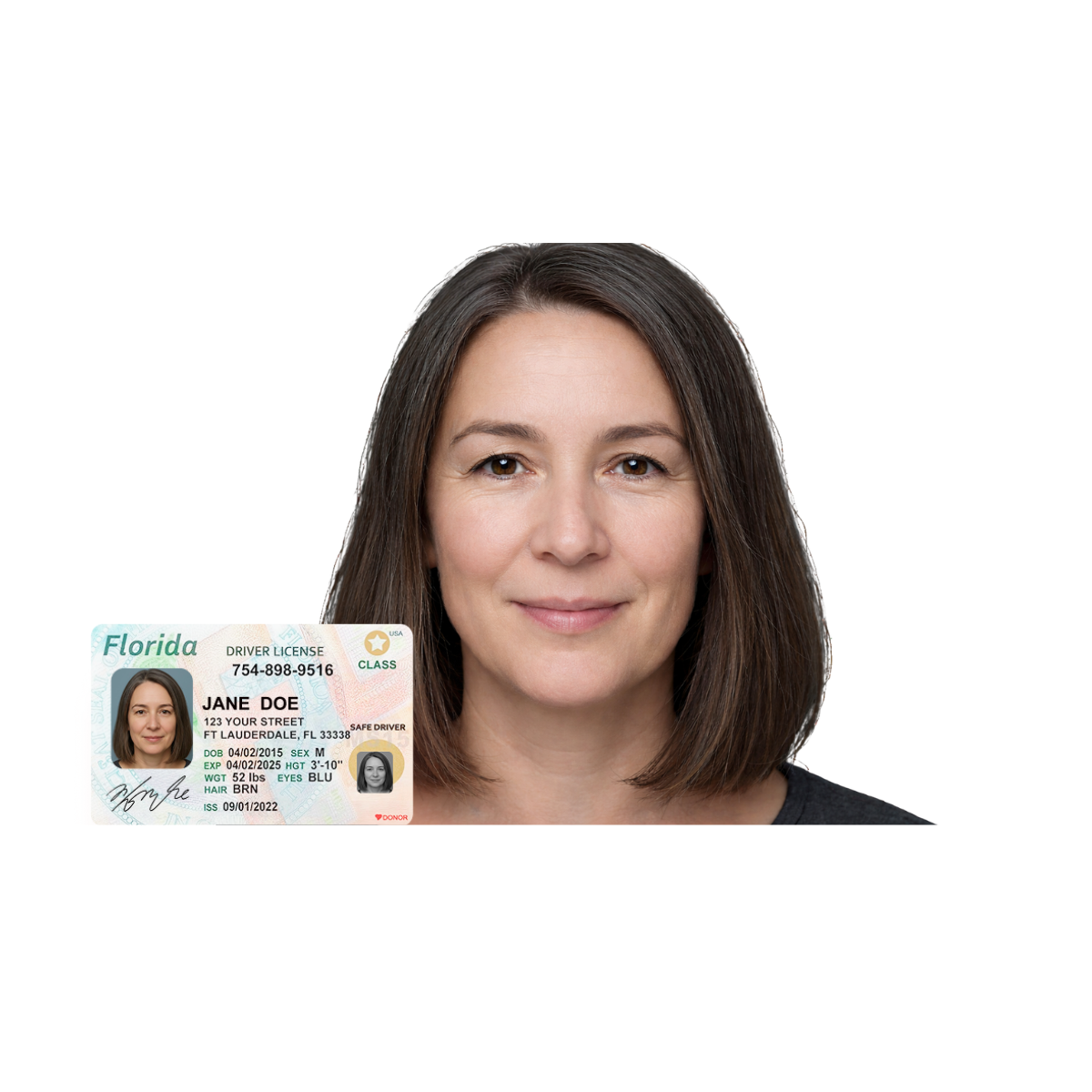
This feature is built for Florida Condos and HOAs and supports Community Association Managers who need a scalable way to manage age-restricted requirements across many applications. It reduces manual work by replacing repetitive, fragmented handling with one consistent workflow. This standardization ensures that every applicant moves through the same structured process, no matter which CAM or board member reviews the file. Because the workflow is consistent, documentation becomes more organized and reliable for internal control. That documentation consistency reduces the administrative burden of age-verification follow-ups, since fewer documents go missing. The result is a structured layer that supports consistency and scalability as your portfolio grows.
The verification workflow supports documentation and process consistency but does not replace legal guidance or act as a legal verification system.
Lease Tracking and Real-Time Portfolio Visibility
Lease management in Florida 55+ communities involves more moving parts than in standard HOAs. CAMs must retain age-verification documents, track rental frequency, store board approval records, and keep executed lease copies accessible. Spreadsheets and email chains rarely support that level of control once a community or portfolio grows.
TenantEvaluation’s Lease Tracking provides centralized, real-time lease visibility and lifecycle control from application through occupancy. It serves CAMs, boards, property management companies, and operations teams that need a single operational view of every lease across their portfolio.
Lease Tracking connects resident onboarding, unit data, approvals, and lease documentation in one streamlined workflow inside TenantEvaluation. It reduces manual follow-ups, spreadsheets, and scattered email chains by replacing them with a single source of truth. That single source provides real-time lease status, including active, pending, expired, or missing, at the unit level without digging through folders or inboxes. Because the system captures lease documents automatically during onboarding, executed leases are recorded at the point of approval instead of chased afterward. This automated capture feeds a searchable digital history that gives CAMs and boards instant access to historical lease records, resident activity, and document trails. The result is an audit-ready digital record inside one connected platform that supports compliance readiness without manual organization.
Like all operational tools, Lease Tracking supports but does not guarantee compliance or replace qualified legal review of lease terms.
See how real-time lease tracking works for Florida 55+ HOAs and schedule a demo today.
Frequently Asked Questions
What is the 80/20 rule for 55+ communities in Florida?
The 80/20 rule requires that at least 80% of occupied units in a qualifying 55+ community have at least one resident who is 55 or older. The remaining 20% of units may be occupied by residents under 55 without affecting age-restricted status, as long as the community maintains written age-verification procedures and publishes its intent to operate as housing for older persons. HOPA at the federal level and Florida Statute Chapter 760 govern how this threshold is calculated and documented. Communities must also conduct a biennial age survey to confirm ongoing compliance.
What are the new HOA laws in Florida for 2026?
Florida’s 2024 HOA reform legislation, which continues into 2026 enforcement, introduced significant recordkeeping and transparency requirements for HOAs. Boards must maintain official records and provide them to members within 10 business days of a written request. Rental restrictions must appear clearly in the recorded declaration to be enforceable against new owners. As noted earlier, the post-July 2021 amendment limits mean boards must track when each rental restriction was recorded and whether it applies to existing or only new owners. Background screening criteria must be applied uniformly across all applicants. CAMs and boards in 55+ communities should review their governing documents and recordkeeping practices with qualified association counsel.
What is the 5-year rule for HOA in Florida?
Provisions in Florida Statute § 720.306 limit how rental restrictions adopted by amendment apply to existing unit owners. A rental restriction adopted after July 1, 2021, cannot be enforced against an existing non-consenting owner, except for limits on rentals shorter than six months or more than three times per year. The July 1, 2021 cutoff discussed earlier means boards must track both the recording date of each rental restriction and each owner’s purchase date to see which restrictions apply. Age-restriction requirements tied to HOPA operate under federal law and follow a separate enforcement timeline.
What are the disadvantages of living in a 55+ community?
Common disadvantages include restricted occupancy for household members under 55, a smaller resale buyer pool than in non-age-restricted communities, and stricter, more document-heavy lease-approval processes. Owners and tenants must also navigate complex governing documents that address rental-frequency caps and minimum lease terms. Communities must complete biennial age surveys to maintain HOPA qualification, which adds recurring administrative work. For CAMs and boards, understanding these issues helps them anticipate applicant questions and potential documentation disputes.
How long can a lease be in a 55+ HOA?
Minimum and maximum lease terms in a 55+ HOA come from the community’s governing documents, such as the declaration, bylaws, or rules and regulations, not state statute. Many Florida 55+ communities set a minimum lease term of six or twelve months to limit turnover and reduce the number of age-verification events. Some communities also set maximum lease terms or rental-frequency caps that limit how many times a unit may be leased in a calendar year. CAMs should review the recorded governing documents for each community before processing any lease application.
Who approves leases, the board or the manager?
In most Florida HOAs and condominiums, the board of directors holds final authority over lease approvals, as stated in the governing documents. The CAM or LCAM usually manages the administrative workflow, including document collection, background screening, age verification, and routing the complete package to the board for review and vote. Some governing documents grant limited approval authority to the manager for applications that meet all criteria, but final authority typically remains with the board. The approval process and any delegation of authority should appear clearly in the governing documents and be applied consistently.
Conclusion: Bringing 55+ Leasing Under Control
Florida 55+ HOA leasing rules require CAMs and boards to keep consistent age-verification documentation, apply rental caps uniformly, and maintain audit-ready records for every lease cycle. Manual processes that rely on spreadsheets, email chains, and scattered PDF files rarely support that level of control as communities grow or as Florida’s HOA statutes change.
Reviewing your current lease-approval checklist gives you a practical starting point. If age-verification documents arrive inconsistently, lease expirations are tracked by hand, or board approval records live in disconnected systems, those gaps create real audit exposure. TenantEvaluation’s 55+ Communities Verification and Lease Tracking tools serve Florida Condos and HOAs that need a more structured, scalable, and documentation-consistent way to manage age-restricted leasing requirements inside one connected platform.
