Written by: Luis Teran, Co-founder, CEO, TenantEvaluation
Key Takeaways for Florida 55+ Communities
- Florida 55+ communities must meet the 80/20 occupancy rule, publish clear intent policies, and verify resident ages under HOPA and 24 CFR §§ 100.305-100.307 to maintain exemption status.
- Age verification relies on collecting government-issued documents showing date of birth at move-in, then backing that up with routine occupancy surveys and consistent record-keeping.
- Surveys should follow a documented cycle tied to the community’s initial HOPA qualification, with formal notices, follow-ups for non-responses, and 7-year retention of all records per Florida Statutes.
- Refusals should be handled through written requests, alternative evidence collection, and uniform enforcement under Florida Statutes § 720.305, without evicting families with children during transition periods.
- TenantEvaluation standardizes 55+ verification workflows, cuts manual tasks, and supports compliance for Florida CAMs and boards.
Florida 55+ Community Verification Requirements for 2026 Compliance
A community qualifies for the 55+ HOPA exemption when it complies with 24 CFR §§ 100.305 (80% occupancy), 100.306 (intent and policy publication), and 100.307 (verification of occupancy).
- 80/20 Rule: At least 80% of occupied units must have at least one resident age 55 or older. Vacant, unfinished, or under-construction units are excluded from the calculation.
- Policy Publication: The community must publish and follow policies and procedures that show its intent to operate as 55+ housing.
- Occupancy Verification: Under 24 CFR § 100.307, 55+ communities must develop procedures for routinely determining occupancy via reliable surveys and affidavits, but no fixed update interval such as every two years is required.
Use this core compliance checklist to keep your community aligned with HOPA:
- Confirm the 80% threshold is met across all currently occupied units.
- Maintain written age-verification policies in governing documents.
- Post 55+ community intent statements in common areas.
- Collect qualifying age documentation at move-in for every new resident.
- Conduct and document regular occupancy surveys.
- Retain all verification records in an audit-ready format.
Generic screening tools and broader property management software do not include this Florida-specific standardization layer. They are built for general rental workflows, not for the structured, documentation-first requirements of age-restricted community associations.
Survey Timing and Execution Steps for Ongoing 55+ Status
Once you establish baseline compliance through move-in verification, you must maintain your 55+ status through ongoing occupancy monitoring. The survey procedures required under § 100.307 follow a structured cycle that mirrors real CAM responsibilities.
- Set the survey cycle date. Anchor the survey to a fixed calendar date, typically the anniversary of the community’s initial HOPA qualification or the date of the prior survey. Document this date in the association’s official records.
- Prepare the survey instrument. Draft a unit-by-unit occupancy form that captures the name, date of birth or age, and unit number of at least one qualifying resident per unit. Include a signature line for the responding household member age 18 or older.
- Issue resident notification. Distribute written notice to all unit owners and occupants at least 30 days before the survey deadline. Specify the documentation required and the submission method.
- Collect responses and documentation. Accept completed forms with attached qualifying documents. Log each response by unit number and date received.
- Follow up on non-responses. Issue a second notice to non-responding units within 14 days of the initial deadline. Document all follow-up attempts.
- Calculate the 80% threshold. Divide the number of occupied units with at least one verified 55+ resident by the total number of occupied units. Retain the calculation worksheet.
- Archive the completed survey. Store the full survey package, including forms, documentation, calculation, and correspondence, in the association’s official records. Florida Statutes require HOAs to retain official records for 7 years.
- Schedule the next cycle. Record the next survey due date immediately after completing the current one.
Acceptable Documents for Age Verification
HUD regulations accept any document that contains a specific date of birth or current age and is issued by a government authority. Acceptable forms include a driver’s license, birth certificate, passport, immigration card, military identification, or any other official document of comparable reliability.
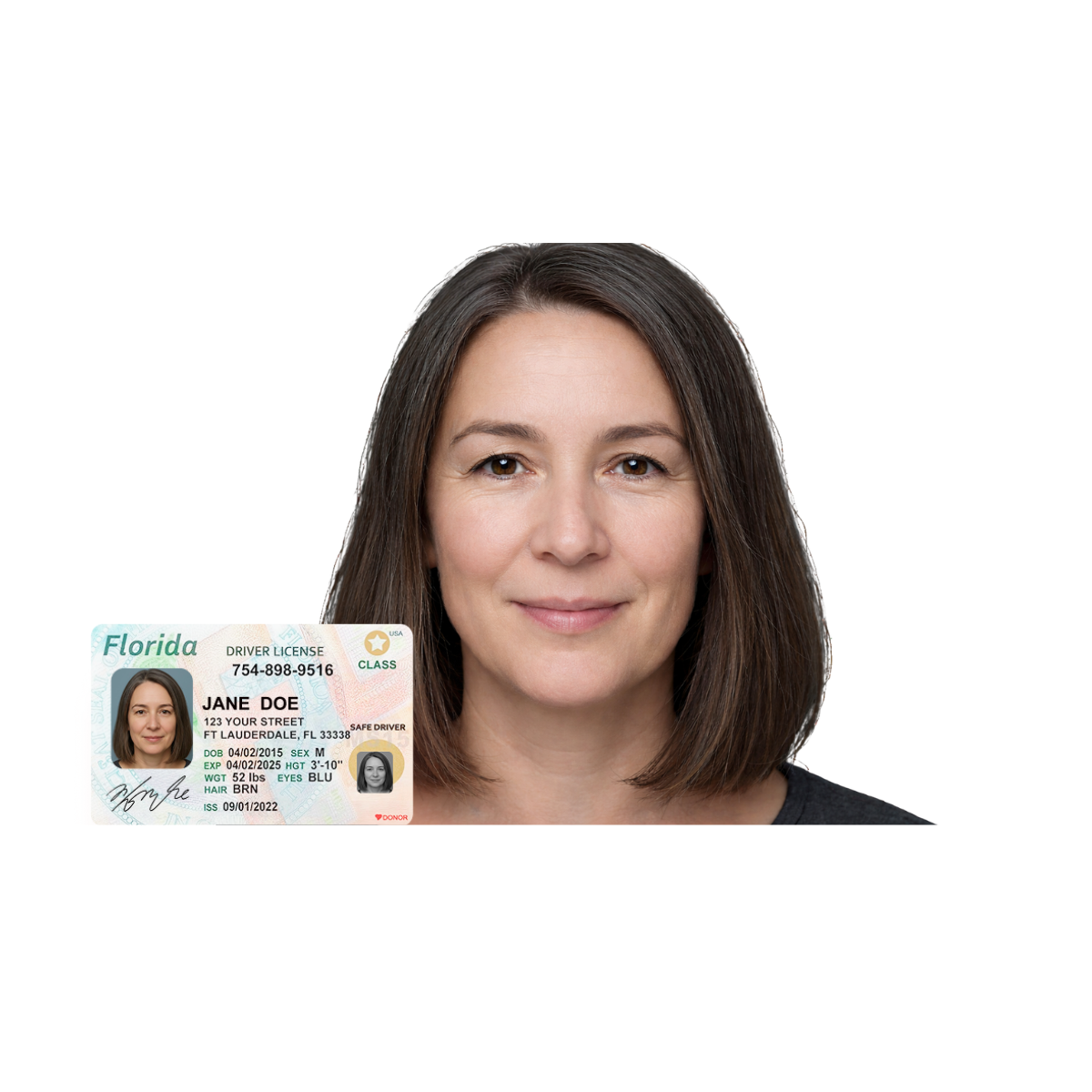
A signed certification in a lease, application, or affidavit by a household member age 18 or older that states at least one person in the unit is 55 years of age or older also qualifies. Any single qualifying document is sufficient.
Use this document collection process flow at application:
- Request qualifying documentation as part of the standard move-in application.
- Confirm the document contains a visible date of birth or current age.
- Log the document type, issuing authority, and date received against the unit record.
- Store a copy in the unit’s permanent file alongside the application.
- Flag any unit where documentation is pending and start follow-up within 5 business days.
Handling Resident Refusals and Using Alternative Evidence
Under 24 CFR § 100.307(f), a housing facility or community may not evict, refuse to renew leases, or otherwise penalize families with children to achieve the 80-percent occupancy requirement during the transition period. When a resident refuses to provide age documentation, follow this checklist.
- Issue a written verification request. Send a formal written notice citing the community’s age-verification policy and the resident’s obligation to comply. Retain a copy with a delivery timestamp.
- Document the refusal. Record the date, method of communication, and the resident’s stated reason for refusal in the unit file.
- Gather alternative evidence. Acceptable alternative evidence can include government records, prior forms or applications, or a signed statement from an individual with personal knowledge of the occupant’s age.
- Obtain a signed third-party statement. If direct documentation is unavailable, collect a written statement from a person with personal knowledge of the occupant’s age, signed under penalty of perjury.
- Apply the policy uniformly. Florida Statutes § 720.305 authorizes associations to enforce obligations through remedies at law or in equity, including fines, which supports consistent enforcement when residents refuse verification.
- Retain all refusal documentation. File the refusal record, follow-up notices, alternative evidence, and any enforcement actions together in the unit’s permanent file.
Record-Keeping and Policy Publication Best Practices
Strong record-keeping and clear policy publication protect your 55+ status and simplify audits.
Focus on retention and organization:
- Minimum retention period: Florida Statutes require HOAs to retain official records, including membership applications and compliance records, for 7 years. Apply the same standard to all age-verification documentation.
- Unit-level filing: Maintain a dedicated file per unit containing the move-in application, age-verification document, survey response, and any refusal or enforcement records.
- Audit-ready organization: Index files by unit number and survey cycle year. Ensure records are retrievable within a reasonable timeframe in response to a Fair Housing complaint or inspection request.
- Survey summary availability: Make a summary of occupancy surveys available for inspection upon reasonable notice and request by any person.
Meet policy publication requirements with consistent, visible messaging:
- Post 55+ community intent statements in common areas visible to residents and prospective residents.
- Include age-restriction language in governing documents, lease or purchase agreements, and community rules.
- Review all marketing materials, prospectus language, and website copy annually to confirm alignment with published policy.
Integrating Verification into Modern Application Workflows
Manual email and PDF-based handling of age verification creates fragmented records, inconsistent follow-up, and unnecessary workload for CAMs and boards. The table below contrasts manual processes with a platform-assisted approach.
| Workflow Area | Manual Email/PDF Process | TenantEvaluation Platform | Operational Impact |
|---|---|---|---|
| Document collection | Emailed PDFs, inconsistent formats, manual logging | Structured digital intake with required document fields | Reduces manual work, supports documentation consistency |
| Application handling | Each application handled differently depending on staff | Standardized workflow applied uniformly across all applications | Standardizes application handling across Florida Condos & HOAs |
| Record organization | Files spread across email inboxes, shared drives, paper | Centralized, unit-level digital records with audit trail | Improves operational efficiency, strengthens internal processes |
| Refusal and follow-up tracking | Manual notes, no consistent escalation path | Structured follow-up workflow with documented status per unit | Supports Community Association Managers handling complex cases |
TenantEvaluation’s 55+ Communities Verification is built specifically for Florida Condos & HOAs, addressing the documentation-first requirements that generic property management tools overlook. Because traditional platforms are designed for general rental workflows rather than age-restricted compliance, they lack the structured verification steps and audit-ready record organization that CAMs need. This gap forces managers to build manual workarounds, so TenantEvaluation provides a purpose-built workflow that delivers a repeatable, defensible process without requiring additional administrative headcount.
See the workflow in a live walkthrough and review how the platform fits your current application and survey process.
Frequently Asked Questions
What are the survey deadlines for Florida 55+ communities?
HOPA requires communities to develop procedures for routinely determining occupancy but does not specify a fixed interval such as every two years. There is no single fixed federal deadline, so each community establishes its own survey cycle, typically anchored to the date of initial HOPA qualification or the completion of the prior survey.
Florida communities should document their chosen cycle date in official records and set internal reminders at least 90 days before the survey is due. Completing the survey late or failing to retain documentation of the process creates audit exposure if a Fair Housing complaint is filed.
What documents are acceptable for age verification?
HUD regulations accept any document that contains a specific date of birth or current age and is issued by a government authority. Acceptable forms include a driver’s license, birth certificate, passport, immigration card, military identification, or any other official document of comparable reliability.
A signed certification in a lease, application, or affidavit by a household member age 18 or older that states at least one person in the unit is 55 or older is also acceptable. Any single qualifying document is sufficient, so communities do not need to collect multiple forms of identification per resident.
What happens if a resident refuses to provide age documentation?
Communities must first have a written policy requiring occupants to comply with age-verification procedures. When a resident refuses, the association should issue a formal written request, document the refusal, and pursue alternative evidence.
Acceptable alternatives under HUD regulations can include government records, prior applications or forms on file, or a signed statement from a person with personal knowledge of the occupant’s age made under penalty of perjury. Florida HOAs may also pursue enforcement remedies under Florida Statutes § 720.305, including fines, when residents fail to comply with documented community rules. All refusal records, follow-up notices, and alternative evidence must be retained in the unit’s permanent file.
How long must age-verification records be retained?
Apply the 7-year retention standard discussed earlier to all age-verification documentation, including move-in applications, qualifying ID copies, survey responses, refusal records, and enforcement correspondence. Condominium associations governed under Florida Statutes Chapter 718 should review their specific retention obligations under that chapter.
Regardless of entity type, retaining records beyond the minimum statutory period is advisable because Fair Housing complaints can arise years after a residency begins.
How do verification requirements differ between condos and HOAs in Florida?
The federal HOPA requirements, including the 80% rule, survey obligation, and policy publication standards, apply equally to both condominium associations and homeowners’ associations. The primary differences arise under Florida state law.
Condominium associations are governed by Florida Statutes Chapter 718, while HOAs are governed by Chapter 720. Each chapter contains distinct provisions on record retention, enforcement authority, and governing document requirements. Both types of communities must maintain written age-verification policies, conduct regular surveys, and retain documentation in an audit-ready format. CAMs managing portfolios that include both condos and HOAs should confirm that their internal verification workflows account for the specific statutory requirements applicable to each community type.
Conclusion: Keeping Your 55+ Status Secure in 2026
Maintaining 55+ community status under HOPA requires more than a one-time setup. It requires a repeatable, documented workflow that covers move-in verification, surveys, refusal handling, record retention, and policy publication, applied consistently across every application and every unit.
For Florida CAMs and boards managing these requirements manually, the operational burden grows with every new application cycle. TenantEvaluation’s 55+ Communities Verification reduces manual work, standardizes application handling, supports documentation consistency, improves operational efficiency, and strengthens internal processes. As audit scrutiny and Fair Housing enforcement continue to evolve, communities that operate from a documented, consistent workflow are better positioned to demonstrate compliance when it matters most.
Request a demo to see how Florida peers manage 55+ verification and evaluate whether the same approach fits your community.
