Written by: Luis Teran, Co-founder, CEO, TenantEvaluation | Last updated: August 22, 2026
Key Takeaways
- Condo approval denials in Florida fall into two categories: project or lender denials that affect entire buildings and buyer or tenant denials that target individual applicants.
- Project-level denials stem from reserve shortfalls, missing SIRS documentation, litigation, high investor concentration, and insurance gaps that eliminate conventional financing.
- Buyer and tenant denials are driven by credit thresholds, criminal background flags, incomplete documentation, and identity verification failures when applied consistently and within Fair Housing limits.
- A standardized, FCRA-compliant screening workflow with biometric identity verification and automated adverse-action notices prevents both types of denials while maintaining audit-ready records.
- TenantEvaluation provides an all-in-one platform that turns denial reasons into a prevention workflow for Florida condo communities.
The Problem: Project and Lender Denials in Florida Condos
Project-level denials remove conventional financing from an entire building, shrinking the buyer pool and depressing unit values association-wide. These denials have accelerated in Florida’s post-Surfside legislative environment, which added new structural and financial requirements that directly feed lender eligibility reviews and create additional failure points for entire buildings.
These requirements have crystallized into seven specific denial triggers that lenders now use to evaluate project eligibility. Each trigger reflects financial stability, structural integrity, or legal risk that can disqualify a building from conventional financing.
- Inadequate reserve funding or missing SIRS. Florida condominium associations with buildings three or more stories must complete a Structural Integrity Reserve Study (SIRS) every 10 years and fully fund the identified reserve components under Fla. Stat. § 718.112. HB 913 (2025) extended the initial SIRS completion deadline to December 31, 2025, with a narrow exception allowing concurrent completion with a milestone inspection due no later than December 31, 2026. A building that cannot demonstrate current SIRS compliance and adequately funded reserves risks project-level denial.
- Pending or active litigation. Pending litigation, especially involving construction defects, building safety, or issues that could impair the association’s ability to function, is treated as a project-level eligibility issue by condominium lenders because it can affect the building’s safety, soundness, financial stability, and insurability.
- Investor concentration above 50%. Excessive concentration of investor-owned units or short-term rental activity in a Florida condominium can trigger underwriting concerns and project-level financing denials.
- Fannie Mae ineligible list placement. As of March 2025, Fannie Mae listed 1,438 ineligible condo buildings in Florida, with 696 concentrated in Miami-Dade, Broward, and Palm Beach counties, many due to delinquency combined with insurance and maintenance issues. Placement on this list eliminates conventional financing for buyers.
- Non-warrantable status under updated agency guidelines. Fannie Mae is retiring its Limited Review process and Freddie Mac is retiring its Streamlined Review process. For loan applications dated on or after August 3, 2026, affected projects generally must go through a Full Review unless they qualify for a waiver. Since 2021, AD Mortgage originated 1,434 conventional condominium loans in Florida, of which 757 (52.8%) used the limited review process being eliminated.
- High unit delinquency rates. Fannie Mae Selling Guide B4-2.1-03 states that a condo project becomes ineligible for financing once 15% or more of total units are 60+ days past due on common-expense assessments. When a Florida condo building exceeds this threshold, conventional financing options shrink and buyer demand often falls.
- Master insurance gaps. Condo master insurance policies with inadequate coverage, unacceptable deductibles, missing fidelity coverage, or non-compliant policy language are frequent causes of project-level FHA, VA, and conventional loan denials. HB 913 (2025) bars Citizens Property Insurance Corporation from issuing or renewing policies for Florida condominium associations that have not completed both the required milestone inspection and SIRS.
The following checklist consolidates these project-level denial triggers into a quick reference that boards and CAMs can use to gauge current eligibility risk.
Lender red flags checklist for project eligibility:
- SIRS not completed or not on file
- Reserve contributions below the statutory floor under Fla. Stat. § 718.112(2)(g)
- Active construction-defect or safety litigation
- Investor-owned unit concentration above agency thresholds
- Delinquency rate at or approaching 15% of units
- Master policy with coverage gaps, missing fidelity bond, or non-compliant deductibles
- Building on Fannie Mae’s ineligible project list
- Reserve funding below the 15% of annual budgeted income threshold taking effect in January 2027
Each item on this checklist represents a financing barrier that boards can address through proactive documentation, reserve planning, and insurance review. Associations that maintain current SIRS documentation, adequate reserves, and clean insurance records are better positioned to remain warrantable, protecting unit values and financing access for all owners.
See how TenantEvaluation maintains audit-ready records for project eligibility — schedule a demo to review reserve tracking, delinquency monitoring, and SIRS documentation workflows built for Florida condo communities.
The Problem: Buyer and Tenant (Board) Denials
Board-level denials arise from the individual applicant review process. Florida condo boards derive screening authority from the recorded declaration of condominium and bylaws under Chapter 718 of the Florida Statutes. Where the declaration grants an approval right, the association has it, but that authority operates within firm Fair Housing boundaries.
Within those boundaries, boards rely on objective, documented criteria that they can apply consistently to every applicant. Common objective criteria used in buyer and tenant denials include the following items.
- Credit score minimums. Florida condo boards commonly screen applicants for credit, income or assets, and the ability to pay dues and follow community rules. Minimum credit thresholds must be documented in governing documents and applied consistently to every applicant.
- Criminal background flags. Criminal background checks in Florida require individualized consideration of the nature and severity of the offense, time elapsed since the offense, and evidence of rehabilitation rather than blanket bans, which may violate Fair Housing guidelines. High-risk offenses that typically justify denial include violent crimes, sex offenses requiring registration, and drug manufacturing or distribution.
- Misrepresentation or incomplete documentation. Incomplete applications, falsified income documents, or identity discrepancies are permissible denial grounds when applied uniformly and documented in the application record.
- Right of first refusal. Some Miami declarations reserve a right of first refusal allowing the association to purchase the unit itself on the same terms within a set window. Failure to exercise or waive this right within the required period can delay or void a sale.
- 55+ age verification gaps. Age-restricted communities operating under the Housing for Older Persons Act (HOPA) must maintain qualifying occupancy records and consistent documentation. Gaps in age verification create both denial risk and operational liability for the association.
These five criteria are permissible only when boards apply them consistently and document decisions clearly. To clarify the boundary between lawful screening and Fair Housing violations, the following comparison shows which denial reasons fall on each side of that line.
Permissible vs. impermissible denial reasons:
- Permissible: Credit score below documented minimum; criminal conviction meeting individualized review criteria; misrepresentation on application; failure to meet lease-term minimums in governing documents; occupancy count exceeding unit limits; failure to complete identity verification.
- Impermissible: Race, color, national origin, religion, sex, familial status, or disability under the federal Fair Housing Act and Florida’s Fair Housing Act; marital status, HIV/AIDS status, or age (for applicants 40 and older) under Florida’s additional state-level protections; blanket criminal bans without individualized review; denial of a reasonable accommodation request for an assistance animal without individualized assessment under Florida Statute § 760.27.
Under Fla. Stat. § 83.683, condominium, cooperative, and homeowners associations must process rental applications from servicemembers (as defined in s. 250.01) and issue written approval or denial within 7 days. If they fail to timely deny, they must lease the unit if all other application and lease terms are met. This statutory deadline applies regardless of the association’s standard processing timeline.
When a denial is issued, whether within the seven-day servicemember window or under the association’s standard timeline, federal law adds further procedural steps. If denying an applicant based on credit or background check information from a consumer reporting agency, an adverse action notice must be provided that includes the agency’s contact information and the applicant’s rights to dispute the report.
The Solution: Prevent Denials with a Standardized Screening Workflow
Both denial categories share a common prevention mechanism: a documented, consistent, FCRA-compliant workflow applied to every application. TenantEvaluation is built specifically to deliver that workflow for community associations and management companies, with FCRA compliance as the foundation rather than an afterthought. This foundation has enabled the platform to serve 5,000+ communities and process approximately 100,000 applications per year across Florida, each one following the same standardized, audit-ready process.
This prevention workflow addresses project-level warrantability concerns by maintaining audit-ready records that support reserve adequacy and delinquency tracking. It also addresses individual applicant denials by standardizing criteria application and automating FCRA compliance. The workflow operates in five steps.
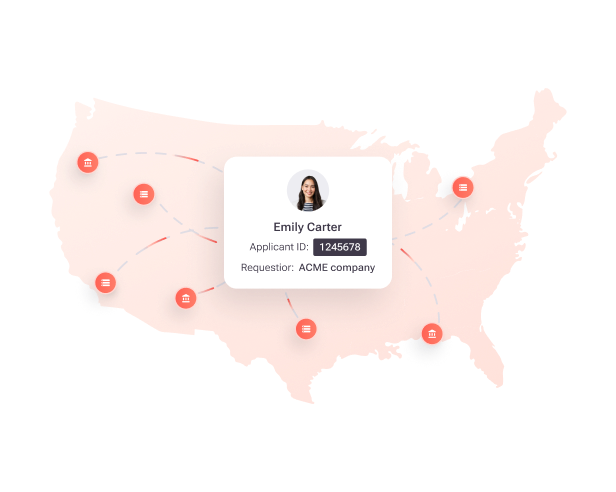
- Intake and community profile configuration. Each community’s governing documents, screening criteria, credit minimums, lease-term requirements, and document checklists are configured into the platform. Intelligent form logic adjusts application requirements based on applicant type, such as buyer, tenant, or additional occupant, eliminating irrelevant questions and ensuring all required information is captured before submission reaches the review queue.
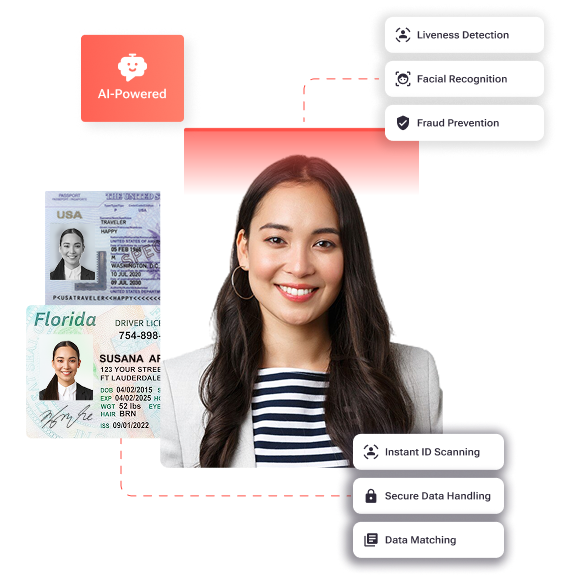
- Biometric identity verification with IDVerify. Applicants complete a guided identity verification step inside TenantEvaluation, uploading a government-issued ID and completing a selfie verification. AI-powered liveness detection, facial landmark recognition, and biometric selfie-to-ID comparison run natively within the workflow. This moves communities from document-based review to biometric-confirmed identity verification before any screening data is accessed, reinforcing permissible-purpose controls and FCRA-aligned audit defensibility.
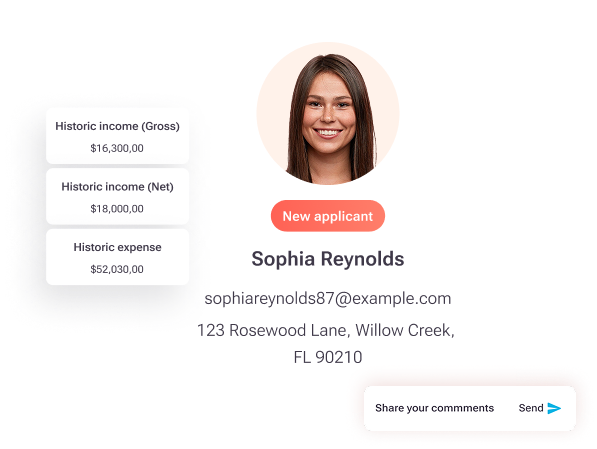
- Automated document review and background screening. TenantEvaluation is a direct reseller of TransUnion and Equifax data, not a third-party scraper, and operates under strict bureau rules with regular compliance reviews. Credit reports, criminal background checks (nationwide and global, including sex offender registry and FBI Most Wanted), income verification, eviction history, and reference checks are delivered through the platform. Auto-redaction of sensitive PII, PCI Level 1 compliance, and end-to-end encryption protect applicant data throughout.
- Board-ready decisions via QuickApprove. QuickApprove accelerates resident approvals inside one connected platform by giving CAMs, boards, and property management teams real-time application tracking, a board-ready approval process with a dedicated voting panel, automated communication support, customized approval letters, and a personalized welcome package. Applications move from submission to decision faster, with less manual follow-up and more visibility, while boards retain control and compliance.
- Audit-ready recordkeeping and adverse-action workflows. Every application action is timestamped and stored in a built-in audit trail. Automated adverse-action workflows ensure that denial notices include required consumer reporting agency information and applicant dispute rights, consistent with FCRA requirements. Lease Tracking connects resident onboarding, unit data, approvals, and lease documentation into one centralized, real-time, audit-ready workflow, replacing spreadsheets and scattered email chains from application to occupancy.
This five-step workflow applies to all community types, but age-restricted communities face an additional layer of documentation requirements under HOPA. For age-restricted communities, 55+ Communities Verification standardizes how age-restricted application requirements are handled across applications, reducing manual work, improving documentation consistency, and strengthening internal operational control for Florida condos and HOAs.

See the FCRA-first prevention workflow in action — schedule a demo to walk through how TenantEvaluation turns denial reasons into standardized, audit-ready processes for your community.
Frequently Asked Questions
How much authority does a Florida condo board have to deny a buyer or tenant application?
A Florida condo board’s denial authority is defined by the recorded declaration of condominium and bylaws under Chapter 718 of the Florida Statutes. Where the declaration grants an approval right, the board may exercise it, but only within the limits of the federal Fair Housing Act, Florida’s Fair Housing Act, and any other applicable law. Boards may not deny based on race, color, national origin, religion, sex, familial status, disability, marital status, HIV/AIDS status, or age for applicants 40 and older. Criteria must be documented, applied consistently to every applicant, and supported by an audit trail. Inconsistent or selective application of criteria creates Fair Housing liability even when the underlying criterion is otherwise permissible.
What credit score threshold can a Florida condo association require?
Florida law does not set a universal minimum credit score for condo applications. Each association may establish its own minimum, provided that threshold is documented in the governing documents or board-adopted screening criteria and applied uniformly to every applicant. The threshold must not function as a proxy for a protected class. When a denial is based on credit information, the adverse-action notice requirement described earlier applies, and the association must identify the reporting agency and inform the applicant of their dispute rights under the FCRA. TenantEvaluation automates this adverse-action workflow and delivers credit data as a direct reseller of TransUnion and Equifax, which keeps the association’s liability exposure lower than manual or third-party-scraped alternatives.
How should a Florida condo board handle criminal background information in an application?
Florida condo boards that use criminal background checks must conduct individualized review rather than applying blanket bans. The individualized review standard described earlier applies, so boards must weigh offense severity, recency, and rehabilitation evidence instead of using automatic denials. Blanket policies that reject any applicant with a criminal record, regardless of these factors, may violate Fair Housing guidelines. The high-risk offense categories outlined earlier, including violent crimes, sex offenses, and drug manufacturing or distribution, typically support denial even under individualized review standards. Minor or older offenses warrant case-by-case review. All denial decisions based on background check data must be accompanied by an FCRA-compliant adverse-action notice. TenantEvaluation’s SafeCheck+ delivers nationwide and global criminal screening within the same workflow as credit and identity verification, with built-in adverse-action support.
What is the approval timeline requirement for active-duty service member applications in Florida?
Under Florida Statute § 83.683, condominium and homeowners associations must fully process rental applications submitted by active-duty service members and issue a written approval or denial within seven days of submission. If the association fails to respond within that window, the application is automatically deemed approved by operation of law. This statutory deadline applies regardless of the association’s standard processing timeline or board meeting schedule. Communities using manual workflows, such as email chains, paper applications, or disconnected spreadsheets, are most exposed to missing this deadline. TenantEvaluation’s QuickApprove accelerated approval workflow and real-time application tracking reduce the risk of timeline failures by giving CAMs and boards a single connected platform with visibility into every pending application.
How do Florida’s 2026 SIRS and reserve requirements affect condo financing for buyers?
Florida’s Structural Integrity Reserve Study requirements, established under SB 4-D (2022) and refined by HB 913 (2025), directly affect whether a condo building qualifies for conventional financing. Associations with buildings three or more habitable stories must complete a SIRS, generally by December 31, 2025, with a narrow exception extending to December 31, 2026 for buildings whose milestone inspection is due by that date, and must fund the identified structural reserve components without the ability to waive or redirect those funds. Fannie Mae and Freddie Mac treat buildings with missing SIRS, insufficient reserves, or failed milestone inspections as non-warrantable, eliminating conventional 30-year financing for buyers. Effective August 3, 2026, Fannie Mae’s elimination of the Limited Review process means every condo purchase loan requires a Full Review, which increases scrutiny of reserve adequacy, delinquency rates, insurance, and financial condition. Associations that maintain current SIRS documentation and adequately funded reserves are better positioned to remain warrantable and protect unit values across the community.
Conclusion: Turn Denial Reasons into Prevention
The two denial tracks outlined in this article, project-level financing barriers and individual applicant screening failures, each carry distinct risks but share a common prevention mechanism. Standardized, documented workflows applied consistently to every application and every building-level compliance requirement reduce both financing denials and Fair Housing exposure.
Both tracks share a common solution: a standardized, documented, FCRA-compliant screening workflow applied consistently to every application. TenantEvaluation’s all-in-one platform delivers that workflow by combining IDVerify biometric identity verification, which prevents documentation fraud, automated background and credit screening as a direct bureau reseller, which supports FCRA compliance, QuickApprove’s board-ready approval workflow, which accelerates decisions within statutory timelines, 55+ Communities Verification, which maintains HOPA documentation, centralized Lease Tracking, which creates audit-ready records, and built-in adverse-action workflows, which automate legal notice requirements. Together, these capabilities give Florida CAMs, property managers, and boards the operational infrastructure to prevent denials rather than react to them.
This proven scale, built on the compliance-first architecture described above, positions TenantEvaluation as the screening and onboarding platform built for the complexity of Florida community associations in 2026 and beyond.
Turn denial reasons into prevention for your Florida community — schedule a demo to see how TenantEvaluation’s all-in-one platform addresses both project-level and buyer or tenant approval challenges with one standardized workflow.
