Written by: Luis Teran, Co-founder, CEO, TenantEvaluation | Last updated: July 26, 2026
Key Takeaways for Florida CAMs and Boards
- Florida HOAs and CAMs face 2026 mandates that require password-protected portals and centralized document access for associations with 25 or more units.
- Most alternatives to AppFolio do not combine FCRA-grade screening, biometric identity verification, board voting workflows, and centralized lease tracking in one system.
- Disconnected tools create operational bottlenecks such as manual follow-ups, missing lease records, and limited board visibility into applications and occupancy.
- Platforms must support FCRA compliance, NIST-aligned biometric verification, and audit-ready records to satisfy Florida regulatory and governance standards.
- TenantEvaluation is the only platform in this comparison that delivers integrated communication, screening, and compliance tools without unit minimums or subscription fees.
Florida’s 2026 Requirements and HOA Software Market
Florida condominium associations with 25 or more units must maintain a password-protected website or secure member portal under amended Florida Statute 718.111(12)(g), with the requirement taking full effect January 1, 2026. Similar requirements for HOAs under HB 1203 call for certain associations to post governing documents and other materials online by a specified date. Approximately 45% of Florida homes, or 3.9 million properties out of 8.9 million statewide, are governed by an HOA, the highest share of any state, which magnifies the impact of these mandates.
Despite this regulatory push toward digital access, adoption remains uneven. Digital communication platforms such as email blasts, community portals, and mobile apps are common among professionally managed U.S. community associations. Many residents still contact the board directly for information that already exists online, which increases workload for managers and volunteers.
Pricing pressure compounds the technology gap. For associations under 50 units or small CAM-managed portfolios, hidden costs such as ACH fees, per-eblast credits, and document storage tiers can make all-in costs 50–100% higher than headline rates. This pricing opacity forces self-managed boards to accept operator-tier pricing that was never designed for single-association deployments, which leaves many smaller communities underserved. The affordability gap intersects with a security gap as identity fraud exposure rises. Traditional document-based screening cannot reliably prevent impersonation or synthetic identity fraud, and a 2026 class action alleges that AI-powered applicant assessment tools are producing consumer reports requiring full FCRA compliance, including disclosure and dispute rights.
Core Communication Features Florida Boards Now Expect
Florida boards now expect a baseline set of communication and operational capabilities from any integrated member management platform in 2026.
- Password-protected member portal with document access for governing documents, budgets, minutes, and insurance records
- Multi-channel messaging that includes email blasts, SMS or push notifications, and in-app announcements
- Resident directory with role-based access controls for managers, board members, and owners
- Online payment portal that supports assessment collection and basic reporting
- Electronic voting with authentication, quorum tracking, and exportable audit records
- Virtual and hybrid meeting support for board and member meetings
- Automated notifications for application status, missing documents, and lease expirations
- Multilingual support that reflects the association’s resident population
How Integrated Member Management Works Day to Day
A Florida CAM managing a mid-size condominium association on a typical day handles incoming applications, board approval queues, lease renewals, and resident inquiries at the same time. The administrative burden grows when each function lives in a separate system. Applications arrive by email, lease copies sit in shared folders, board votes happen in email chains, and identity documents are reviewed manually, which creates the “too many follow-ups” problem that CAMs consistently cite as their primary operational pain point.

A 2026 HOA trends report sponsored by Enumerate states that the industry focus has shifted from adopting individual tools to integrated systems that connect financial operations, communication, document access, and audit-ready records. Boards without centralized visibility into application status, occupancy records, and lease documentation face a structural transparency gap. Members cannot make informed decisions without reliable, real-time data.
Disconnected systems create delays, duplicate work, and inconsistent reporting across properties, while integration with property management systems enables automatic data transfer from applications, faster decision turnaround, and reduced manual entry for onsite teams. For Florida associations managing 55-plus age-restricted communities, fragmentation becomes more acute. Eligibility documentation, age verification records, and application workflows often move through emails, PDFs, and manual follow-ups that create inconsistent records and audit exposure.
Compliance, Risk, and Governance Requirements in 2026
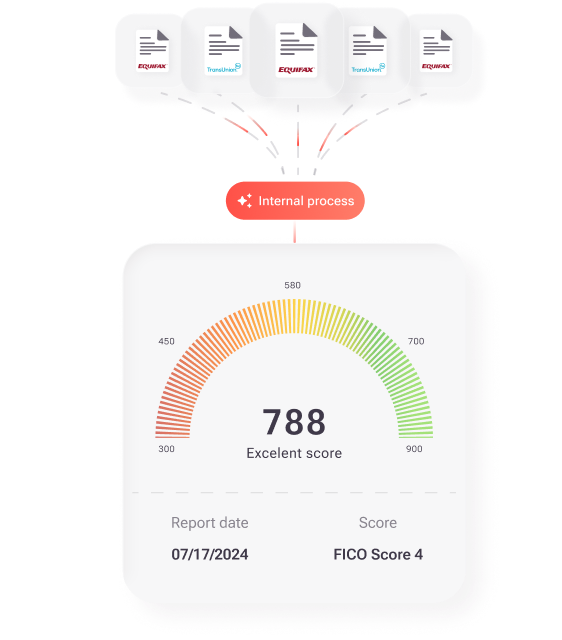
When housing providers use consumer reports for decisions such as tenant approval, they must follow the FCRA’s three-step adverse action process. This process includes a pre-adverse action notice with a copy of the report and Summary of Rights, a reasonable waiting period, and a final adverse action notice. Platforms that do not build adverse action workflows into the screening process place the entire compliance burden on the association.
Florida’s Information Protection Act (FIPA) requires all entities that acquire, use, store, or maintain the personally identifiable information of Florida residents to protect that data and notify consumers of breaches, with penalties that can reach $500,000 for violations exceeding 180 days. Onboarding systems that store Social Security numbers, driver’s license numbers, financial account data, or health information without end-to-end encryption and automatic redaction create direct liability exposure for associations.
NIST SP 800-63-4 was released in July 2025 and now shapes identity proofing expectations. Florida associations that adopt biometric identity verification should confirm whether their vendor’s technology aligns with these current standards.

Many states, including Florida, authorize electronic voting through statutes or regulations that specify authentication and ballot requirements. Board voting tools must produce exportable audit records with timestamped ballot data to satisfy Florida statutory requirements and withstand governance challenges.
Common Workflow Breakdowns in HOA Member Management
The most frequently reported failure points in HOA member management workflows in 2026 fall into four interconnected categories.
Best-Practice Features in Modern HOA Platforms
Integrated member management platforms that meet 2026 operational standards for Florida associations share several structural characteristics.
- Biometric identity verification: NIST SP 800-63-4 requires organizations to protect against forged assertions, injection attacks, and AI-generated or deepfake media for IAL2 identity proofing. Platforms that embed government ID validation, AI-powered liveness detection, and biometric facial matching natively, without redirecting applicants to external portals, now represent the standard. TenantEvaluation’s IDVerify delivers this layer directly inside the screening workflow.
- Board-ready dashboards: A credible board-voting system must verify voter eligibility, support quorum tracking, provide a secret-ballot option, and produce exportable audit records including timestamped ballot records and compliance certificates. TenantEvaluation’s QuickApprove accelerated approval workflow provides a dedicated board review and voting panel with real-time application tracking and automated communication support, while preserving board oversight and compliance review.
- Centralized lease tracking: Connecting resident onboarding, unit data, approvals, and lease documentation into one streamlined workflow with real-time lease status visibility, including active, pending, expired, or missing, replaces the spreadsheet-and-email-chain model that creates operational blind spots.
- FCRA-first design: Platforms built as direct credit bureau resellers, with strict permissible purpose controls, automated adverse action workflows, and built-in audit trails, provide a structurally different compliance posture than platforms that bolt screening onto a property management core.
- 55-plus documentation standardization: Florida condos and HOAs that manage age-restricted communities benefit from structured, consistent application handling that reduces manual work and improves documentation consistency. TenantEvaluation’s 55+ Communities Verification standardizes this process across applications while leaving legal guidance to association counsel.
Decision Framework for Evaluating AppFolio Alternatives
Florida CAMs and HOA boards evaluating alternatives to AppFolio HOA software should assess each platform against five practical dimensions.
- Compliance readiness: Confirm that the platform includes FCRA-compliant adverse action workflows, direct credit bureau data access, and built-in audit trails. Verify whether FIPA-aligned data security, including encryption, redaction, and breach notification support, is built in or sold as an add-on.
- Operational efficiency: Review how the platform reduces manual follow-ups, automates document collection, and connects applications to lease records and occupancy data in one workflow.
- Transparency and board visibility: Check whether the board has a dedicated dashboard with real-time application status, summarized applicant reports, and a structured voting workflow, or whether visibility depends on manager-curated email updates.
- Scalability: Examine whether pricing scales without unit minimums or high subscription fees and whether the platform can handle high-volume application seasons without adding headcount.
- Auditability: Confirm that all actions are timestamped and exportable and that the platform produces audit-ready lease records, identity verification results, and board voting logs in one searchable system.
Self-managed boards under 50 units should pay close attention to whether vendor pricing models were designed for their scale. Many platforms use per-unit, per-month pricing with minimum monthly fees or minimum unit thresholds that make them cost-prohibitive for smaller communities. TenantEvaluation operates on a pay-per-application model with no upfront fees and no unit minimums, which keeps the platform accessible to communities of any size.
2026 Feature Comparison: HOA Management Software
The table below benchmarks eight platforms on the combined capabilities Florida associations require in 2026. Communication and screening appear together because platforms that offer only one without the other create the integration gaps described earlier. All data points reflect publicly available product information and vendor documentation as of July 2026.
| Tool | Communication + Screening | Identity Verification + Board Voting + Lease Tracking | FCRA Compliance |
|---|---|---|---|
| TenantEvaluation | Full multi-channel communication, including automated notifications, multilingual support, and 24/7 AI chat, combined with FCRA-grade screening via direct TransUnion and Equifax reseller relationships; no unit minimums; pay-per-application model with no subscription fees | IDVerify biometric identity verification, including government ID validation, AI liveness detection, and facial biometric matching, native to the workflow; QuickApprove board-ready voting dashboard with timestamped audit records; centralized real-time lease tracking, including active, pending, expired, or missing, connected to onboarding and unit data | FCRA-first design; direct credit bureau reseller relationships with TransUnion and Equifax; automated adverse action workflows; built-in audit trails; strict permissible purpose controls |
| AppFolio | Resident portal, email and SMS communication, online payments, and maintenance requests; screening available as an add-on through third-party integration; subscription pricing with minimum unit thresholds | No native biometric identity verification; board approval workflows present but not a dedicated voting dashboard; lease management available but not connected to a unified onboarding-to-occupancy workflow | Screening add-on; FCRA compliance dependent on third-party screening vendor integration; adverse action support varies by configuration |
| Buildium | Resident portal, email and SMS, and online payments; screening available via ResidentVerified integration; Buildium Essential plan starts at $62/month | No native biometric verification; no dedicated board voting dashboard; lease management present but not integrated with a screening-to-occupancy workflow | Screening via third-party integration; FCRA compliance dependent on integration configuration; no native adverse action automation |
| PayHOA | Member portal, email and SMS announcements, online payments, and document storage; no native screening; $54/month for 0–25 units and $65/month for 26–50 units | No identity verification; basic voting tools available; no lease tracking connected to onboarding | No native FCRA-compliant screening; no adverse action workflow |
| DoorLoop | Tenant portal, email and SMS, online payments, and maintenance; screening available via TransUnion SmartMove integration; subscription pricing | No native biometric verification; no dedicated HOA board voting dashboard; lease management present but not unified with screening workflow | Screening via third-party integration; FCRA compliance dependent on SmartMove configuration; adverse action support not native |
| ManageCasa | Resident portal, email and SMS, online payments, and document management; screening available via third-party integration; subscription pricing | No native biometric verification; no dedicated board voting dashboard; lease management available but not connected to a unified onboarding workflow | Screening via third-party integration; FCRA compliance dependent on integration; no native adverse action automation |
| Effortless HOA | Member portal, announcements, and online payments; limited screening capabilities; priced at approximately $3 per home per month | No identity verification; no board voting dashboard; no lease tracking | No native FCRA-compliant screening; no adverse action workflow |
| Real Estate Ledger | Accounting and financial management focus; limited communication tools; no native screening | No identity verification; no board voting dashboard; no lease tracking connected to onboarding | No native FCRA-compliant screening; no adverse action workflow |
TenantEvaluation is the only platform in this comparison that delivers both integrated communication tools and FCRA-grade onboarding, including biometric identity verification, board voting workflows, and centralized lease tracking, without unit minimums or high subscription fees.
Frequently Asked Questions
What makes TenantEvaluation different from AppFolio for Florida HOAs and condos?
AppFolio is a broad property management platform with screening available as an add-on through third-party integration. TenantEvaluation is built exclusively for community associations and management companies, with FCRA compliance as the foundation rather than an afterthought. Key structural differences include direct TransUnion and Equifax reseller relationships, not third-party data scraping, a native biometric identity verification layer through IDVerify, a dedicated board review and voting dashboard through QuickApprove, and centralized lease tracking connected to the onboarding workflow from application to occupancy. TenantEvaluation also operates on a pay-per-application model with no unit minimums, which makes it accessible to self-managed communities of any size, a pricing structure AppFolio’s subscription model does not replicate.
Does TenantEvaluation meet Florida’s 2026 portal and document access mandates?
Florida’s 2026 mandates require condominium associations with 25 or more units to provide password-protected digital access to governing documents, meeting minutes, budgets, financial reports, and other specified records. TenantEvaluation’s platform provides a centralized, secure digital environment for document collection, storage, and access. Boards should confirm with their legal counsel which specific documents must be posted under their association’s applicable statute, such as Florida Statute 718.111(12)(g) for condominiums or HB 1203 for HOAs, and ensure their portal configuration satisfies those requirements. TenantEvaluation’s audit-ready records and centralized document management support this compliance process while leaving legal interpretation to counsel.
How does FCRA compliance work inside TenantEvaluation’s screening workflow?
As a legitimate bureau reseller, described in the Best-Practice Features section above, TenantEvaluation accesses credit information under strict bureau rules with regular compliance reviews and audits. The platform includes automated adverse action workflows that cover the pre-adverse action notice, waiting period, and final adverse action notice required by the FCRA, along with built-in audit trails for every application. IDVerify+ strengthens permissible-purpose validation by confirming applicant identity before screening authorization, which reinforces FCRA-aligned workflows and audit defensibility. The platform maintains a clear separation between decision-making, which remains with the association, and data provision, which TenantEvaluation handles, protecting associations from liability tied to gray-market or offshore data sources.
Can TenantEvaluation support 55-plus age-restricted communities in Florida?
Yes. TenantEvaluation’s 55+ Communities Verification is a built-in capability that helps Florida condos and HOAs standardize how age-restricted requirements are handled across applications. It reduces manual work, improves documentation consistency, and creates more structured records for internal operational control, which replaces fragmented manual processes involving emails, PDFs, and follow-ups. This capability is designed for Community Association Managers and boards that manage age-restricted communities and supports documentation and consistency while leaving HOPA compliance and eligibility determinations to legal counsel.

Conclusion: Choosing a Platform Built for Florida’s 2026 Reality
Florida CAMs and HOA boards that evaluate alternatives to AppFolio HOA software in 2026 operate in a regulatory environment that has moved faster than most platforms have adapted. Portal mandates are active, FCRA enforcement is tightening, identity fraud is increasing, and board transparency expectations have risen. Portals, SMS or push notifications, announcements, and directories remain table stakes, yet they address only the communication layer of the workflow.
The platforms that serve Florida associations most effectively in 2026 connect communication tools with FCRA-grade screening, biometric identity verification, board voting workflows, and centralized lease tracking in one audit-ready system. Each association’s evaluation should start with its own operational gaps. Boards need to identify where applications stall, where lease records are missing, where visibility breaks down, and where identity verification still relies on document review alone.
TenantEvaluation has processed more than 100,000 applications annually across over 5,000 communities, generated $150 million for those communities, and maintains a 4.8 out of 5 Google rating. The platform is built specifically for Florida community associations, with FCRA compliance as the foundation rather than an afterthought.
