Written by: Luis Teran, Co-founder, CEO, TenantEvaluation | Last updated: July 24, 2026
Key Takeaways for Florida CAMs and Boards
- Florida CAMs and boards lose time and revenue when approvals sit in email inboxes and disconnected spreadsheets.
- HOA, condo, ARC, CDD, and 55+ boards each hold distinct statutory approval powers under Chapters 718 and 720.
- A seven-step digital workflow, from application intake through record retention, can cut processing time by up to 70% while maintaining FCRA compliance.
- QuickApprove, IDVerify+, Lease Tracking, and 55+ Communities Verification work together to replace email chaos with real-time, audit-ready decisions.
- Communities can eliminate manual workflows and start generating compliant revenue today at TenantEvaluation.
Florida Board Types and How They Use Approval Authority
Florida community governance relies on several board structures, and each one uses specific approval powers.
- Homeowners Associations (HOAs), governed by Florida Statute Chapter 720, control tenant and buyer approvals, architectural modifications, and community rule enforcement.
- Condominium Associations, governed by Florida Statute Chapter 718, oversee unit owner and tenant approvals, transfer fees, and structural modification requests.
- Architectural Review Committees (ARCs) act as subcommittees of HOA or condo boards with delegated authority to review and approve exterior and structural modification requests under FS 720.3035.
- Community Development Districts (CDDs) operate as quasi-governmental entities that manage infrastructure and amenities, with approval authority over specific development and improvement activities within their boundaries.
- 55+ Age-Restricted Communities function as HOAs and condos operating under the Housing for Older Persons Act (HOPA) with added documentation and verification requirements for all incoming residents.
Statutory Approval Rules for Tenants, Buyers, and Architectural Changes
Florida statutes set clear approval requirements for tenant and buyer screening, transfer fees, and architectural changes. Florida condominium associations may charge an approval or transfer fee only if authorized in the declaration, articles, or bylaws, and the fee may not exceed $100 per applicant under Florida Statute 718.112, with spouses or a parent and dependent child counting as one applicant.
Recent changes to FS 720.3035 reshaped how Florida HOAs handle architectural review and denials.
- Under FS 720.3035(1)(b), as amended in 2024 by Ch. 2024-205 and Ch. 2024-221, Florida HOAs and ARCs may not enforce or adopt covenants, rules, or guidelines that limit or place requirements on the interior of a structure not visible from the parcel’s frontage, an adjacent parcel, an adjacent common area, or a community golf course.
- FS 720.3035(6), added by the 2024 amendments, requires every Florida HOA board or ARC to adopt hurricane protection specifications that comply with the Florida Building Code, and prohibits denial of any hurricane protection installation that conforms to those specifications.
- The 2024 amendments expand the definition of “hurricane protection” to cover additional storm protection measures.
The 7-Step Board Approval Workflow for Florida Communities
Complex statutory requirements and multiple approval categories make a standardized workflow essential for Florida boards. A repeatable, auditable approval process reduces compliance exposure and processing time across tenant, buyer, and architectural approvals. The following workflow applies to Florida HOAs and condo associations.
- Application Submission. The applicant submits a complete digital application that includes all required documents, the executed lease when applicable, and payment of any authorized fees.
- Completeness Review. Florida associations have no statutory deadlines for acknowledging receipt or reviewing application completeness, and response timelines are set by each community’s governing documents.
- Identity Verification. Biometric verification confirms the applicant’s government-issued ID, liveness, and facial match before the application moves to board review.
- Background and Document Screening. Credit, criminal, income, and reference checks follow FCRA requirements and community-specific screening criteria.
- Board Review and Voting. A quorum of the Florida HOA or condo board, typically a majority of directors unless governing documents state otherwise, must be present before any official action or vote can occur. Board members review summarized applicant reports and cast recorded votes.
- Written Decision Issuance. Approval or denial letters include specific citations. A compliant ARC workflow documents deliberation, issues a written decision, and maintains associated records.
- Record Retention and Lease Tracking. All documents, decisions, and lease records stay in a centralized, searchable, audit-ready system connected to the onboarding lifecycle.
QuickApprove: Faster Approvals With Board-Ready Control
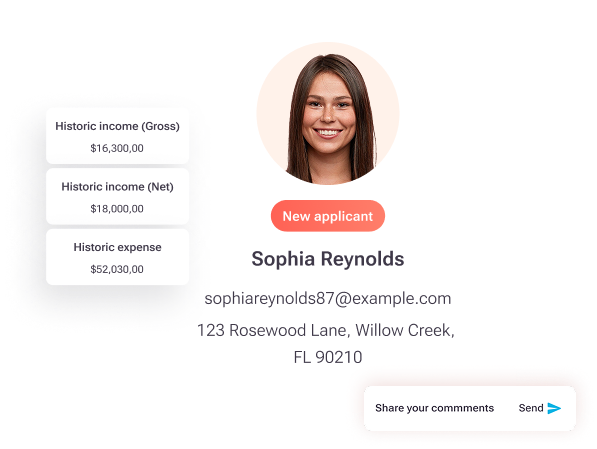
QuickApprove is TenantEvaluation’s accelerated approval workflow for CAMs, boards, and property management teams inside one connected platform. It replaces email chains and spreadsheets with real-time application tracking, automated communication support, customized approval letters, and a personalized welcome package while preserving control, compliance, and visibility.
Key capabilities include:
- Real-time application tracking visible to managers and boards at the same time
- A board-ready approval process with a dedicated review and voting dashboard
- Automated communication support that reduces manual follow-ups
- Customized approval letters and a personalized welcome package
- Support for high-volume seasons and communities with complex onboarding requirements
IDVerify+: Biometric Identity Checks That Block Fraud
IDVerify+ adds biometric identity verification directly inside the TenantEvaluation workflow. Traditional screening methods that rely mainly on document uploads no longer keep pace with rising identity fraud across condo and HOA communities. IDVerify+ shifts communities from document-based review to verified identity confirmation through several layered checks.
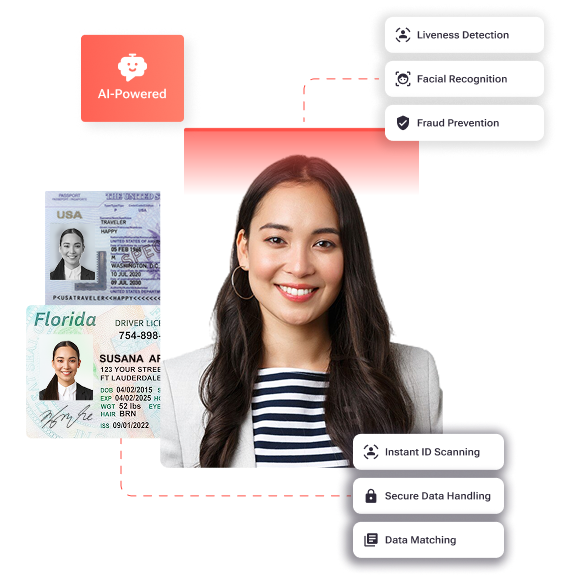
- Government-issued ID validation and authenticity confirmation
- AI-powered liveness detection that confirms physical presence
- Facial landmark recognition and biometric selfie-to-ID comparison
- Verification results embedded directly within the screening report, with no external portals or workflow disruption
IDVerify+ can be enabled per condo or HOA, configured per property portfolio, and adapted to each community’s risk profile. It strengthens permissible-purpose validation by confirming identity before screening authorization, which reinforces FCRA-aligned workflows and audit defensibility.
Watch IDVerify+ stop identity fraud in real time during your demo.
Lease Tracking: Centralized Control of Occupancy and Documents
Lease Tracking is a centralized operational capability inside TenantEvaluation that connects resident onboarding, unit data, approvals, and lease documentation into one real-time workflow. It delivers centralized lease records, live lease status visibility, automated lease document collection, unit-level tracking, and searchable, audit-ready digital records that replace spreadsheets and scattered email chains.
For CAMs, boards, property management companies, and community operations teams, Lease Tracking provides:
- Real-time lease status across the entire portfolio, including active, pending, expired, or missing leases
- Automated lease document collection during the onboarding process
- Unit-level tracking connected to occupancy records
- Searchable digital history of leases, resident activity, and document trails
- Audit-ready digital lease records that support compliance readiness
Replace spreadsheets with centralized lease lifecycle control by scheduling your demo now.
55+ Communities Verification for HOPA Compliance
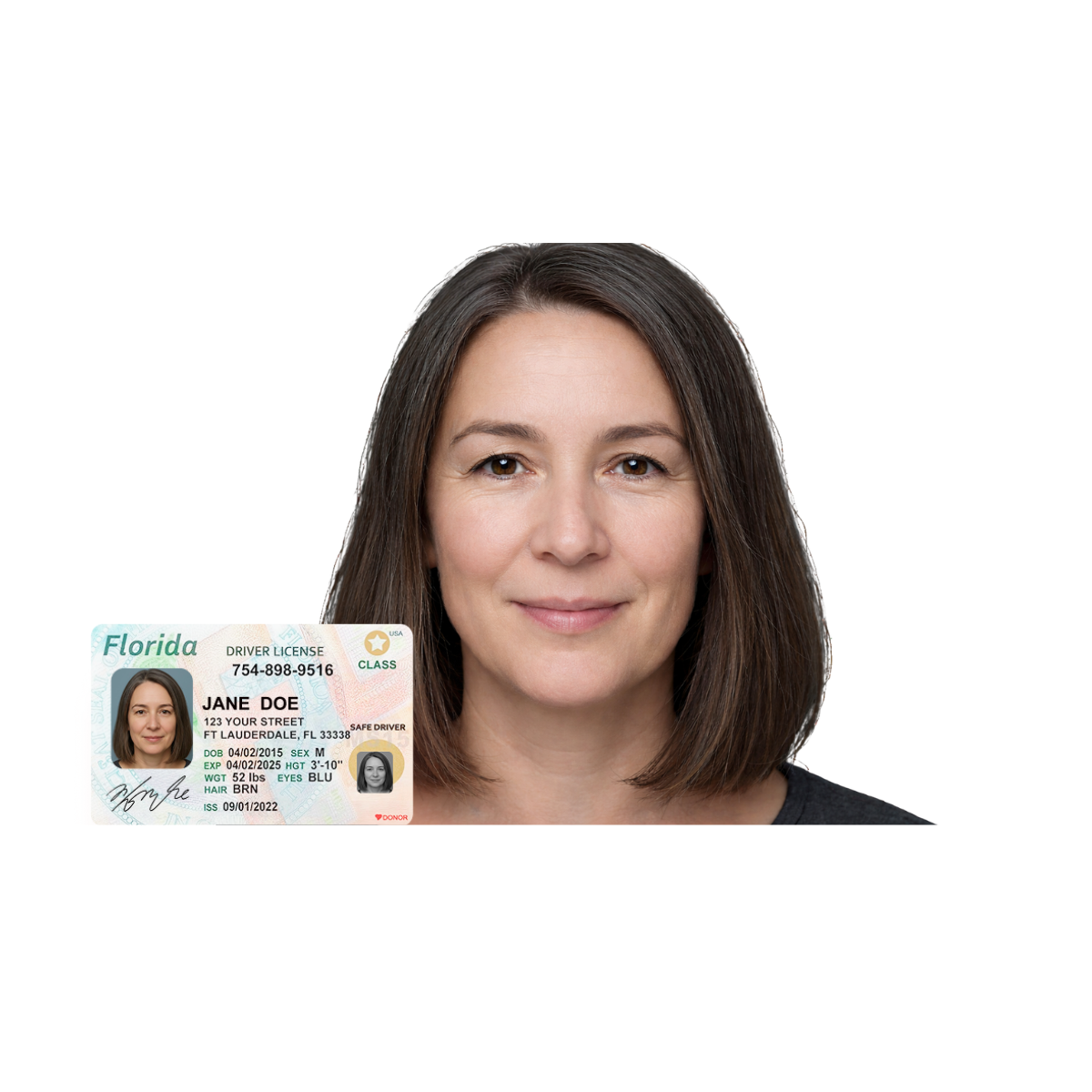
55+ Communities Verification is a built-in capability within TenantEvaluation that helps Florida condos and HOAs standardize how age-restricted requirements are handled across applications. It reduces manual work, improves documentation consistency, and strengthens operational efficiency and control for communities managing HOPA-related application requirements.
For CAMs and boards managing age-restricted communities, this capability:
- Standardizes application handling across all incoming residents
- Supports documentation consistency and reduces fragmentation across emails, PDFs, and follow-ups
- Improves operational efficiency for communities with complex eligibility documentation
- Strengthens internal processes while leaving legal guidance to qualified counsel
- Serves Florida condos and HOAs and is designed specifically for Community Association Managers
Manual vs. Digital Approval Processes in Florida Communities
| Metric | Manual / Email-Based Process | TenantEvaluation Platform |
|---|---|---|
| Processing Time | Florida HOA boards may use email for communication but cannot vote or approve matters by email. Actions require a meeting or unanimous written consent, with typical approval timelines of 7–30 days or 2–6 weeks. | Up to 70% reduction in processing time, with application intake in 5–10 minutes |
| Visibility | No task ownership, deadlines, or institutional memory, and knowledge often disappears at board turnover every 2–3 years. | Real-time dashboards for CAMs and boards, with searchable audit-ready records retained across board transitions |
| Compliance Risk | Incomplete intake creates back-and-forth that increases risk of missing declaration deadlines or issuing the vague denials prohibited under FS 720.3035(4)(a). | FCRA-first design, built-in adverse action workflows, automated audit trails, and direct TransUnion and Equifax reseller relationships |
Key Factors When Choosing an Approval Platform
Florida CAMs and board members should use a clear framework when they evaluate approval platforms. The following criteria build from legal compliance to operational control and revenue impact.
- FCRA Compliance Foundation. The platform must treat FCRA compliance as a core requirement. Look for direct credit bureau reseller relationships with TransUnion and Equifax, strict permissible purpose controls, and automated adverse action workflows. Without this foundation, even a feature-rich platform exposes your community to regulatory risk.
- Board Dashboard Access. Operational efficiency depends on real-time review and voting. A dedicated board review and voting panel with live application visibility delivers this access and remains a differentiator that generic tenant screening tools do not provide.
- Biometric Identity Verification. IDVerify+ confirms applicant identity using AI-driven liveness detection, government ID authentication, and biometric comparison. This capability closes a major fraud gap that most competing platforms leave open.
- Lease Lifecycle Control. Centralized, real-time lease tracking from application to occupancy, connected to onboarding and approvals inside one platform, removes the operational blind spots created by spreadsheets and email chains.
- Revenue-Sharing Model. TenantEvaluation’s pay-per-application model with revenue sharing turns application processing into a compliant income stream. Subscription-based competitors such as AppFolio or RealPage do not share revenue in this way.
- Florida-Specific Configuration. The platform must support Florida-specific governing documents, screening criteria, and workflows, including 55+ community requirements, instead of applying a generic rental screening approach.
Frequently Asked Questions for Florida Boards
What is the 5-year rule for HOAs in Florida?
The “5-year rule” in Florida HOA context most often refers to the requirement under the Housing for Older Persons Act (HOPA) that at least 80% of occupied units in a 55+ community must be occupied by at least one person who is 55 years of age or older. To maintain HOPA status and the related Fair Housing Act exemption, the community must also publish and follow policies that show intent to be age-restricted housing and conduct age verification of residents at least every two years. Failure to maintain these requirements can result in loss of the exemption. TenantEvaluation’s 55+ Communities Verification capability helps Florida condos and HOAs standardize how age-restricted application requirements are handled, which improves documentation consistency and reduces manual work across communities managing these obligations.
How much notice is required for an HOA board meeting in Florida?
Under Florida HOA law in Chapter 720, regular board meetings and architectural review committee meetings require at least 48 hours of advance notice posted conspicuously in the community, with the agenda included. For meetings where special assessments or amendments to rules regarding unit or parcel use will be considered, written notice must be mailed, delivered, or electronically transmitted to owners and posted at least 14 days before the meeting. Under Florida Statute 718.112(2)(c), condominium board meetings at which a quorum of directors is present must be posted at least 48 continuous hours before the meeting except in an emergency. Video conference meetings are permitted but must include the hyperlink, conference telephone number, and a physical address where owners may attend in person, and they must be recorded and maintained as an official record.
What are the signs of a dysfunctional HOA board?
A dysfunctional HOA board usually shows several clear patterns. Approval decisions occur without a documented quorum or recorded vote. Denial letters cite vague standards instead of specific rule citations, which is legally deficient under FS 720.3035(4)(a). Approval workflows rely entirely on email chains with no audit trail. Architectural standards are enforced inconsistently, which creates selective-enforcement liability. Board members lack access to complete application materials before meetings. Institutional knowledge disappears with board turnover because records sit in personal inboxes instead of a centralized system. These patterns increase legal exposure, slow approvals, and erode resident trust. A structured, digital approval platform with a board-ready dashboard and full audit trails directly addresses each of these failure points.
What is the new HOA law in Florida 2026?
Florida’s 2026 legislative session introduced additional updates to HOA governance that build on the significant 2024 amendments to FS 720.3035. The 2024 changes, which remain in effect and enforceable in 2026, require every HOA board or ARC to adopt hurricane protection specifications that comply with the Florida Building Code, prohibit denial of any conforming hurricane protection installation, restrict HOAs from regulating interior spaces not visible from public-facing areas, and mandate that all denial letters cite specific rule sections and the precise aspect of the proposal that fails to conform. Boards that issue vague denials or fail to adopt hurricane protection specifications face voidable decisions and potential liability for damages and attorney fees. Florida CAMs and board members should consult qualified legal counsel for the most current 2026 legislative updates that apply to their specific community type and governing documents.
Conclusion: Turn Email Chaos Into Compliant, Revenue-Generating Approvals
Manual, email-based approval processes create measurable liability for Florida community associations by causing processing delays, compliance gaps, identity fraud exposure, and lost revenue. TenantEvaluation is the only platform purpose-built for Florida community associations that combines QuickApprove for accelerated board-ready approvals, IDVerify+ for biometric fraud prevention, centralized Lease Tracking for real-time occupancy visibility, and 55+ Communities Verification for age-restricted documentation consistency, all with FCRA compliance as the foundation rather than an afterthought.
TenantEvaluation’s track record, including $150M generated for communities, 100,000+ applications processed annually, and a 4.8/5 Google rating, shows proven results for Florida CAMs and boards that want a repeatable, auditable approval system.
Schedule a demo today and see how TenantEvaluation replaces email chaos with board-ready decisions.
