Written by: Luis Teran, Co-founder, CEO, TenantEvaluation
Key Takeaways for Florida 55+ Board Approvals
- Florida 55+ communities face administrative challenges from scattered emails, PDFs, and manual processes that delay board approvals and increase audit risks.
- Fragmented approval workflows create operational bottlenecks, reduce board visibility, and lead to inconsistent documentation that can surface during compliance reviews.
- A six-step standardized checklist helps CAMs and boards ensure complete documentation, HOPA compliance, formal voting, and audit-ready record retention.
- Digital tools with real-time tracking and centralized dashboards significantly reduce manual work while maintaining consistent communication and compliance standards.
- TenantEvaluation provides Florida 55+ communities with an all-in-one platform that streamlines board approval workflows and strengthens operational efficiency.
The Real Cost of Fragmented 55+ Approval Workflows
Traditional 55+ community approval processes rely heavily on email chains and manual document review, which creates significant administrative burden for Florida CAMs and property management teams. Board members receive application materials through multiple channels, so tracking submission completeness and approval status becomes difficult. This scattered approach often results in delayed decisions, repeated requests for missing documentation, and inconsistent communication with applicants.
The audit risk associated with fragmented workflows extends beyond operational inefficiency. When age verification documents, board voting records, and approval communications exist across different systems, associations struggle to demonstrate consistent compliance with their written policies. See how centralized workflows reduce these operational and audit risks.
Six-Step 55+ Community Board Approval Checklist
Effective 55+ community board approval uses a systematic approach that supports consistent documentation and clear decision-making. This six-step checklist helps CAMs and boards replace fragmented workflows with a structured process.
1. Document Intake and Initial Review
Collect all required application materials through a centralized system, including age verification documents, financial qualification forms, and community agreement acknowledgments. Verify submission completeness before forwarding applications to the board for review.
2. Age Verification and HOPA Compliance Check
Confirm that at least one household member meets the 55+ requirement using the verification documents detailed in the section below. Maintain records that show compliance with your community’s written age verification policy.
3. Board Review and Discussion
Present complete application packages to board members with standardized summary reports. Ensure all voting members receive the same information and documentation before they discuss or vote.
4. Formal Voting Process
Record board votes with timestamps and individual member positions. Document any conditions or requirements attached to approvals in a consistent format.
5. Applicant Communication
Send standardized approval or denial notifications with clear next steps for each outcome. Include any community-specific requirements or move-in procedures that applicants must follow.
6. Record Retention and Audit Trail
Store all application materials, board voting records, and communications in an organized, searchable format. Maintain these records for future reference and compliance verification.
What the 80/20 Rule Means in a 55+ Community
The 80/20 rule stems from the federal Housing for Older Persons Act (HOPA), which requires that at least 80% of occupied units must be occupied by at least one person age 55 or older to maintain age-restricted status. This federal standard allows qualifying communities to legally restrict residency by age while complying with fair housing regulations.
Florida 55+ communities must demonstrate ongoing compliance with the 80/20 threshold through regular occupancy monitoring and age verification procedures. Communities must advertise appropriately and keep records to show they meet HOPA standards, which enables them to prove compliance if questions arise about their age-restricted status.
Board approval processes play a critical role in maintaining HOPA compliance by ensuring consistent age verification for all new residents. When approval workflows lack structure, communities risk falling below the 80% threshold or failing to follow their written verification policies, which can jeopardize their age-restricted status.
How to Get Approved to Live in a 55+ Community Under Age 55
Under the HOPA requirements discussed earlier, younger household members may reside in 55+ communities when at least one qualifying resident meets the age threshold. Many communities only require one person per household to be 55 or older, which allows a younger spouse or partner to live in the home when the qualifying resident is a permanent occupant.
Common exceptions that boards may consider include younger spouses of qualifying residents, adult children over 18 in specific circumstances, and live-in caregivers providing necessary medical assistance. While these exceptions are generally recognized under HOPA, individual HOA covenants, conditions, and restrictions (CC&Rs) may include additional standards that require board approval for exceptions.
The board’s role in evaluating under-55 applications involves reviewing the specific circumstances, confirming the presence of a qualifying 55+ resident, and ensuring the arrangement complies with community governing documents. Documentation requirements typically include proof of relationship, verification of the qualifying resident’s age, and written acknowledgment of community rules.
55+ Board Approval Documentation and Verification Standards
Florida 55+ communities typically require comprehensive documentation to support board approval decisions. Common age-verification documents requested by Florida 55+ HOAs and condos include a driver’s license, passport, birth certificate, or other official documents containing a birth date, along with affidavits or certification forms that associations retain to document ongoing compliance.
Standard verification documentation often includes government-issued photo identification, birth certificates or other age-proof documents, financial qualification materials such as income statements and credit reports, background check authorizations and results, and signed acknowledgments of community governing documents and rules.
Verification standards must align with the community’s written age verification policy while meeting HOPA requirements. HOPA-compliant age verification may be performed by reviewing official documentation such as government-issued birth certificates, driver’s licenses, or other IDs, or by accepting third-party affidavits. Consistent application of these standards across all applicants helps maintain audit-ready records and reduces compliance risk.
Common Bottlenecks in the 55+ HOA Age Verification Process
The most frequent delays in 55+ community approvals stem from incomplete initial submissions and lengthy email chains between applicants, CAMs, and board members. When age verification documents arrive separately from other application materials, boards often postpone decisions until complete packages are available, which extends approval timelines unnecessarily.
Lack of board visibility into application status creates additional bottlenecks, particularly when members cannot easily access submitted documents or track voting progress. This situation leads to repeated requests for information that applicants have already provided, which frustrates residents and increases administrative workload for property management teams.
Growing risk of inconsistent documentation practices compounds these operational challenges. When different staff members handle various aspects of the approval process without consistent procedures, communities face increased audit exposure and potential compliance gaps that can surface during regulatory reviews or legal disputes.
Best Practices for Faster, More Consistent Board Approval
Workflow standardization forms the foundation of efficient 55+ community board approval. Clear stakeholder responsibilities, defined document requirements, and consistent communication protocols reduce confusion and remove redundant steps that slow approval cycles.
Digital tools that provide real-time tracking and board dashboards significantly improve approval efficiency by giving all stakeholders visibility into application status and required actions. TenantEvaluation’s 55+ Communities Verification serves as an operational layer that addresses these workflow challenges directly. By centralizing application handling, the platform reduces manual work and supports consistent documentation practices. This consistency improves overall operational efficiency for Florida Condos, HOAs, and Community Association Managers.

Automated communication workflows ensure applicants receive timely updates while reducing manual follow-up requirements for CAMs and property management teams. This approach maintains professional communication standards and frees staff time for higher-value activities. Explore how automated approval tracking can streamline your 55+ board process.
How TenantEvaluation Strengthens Internal Processes for 55+ Communities
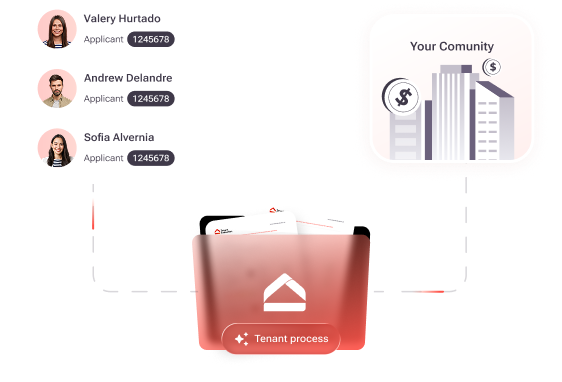
TenantEvaluation’s all-in-one platform provides Florida 55+ communities with a board-ready dashboard that centralizes application review, voting, and record-keeping in a single system. Unlike generic screening tools that focus primarily on background checks, TenantEvaluation’s 55+ Communities Verification capability specifically addresses the operational challenges faced by age-restricted communities.
The platform removes email chains and spreadsheet tracking by providing real-time application visibility for CAMs, boards, and applicants. Board members access summarized application reports, cast votes through a dedicated panel, and maintain complete audit trails without managing multiple systems or manual processes.
This integrated approach contrasts sharply with manual processes that scatter information across emails, PDFs, and follow-up calls. TenantEvaluation’s specialized focus on community associations ensures that workflow automation aligns with the real operational needs of Florida Condos and HOAs that manage age-restricted properties.
Key Operational Takeaways and Next Steps for 55+ Boards
Successful 55+ community board approval relies on structured workflows that reduce manual work while maintaining compliance oversight and board control. Communities that implement clear processes experience faster approval cycles, more consistent documentation, and lower administrative burden for CAMs and property management teams.
The shift from fragmented manual processes to integrated digital workflows creates a meaningful operational upgrade for all stakeholders. Boards gain better visibility and control, CAMs reduce repetitive administrative tasks, and applicants experience more professional and predictable approval timelines.
TenantEvaluation’s specialized platform for Florida 55+ communities provides the operational infrastructure needed to achieve these improvements while maintaining the compliance focus and board oversight that age-restricted communities require. Schedule a demo today to see how standardized 55+ approval workflows can strengthen your community’s operational efficiency.
Frequently Asked Questions
How long should the 55+ community board approval process take in Florida?
Approval timelines vary based on board meeting schedules, application completeness, and third-party screening requirements. Communities with structured workflows and digital platforms often achieve faster approval cycles by removing common bottlenecks like incomplete submissions and manual document review. The main timeline drivers include board meeting frequency, document verification requirements, and the efficiency of communication between applicants, CAMs, and board members.
What happens if a 55+ community falls below the 80% occupancy threshold?
Communities that fall below the 80% threshold risk losing their HOPA status, which can trigger Fair Housing Act compliance issues and potentially alter occupancy rules. This risk makes consistent age verification and occupancy monitoring critical for maintaining age-restricted status. Boards should conduct regular compliance reviews and maintain detailed records of resident ages and occupancy status to demonstrate ongoing HOPA compliance.
Who is responsible for age verification in Florida 55+ communities – the CAM or the board?
CAMs typically handle initial document collection and verification procedures, while the board retains ultimate responsibility for approval decisions and compliance with the community’s written age verification policy. This shared responsibility requires clear communication and standardized procedures to prevent gaps in the verification process. Effective workflows establish specific roles for document intake, verification, board review, and record retention.
What documentation is required to prove age eligibility in a 55+ community?
Standard age verification documents include government-issued photo identification, birth certificates, passports, or Medicare cards. Communities may also accept third-party affidavits in specific circumstances. The key requirement is that verification methods align with the community’s written policy and provide reliable proof of age for HOPA compliance purposes. Boards should maintain consistent documentation standards across all applicants to ensure audit-ready records.
How do condo and HOA approval processes differ for 55+ communities in Florida?
Both condos and HOAs must comply with HOPA requirements, but specific approval procedures may vary based on governing documents and state regulations. Condominiums often have more detailed transfer approval requirements and fee limits under Florida Statute 718.112(2)(k), while HOAs operate under Chapter 720 with fewer statutory restrictions. Both types of communities benefit from consistent age verification procedures, centralized document collection, and board-ready approval workflows that support compliance with their governing documents and federal age restriction requirements.
