Written by: Luis Teran, Co-founder, CEO, TenantEvaluation | Last updated: August 23, 2026
Key Takeaways for Florida 55+ Screening
- Florida 55+ condos must follow both FCRA background screening rules and HOPA age-verification rules, which creates complex compliance work for CAMs and boards.
- Common disqualifiers include violent felonies, sex offender listings, recent evictions, low credit scores, and missing age-55 documentation for at least one occupant.
- FCRA requires written disclosure, written authorization, and a two-step adverse action process. HOPA requires 80% occupancy by residents 55 or older, a published intent to serve older persons, and reliable age-verification records.
- Fragmented manual processes create audit gaps and legal exposure. An integrated platform brings age verification, background checks, and board approval into one connected workflow.
- TenantEvaluation streamlines 55+ application handling for Florida HOAs. Learn how the platform supports Florida communities.
The Daily Pain of 55+ Applications
Most CAMs managing Florida 55+ communities juggle age-verification documents, criminal history reports, and board approval votes through a patchwork of emails, PDFs, and spreadsheets. When an application arrives, the team must confirm that at least one occupant is 55 or older, collect government-issued proof of age, run an FCRA-compliant background check, and route everything to the board, often through disconnected systems that create gaps in the audit trail.
This fragmented approach produces inconsistent application handling, incomplete criminal histories, and no clear disqualification framework when edge cases appear. That inconsistency creates liability, not just operational frustration. A community that cannot demonstrate reliable age verification has no good-faith reliance defense if a familial status complaint is filed.
An all-in-one, FCRA-first resident screening and onboarding platform purpose-built for Florida community associations solves this problem. The right platform standardizes 55+ verification inside the same workflow as background checks and board approval instead of treating them as separate administrative tasks.
See how one platform connects age verification, background checks, and board approval in a live walkthrough of the TenantEvaluation workflow.
What Disqualifies an Applicant in Florida 55+ Communities
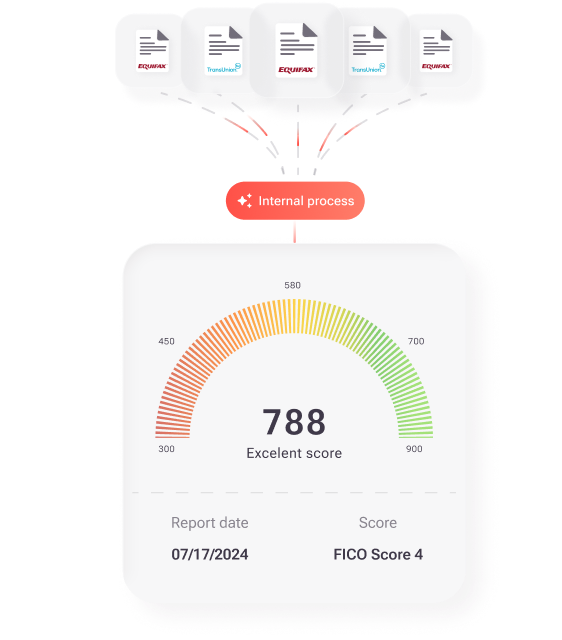
Florida 55+ communities evaluate applicants across three broad categories: criminal history, financial standing, and documentation completeness. The matrix below reveals a key pattern for CAMs and boards. Documentation failures and criminal history issues usually trigger automatic denials with little or no board discretion, while financial red flags often allow conditional approval or closer review. Understanding this distinction helps teams set clear expectations with applicants from the first contact.
| Category | Common Disqualifying Factor | Typical Board Response |
|---|---|---|
| Criminal History | Violent felony conviction within FCRA lookback window | Denial, documented adverse action required |
| Criminal History | Sex offender registry listing | Denial, no discretionary review |
| Financial | Prior eviction judgment within 7 years | Denial or conditional approval with deposit |
| Financial | Credit score below community threshold | Denial or escalated board review |
| Documentation | No qualifying occupant age 55 or older | Denial, HOPA occupancy rule not met |
| Documentation | Missing or expired government-issued age proof | Application held, incomplete submission |
Beyond the matrix, five red flags consistently surface in Florida 55+ screening reviews.
- A violent or sexual felony conviction appearing on a national criminal database scan or county-level Florida criminal record
- An active sex offender registry listing returned during screening
- An eviction judgment within the past seven years tied to nonpayment or lease violations
- A credit profile showing collections, charge-offs, or a score below the community’s stated minimum
- No household member who can document age 55 or older with a government-issued ID, birth certificate, or equivalent
How Far Back Florida HOAs Look and FCRA Rules
Under the FCRA, consumer reports may include criminal convictions indefinitely but must exclude arrest records more than seven years old, and Florida follows these federal rules and Chapter 435 screening standards, with no evidence on reporting of records sealed or expunged under F.S. §943.045. Florida has no statewide ban-the-box law restricting criminal history inquiries in housing screening, so associations may ask about criminal history on the application itself if they apply the inquiry consistently and document their process.
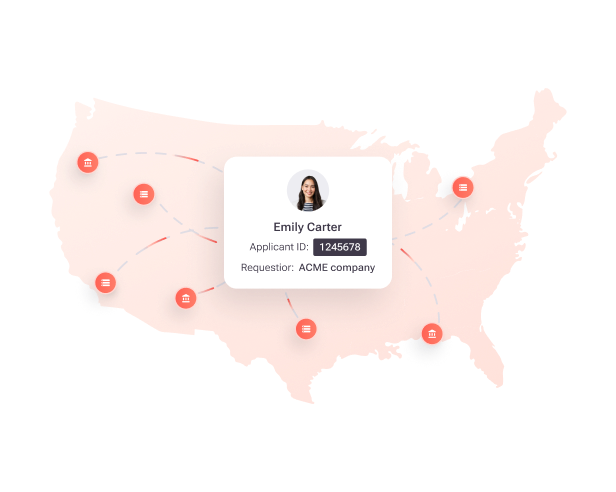
Before any consumer report is ordered, the FCRA requires a standalone written disclosure and the applicant’s written authorization, separate from the application form. If the board denies or conditions an application based on that report, a two-step adverse action process applies. The association first sends a pre-adverse action notice with a copy of the report and the Summary of Rights Under the FCRA. After at least five business days, the association sends a final adverse action notice identifying the reporting agency and confirming that the agency did not make the decision. Willful FCRA violations carry either actual damages or statutory damages of $100 to $1,000 per violation, plus punitive damages and attorney’s fees.
The 2026 enforcement environment shows why documentation quality matters. The Arbor Mill HOA in Jacksonville’s Oakleaf 55+ community has pursued ongoing litigation against 28-year-old heir Bethany Michel to enforce age restrictions, and in July 2026 voted to impose a $155,000 special assessment on residents to cover legal costs, a direct consequence of inadequate occupancy documentation and unclear enforcement procedures. That documentation gap illustrates why FCRA compliance alone does not protect a community. Associations must also satisfy HOPA’s independent age-verification framework to maintain their familial-status exemption.
HOPA Age-Verification Requirements for Florida 55+ Condos
Under HOPA, codified at 42 U.S.C. § 3607(b)(2)(C) and implemented through 24 CFR Part 100 Subpart E, a 55+ community must satisfy three independent requirements simultaneously: the 80% occupancy rule, a published intent-and-policy statement, and reliable age verification. Florida communities seeking a familial-status exemption under the Fair Housing Act must satisfy the federal HOPA three-part test; F.S. 760.29 addresses only unrelated exemptions and does not contain a mirroring state test.
The 80% rule requires that at least 80% of occupied units have one resident age 55 or older. That threshold sets the minimum required to protect exempt status and does not create an automatic right for the remaining 20% of units to be occupied by younger residents. Individual HOA declarations may impose stricter standards.
Every new lease or occupancy file must include a government-issued photo ID or comparable proof of age for at least one household member, retained on file rather than merely reviewed. Acceptable documentation includes a government-issued photo ID, birth certificate, passport, or a signed certification from a household member over 18. Federal HOPA rules require communities to maintain procedures for regular updates of age-verification information but do not mandate any specific interval such as every two years.
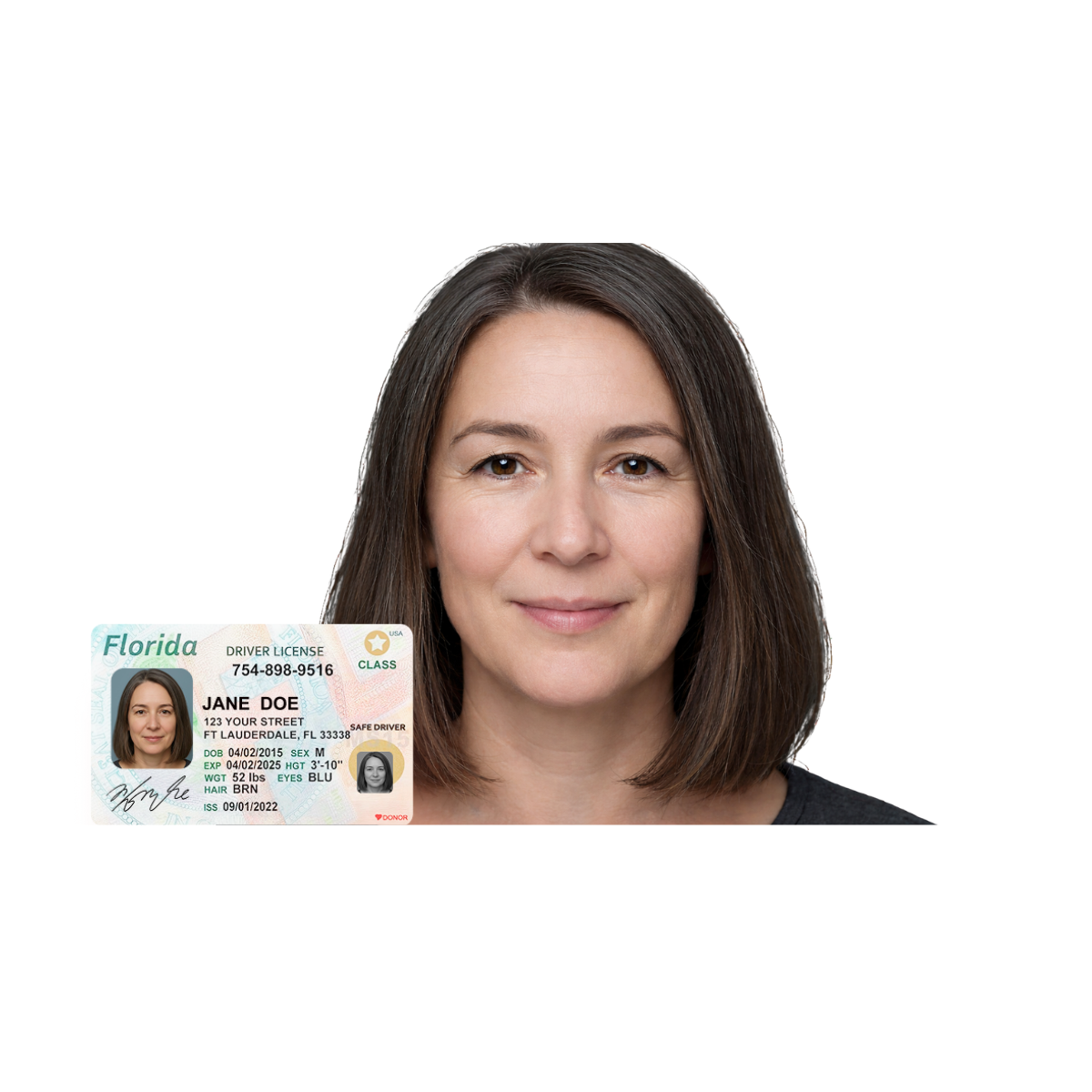

Red flags in Florida 55+ age-verification documentation include a policy adopted with no record of implementation, verification records covering only a fraction of units, or an occupancy survey without regular updates. These gaps emerge predictably when verification relies on fragmented manual processes. Email threads do not create a central record, scanned PDFs sit in different folders on staff computers, and individual judgment calls happen without a standardized checklist. No single system enforces completeness at every application, so missing records and outdated surveys become almost inevitable at scale.
See how automated age-verification workflows eliminate documentation gaps in every 55+ application your community processes.
Board Approval Workflow That Actually Works
The typical 55+ condo approval workflow in Florida involves at least four handoffs: application intake, document review, background check ordering, and board voting. Each handoff creates a bottleneck because no single system tracks the application’s status across all four stages. Applications sit in inboxes because board members do not know a complete file is ready for review. Age-verification documents arrive in different formats because intake happens outside the screening system. Background check results land in a separate platform, which forces staff to reconcile identity records with criminal history by hand. The board votes by email reply because the approval step is disconnected from the documentation that supports it.

TenantEvaluation is the only platform built specifically for Florida community associations that standardizes 55+ Communities Verification inside the same FCRA-compliant workflow as background checks, IDVerify, QuickApprove board-ready voting, and Lease Tracking.
- Reduces manual work by automating document collection, age-verification requests, and background check ordering inside one connected workflow
- Standardizes application handling so every 55+ application follows the same structured process regardless of which CAM or board member reviews it
- Supports documentation consistency by collecting and retaining government-issued age proof, biometric identity confirmation, and screening reports in a single audit-ready record
- Serves Florida condos and HOAs specifically, rather than adapting a generic rental screening tool
- Reflects how Community Association Managers and boards actually operate, with workflows designed for their day-to-day processes
- Improves operational efficiency by reducing application processing time by up to 70% and freeing as much as 50 hours of staff time per day
- Strengthens internal processes by replacing email chains and spreadsheets with a connected, board-ready approval workflow that produces a complete audit trail for every decision
TenantEvaluation is a legitimate reseller of TransUnion and Equifax data, with strict permissible purpose controls, automated adverse action workflows, and built-in audit trails for every application. The platform treats FCRA compliance as the foundation of screening, not an afterthought.
Frequently Asked Questions
What do condo associations look for in background checks?
Florida condo associations typically review criminal history, credit standing, eviction history, and identity verification when screening applicants. Criminal checks cover national and county-level records, sex offender registries, and federal criminal databases. Credit reviews assess score thresholds, collections, and charge-offs. Eviction history surfaces prior judgments tied to nonpayment or lease violations. In 55+ communities, associations also verify that at least one occupant meets the age requirement using government-issued documentation. Each community’s governing documents define the specific criteria, and all screening must follow FCRA authorization and adverse action procedures.
How far back do HOA background checks go in Florida?
Florida HOA background checks follow the federal FCRA lookback rules described earlier. Convictions may appear on reports indefinitely, while arrest records are limited to seven years. The state has no separate ban-the-box law for housing, so associations may ask about criminal history but must apply their criteria consistently across all applicants and document every decision. Misdemeanors older than seven years usually present lower risk and often receive individual review instead of automatic denial, depending on the community’s written screening criteria.
What will disqualify you on a background check for a 55+ condo?
The most common disqualifying factors in Florida 55+ condo background checks are violent or sexual felony convictions within the FCRA lookback window, an active sex offender registry listing, an eviction judgment within the past seven years, a credit score below the community’s stated minimum, and the absence of any household member who can document age 55 or older with acceptable proof. Documentation failures, such as missing IDs, expired records, or an incomplete occupancy file, can also result in an application being held or denied. Communities must apply their criteria consistently and issue FCRA-compliant adverse action notices when a consumer report contributes to a denial.
How do HOPA rules interact with FCRA screening in Florida?
HOPA and the FCRA operate on parallel tracks that communities must satisfy at the same time to make defensible approval decisions. HOPA governs who may occupy the community, requiring that at least 80% of occupied units have one resident age 55 or older, that the community publish its intent to serve older persons, and that it maintain reliable age-verification records. While HOPA requires regular age-verification updates, as noted earlier, it does not prescribe a specific timeline, so communities set their own intervals based on turnover rates and operational capacity.
The FCRA governs how background and credit information is collected and used, requiring written disclosure, written authorization, and a two-step adverse action process when a consumer report contributes to a denial. Neither framework replaces the other. A community that meets HOPA’s occupancy threshold but skips FCRA adverse action procedures faces exposure to federal statutory damages. A community with FCRA-compliant screening but no current occupancy survey has no good-faith defense against a familial status complaint. Florida has no separate state-level HOPA equivalent, so communities must satisfy the federal three-part test described earlier to claim a familial-status exemption under the Fair Housing Act.
Conclusion: One Audit-Ready Platform for Florida 55+ Communities
Florida 55+ condo communities operate at the intersection of HOPA age-verification requirements and FCRA-compliant background screening, two frameworks that demand consistent documentation, structured workflows, and defensible decision records. Manual, fragmented processes cannot reliably satisfy both at scale.
TenantEvaluation gives CAMs and board presidents a single, audit-ready platform that connects 55+ age verification, FCRA-compliant background checks, biometric identity confirmation through IDVerify, accelerated board voting through QuickApprove, and centralized Lease Tracking inside one connected workflow built specifically for Florida community associations. With 5,000+ communities and more than 100,000 applications processed annually, TenantEvaluation is the platform Florida 55+ communities rely on to decide faster and document better.
Request a walkthrough of the complete audit-ready workflow and see how TenantEvaluation handles every step from age verification to board approval in one platform.
