Written by: Luis Teran, Co-founder, CEO, TenantEvaluation
Key Takeaways
- Florida’s 80/20 rule requires 80% of occupied units in a 55+ community to include at least one resident aged 55 or older. The remaining 20% can include under-55 residents under defined conditions.
- Manual application processes can waste up to 50 staff hours daily, expose HOAs to fraud and compliance risks, and cost $28,500 per employee annually.
- A 7-step automated workflow cuts processing time by 70%, supports FCRA compliance, and includes ID verification, age checks, and board voting tools.
- TenantEvaluation delivers specialized 55+ verification, QuickApprove dashboards, and revenue-sharing models, serving over 5,000 communities with documented $240,000 annual savings for a single Florida client.
- Communities can see how automated workflows eliminate manual bottlenecks and strengthen compliance for Florida HOAs.
How Florida 55+ Rules Shape HOA Workflows
Florida’s age-restricted communities operate under the Housing for Older Persons Act (HOPA) and state regulations that demand accurate documentation and verification. These rules drive how HOAs design application workflows and track resident data.
Florida’s 80/20 Rule for 55+ HOAs
The 80/20 rule mandates that at least 80% of occupied units in a 55+ community must have one resident who is 55 years or older. The remaining 20% of units have no federal age requirements and may be occupied by residents under 55, including as the sole or primary occupants. Communities must monitor this mix continuously and maintain documentation that supports compliance during audits.

When Under-55 Residents Can Live in 55+ Communities
Residents under 55 can live in age-restricted communities under specific circumstances that fall within the 20% exception described above. They may qualify as primary occupants in those units, as adult children of qualifying residents, or as caregivers who reside in the home. HOAs need clear records that show how each under-55 resident fits within these allowed categories.
Key 80/20 Compliance Obligations for HOAs
Florida’s 80/20 rule sets the primary requirement for maintaining age-restricted status. Communities must track unit occupancy, document qualifying residents, and keep records that demonstrate the 80% threshold. Reliable tracking tools reduce the risk of falling below the required percentage.
New 2026 Rules for Florida 55+ HOAs
According to Florida Statutes 2025, amendments to the Florida Fair Housing Act remove the requirement to register and renew age-restricted communities. Enforcement of existing documentation requirements has intensified, making automated compliance tracking more critical than ever. These stricter enforcement standards compound the operational challenges that Florida HOAs already face with manual application processes.
Current Challenges in 55+ Applications
Manual application processes create heavy operational burdens for Florida HOAs that manage age-restricted communities. CAMs often spend hours chasing missing documents, sending repeated emails to applicants and realtors, and applying inconsistent verification procedures that change by staff member. These issues grow more serious with age verification, where missing birth certificates or unclear records can delay approvals for weeks.
Fraud exposure represents another critical challenge, with many multifamily professionals encountering fraud during application processes. This vulnerability stems from traditional document-based screening methods, which cannot reliably detect identity theft or synthetic fraud attempts, leaving communities exposed to liability and security risks.
The financial impact of manual processes is substantial, with manual data entry costing companies an average of $28,500 per employee annually. For HOAs that process hundreds of applications each year, these costs escalate quickly and reduce staff availability for higher-value community management tasks.
The following 7-step workflow directly addresses these challenges by automating document collection, closing fraud gaps through identity verification, and reducing manual processing costs by up to 70%.
7-Step Streamlined Workflow for Florida 55+ HOAs
A comprehensive automated workflow removes manual bottlenecks while supporting FCRA compliance and accurate age verification. This system reduces processing time from days to hours and maintains complete audit trails for regulatory reviews.
Step 1: Custom Setup for Community Rules
Teams configure specific 55+ requirements, credit score thresholds, income verification standards, and document checklists that match each community’s governing documents and Florida regulations. This setup creates a single source of truth for every application.
Step 2: Applicant Online Start with Property Code
Applicants receive a unique property code and access a mobile-optimized portal that walks them through age and eligibility requirements. Clear prompts reduce confusion about community rules and cut down on back-and-forth emails.
Step 3: Intelligent Forms and Document Collection
Dynamic form logic adjusts questions based on applicant age, relationship status, and unit type. This approach captures complete information while avoiding irrelevant requests that frustrate applicants and slow staff.
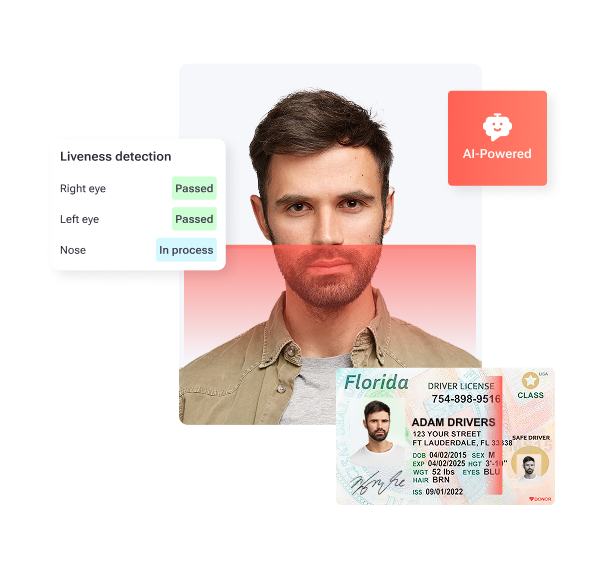
Step 4: IDVerify+ Age and Identity Verification
IDVerify+ combines government ID validation, AI-powered liveness detection, and biometric facial matching to confirm identity and age before processing continues. This step blocks many fraud attempts that would pass a simple document review.
Step 5: Automated 55+ Communities Verification
Automated age verification standardizes handling of 55+ requirements across applications, which directly reduces manual work by removing case-by-case judgment calls. This standardization supports documentation consistency that satisfies Florida’s intensified enforcement standards and strengthens internal processes for age-restricted communities.
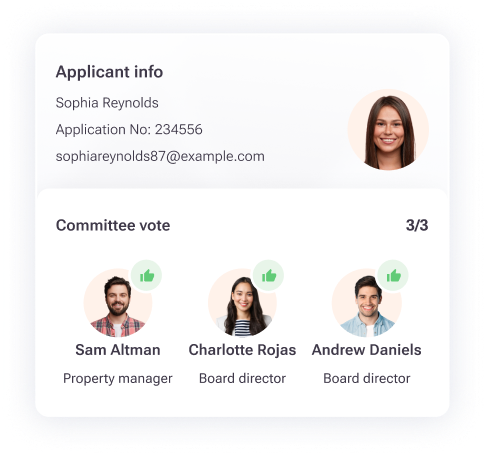
Step 6: QuickApprove Board Review and Voting
QuickApprove gives board members streamlined dashboards with AI-generated application summaries, voting panels, and real-time status tracking. These tools replace long email chains and help boards reach decisions faster.
Step 7: Auto-Approval and Complete Audit Trail
Approved applications trigger automatic notifications to applicants, managers, and realtors. At the same time, the system creates detailed audit trails that support FCRA requirements and provide clear compliance documentation for future reviews.
Why TenantEvaluation Fits Florida 55+ HOAs
TenantEvaluation focuses exclusively on community association workflows, with FCRA compliance built into every step. Founded in 2007 by property managers, board members, and engineers, the platform now serves over 5,000 communities and processes more than 100,000 applications each year, supported by a 4.8/5 Google rating.
The platform’s 55+ Communities Verification capability reduces manual work, standardizes application handling, and supports documentation consistency for Florida condos and HOAs. Unlike generic screening tools, this feature serves Community Association Managers who need structured age-restricted processes while still relying on legal counsel for interpretation of complex cases.
Key differentiators include direct TransUnion and Equifax reseller relationships, automated adverse action workflows, PCI Level 1 compliance with end-to-end encryption, and revenue-sharing models that remove upfront costs. Strategic partnerships with industry leaders like RealManage demonstrate proven reliability at enterprise scale. The following comparison illustrates how TenantEvaluation’s specialized features address gaps in generic screening services:
| Feature | TenantEvaluation | ApplyCheck/Verify Screening |
|---|---|---|
| Processing Speed | 70% faster end-to-end | Background checks only |
| Board Tools | QuickApprove dashboard | None |
| 55+ Verification | Built-in age verification | Generic screening |
| Revenue Model | Revenue sharing | Fixed fees |
Schedule a demo to experience the difference specialized 55+ community workflows make for Florida HOAs.
ROI and Proof of Impact
TenantEvaluation has generated over $150 million for communities through streamlined workflows and improved revenue capture. One Florida management company achieved $240,000 in annual savings by eliminating 50 hours of daily manual work and cutting processing time by 50%. These gains free staff to focus on resident service and strategic community projects while maintaining strong compliance.
The platform’s automation capabilities address the core cost drivers identified earlier, including the $28,500 per-employee burden from manual processes and the heavy share of time spent on coordination instead of skilled work. Automation shifts that time toward higher-value tasks.
Implementation Checklist and Best Practices
Successful implementation starts with a comprehensive demo that highlights platform capabilities and customization options. Next, communities input their specific rules, including 55+ requirements, credit thresholds, and document standards, so every application follows the same playbook. Teams then train board members on QuickApprove functionality and confirm voting procedures. Finally, managers align go-live timing with current application cycles to reduce disruption.
FCRA compliance requires detailed documentation for all screening decisions, secure encrypted storage for digital files, and proper disposal procedures for sensitive information. TenantEvaluation’s automated compliance features manage these tasks systematically, lowering liability exposure and keeping communities audit ready.
Conclusion: Modernizing 55+ Application Workflows
Manual 55+ application processes drain staff time, increase compliance risk, and delay revenue for Florida HOAs. TenantEvaluation’s specialized workflow automation delivers 70% faster processing, $240,000 in documented savings for a single client, and comprehensive FCRA support tailored to age-restricted communities. Request a personalized demo to transform your community’s application workflow and join more than 5,000 communities already benefiting from streamlined resident onboarding.
Frequently Asked Questions
What is the 80/20 rule for 55+ communities in Florida?
The 80/20 rule requires that at least 80% of occupied units in a 55+ community must have one resident who is 55 years or older. The remaining 20% of units have no federal age requirements and may be occupied by residents under 55, including as the sole or primary occupants. This rule demands continuous monitoring and documentation to support audits, so larger communities benefit from automated tracking systems.
How does automated workflow reduce compliance risks for 55+ HOAs?
Automated workflows reduce compliance risk by removing human error from age verification, enforcing consistent documentation standards, and maintaining complete audit trails for FCRA compliance. TenantEvaluation’s 55+ Communities Verification applies the same rules to every application, which reduces manual work and supports documentation consistency. The system also tracks 80/20 unit requirements in real time, providing compliance visibility that manual processes cannot match.
Can TenantEvaluation integrate with existing HOA management software?
TenantEvaluation operates as a comprehensive standalone platform built for community associations, which removes the need for multiple third-party integrations that can create security gaps and workflow breaks. The system covers application intake through final approval, including board voting tools, identity verification, and compliance documentation. This integrated approach simplifies operations while protecting data security and FCRA compliance throughout the process.
What makes TenantEvaluation different from generic tenant screening services?
TenantEvaluation serves community associations exclusively and treats FCRA compliance as a core requirement rather than an add-on. The platform includes features such as QuickApprove board dashboards, 55+ Communities Verification for age-restricted rules, and revenue-sharing models that remove upfront costs. As a direct TransUnion and Equifax reseller, TenantEvaluation provides legitimate credit data under strict bureau rules, unlike competitors that depend on third-party scraping or offshore data sources.
How quickly can Florida HOAs implement streamlined 55+ workflows?
Most Florida HOAs implement streamlined 55+ workflows within 1 to 2 weeks from demo to go-live, depending on community size and customization needs. The process includes configuring community rules, training board members on QuickApprove, and setting automated compliance procedures. TenantEvaluation’s implementation team works directly with CAMs to support a smooth transition while current application processing continues, and most communities see noticeable efficiency gains in the first week.
