Written by: Luis Teran, Co-founder, CEO, TenantEvaluation
Key Takeaways for Florida 55+ Condo Age Verification
- Florida 55+ condos must follow HOPA’s 80/20 rule. At least 80% of occupied units must have one resident who is 55 or older.
- Accepted age verification documents include driver’s licenses, birth certificates, passports, and sworn affidavits. Regular surveys and biennial audits keep communities compliant.
- Manual verification creates administrative overload, incomplete documentation, audit stress, and fraud risks for Community Association Managers and boards.
- The age verification process includes application submission, CAM review, board approval, age audits, and ongoing monitoring. Adult children over 18 may live with qualifying residents.
- TenantEvaluation automates 55+ verification with document collection, biometric ID checks, board dashboards, and audit trails. See how much time your team can save with a guided demo.
Why Florida 55+ Condo Age Rules Matter for CAMs and Boards
Florida’s 55+ condo communities balance two constant pressures. They must protect HOPA compliance while keeping daily operations manageable for CAMs and volunteer boards. The 80/20 rule sits at the center of this challenge.
Under HOPA, at least 80% of occupied units must have one person 55 years of age or older. The remaining 20% may house younger residents, depending on community policy. Florida law aligns with these standards and sets clear expectations for age documentation and recordkeeping.
Reliable age verification keeps your community’s 55+ status secure. It also protects you during Fair Housing reviews, insurance renewals, and disputes with residents or families.
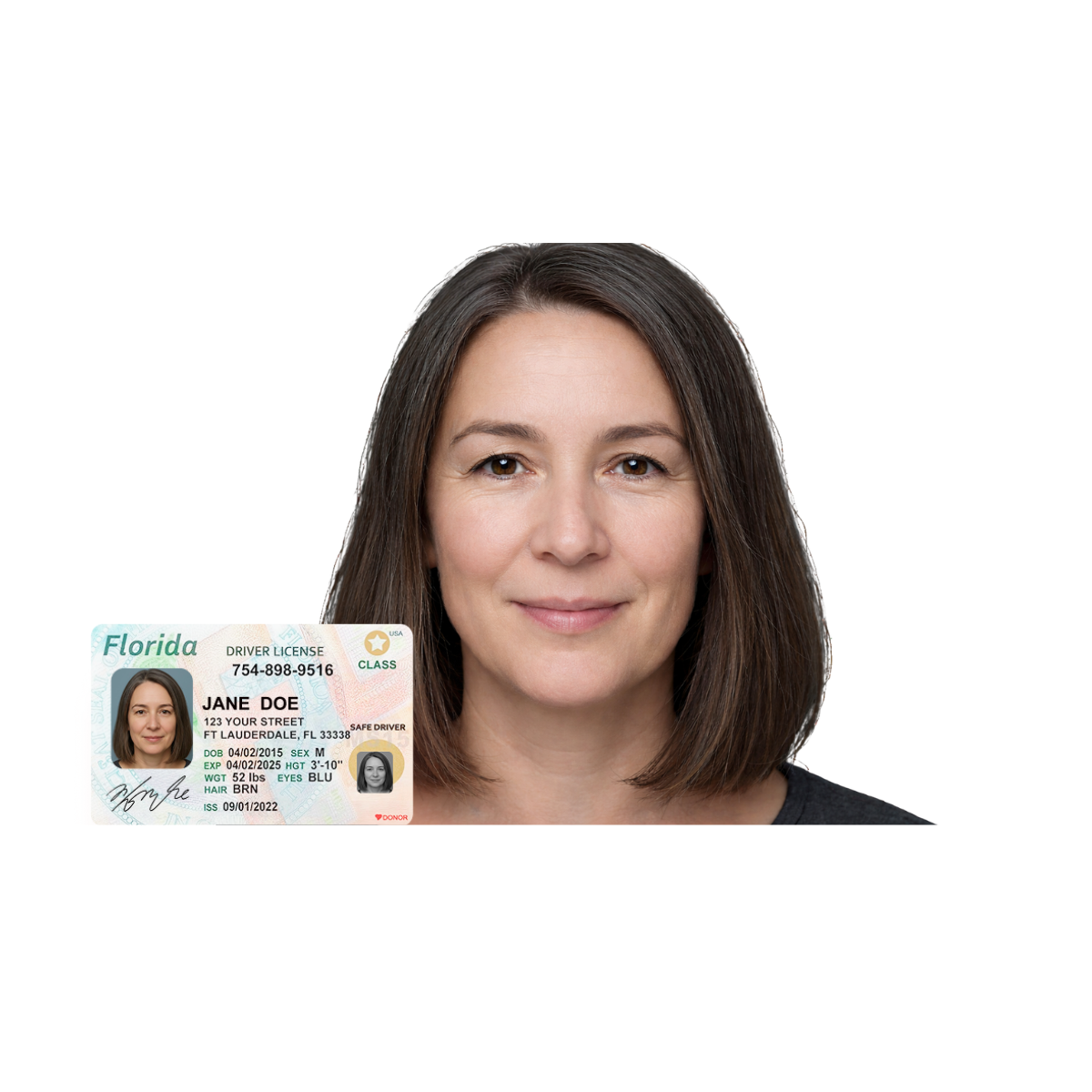
Florida 55+ Condo Age Verification Requirements and Documents
Florida 55+ condos rely on specific documents to prove resident ages and maintain HOPA compliance. Communities must collect, verify, and store these records in a consistent way.
Commonly accepted age verification documents include:
- Government-issued driver’s license or state ID
- Birth certificate
- Valid passport
- Sworn affidavits
Regular age verification surveys help confirm that the community still meets the 80/20 rule. During these surveys, associations collect and retain copies of proof of age documents such as government-issued photo IDs, birth records, or affidavits.
The table below shows how each document type typically fits into initial and ongoing verification. Driver’s licenses and state IDs usually serve as the primary proof, while birth certificates, passports, and affidavits support situations where photo ID is missing or unclear.
| Document Type | Initial Verification | Ongoing Verification |
|---|---|---|
| Driver’s License/State ID | Commonly used | Commonly used |
| Birth Certificate | Acceptable | Can be used if no photo ID available |
| Passport | Acceptable | Acceptable |
| Sworn Affidavit | Can be used with supporting documentation | Supplementary |
See how automated document collection works with TenantEvaluation’s age verification tools.
Step-by-Step Florida 55+ Condo Age Verification Process
Knowing which documents satisfy HOPA requirements is only the first step. CAMs and boards also need a clear process that collects, reviews, and stores these documents for every household.
The 55+ condo application screening Florida workflow involves coordinated steps between applicants, CAMs, and boards. Each step affects both compliance and resident experience.
Step 1: Application Submission
Applicants submit required age verification documents through QuickApprove or traditional paper processes. Initial screening includes driver’s license, birth certificate, or passport verification alongside standard application materials.
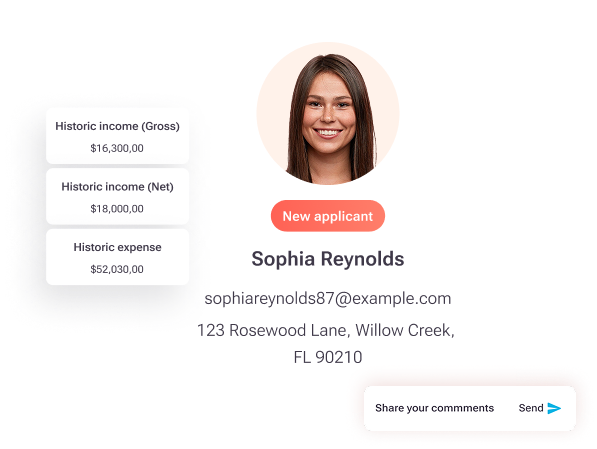
Step 2: CAM Document Review
Community Association Managers verify document authenticity, calculate unit occupancy ratios, and confirm compliance with community-specific age policies. Each task requires manual cross-referencing between documents, spreadsheets, and policy guidelines, so the full review often consumes 15 to 20 hours per application cycle.
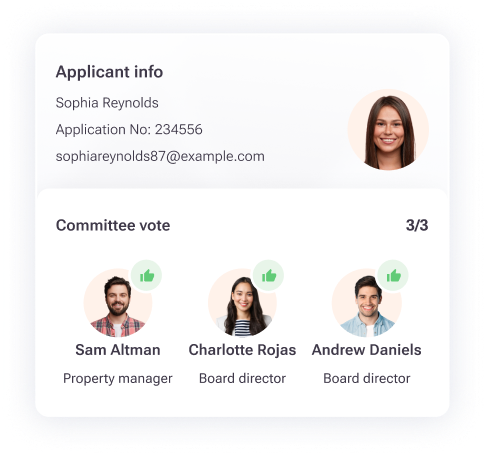
Step 3: Board Approval Process
Board members review summarized applicant information and cast approval votes. Traditional email-based voting slows decisions and creates gaps in the audit trail that are hard to reconstruct later.
Step 4: Age Audit Implementation
The age audit process verifies ages across all occupied units on a regular schedule. Communities distribute age verification forms, collect proof of age, and calculate the 80% threshold to confirm HOPA compliance.
Step 5: Ongoing Compliance Monitoring
Associations track resident changes, monitor guest policies, and maintain secure age verification records. Vacant units do not count toward 80/20 calculations, so accurate occupancy tracking remains essential.
Step 6: Family and Adult Child Occupancy Rules
Family composition affects eligibility in 55+ communities. Adult children over 18 are typically allowed to live with qualifying 55+ residents. Minors under 18 or 19 usually cannot establish permanent residency. Each community sets specific policies within HOPA framework guidelines, so written rules and consistent enforcement are critical.
Challenges with Manual 55+ Age Verification in Florida
This six-step process works on paper, but manual execution strains CAMs and boards. Paper files, email chains, and spreadsheets create friction at every stage.
Manual age verification processes create significant operational burdens for Florida condo associations, and each issue tends to amplify the others:
- Incomplete Documentation: Applicants frequently submit partial or incorrect age verification documents. CAMs then chase missing items through repeated emails and calls, which slows approvals for everyone.
- Administrative Overload: CAMs spend most of their application processing time on document collection and verification tasks. This constant follow-up reduces the time available for maintenance coordination, resident communication, and board support.
- Audit Preparation Stress: Biennial age audit 55+ condo process requirements demand extensive record compilation and verification. When records live in filing cabinets, email inboxes, and shared drives, pulling everything together for an audit becomes a last-minute scramble.
- Family Dispute Resolution: Florida 55+ age restricted rules can be confusing for residents and relatives. Questions about spouses, adult children, and long-term guests often escalate into disputes when policies are unclear or applied inconsistently.
- Identity Fraud Exposure: Paper-based verification systems cannot reliably detect sophisticated document fraud or identity theft. Without biometric checks or automated validation, communities face higher risk during disputes or legal reviews.
Some associations try to reduce these risks with digital folders, shared spreadsheets, and email templates. These tools help, but manual processes still depend on individual staff habits and remain vulnerable to human error and compliance gaps. Discover how to eliminate these verification bottlenecks with a purpose-built platform.

How TenantEvaluation Streamlines Florida 55+ Verification
TenantEvaluation’s 55+ Communities Verification gives CAMs and boards a single system for managing age-restricted compliance. The platform focuses on Florida condos and HOAs, so workflows match the real-world steps your team already follows.
By automating document collection and verification workflows, TenantEvaluation removes much of the manual back-and-forth from applications and audits. This automation creates consistent application handling across all units. That consistency supports clean documentation for audits and reduces the risk of Fair Housing disputes.
Because the system was built specifically for Florida condos and HOAs, it addresses the unique compliance requirements CAMs face in age-restricted communities. Boards gain clearer visibility, and staff gain repeatable processes that scale as the portfolio grows.
Key automation features include:
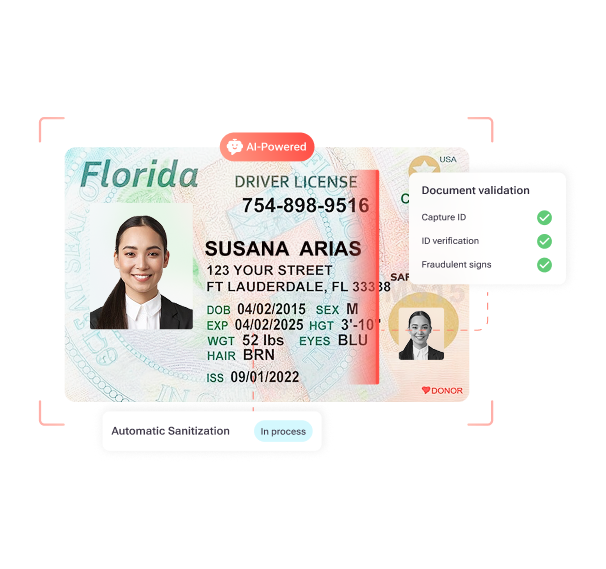
- Automated document collection with age verification logic that flags missing or invalid proof
- Integrated QuickApprove dashboard for structured, trackable board voting
- Biometric identity verification through IDVerify to reduce fraud risk
- Comprehensive audit trail generation that records decisions, documents, and timestamps
- HOPA compliance-supporting workflows tailored to 55+ occupancy rules
TenantEvaluation serves communities nationwide, processes more than 100,000 applications each year, and has generated $150M in revenue for associations. The platform maintains a 4.8 out of 5 Google rating and partners with leading management companies including RealManage.
The comparison below highlights how TenantEvaluation differs from generic screening tools. The focus is on built-in 55+ automation, Florida-specific workflows, and time savings for CAMs and boards.
| Feature | TenantEvaluation | ApplyCheck | Verify Screening |
|---|---|---|---|
| 55+ Age Verification | Built-in automation | Manual process | Manual process |
| Board Dashboard | QuickApprove included | Not available | Not available |
| Florida Condo Focus | Specialized platform | Generic screening | Generic screening |
| Time Savings | Up to 70% reduction | Limited automation | Limited automation |
A recent case study showed a 70% time savings for a Florida management company processing 55+ applications. The team recovered about 50 hours each day for higher-value operational work. Schedule a demo to see TenantEvaluation in action and review workflows that match your community’s needs.
Conclusion: Moving From Manual 55+ Verification to Automated Compliance
Florida 55+ condo age verification requirements demand a structured approach that balances HOPA compliance with daily operational realities. The 80/20 rule, biennial audit mandates, and complex family residency scenarios create ongoing pressure for CAMs and boards that rely on manual methods.
TenantEvaluation’s 55+ Communities Verification addresses these pain points with automated workflows, standardized documentation, and integrated compliance tools designed for Florida associations. Digital verification reduces administrative burdens, improves accuracy, and strengthens audit readiness.
Communities that adopt automated age verification gain clearer records, faster approvals, and more predictable audits. Get started with automated age verification and simplify how your community manages 55+ compliance.
Frequently Asked Questions
What is the 80/20 rule for 55+ communities in Florida?
The 80/20 rule requires at least 80% of occupied residential units in a 55+ community to have at least one resident who is 55 years of age or older. The remaining 20% may house younger residents, though many communities choose to require 100% compliance. This federal HOPA standard applies to all Florida 55+ condos and HOAs seeking Fair Housing Act exemptions.
What documents are required for 55+ age verification in Florida?
Commonly accepted documents include government-issued driver’s licenses, state IDs, birth certificates, valid passports, and sworn affidavits from household members over 18. For periodic surveys, communities collect and retain copies of government-issued photo identification or birth records. Primary documents like driver’s licenses and birth certificates are widely used for verification purposes.
How often must Florida 55+ condos conduct biennial age audits?
Florida 55+ condos typically conduct age verification surveys every two years to maintain HOPA compliance. The process involves distributing age verification forms to occupied units, collecting reliable proof of age, calculating the 80% threshold, and maintaining secure records. Vacant units do not count toward the 80/20 calculation.
Can adult children live in Florida 55+ communities?
Adult children over 18 are typically permitted to live with qualifying 55+ residents in most Florida communities. However, minors under 18 or 19 cannot establish permanent residency, though specific age limits vary by community policy. Younger spouses are generally allowed, with some communities setting minimum age requirements of 40 or 45 years old.
What are the basic HOPA compliance requirements for Florida 55+ communities?
HOPA compliance involves maintaining the 80/20 occupancy ratio, publishing written policies demonstrating intent to provide housing for persons 55 and older, and implementing reliable age verification procedures with proper recordkeeping. Communities must publish and adhere to policies and procedures that demonstrate an intent to provide housing to persons 55 years or older.
