What Disqualifies a Background Check in a 55+ Community?
Written by: Luis Teran, Co-founder, CEO, TenantEvaluation | Last updated: August 25, 2026
Key Takeaways for Florida 55+ Screening
Florida 55+ communities must meet HOPA age-occupancy thresholds, criminal standards, eviction and credit criteria, and identity checks at the same time.
Eviction history is the most common disqualifier, followed by financial shortfalls, age-occupancy failures, criminal convictions, and identity verification issues.
Manual processes using email chains, PDFs, and spreadsheets create inconsistent documentation, repeated follow-ups, and audit exposure across communities.
Strict, consistent enforcement of screening criteria protects fair housing compliance and helps maintain the 80/20 age-qualified occupancy threshold.
TenantEvaluation standardizes 55+ application handling for Florida Condos and HOAs, cuts manual work, and strengthens documentation consistency.
The Problem: How 55+ Background Check Rules Create Daily Friction
Florida CAMs and boards managing age-restricted communities work under a layered screening obligation. Every application must satisfy federal HOPA thresholds, community criminal and financial criteria, identity verification requirements, and occupant-level screening at the same time. When teams manage these steps manually, inconsistencies build up across applications.
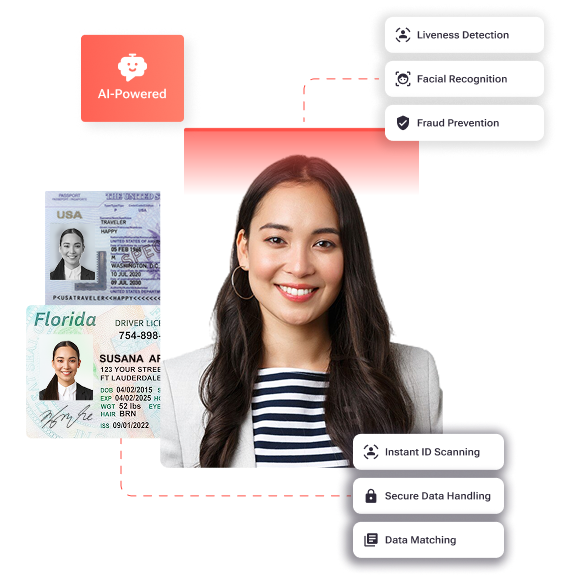
ID Verify
Common friction points connect to each stage of the review process and often appear together in the same file.
Inconsistent age documentation collected across applications, which creates gaps in biennial survey records and weakens HOPA support.
Criminal history evaluated without a documented standard, which exposes communities to fair housing liability if decisions appear uneven.
Eviction and credit review applied unevenly across applicants, which undermines defensibility when decisions are challenged.
Occupant and relative screening handled through separate email threads, leaving no centralized record for the full household.
Identity verification handled through document uploads alone, without a biometric confirmation layer to confirm the person applying.
Each gap adds administrative work and increases documentation risk. For CAMs managing multiple communities, this manual workload compounds during every application cycle and every renewal period.
How Strict 55 and Older Communities Are in Practice
Florida 55+ communities apply screening standards that are more layered than standard rental communities. To understand why the earlier friction points matter, it helps to see the specific disqualifiers that drive most denials.
The following disqualifiers appear most often in Florida 55+ screening decisions.
Age-rule violations: Failure to document that at least one occupant in the unit is 55 or older. To satisfy this requirement, communities typically require government-issued photo ID, birth certificates, passports, or signed certifications from a household member over 18 as acceptable proof of age.
Criminal history: Convictions involving violence, property destruction, or offenses that affect neighbor safety. HUD guidance directs Florida landlords to consider the nature, severity, and recency of a criminal offense instead of using blanket bans that can violate fair housing law.
Eviction history: Prior evictions, especially those tied to nonpayment, lease violations, or property damage. A past eviction is a strong predictor of a future one, and Florida eviction filings appear in public court records.
Credit shortfalls: Patterns such as collections from prior landlords, recent charge-offs, or debt loads that make rent unsustainable. Many Florida communities focus on credit patterns rather than the score alone.
Identity failures: Inability to verify applicant identity through reliable documentation or biometric confirmation, which raises fraud and compliance concerns.
Occupant screening failures: Additional occupants, including relatives, who do not meet the community’s documented eligibility criteria or age rules.
Strict enforcement of these criteria depends on consistent, documented processes that apply the same rules to every applicant. Communities that apply standards unevenly face fair housing exposure, audit vulnerability, and disputes with residents and applicants.
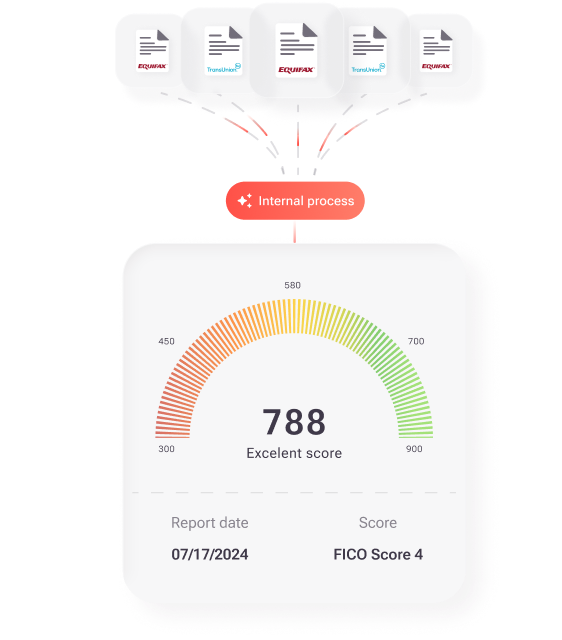
Trusted insights to evaluate financial responsibility. Access full credit reports and verified credit scores across the U.S. and Canada. Our reports provide detailed payment history, debt levels, and financial behavior—giving you a clear, reliable view of each applicant’s financial standing. Ideal for communities with diverse applicants, this tool helps you make confident, well-informed leasing decisions.
Under the Housing for Older Persons Act, a 55+ community must satisfy three tests to claim the federal fair housing exemption. At least 80% of occupied homes must have one resident age 55 or older. The community must publish and follow policies that show intent to operate as housing for older adults. It must also verify residents’ ages with reliable documentation and re-survey those records at least once every two years.
+55 Communities
Florida Statute Reference: HOPA is codified at 42 U.S.C. § 3607(b). Florida communities operating as 55+ housing must maintain HUD-compliant age verification records and conduct biennial occupancy surveys. Failure to maintain the 80% threshold results in immediate reversion to standard Fair Housing Act rules, including the prohibition on familial status discrimination.
Application rejection triggers under the 80/20 rule include several recurring issues.
No occupant in the unit is documented as age 55 or older at the time of application.
Age documentation submitted is expired, unacceptable under community policy, or missing entirely.
Approving the unit would push the community’s age-qualified occupancy below the 80% threshold.
Records are not updated through periodic re-verification at least once every two years, which creates compliance gaps in biennial survey records.
The 80/20 rule applies only to occupied homes, not vacant units. The community must also maintain records that show ongoing intent to operate as age-restricted housing. A household with one spouse under 55 may still qualify if the unit has at least one resident aged 55 or older and the community’s governing documents permit that occupancy.
The Solution: TenantEvaluation’s 55+ Communities Verification
TenantEvaluation’s 55+ Communities Verification is a built-in capability that standardizes application handling for Florida Condos and HOAs with age-restricted requirements. It serves Community Association Managers and boards that want a consistent, scalable process without adding staff or extending manual follow-up cycles.
QuickApprove: Fast, Informed Decisions at the Click of a Button
Each capability works together to address the friction points described earlier and to support defensible decisions.
Reduces manual work by replacing fragmented email and PDF workflows with a structured onboarding process that guides applicants step by step.
Standardizes application handling across every applicant, unit, and community in a portfolio, so criteria apply the same way every time.
Supports documentation consistency for age verification records, occupant screening, and biennial survey readiness, which strengthens HOPA compliance.
Improves operational efficiency for CAMs during high-volume application seasons by shortening review time and reducing back-and-forth.
Strengthens internal processes by creating structured records that support internal controls, legal review, and board oversight.
55+ Communities Verification is built for Florida Condos and HOAs, not generic rental platforms. It operates alongside TenantEvaluation’s full onboarding suite, including IDVerify for biometric identity confirmation and QuickApprove for accelerated board-ready approvals.
Manual vs. Standardized Processes in 55+ Screening
Process Area
Manual (Email/PDF Workflow)
TenantEvaluation Standardized
Impact
Age documentation collection
Requested via email, stored in folders or inboxes
Collected within the structured onboarding workflow
Consistent records across all applicants
Occupant and relative screening
Handled through separate email threads with no centralized record
Captured within the same application workflow
Reduced follow-ups and documentation gaps
Biennial survey readiness
Manual re-verification with spreadsheet tracking
Structured records maintained within the platform
Improved documentation consistency for re-surveys
Application processing time
5–10 days with manual back-and-forth
5–10 minutes with automated workflow
Up to 70% reduction in processing time
Relative and Occupant Screening in 55+ Communities
Occupant screening in 55+ communities extends beyond the primary applicant. Adult children, live-in caregivers, younger spouses, and inherited-property occupants all require evaluation against the community’s documented eligibility criteria.
The remaining 20% of occupied homes may include younger spouses, live-in caregivers, or inherited-property occupants, and individual communities may adopt stricter internal rules than the federal minimum. Each of these occupant categories needs its own documentation trail. Manual processes often create gaps when multiple occupants are involved in a single household.
Common occupant screening failure points appear in several predictable areas.
Relative or caregiver occupants not screened against the community’s criminal history criteria.
Age documentation missing for the qualifying occupant when a younger co-occupant is present.
No centralized record connecting occupant screening results to the primary application file.
Inconsistent standards applied to occupants across different units or application cycles.
TenantEvaluation’s 55+ Communities Verification supports documentation consistency across all occupants within a single application workflow and reduces the manual coordination burden on CAMs and boards.
Frequently Asked Questions
What automatically disqualifies someone from a 55+ community in Florida?
No single factor triggers automatic disqualification under federal law, but Florida 55+ communities commonly reject applications for several recurring reasons. These include failure to document that at least one occupant is age 55 or older, eviction history tied to nonpayment or lease violations, and criminal convictions involving violence or property offenses that conflict with the community’s documented screening criteria. Communities also review credit patterns that indicate an inability to sustain rent obligations and identity verification failures. Communities must apply their screening criteria consistently across all applicants to avoid fair housing liability, and they typically consider the nature, severity, and recency of any adverse history.
Can a 55+ community in Florida reject an applicant for having a younger spouse or family member?
A 55+ community operating under HOPA cannot reject an application solely because one occupant is under 55, as long as at least one occupant in the unit is 55 or older and the community’s governing documents permit that occupancy. The HOPA exemption applies only to familial status, and communities must still comply with all other Fair Housing Act protections. Individual communities may adopt stricter internal rules than the federal minimum, so applicants should review the specific community’s governing documents before applying.
How often do Florida 55+ communities verify age documentation?
HOPA requires communities to re-survey resident age records at least once every two years using reliable documentation such as birth certificates, government-issued photo ID, passports, or signed certifications from a household member over 18. This biennial survey obligation continues throughout the life of the community, not just at the time of application. Communities that fail to maintain current records risk losing their HOPA exemption, which would revert them to standard Fair Housing Act rules, including the prohibition on familial status discrimination.
Does a bankruptcy disqualify an applicant from a 55+ community?
Bankruptcy alone is not a standard automatic disqualifier, but it remains a significant factor in financial screening. Under the Fair Credit Reporting Act, both Chapter 7 and Chapter 13 bankruptcies may remain on a credit report for up to 10 years from the date of the order or adjudication. Communities evaluating applicants with bankruptcy typically review whether the bankruptcy was discharged, whether past rent was included in the filing, whether any eviction occurred alongside the bankruptcy, and whether current income supports the monthly obligation. Eviction history usually weighs more heavily than bankruptcy in screening decisions, and a clean eviction record can strengthen an application even when a bankruptcy is present.
Conclusion: Moving From Manual Work to Documented Consistency
Florida 55+ communities face a screening environment that is more layered than any other residential category. Age-occupancy thresholds, criminal history standards, eviction and credit criteria, identity verification requirements, and occupant screening obligations all need to be managed together and documented clearly enough to withstand biennial surveys and audit review.
Manual processes using email chains, PDF submissions, and spreadsheet tracking rarely deliver that level of consistency at scale. Documentation gaps accumulate, follow-ups multiply, and the administrative burden on CAMs and boards grows with every application cycle.
TenantEvaluation’s 55+ Communities Verification gives Florida Condos and HOAs a standardized, documentation-first approach to age-restricted application handling. It cuts manual work, improves documentation consistency, strengthens internal processes, and supports operational efficiency while preserving the legal guidance communities rely on.
TenantEvaluation processes more than 100,000 applications annually across over 5,000 communities, with FCRA compliance as a core requirement.