Written by: Luis Teran, Co-founder, CEO, TenantEvaluation
Key Takeaways
- Florida 55+ condos must comply with HOPA’s 80/20 occupancy threshold to preserve their Fair Housing Act exemption.
- Accepted age verification documents include driver’s licenses, passports, birth certificates, military IDs, and signed affidavits for applications and biennial surveys.
- Missing or inconsistent documentation exposes communities to discrimination claims, loss of age-restricted status, and other legal and financial risks.
- Manual processes create bottlenecks, fraud exposure, and inconsistent decisions, while digital tools create clear workflows and faster reviews for CAMs.
- Streamline your 55+ verification with TenantEvaluation’s automated platform to keep records audit-ready and cut repetitive administrative tasks.
Strategic Context: Why Accurate 55+ Age Verification Is Critical
The Housing for Older Persons Act requires Florida 55+ communities to maintain strict documentation standards to preserve their Fair Housing Act exemption. Communities must prove that at least one resident in 80% of occupied units is 55 or older, with vacant units excluded from calculations.
Failure to maintain proper age verification creates significant legal and financial risks. Communities that lose their HOPA exemption face potential discrimination lawsuits and must accept families with children in all units. Associations must conduct biennial age verification surveys and maintain confidential resident age rosters to demonstrate ongoing compliance.
The manual processing burden has intensified as Florida’s 55+ population grows rapidly across Miami, Tampa, Orlando, and other metropolitan areas. CAMs report spending excessive time on email follow-ups, document verification, and survey coordination while managing increasing application volumes and sophisticated identity fraud attempts.

See how TenantEvaluation eliminates these manual bottlenecks with automated age verification workflows and standardized documentation.
Core Definitions and Operating Framework: HOPA Requirements Florida
To understand why these manual processes create such a heavy burden, CAMs need a clear view of the regulatory framework that shapes every verification decision. HOPA compliance requires Florida 55+ communities to establish and maintain specific operational frameworks. Communities must proactively administer compliance including 80% occupancy verification, age certification procedures, resident surveys, and published policies to maintain their legal exemption.
The standard workflow includes applicant document submission, CAM verification, board review, and secure record retention. Housing facilities or communities qualifying as housing for persons 55 years of age or older must establish and maintain appropriate policies requiring age verification, including via certifications in a lease or application, as part of processes for new buyers and tenants prior to move-in.
Three core terms define the compliance framework that CAMs must understand before building or updating their verification process:
| Term | Definition |
|---|---|
| HOPA | Housing for Older Persons Act: Exempts 55+ communities from Fair Housing Act familial status protections |
| 80/20 Rule | 80% of occupied units must have at least one resident 55 or older |
| Biennial Survey | Process to routinely determine occupancy of each unit and verify compliance with age requirements |
Florida 55+ Community Rules: Industry Landscape
Florida’s 55+ community sector continues expanding rapidly, with new developments concentrated in high-growth markets including Southwest Florida, Central Florida, and the Tampa Bay region. The Florida Commission on Human Relations provides oversight for 55+ communities, which highlights both the sector’s scale and the level of regulatory attention.
CAMs report increasing challenges with sophisticated document fraud, including altered driver’s licenses and fabricated birth certificates. The 2026 regulatory environment emphasizes digital record-keeping and audit-ready documentation standards, which pushes communities to modernize verification processes beyond traditional paper-based workflows.
How Florida 55+ Age Verification Works in Daily Operations
Effective age verification starts with clear communication of requirements to applicants and realtors. Communities then need standardized document collection procedures and verification protocols that satisfy HOPA requirements while still supporting efficient operations.
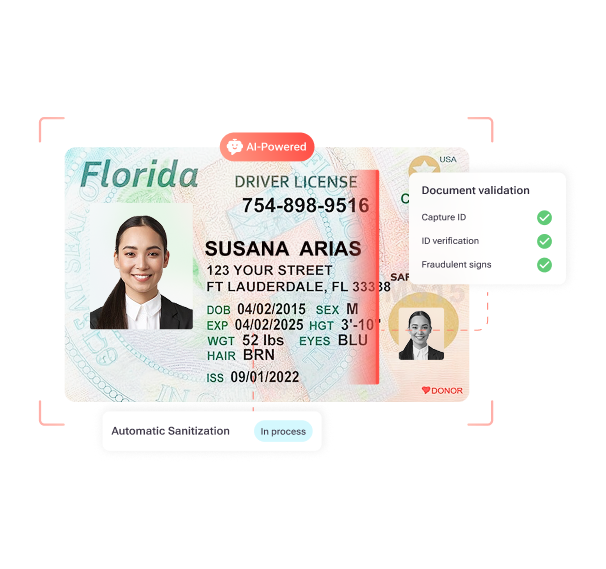
Four categories of documents satisfy HOPA’s age verification requirements, and each offers a different balance of reliability and ease of collection:
| Document | Details | Source |
|---|---|---|
| Driver’s License | State-issued photo identification | Primary age verification document |
| Passport/Birth Certificate | Original or certified copy required | Reliable proof of age documentation |
| Affidavit of Age | Signed statement from household member over 18 | Alternative verification method |
| Military/Immigration ID | Valid government-issued identification | Acceptable under Fair Housing guidelines |
Can Under 55 Live in Florida 55+ Condo?
Florida 55+ communities may have residents younger than 55 or families with children in up to 20% of their properties. These younger residents usually cannot be primary occupants in most units, and communities must track occupancy ratios carefully to maintain HOPA compliance.
Florida 55+ Age Verification Survey Every 2 Years
Communities must develop procedures for routinely determining the occupancy of each unit and collecting reliable proof of age such as driver’s licenses, passports, birth certificates, or signed affidavits. Survey responses must be securely stored and kept confidential from general membership.
Compliance, Risk, and Governance: 2026 Florida Condo Laws 55+
Florida Statutes Chapters 718 and 720 govern condominium and HOA operations, while federal HOPA requirements establish age verification standards. Age verification documentation must be collected, organized, and maintained in auditable condition to protect the community’s 55+ exemption status.
Communities face significant liability exposure if they lose HOPA exemption due to inadequate documentation or failure to maintain the 80/20 occupancy threshold. As noted earlier, losing exemption status forces communities to accept families with children throughout the property, and the financial exposure extends to substantial penalties and legal defense costs.
Consistent documentation standards and audit-ready record-keeping now play a central role in defending HOPA compliance during regulatory reviews or legal challenges. This guidance does not constitute legal advice, and communities should consult qualified attorneys for specific compliance questions.
Common Challenges and Failure Points
CAMs consistently report several operational bottlenecks in manual age verification processes:
- Inconsistent document review standards across different staff members
- Sophisticated fake identification documents that bypass visual inspection
- Email and PDF-based workflows that create version control chaos
- Significant delays in application processing due to missing documentation
- Gaps in biennial survey compliance and resident response tracking
- Miscommunication between realtors, applicants, and community management
Best Practices for Modern 55+ Age Verification
Leading Florida 55+ communities have adopted standardized verification checklists and digital document collection systems to improve consistency and cut repetitive administrative work. These improvements follow a logical progression that turns scattered tasks into a single connected workflow.
Standardized application forms establish clear age verification requirements upfront, and digital collection platforms then enforce those requirements through structured workflows and audit trails. Automated survey tools maintain ongoing compliance monitoring, while regular staff training helps teams spot sophisticated fraud that technology alone might miss. Integration with identity verification technology adds a biometric layer that can catch document alterations that pass visual inspection.

Schedule a demo to see these best practices in action through TenantEvaluation’s compliance automation platform.
Why TenantEvaluation’s 55+ Communities Verification Fits Florida CAMs
TenantEvaluation, founded in 2007, serves over 5,000 Florida communities and processes more than 100,000 applications annually, with a 4.8/5 Google rating and $150 million generated for client communities. The platform was built specifically for Florida condos and HOAs by property managers, board members, and software engineers with over 50 years of combined experience.
TenantEvaluation’s 55+ Communities Verification automates time-consuming document review, standardizes application handling, supports documentation consistency, and improves operational efficiency for Community Association Managers. The system strengthens internal processes through automated workflows tailored to Florida’s regulatory environment.
The platform integrates seamlessly with IDVerify for biometric identity verification and QuickApprove for board dashboard functionality. Unlike generic competitors such as ApplyCheck or Verify Screening Solutions, TenantEvaluation offers end-to-end FCRA compliance as a foundation, supported by direct TransUnion and Equifax reseller relationships.
Leading management companies report significant savings through TenantEvaluation’s automated workflows and revenue-sharing model.
Evaluation Criteria: Decision Framework
When evaluating age verification platforms, four criteria determine whether a solution can handle Florida’s compliance requirements at scale:

| Criteria | TenantEvaluation |
|---|---|
| Efficiency | Automates 70% of manual processing time |
| Compliance | FCRA-built foundation with audit trails |
| Scalability | Processes 100,000+ applications annually |
| Board Access | QuickApprove dashboard for direct oversight |
Frequently Asked Questions
What Documents Prove Age for 55+ Condo Applications Florida?
Florida 55+ communities accept several forms of age verification documentation including state-issued driver’s licenses with photo identification, U.S. passports or certified birth certificates, military or immigration identification cards, and signed affidavits from household members over 18 years old. Communities must collect and organize these documents in auditable condition to maintain HOPA exemption status.
How Does the 80/20 Rule Work for Florida 55+ Communities?
As mentioned in the compliance framework above, the 80/20 rule requires that at least 80% of occupied units in a Florida 55+ community have at least one resident who is 55 years or older. The remaining 20% of units may house younger residents, including families with children, but communities must carefully track occupancy ratios and verify compliance before approving underage residents. Vacant units are excluded from the calculation.
What Are the Biennial Survey Requirements for Florida 55+ Communities?
Florida 55+ communities must implement procedures to routinely determine the occupancy of each unit. These surveys must collect reliable proof of age from residents and maintain confidential rosters that are not published to general membership. Communities must securely store survey responses and documentation to demonstrate ongoing HOPA compliance during audits or legal challenges.
Can Families with Children Live in Florida 55+ Condos?
Families with children may occupy up to 20% of units in Florida 55+ communities under HOPA exemption rules. Communities must verify they maintain the required 80% threshold of units with residents 55 or older before approving younger families. Children under 19 cannot be regular residents in the majority of cases, and communities must carefully document all exceptions to maintain compliance.
What Are the Penalties for HOPA Compliance Violations in Florida?
Communities that lose HOPA exemption due to inadequate age verification or failure to maintain the 80/20 rule face significant legal and financial consequences. They must accept families with children in all units, potentially face discrimination lawsuits, and lose the ability to market as age-restricted communities. Proper documentation and consistent verification processes are essential for maintaining exemption status and avoiding costly legal challenges.
Conclusion and Next Steps
Florida condo 55+ age verification documentation requirements for applications demand systematic approaches that balance HOPA compliance with operational efficiency. Standardized checklists, digital workflows, and automated verification systems help CAMs and boards maintain consistent documentation while reducing manual workload.
TenantEvaluation’s 55+ Communities Verification provides Florida condos and HOAs with the tools needed to standardize application handling, support documentation consistency, and improve operational efficiency. Schedule a demo today to see how automated age verification workflows can strengthen your community’s compliance processes and reduce administrative burden.
