Written by: Luis Teran, Co-founder, CEO, TenantEvaluation | Last updated: September 16, 2026
Key Takeaways
- Florida 55+ condo associations must keep at least 80% of occupied units with one resident aged 55 or older to preserve their HOPA exemption.
- The age verification process follows seven documented steps: confirming governing documents, capturing household ages at intake, collecting proof-of-age documents, calculating the 80% threshold, running biennial surveys, handling refusals, and maintaining audit-ready records.
- Acceptable proof of age includes a government-issued ID such as a driver’s license, passport, birth certificate, or a signed affidavit from any household member over 18 stating that at least one occupant is 55 or older.
- Every unit change such as a sale, transfer, inheritance, or death requires recalculation of the 80% threshold and fresh documentation before the next occupant takes possession.
Steps in Condo Age Verification
Florida 55+ communities can follow these seven steps as a complete condo age verification process. Each step below explains what to do and how to document it.
- Confirm the age requirement in the governing documents. Verify the 55+ restriction in the declaration, bylaws, and recorded amendments before collecting any documentation.
- Capture ages of all household members at application intake. Collect the age of every proposed occupant before move-in so you can apply the 80% rule correctly.
- Collect acceptable proof-of-age documents. Gather a government-issued photo ID, passport, birth certificate, or driver’s license, and document the affidavit path for applicants who cannot produce standard ID.
- Calculate and document the 80% occupied-units threshold. Count every occupied unit, identify which units have at least one occupant 55 or older, calculate the percentage, and record the result with the date and source data.
- Run the biennial age verification survey. Survey all occupied units on a defined two-year schedule, document follow-up for nonresponses, and re-survey units affected by sales, transfers, inheritances, and deaths.
- Handle refusals and nonresponses. Follow a documented outreach sequence, explain the association’s verification obligation, and use the affidavit or alternative-evidence path when standard ID is unavailable.
- Keep audit-ready records. Maintain the survey, ID copy or affidavit, occupancy record, 80% calculation, and outreach log in a file that can be produced quickly during an audit or fair-housing challenge.
Step 1: Confirm the Age Requirement in the Governing Documents
Start by confirming that the 55+ age restriction appears in the community’s declaration, bylaws, and any amendments. The requirement must live in the governing documents, not only in practice or informal policy. 24 CFR § 100.306 requires a 55+ community to publish and follow policies and procedures that show its intent to operate as housing for persons 55 or older, and HUD reviews written rules and regulations when evaluating that intent.
If the governing documents use language that conflicts with 55+ intent, such as “adult living” or “adult community,” 24 CFR § 100.306(b) identifies those phrases as inconsistent with HOPA intent. HUD looks for documented evidence that the association made a good-faith effort to correct that language. Record that effort in writing so it becomes part of the compliance file.
TenantEvaluation configures each community’s governing documents and screening criteria into the platform so the age requirement applies the same way at intake for every applicant. This consistency reduces the risk of uneven handling across residents.
Step 2: Capture Ages of All Household Members at Application Intake
Once the governing documents confirm the 55+ restriction, the next place to apply that requirement is the application itself. Condo age verification starts at intake, before move-in. The association needs the ages of every proposed occupant, including co-applicants and additional residents.
Under 24 CFR 100.305(c), a unit counts toward the 80% threshold if at least one occupant is 55 or older on the date the exemption is claimed. Accurate tracking requires a complete picture of the household, not just the primary applicant.
TenantEvaluation’s intelligent form logic separates workflows for tenants, purchasers, and additional residents. The system prompts for the right age information for each applicant type and reduces the need for manual follow-up or one-off intake forms.
Step 3: Collect Acceptable Proof-of-Age Documents
Federal rules at 24 CFR 100.307 define a broad set of acceptable proof-of-age documents. This matters because a community that demands more than the regulation allows creates its own compliance risk. Acceptable forms include:
- Driver’s license
- Birth certificate
- Passport
- Immigration card
- Military ID
- Any other government-issued document showing a birth date
- A signed certification from any household member over 18 stating that at least one occupant is 55 or older
A 55+ community that requires multiple proof-of-age documents or rejects a valid document goes beyond what 24 CFR 100.307 allows. The affidavit or alternative-evidence path exists for applicants who cannot or will not produce standard ID. Document that path every time you use it so the record remains defensible if challenged.
TenantEvaluation’s IDVerify adds biometric identity verification directly into the screening workflow. The system confirms that the person submitting proof of age matches the person named on the document, which shifts communities from simple document review to verified physical identity confirmation.

Step 4: Calculate and Document the 80% Occupied-Units Threshold
The 80% occupied-units threshold provides the numerical test for the HOPA exemption, and many communities apply it unevenly. Under 24 CFR 100.305(a), at least 80% of occupied units must have at least one person 55 years of age or older. The calculation uses occupied units only, so vacant units drop out of the count.
24 CFR 100.305(b) defines an occupied unit as a dwelling actually occupied on the calculation date or a temporarily vacant unit whose primary occupant lived there during the past year and intends to return periodically. Under 24 CFR 100.305(g), any fraction of a unit in the 80% calculation counts as a full unit that must be occupied by at least one person 55 or older. The rounding rule favors the higher qualifying count.
Use the following method to create a clear, copy-paste-ready calculation:
- List every occupied unit in the community as of the calculation date.
- For each unit, mark whether at least one current occupant is 55 or older (Y/N).
- Count the total number of occupied units to set the denominator.
- Count the number of occupied units with at least one occupant 55 or older to set the numerator.
- Divide the numerator by the denominator and multiply by 100 to get the percentage.
- If the result includes a fraction of a unit, round up the number of qualifying units required.
- Record the result, the calculation date, and the source data such as the unit roster, survey responses, and ID copies or affidavits.
Some unit types need special treatment in this calculation. Under 24 CFR 100.305(e)(3), units occupied by employees who perform substantial management or maintenance duties do not count against the 80% threshold, even when those employees are under 55. Under 24 CFR 100.305(e)(4), units occupied by persons under 55 who are necessary to provide a reasonable accommodation to a disabled resident are also excluded from the negative side of the calculation.
The association must maintain this count on an ongoing basis. When a qualifying resident dies or moves to a care facility, a surviving spouse under 55 may fit within the 20% buffer. The association may decline that allowance if it would drop the community below the 80% threshold. Every unit change such as a sale, transfer, inheritance, or death requires the CAM to recalculate and re-document the threshold before the next occupant takes possession.
Step 5: Run the Biennial Age Verification Survey
The biennial survey keeps the 80% calculation current and defensible. 24 CFR § 100.307 requires 55+ communities to develop procedures for routinely determining each unit’s occupancy, including whether at least one occupant is 55 or older, and to update that information at least once every two years. The survey functions as evidence that the association actively maintains its HOPA status.
A compliant biennial survey process includes:
- A defined survey schedule with a start date, a deadline, and a documented follow-up sequence for nonresponses
- A standard survey form that captures unit number, occupant names, dates of birth or age confirmations, and the document type used as proof
- A process for re-surveying any unit affected by a sale, transfer, inheritance, or death before the next biennial cycle
- A record of the survey date, the response rate, and the resulting 80% calculation
Adult children who inherit a home in a 55+ community fall into the same 20% exception pool as other nonqualifying occupants. Each inheritance, sale, or transfer requires the CAM to review the impact on the 80% count and document the outcome before the unit is re-occupied.
TenantEvaluation’s 55+ Communities Verification standardizes how age-restricted requirements appear across applications and surveys. This structure improves documentation consistency and reduces manual work for CAMs and boards managing the biennial cycle.
Step 6: Handle Refusals and Nonresponses
Refusals and nonresponses are the most common failure points in the survey process. When residents refuse to cooperate with age verification, 24 CFR 100.307 allows the community to rely on alternative evidence such as government records, prior applications, or a sworn statement from someone with personal knowledge of the occupants’ ages. Each refusal should appear in the record.
A practical refusal-and-nonresponse playbook follows this sequence:
- First outreach: Send a written notice by mail and email explaining that federal law requires the association to verify the age of at least one occupant per unit and that the resident’s cooperation protects the community’s age-restricted status.
- Second outreach (14 days later): Send a follow-up notice referencing the first communication, restating the legal basis under 24 CFR 100.307, and offering the affidavit path as an alternative to a government-issued ID.
- Affidavit path: Provide a signed certification form that any household member over 18 can complete, stating that at least one occupant in the unit is 55 or older. This option satisfies the federal standard without a physical ID.
- Alternative evidence: If the resident declines both the ID and the affidavit, document the refusal in writing and search for alternative evidence such as prior application records, government records, or a sworn statement from a neighbor or property manager with personal knowledge of the occupant’s age.
- Legal consultation: If no evidence can be obtained and the unit is needed to maintain the 80% threshold, consult association counsel on enforcement options. Avoid enforcement action without legal guidance.
A CAM can adapt the following script for the first outreach call or letter: “Our community is required by federal law, specifically 24 CFR 100.307, to verify that at least one occupant in each unit is 55 or older. This verification protects the community’s age-restricted status for all residents. We can accept a driver’s license, passport, birth certificate, or a simple signed form. Please let us know which option works best for you.”
Log every refusal and nonresponse with the date, the outreach method, and the outcome. Associations should work with counsel on enforcement strategy. This process documents the association’s good-faith effort to verify, which 24 CFR 100.307 requires.
Step 7: Keep Audit-Ready Records
Under 24 CFR § 100.307, a 55+ community must be able to show verification of compliance with the 80% requirement through reliable surveys and affidavits when a Fair Housing Act complaint is filed. A defensible file for each unit includes:
- The completed survey form with the occupant’s response and date
- A copy of the government-issued ID, affidavit, or alternative evidence used as proof of age
- The occupancy record showing the unit’s status on the calculation date
- The 80% calculation worksheet with the date and source data
- A log of any outreach, refusals, or nonresponses for the unit
Under HUD’s HOPA framework, age verification records for a 55-or-older community should be retained as long as the community intends to claim its exempt status. Store records in an encrypted, access-controlled system indexed by unit and resident. Organize files so the association can produce them quickly during an audit or fair-housing challenge.
TenantEvaluation’s 55+ Communities Verification supports documentation consistency and strengthens internal processes for Florida condos and HOAs. The platform standardizes the workflow so records stay organized and accessible when needed.
See how audit-ready age verification records are built in TenantEvaluation.
How TenantEvaluation Fits into the Seven-Step Verification Process
TenantEvaluation is built for community associations and management companies, and FCRA compliance sits at the core of the platform. Its 55+ Communities Verification capability gives Florida condos and HOAs a consistent, scalable way to handle age-restricted application requirements and documentation across all seven steps.
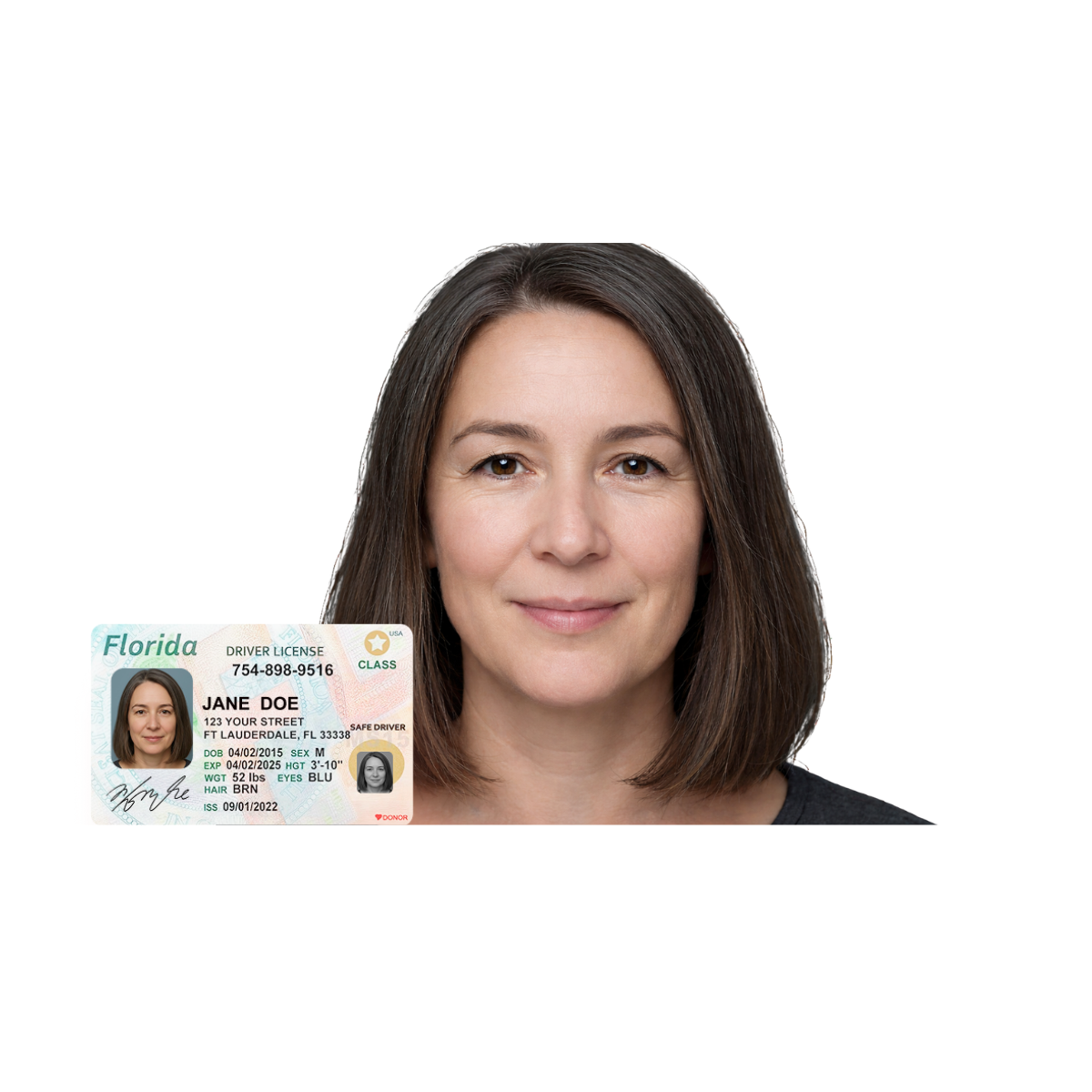
For CAMs and boards managing this process, TenantEvaluation delivers:
- Standardized application handling: Age-restricted requirements apply the same way to every applicant, which reduces fragmentation across emails, PDFs, and manual follow-ups.
- Reduced manual work: Intelligent form logic collects the right age information for tenants, purchasers, and additional residents without extra staff intervention.
- Consistent documentation: Records live in one platform instead of scattered folders and inboxes, which supports the audit-ready file structure that 24 CFR 100.307 expects.
- Structured internal processes: The platform adds a clear process layer for CAMs, management companies, and boards that manage 55+ requirements at scale.
- Biometric identity verification: IDVerify confirms that the person submitting proof of age matches the document holder, using AI-powered liveness detection and biometric facial matching inside the screening workflow.
TenantEvaluation serves more than 5,000 communities and processes about 100,000 applications per year. It is designed for Community Association Managers rather than generic rental platforms and is used by management companies such as FirstService Residential, Campbell Property Management, and Castle Group.
Watch a walkthrough of standardized 55+ condo age verification in TenantEvaluation.
Frequently Asked Questions
What Documents Count as Proof of Age?
24 CFR 100.307 allows a single government-issued ID that shows a date of birth or a signed certification from any household member over 18 stating that at least one occupant is 55 or older. The documents listed in Step 3 cover the full set of acceptable options.
How Often Must the Biennial Age Verification Survey Be Run?
24 CFR 100.307 requires communities to update age verification information at least once every two years. The two-year period runs from the date of the last completed survey. Units affected by a sale, transfer, inheritance, or the death of a qualifying resident should be re-surveyed before the next occupant takes possession so the 80% count stays accurate.
What Should a CAM Do When a Resident Refuses Age Verification?
Document each refusal and follow a written outreach sequence that explains the legal basis under 24 CFR 100.307 and offers the affidavit option. If the resident declines both ID and affidavit, the association may rely on alternative evidence such as prior applications, government records, or a sworn statement from someone with personal knowledge of the occupant’s age. Log each step with the date, method, and outcome, and consult legal counsel if the unit is critical to maintaining the 80% threshold.
How Long Should Age Verification Records Be Kept?
Federal regulations such as the COPPA rule at 16 CFR § 312.10 require retaining personal information only as long as reasonably necessary for its purpose and discourage indefinite retention. Under HUD’s HOPA framework, a conservative approach keeps age verification records as long as the community claims its 55-or-older exempt status, with biennial updates. Store records in an encrypted, access-controlled system indexed by unit and resident, and include the survey form, ID copy or affidavit, occupancy record, 80% calculation worksheet, and outreach or refusal logs. Associations should work with legal counsel on retention periods that match their jurisdiction and governing documents.
Conclusion
The seven steps in condo age verification create a clear, repeatable process for Florida 55+ communities. Documented procedures for governing documents, intake, proof-of-age collection, the 80% calculation, biennial surveys, refusal handling, and recordkeeping help protect a community’s HOPA exemption when a complaint or audit arises.
The next practical move for a CAM or board member is to review the governing documents, confirm that the 80% calculation method is current and written down, and align age-restricted application handling across the community. TenantEvaluation’s 55+ Communities Verification helps reduce manual work, improve documentation consistency, and strengthen internal processes for age-restricted applications.
Get a step-by-step look at how TenantEvaluation supports the full condo age verification process.
