Written by: Luis Teran, Co-founder, CEO, TenantEvaluation | Last updated: September 10, 2026
Key Takeaways
- Age-restricted HOA enforcement in Florida depends on a current, consistent age census. Missing or outdated documentation can turn a defensible policy into legal liability.
- The 80/20 rule requires at least 80 percent of occupied units to house at least one resident age 55 or older. Communities must prove both the occupancy threshold and published intent to qualify for HOPA protection.
- Effective enforcement follows a documented lifecycle: baseline survey, application verification, biennial recertification, refusal handling, and ongoing occupancy monitoring. Each step must apply uniformly to owners, renters, and caregivers.
- Selective enforcement, whether through uneven documentation requests or informal exceptions, can forfeit the HOPA exemption and expose the association to federal and Florida fair-housing claims with significant financial penalties.
- TenantEvaluation standardizes age-restricted application handling for Florida condos and HOAs. Explore a TenantEvaluation walkthrough to strengthen documentation consistency and protect your community’s exemption.
How The 80/20 Rule Works In A 55+ Community
The 80/20 rule requires that at least 80 percent of the occupied units in a 55+ housing community be occupied by at least one person age 55 or older. The community must also publish and follow policies that show an intent to provide housing for older persons. Both conditions must be satisfied at the same time for the HOPA exemption to hold.
The legal anchors are 24 CFR § 100.305, which defines the occupancy threshold and its calculation rules, and 24 CFR § 100.304, which establishes the exemption framework under 42 U.S.C. § 3607(b). The two-year recertification requirement appears at 24 CFR § 100.307, which requires communities to maintain procedures for routinely determining occupancy and to update those records through surveys or other means at least once every two years.
HOPA is the exemption that permits age restrictions. The Fair Housing Act (FHA) is the law that otherwise prohibits them. HOPA exempts communities only from familial-status discrimination, and every other FHA protection (race, color, national origin, religion, sex, disability) continues to apply in full.
The 80/20 rule creates an active enforcement obligation. Boards must be able to prove occupancy composition and consistent application on the day a complaint is filed. Florida law and HUD rules tie compliance to maintaining reliable records, not to a one-time certification. No agency pre-approves 55+ status.
See how 55+ Communities Verification standardizes age documentation across your community’s applications.
Enforcement Lifecycle For Age-Restricted Florida HOAs
Effective age-restricted HOA enforcement follows a clear lifecycle. Each step must be applied consistently across all residents, because inconsistency is the main way communities lose their HOPA exemption.
- Initial Age Survey And Baseline Documentation. The community conducts a full occupancy survey establishing the current 80/20 calculation. Acceptable verification methods under 24 CFR § 100.307 include reliable surveys, affidavits, and other supporting documentation such as driver’s licenses, birth certificates, passports, immigration cards, and military IDs. A signed certification from any household member age 18 or older that at least one occupant is 55 or older is also acceptable.
- Documentation Collection At Application And Onboarding. Age verification is required for owners, renters, and long-term occupants at the point of application. Requesting age verification from some applicants but not others undermines the consistency that the 24 CFR § 100.307 HOPA compliance framework depends on.
- Two-Year Recertification Of The 80/20 Calculation. The 24 CFR § 100.307 update obligation is continuous. Communities should place age verification recertification in a compliance calendar rather than relying on staff memory. A community association law firm warns that an association without a current age census may be unable to enforce its 55-and-older provision at all until a proper survey is completed. Stale affidavits from an old file do not cure that gap.
- Handling Refusals. When a resident refuses to submit age documentation, the community should issue repeat written requests, apply a consistent escalation process, and maintain a documented record of the refusal. Under 24 CFR § 100.307, if occupants refuse to respond, the unit may still be counted as age-qualified using government records, prior applications, or a signed statement made under penalty of perjury by someone with personal knowledge of the occupants’ ages. Association counsel should be consulted before any enforcement action is taken.
- Ongoing Monitoring Of Occupancy Changes. New leases, ownership transfers, long-term guest stays, and caregiver arrangements all represent occupancy events that must be documented and evaluated against the 80/20 calculation. Age verification records fall into the same retention category as other screening records: evidence the community may need to produce years later in response to a Fair Housing Act complaint.
Enforcement applies to renters as well as owners. Long-term guests and live-in caregivers must be counted and documented under the 80/20 calculation, as addressed in the section below.
Review a live enforcement-lifecycle workflow to see how TenantEvaluation helps Florida communities build a repeatable, documented process.
Selective Enforcement Liability For Florida HOAs
Florida HOAs can face both the loss of a HOPA exemption and discrimination claims if they enforce age restrictions inconsistently.
In White Egret Condominium v. Franklin, the Florida Supreme Court upheld age restrictions as valid in principle but refused to allow one to be enforced selectively, because the association had tolerated other underage residents while moving against one family. Selective enforcement is a complete defense a Florida owner can raise against an association’s enforcement action, and in the age-restriction context it also carries fair-housing liability overtones.
Selective enforcement HOA claims often arise from patterns that no one intended:
- Uneven documentation requests, where some applicants must provide age verification and others do not
- Ignored violations, where known non-compliant occupancy in some units is allowed while others are pursued
- Informal exceptions that are never recorded in writing
- Amenity age restrictions applied inconsistently across residents
The Eleventh Circuit addressed the burden of proof in Massaro v. Mainlands Section 1 & 2 Civic Ass’n, 3 F.3d 1472 (11th Cir. 1993), holding that a homeowners association claiming the HOPA exemption bears the burden of proving eligibility and that FHAA exemptions must be construed narrowly. In that case, HUD’s investigation found the association had failed to adhere to its own stated policies and maintained inadequate procedures to verify the ages of persons owning homes in the subdivision. The core problem was documentation, not the written rule.
The board’s defense in any selective enforcement claim is a documented, repeatable process applied uniformly. The measure of a defensible decision is whether someone who was not there can reconstruct which criterion it turned on and why.
The financial consequences of losing the exemption are significant. In January 2024, the U.S. Department of Justice obtained consent decrees against three Hallandale Beach cooperative buildings that had enforced a policy barring children under 12 without qualifying for the HOPA exemption, resulting in $52,000 in damages, settlement funds, and civil penalties. In the Townhomes of Kings Lake case near Tampa, the DOJ sued both the HOA and its management company, resulting in a settlement totaling $150,000. That settlement included $45,000 to the family, an $85,000 victim compensation fund, and a $20,000 civil penalty.
This article does not constitute legal advice. Boards and CAMs should consult association counsel for guidance on specific disputes or enforcement decisions.
Hardship Exceptions, Caregivers, And Adult Children With Disabilities
Selective enforcement risk does not disappear when a community grants an exception. It shifts to how that exception is granted. Under 24 CFR § 100.305(e)(4), under-55 live-in caregivers necessary to provide a reasonable accommodation to a disabled resident are excused from the age restriction, and a caregiver request tied to a resident’s disability generally cannot be refused solely because the caregiver is under 55. These units do not count against the 80/20 occupancy requirement.
The operational risk in this area comes from inconsistent application of the exception. Communities that grant caregiver accommodations informally, without a written policy and a documented approval process, create the same selective enforcement exposure described above. Every exception must be:
- Evaluated under a written policy that existed before the request was received
- Documented with the specific basis for the exception
- Applied consistently to similarly situated residents
- Recorded in a format that can be produced in response to a complaint
Many 55+ communities make exceptions for live-in caregivers under 55, but most require HOA notification or approval first, and the caregiver policy should be confirmed in writing because details differ from one community to the next. Case-by-case improvisation, without a written policy framework, is a common source of selective enforcement exposure.
Adult children with disabilities present a related but distinct question. The reasonable accommodation analysis under the FHA applies regardless of HOPA status, and refusing a legitimate reasonable accommodation request is itself a form of Fair Housing Act discrimination. Boards should consult counsel before denying any accommodation request tied to a disability.
Consequences When A 55+ Community Loses HOPA Protection
Under HOPA, failing any one of the three required prongs, the 80% occupancy threshold, published policies demonstrating 55+ intent, or HUD-compliant age verification, collapses the exemption entirely. A community that loses its exemption can no longer lawfully exclude families with children based on familial status, and the full Fair Housing Act applies again.
Loss of a HOPA exemption is not retroactive, and past conduct is not rendered unlawful, but the community is exposed to familial status discrimination claims from the point of non-compliance forward. Each family turned away while the community is not properly qualifying counts as a separate discriminatory housing practice.
Per 24 CFR § 180.671, civil penalties reach up to $26,262 per violation for a first offense. With one prior within five years, that rises to $65,653. With two or more priors within seven years, penalties can reach $131,308 per violation. Compensatory damages to rejected families can stack on top. Under Florida’s FS § 760.34, state civil fines run up to $10,000 for a first violation, up to $25,000 for a second violation within five years, and up to $50,000 for further violations within seven years.
The good-faith defense available under 42 U.S.C. § 3607(b)(5) and FS § 760.29(4)(d) protects a director, agent, or manager from monetary liability only if they had no actual knowledge the community was ineligible and the community had formally certified its compliance in writing under oath in advance. Without that written certification, individual board members, managers, and leasing agents can be personally exposed. Penalties for age-restriction missteps are often pursued against directors and managers individually, not just the association.
Documentation consistency is the mechanism that keeps the exemption intact.
The Operational Layer: Standardizing Age Documentation For Florida Condos And HOAs
TenantEvaluation serves as the operational layer built specifically for this problem. For Florida condos and HOAs managing 55+ application requirements, TenantEvaluation’s 55+ Communities Verification standardizes how age-restricted requirements are handled across applications, reduces manual work, improves documentation consistency, and strengthens internal processes. It is built for Community Association Managers and designed for the real workflows of Florida associations, not adapted from a generic tenant screening tool.
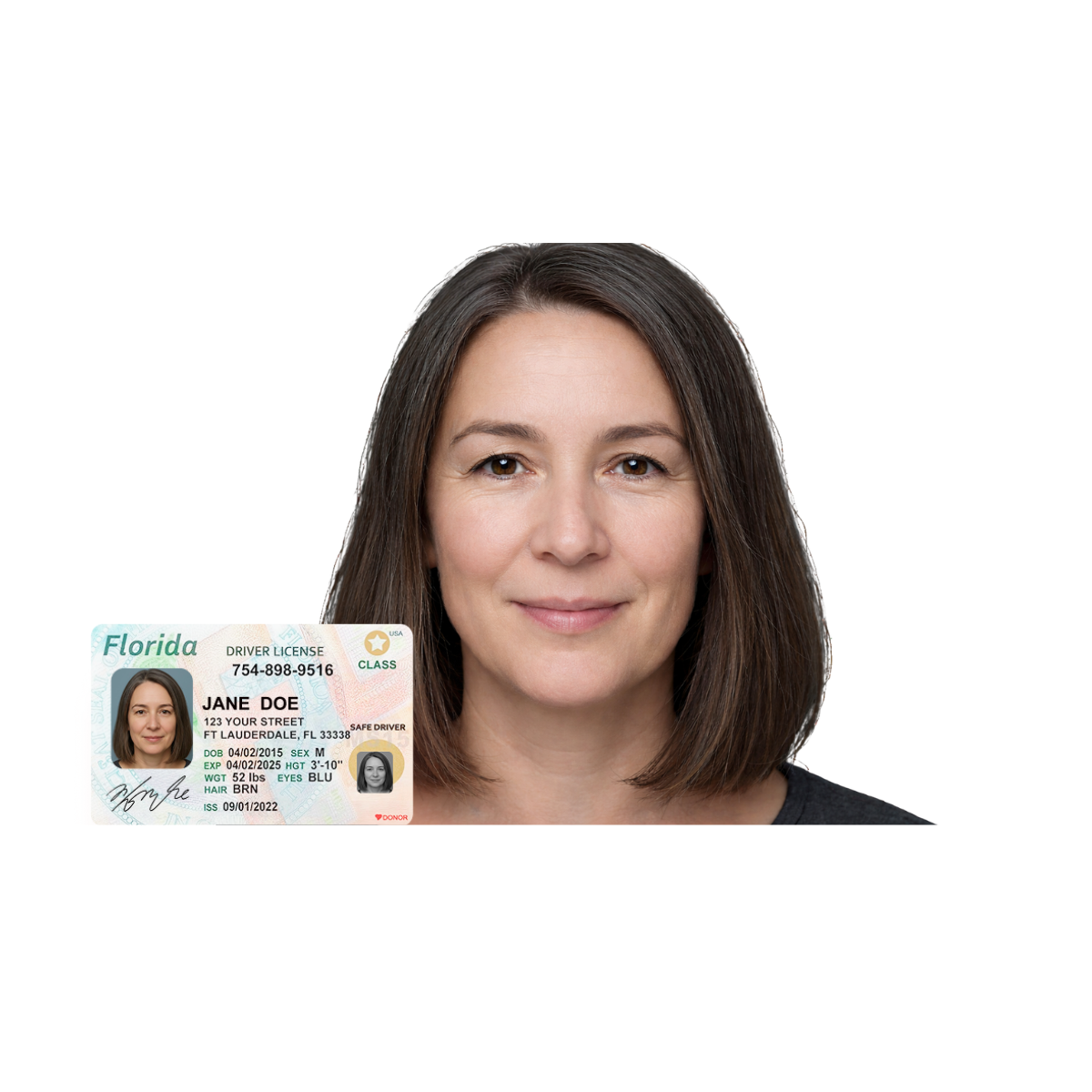
The three approaches below differ most in one respect: whether age-verification records live in a structured system or scattered across inboxes and spreadsheets. That difference determines whether a community can reconstruct its 80/20 calculation on the day a complaint is filed.
| Approach | Documentation Consistency | Age-Restricted Application Handling | Built For Florida Condos And HOAs |
|---|---|---|---|
| Manual Spreadsheets And Email | Inconsistent; records scattered across inboxes, folders, and spreadsheets with no centralized audit trail | Ad hoc; no standardized workflow for age verification requests, refusals, or exception documentation | No; general-purpose tools with no Florida community association configuration |
| Generic Tenant Screening Tools | Partial; screening reports may be stored digitally, but age-verification workflows and occupancy census records are typically not integrated | Limited; designed for rental screening, not for 55+ occupancy documentation, 80/20 calculation support, or biennial recertification workflows | No; built for general rental markets, not for Florida HOA and condo governing document requirements |
| TenantEvaluation 55+ Communities Verification | Standardized across applications; structured records support consistent documentation and reduce fragmentation across emails, PDFs, and manual follow-ups | Built-in capability designed for age-restricted application handling, supporting documentation consistency and operational control across owners, renters, and occupants | Yes; built specifically for Florida condos and HOAs, with FCRA compliance as the foundation and custom setup aligned to Florida community association workflows |
TenantEvaluation is built specifically for community associations and management companies, with FCRA compliance as the foundation, not as an afterthought. The platform serves 5,000+ communities and processes approximately 100,000 applications per year. 55+ Communities Verification provides process support that complements legal guidance. It is the operational layer that makes documentation consistency repeatable at scale.
For communities managing high application volume or complex onboarding requirements, QuickApprove is TenantEvaluation’s accelerated approval workflow for CAMs, boards, and property management teams. It moves resident applications from submission to decision faster, with real-time tracking and automated communication, while keeping control, compliance, and visibility intact.
Watch a 55+ Communities Verification demo to see TenantEvaluation in action.
Frequently Asked Questions
How Does The 80/20 Rule Apply Day To Day?
The 80/20 rule requires that at least 80 percent of the occupied units in a qualifying 55+ community be occupied by at least one person age 55 or older. Only occupied units count toward the calculation, so temporarily vacant units whose primary occupant intends to return still count, while truly empty units are excluded. The community must also publish and follow policies demonstrating intent to operate as housing for older persons. The 20 percent functions as a compliance buffer the community controls, rather than a quota that owners or buyers can claim as a right to occupy regardless of age.
How Often Should A 55+ HOA Verify Resident Ages?
Under 24 CFR § 100.307, a 55+ community must maintain procedures for routinely determining the occupancy of each unit, including whether at least one occupant is 55 or older, and must update those records through surveys or other means at least once every two years. The survey functions as evidence a community must produce when its HOPA exemption is challenged. A community that cannot produce a current survey is relying on an exemption it may struggle to demonstrate. Florida community association law firms have warned that an association without a current age census may be unable to enforce its 55-and-older provision at all until a proper survey is completed.
What Creates Selective Enforcement Risk On Age Rules?
Inconsistent enforcement of age restrictions, such as applying rules against some residents but not others, can forfeit the HOPA exemption and invite discrimination claims under both federal and Florida law. The Florida Supreme Court addressed this directly in White Egret Condominium v. Franklin, refusing to allow an age restriction to be enforced selectively because the association had tolerated other underage residents while moving against one family. Selective enforcement is a complete defense a Florida owner can raise against an association’s enforcement action. The board’s protection is a documented, repeatable process applied uniformly across all residents, with written records that can be produced in response to a complaint.
How Do Caregivers And Disabled Adult Children Affect The 80/20 Rule?
Under 24 CFR § 100.305(e)(4), under-55 live-in caregivers who are necessary to provide a reasonable accommodation to a disabled resident are excused from the age restriction and do not count against the 80/20 occupancy requirement. A caregiver request tied to a resident’s disability generally cannot be refused solely because the caregiver is under 55. Under 24 CFR § 100.305(e)(3), under-55 employees of the community who perform substantial duties related to management or maintenance, and family members in the same unit, also do not count against the 80 percent threshold. Every exception should be evaluated under a written policy, documented consistently, and applied uniformly to avoid selective enforcement exposure. Boards should consult association counsel before denying any accommodation request tied to a disability.
What Ongoing Risk Follows Loss Of A HOPA Exemption?
A community that loses its HOPA exemption can no longer lawfully exclude families with children based on familial status, and the full Fair Housing Act applies from the point of non-compliance forward. The penalty structure described above applies from that point, and each family turned away counts as a separate violation. In serious cases, courts have permanently barred communities from reinstating age restrictions. Individual board members, managers, and leasing agents can be personally exposed if the good-faith defense requirements, including a written compliance certification made under oath in advance, are not met.
Conclusion: Documentation First, Legal Defense Second
Most 55+ communities lose HOPA protection because they cannot prove consistent enforcement, not because they adopted a flawed rule. The enforcement lifecycle, baseline survey, application-stage verification, biennial recertification, refusal handling, and ongoing occupancy monitoring, functions as a documentation system before it becomes a legal system. Every step must be applied uniformly across owners, renters, long-term guests, and caregivers, and every step must produce records that can be produced on the day a complaint is filed.
The practical next steps for Florida CAMs and board presidents start with the two-year requirement. Review internal age-verification procedures against 24 CFR § 100.307 and confirm a current census exists. From there, clarify board and CAM responsibilities for each stage of the enforcement lifecycle so no step depends on staff memory. Then audit caregiver and hardship exception policies, and treat any unwritten policy as a gap that needs to be closed. Finally, evaluate whether current documentation workflows would hold up if the HOPA exemption were challenged today.
TenantEvaluation’s 55+ Communities Verification gives Florida condos and HOAs a standardized operational layer for age-restricted application handling. It reduces manual work, improves documentation consistency, and strengthens internal processes across every application. The platform is built specifically for community associations and management companies, with FCRA compliance as the foundation.
Request a Florida 55+ enforcement consultation and see how TenantEvaluation helps communities build a defensible, repeatable enforcement process.
