Written by: Luis Teran, Co-founder, CEO, TenantEvaluation | Last updated: July 26, 2026
Key Takeaways for Florida HOA Fraud Prevention
- Florida HOAs face growing fraud risks under Chapters 718 and 720, so software selection becomes a structural governance decision, not a simple admin choice.
- Screening-first platforms with built-in biometric identity verification outperform generic accounting tools at blocking onboarding fraud and maintaining FCRA compliance.
- Recent Florida cases, including the $11 million Hammocks embezzlement, show how dual-approval workflows and centralized audit trails can disrupt fraud patterns.
- High-impact fraud-prevention features include biometric verification, board-ready voting dashboards, centralized lease tracking, automated adverse action, and auto-redaction of sensitive PII.
- Boards evaluating HOA management software should prioritize platforms built specifically for community associations. TenantEvaluation brings all seven recommended fraud-prevention capabilities into one connected workflow.
Fraud-Prevention Feature Comparison for HOA Software
This comparison table highlights how platforms perform across four fraud-prevention dimensions. Generic accounting platforms such as Buildium and AppFolio appear for reference, and their onboarding fraud coverage remains limited compared with screening-first platforms.
| Feature | TenantEvaluation | Buildium / AppFolio | ApplyCheck / Verify Screening |
|---|---|---|---|
| Biometric Identity Verification | Native, with AI liveness detection, government ID validation, and selfie-to-ID biometric match via IDVerify | Not available | Not available natively, relies on third-party TazWorks portal |
| Dual-Approval / Board Voting Workflow | Built-in board voting panel with timestamped audit trail via QuickApprove | General approval workflows, no dedicated board voting panel | Not available |
| Centralized Lease Tracking | Real-time lease status (active, pending, expired, or missing), unit-level tracking, and audit-ready records | Lease management available, but not connected to onboarding screening workflow | Not available |
| FCRA-First Compliance Design | Direct TransUnion and Equifax reseller, automated adverse action, and built-in audit trails | FCRA-compliant screening via third-party integrations | FCRA-compliant, background-check focused rather than end-to-end onboarding |
Compare these capabilities in your own workflow and request a platform walkthrough
Why Fraud Prevention Drives Florida HOA Software Decisions
More than 9.4 million Florida residents live in communities governed by HOAs or condominium associations, across approximately 50,000 associations statewide. Chapter 720 requires associations to carry a fidelity bond or insurance policy for those who control association funds, protecting against theft, fraud, or embezzlement. Chapter 718 provisions create similar financial controls for condominium associations. Fla. Stat. §720.303 codifies homeowner rights to inspect official association records, which supports financial oversight and transparency. Boards that fail to maintain complete, auditable records face statutory exposure and civil liability.
Key Fraud-Prevention Terms for Florida HOAs
These terms appear throughout fraud-prevention evaluations and statutory discussions.
- Onboarding fraud: Identity misrepresentation at the application stage, including stolen IDs, synthetic identities, and impersonation attempts.
- Embezzlement red flags: Unauthorized vendor payments, forged signatures on checks, shell-company disbursements, and reserve transfers without board authorization.
- Dual-approval controls: Workflow requirements that prevent any single individual from both initiating and authorizing a financial transaction or approval decision.
- Biometric verification: Identity confirmation using physical characteristics, such as facial landmarks and liveness detection, matched against a government-issued ID.
- Audit trail: A timestamped, tamper-evident record of every action taken within a platform, from document uploads to board votes to payment approvals.
These terms appear throughout the following case examples, which show how missing controls like dual approvals, biometric verification, and audit trails allowed fraud to scale.
Florida HOA Fraud Cases 2025–2026: What Went Wrong
Recent Florida prosecutions highlight two distinct fraud vectors that software must handle separately. The first involves onboarding-stage identity manipulation. The second involves operational embezzlement after move-in.
Hammocks Community Association, West Kendall (2026): Former HOA president Marglli Gallego pleaded guilty on April 30, 2026, to racketeering and grand theft in an $11 million embezzlement scheme affecting approximately 18,000 residents. Miami-Dade State Attorney Katherine Fernandez Rundle described it as “one of the largest homeowner-association frauds in U.S. history.” Marglli Gallego received a seven-year prison sentence, which Miami-Dade State Attorney Katherine Fernandez Rundle believes is the longest for an HOA board president in the United States. The scheme used fake vendors, shell companies, and records concealment. Dual-approval workflows and centralized audit trails exist to disrupt exactly these patterns.
Windmill Lakes HOA, Pembroke Pines (2026): Michael Christopher Curtis, owner of BDM Property Management, was charged in January 2026 with grand theft and criminal use of personal identifiable information, allegedly embezzling about $600,000 from the Windmill Lakes Condominium Community, with total unauthorized payments potentially exceeding $1 million. Investigators found forged signatures on nearly $600,000 in checks. Curtis faces three separate pending felony cases across Broward County. The Florida Department of Business and Professional Regulation revoked his CAM license in 2024.
Greynolds Park Club Condominium, North Miami Beach (2026): Manager Maria del Alvarez-Concepcion was arrested on April 9, 2026, and charged with 39 counts including kickbacks, organized scheme to defraud, and second-degree grand theft after allegedly receiving approximately $21,000 from a vendor. The investigation began after a board member raised concerns about exclusive control of multimillion-dollar contracts and missing records.
Miami-Dade Kickback Arrests (2026): Miami-Dade authorities arrested two separate condo property managers in kickback schemes involving routine vendor work, prosecuted under HB 1203 (FS 720.3033(3)) and parallel condominium provisions in FS 718.111(1)(a).
How Fraud Risks Appear in Day-to-Day HOA Operations
Fraud in Florida communities often grows through small daily gaps rather than one dramatic event. An unverified applicant misrepresents identity at onboarding. A vendor payment receives approval from a single manager without board visibility. A lease record sits in a spreadsheet that no one audits. The ACFE’s 2024 Report to the Nations found that occupational fraud costs organizations an estimated 5% of annual revenue each year. Boards that use proactive data analytics experience fraud losses 50% lower than those that do not.
Fraud Detection Software Requirements for Florida HOAs
Florida HOAs and condominiums need fraud detection software that addresses two operational layers at the same time. The first layer covers onboarding fraud, where applicants misrepresent identity at the point of application. The second layer covers operational embezzlement, including unauthorized disbursements, vendor kickbacks, and forged approvals during ongoing operations. No single generic fraud prevention solution covers the entire fraud lifecycle, because tools often focus on onboarding, authentication, transaction monitoring, or investigation as separate functions. A platform built specifically for community associations brings both layers into one workflow.
What Fraud Analysts Look For in HOA-Focused Tools
Fraud analysts in financial and operational settings rely on platforms that combine identity verification at onboarding with ongoing transaction monitoring and approval governance. Key evaluation criteria include detection quality, real-time performance, machine learning adaptability, behavioral biometrics, rules customization, explainability of alerts, case management integration, and compliance support. In HOA environments, these criteria translate into biometric identity confirmation at application, dual-approval workflows for disbursements, and audit-ready records that boards and regulators can access quickly.

7 Fraud-Prevention Features Florida HOAs Need to Review
- Biometric identity verification at onboarding: Government ID validation combined with AI-powered liveness detection and selfie-to-ID facial biometric matching. Deepfake incidents increased 10x from 2022 to 2023, so document-only review no longer provides enough protection.
- Dual-approval workflows: No single individual should both initiate and authorize a payment or application decision. Attorney Chad D. Cummings has stressed the need for dual approvals for disbursements as a core internal control.
- Board-ready voting dashboard: A dedicated panel gives board members direct, timestamped access to review and vote on applications. This replaces email chains with an auditable approval record.
- Centralized lease tracking: Real-time lease status visibility, including active, pending, expired, or missing, connected to onboarding records. This approach removes spreadsheets and operational blind spots.
- Automated adverse action and FCRA-compliant audit trails: Every screening decision is documented with permissible purpose controls and bureau-sourced data from direct reseller relationships.
- Auto-redaction of sensitive PII: Automatic redaction of Social Security numbers and banking details from uploaded documents, combined with PCI Level 1 compliance and end-to-end encryption.
- Configurable screening criteria per community: Credit score thresholds, income verification, 55+ age-restriction documentation, and custom document requirements are set per association instead of using a single template.
See how your current process scores against these seven fraud-prevention criteria
Florida Chapter 718/720 Compliance Features to Look For
Software evaluated for Chapters 718 and 720 compliance should align directly with statutory requirements. Chapter 720 mandates fidelity bond coverage for those controlling association funds and requires that board minutes record votes, amounts approved, and purposes of any special assessment levy. These records create defensible documentation. Incomplete records can weaken the association’s position in disputes under Chapter 720. Software that generates timestamped, searchable audit trails for every application, approval, and document action supports this recordkeeping standard. Florida’s new condo law also requires condominium associations with 25 or more units to maintain a website for posting essential documents, which improves transparency and helps with early issue detection.
Common Operational Gaps That Enable HOA Fraud
The fraud cases described above share operational weaknesses that software controls must address. The following gaps appear repeatedly in Florida fraud prosecutions and CAM workflows, creating conditions that enabled schemes like the Hammocks embezzlement and Windmill Lakes forgeries.
- Document-only identity review with no biometric confirmation, which enables impersonation and synthetic identity fraud
- Single-manager control over vendor selection, contract approval, and payment disbursement, with no segregation of duties
- Lease records stored across email inboxes, folders, and spreadsheets with no centralized visibility or expiration tracking
- Board approval conducted through email chains with no timestamped voting record
- Missing or outdated lease copies that create occupancy disputes and compliance gaps
- No direct connection between approved applications and active lease records
- Manual adverse action processes that increase FCRA exposure
Biometrics, Lease Centralization, and Dashboards as HOA Best Practices
The global digital identity solutions market was valued at USD 47.0 billion in 2025 and is projected to reach USD 135.1 billion by 2033, with biometrics as a primary growth driver. Selfie-based facial capture is likely to become a mandatory step in identity proofing for the banking sector in 2026, because identity documents alone no longer manage fraud risk effectively. Financial services already follow this shift, and community association management now moves in the same direction.
A May 2025 Equifax webinar with experts from Alloy, Equifax, and Nova Credit recommends authenticating the person behind the document rather than relying solely on document verification. For HOA boards, this recommendation means selecting platforms that embed biometric confirmation directly into the screening workflow instead of using a separate portal redirect.
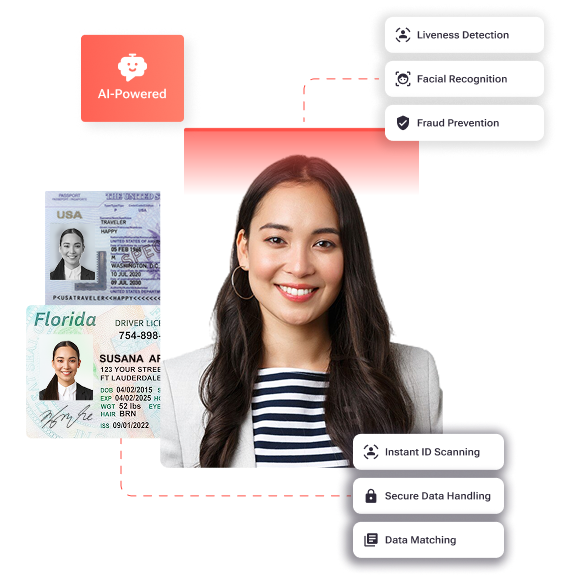
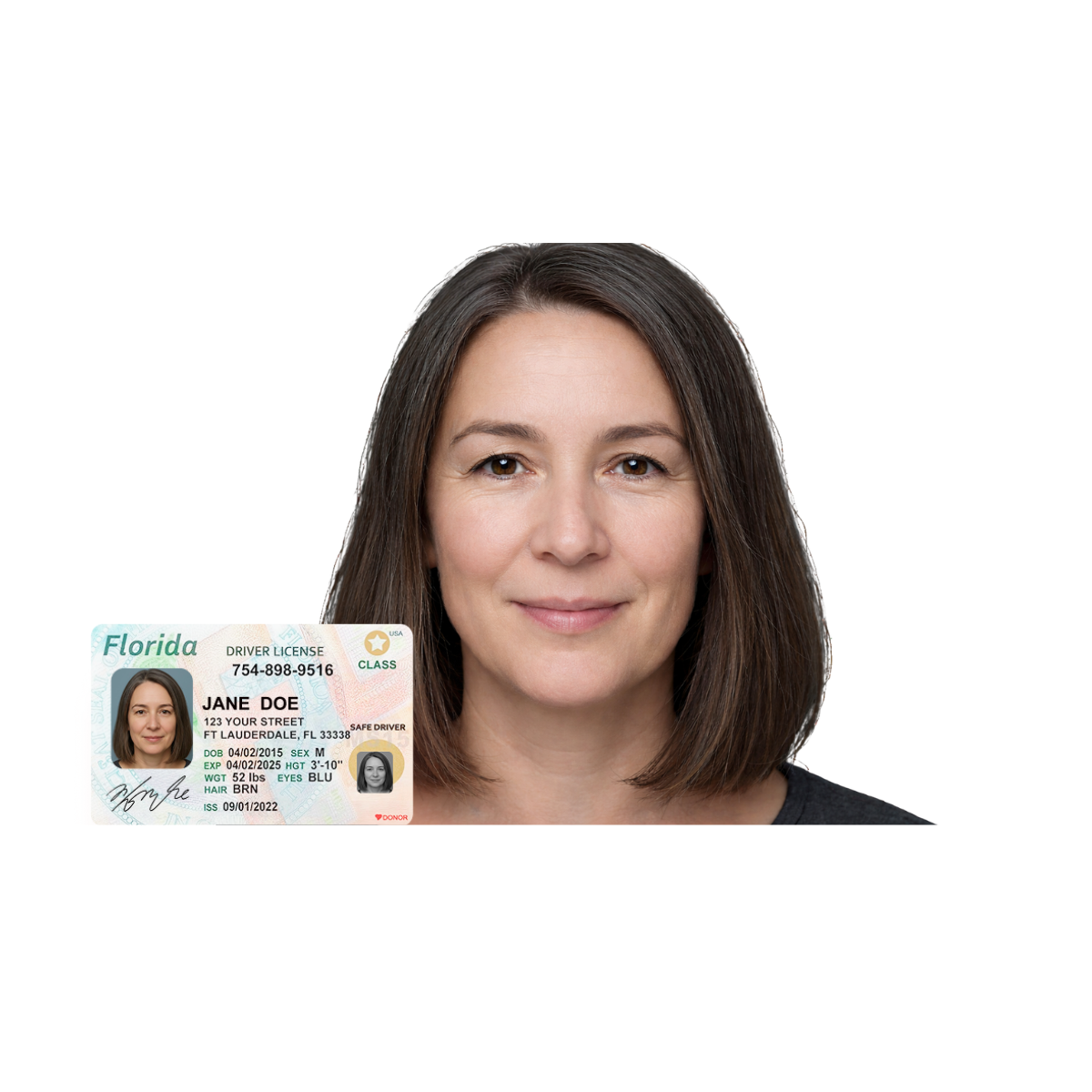
TenantEvaluation’s IDVerify delivers government ID validation, AI-powered liveness detection, and facial landmark biometric matching inside the screening workflow. QuickApprove provides a board-ready approval process with real-time application tracking, automated communication support, customized approval letters, and a personalized welcome package. This setup accelerates resident approvals while preserving control, compliance, and visibility. Lease Tracking connects resident onboarding, unit data, approvals, and lease documentation into one centralized, real-time, audit-ready workflow, which replaces spreadsheets and scattered email chains from application to occupancy. For age-restricted communities, 55+ Communities Verification standardizes application handling, reduces manual work, and supports documentation consistency across Florida Condos and HOAs.
Evaluation Framework for HOA Fraud-Prevention Platforms
Boards and CAMs evaluating HOA management software for fraud prevention can use the following framework across six dimensions.
- Compliance readiness: Confirm that the platform operates as a direct credit bureau reseller. Automated adverse action workflows and built-in FCRA compliance should form the foundation.
- Operational efficiency: Confirm that the platform shortens application processing from days to hours and removes manual follow-ups, paper forms, and spreadsheet-based lease tracking.
- Transparency: Confirm that boards have real-time visibility into application status, voting records, and lease occupancy, with all actions timestamped and searchable.
- Scalability: Confirm that the platform handles high-volume application seasons and multiple communities without adding headcount or complexity.
- Auditability: Confirm that every application, approval, document upload, and board vote generates a tamper-evident, searchable audit trail, and that lease records connect to onboarding records.
- Risk controls: Confirm that the platform enforces dual-approval workflows, includes native biometric identity verification instead of a third-party redirect, and auto-redacts PII while enforcing PCI Level 1 security.
The NCUA recommends that organizations adopt internal controls including dual controls, computer access controls, and audit verifications, and the same ACFE research identified internal control weaknesses as responsible for nearly half of fraudulent activity. These principles map directly to HOA software selection.
Conclusion: Action Steps for Florida Boards and CAMs
Manual document-only screening and fragmented accounting tools leave Florida communities exposed to both onboarding identity fraud and operational embezzlement. The 2025–2026 Florida case record, from the $11 million Hammocks scheme to the Windmill Lakes forgery charges, shows that both fraud vectors already affect real communities. Chapters 718 and 720 create recordkeeping and financial control obligations that software must actively support.
TenantEvaluation is built specifically for community associations and management companies, with FCRA compliance as the foundation. It serves 5,000+ communities and processes approximately 100,000 applications per year. The platform combines native biometric identity verification through IDVerify, accelerated board-ready approvals through QuickApprove, centralized lease lifecycle control through Lease Tracking, and standardized age-restricted application handling through 55+ Communities Verification inside one connected platform.
Evaluate TenantEvaluation’s integrated fraud controls for your Florida communities
Frequently Asked Questions
What is the best HOA management software to prevent fraud in Florida communities?
The strongest platform for Florida HOA fraud prevention combines biometric identity verification at onboarding, dual-approval workflows for board decisions, centralized lease tracking with real-time status visibility, and FCRA-compliant audit trails inside one connected system. TenantEvaluation is built exclusively for Florida community associations and management companies and integrates all of these capabilities natively. Unlike generic accounting platforms such as Buildium or AppFolio, TenantEvaluation addresses both onboarding identity fraud and operational embezzlement risk through a single platform designed around Chapters 718 and 720 compliance requirements.
How does biometric identity verification reduce fraud risk in Florida HOA applications?
Traditional document-based screening relies on applicants uploading copies of government-issued IDs, which can be forged, stolen, or misrepresented. Biometric identity verification adds a layer that confirms the person submitting the application is physically present and matches the identity document provided. TenantEvaluation’s IDVerify+ uses AI-powered liveness detection, government ID authentication, and selfie-to-ID facial biometric comparison, all running inside the screening workflow without redirecting applicants to external portals. This shift moves communities from document-based validation to biometric-confirmed identity verification before any approval decision.
What internal controls should Florida HOA boards require in their management software?
Florida HOA boards should require software that enforces dual-approval workflows so no single manager can both initiate and authorize a payment or application decision. Boards should also require a dedicated voting panel with timestamped records for every approval action, automated adverse action workflows for FCRA compliance, centralized lease tracking connected to onboarding records, auto-redaction of sensitive PII, and searchable audit trails covering every document upload, board vote, and status change. These controls directly address operational patterns seen in recent Florida fraud prosecutions, including forged check signatures, unauthorized vendor payments, and missing financial records.
How does Lease Tracking in TenantEvaluation support fraud prevention?
Fragmented lease management, including missing lease copies, manual expiration tracking, and disconnected spreadsheets, creates operational blind spots that increase compliance risk and can hide unauthorized occupancy. TenantEvaluation’s Lease Tracking connects resident onboarding, unit data, approvals, and lease documentation into one centralized, real-time workflow. It provides real-time lease status visibility, including active, pending, expired, or missing, automated lease document collection during onboarding, unit-level tracking tied to occupancy records, and audit-ready digital records. This connection removes the gap between approved applications and active leases that creates compliance exposure and opportunities for misrepresentation.
Does TenantEvaluation support Florida’s 55+ age-restricted community requirements?
Yes. TenantEvaluation includes 55+ Communities Verification, a built-in capability that helps Florida Condos and HOAs standardize how age-restricted requirements are handled across applications. It reduces manual work, improves documentation consistency, and strengthens internal operational control by replacing fragmented manual processes involving emails, PDFs, and follow-ups with a more structured and scalable workflow. This capability is designed for Community Association Managers and boards managing age-restricted communities and supports documentation and consistency without replacing legal guidance.
