Written by: Luis Teran, Co-founder, CEO, TenantEvaluation | Last updated: July 22, 2026
Key Takeaways for Florida CAMs and Boards
- Accuracy in 2026 depends on biometric identity verification, direct bureau data access, and complete FCRA audit trails, not document-only checks.
- Employment-focused vendors like Checkr, Cisive, and DISA lack HOA and condo workflows, biometric liveness detection, and direct bureau reseller status required for Florida associations.
- TenantEvaluation delivers primary-source TransUnion and Equifax data, native IDVerify biometrics, and board-ready approval tools built exclusively for community associations.
- Document fraud, third-party data aggregation, and fragmented lease records create compliance and financial risk that biometric and direct-bureau screening can reduce.
- Community associations can improve screening accuracy and compliance by using TenantEvaluation’s integrated platform, and can see how the integrated workflow works for your community.
Core Definitions for the 2026 Accuracy Framework
Accuracy in 2026 depends on four technical capabilities that separate modern screening from legacy document-only approaches. These definitions matter because they form the evaluation criteria used throughout this guide.
- Biometric identity verification: A process that confirms an applicant is physically present and matches their government-issued ID through AI-powered liveness detection and selfie-to-ID facial comparison. This accuracy level reduces successful impersonation and synthetic identity attempts.
- Direct bureau reseller: A screening provider that accesses credit data directly from TransUnion or Equifax under strict bureau rules, rather than through third-party aggregators or gray-market data sources.
- FCRA audit trail: A timestamped, complete record of every screening action, disclosure, consent, and adverse-action notice, required under the Fair Credit Reporting Act for any consumer report used in a housing decision.
- Identity Verification Exception Rate: The percentage of applicants requiring secondary review because identity or income signals conflict, as defined in the 2026 Tenant Screening Guide.
Industry Landscape and Enforcement Pressure in 2026
The background screening market in 2026 is dominated by employment-focused vendors such as Checkr, Cisive, and DISA, whose workflows center on employer permissible-purpose certifications, not HOA and condo association onboarding. No Florida HOA- or condo-specific accuracy guide with biometric and direct-bureau criteria currently ranks among top resources, which leaves CAMs and boards without association-focused guidance.
The July 2026 FTC consent order against RentGrow, Inc., a $2.25 million civil penalty for FCRA accuracy violations including duplicate criminal and eviction records, signals active federal enforcement against tenant-screening platforms that fail maximum-possible-accuracy standards. Multifamily and community association operators with high application volume now face heightened exposure under this enforcement environment.
Most Accurate Background Screening Company Services
Given this enforcement landscape, understanding how to measure accuracy becomes critical. Accuracy in background screening is measured across several quantifiable dimensions that determine whether a provider can meet the “maximum possible accuracy” standard the FTC now actively enforces. Automated tenant screening solutions reduce application fraud by up to 75% while cutting decision times from days to minutes and saving property managers over 20 hours per listing. PwC research shows that AI can materially improve data accuracy compared to manual methods in tenant screening processes.
The most accurate screening services in 2026 combine five components. These components include credit report and score from a direct bureau source, criminal background check, eviction history search, income verification, and biometric identity confirmation. Eviction filings often do not appear on a credit report, especially when cases are dismissed, settled, or lack a money judgment, which creates a blind spot unique to tenant screening that employment-focused vendors typically do not cover.
Most Accurate Background Check Company for Community Associations
Community associations need screening providers that understand HOA and condo workflows instead of generic rental or employment pipelines. The most accurate background check company for community associations must satisfy three criteria: biometric identity confirmation embedded natively in the workflow, direct credit bureau reseller status, and FCRA-compliant audit trails designed for association governance.
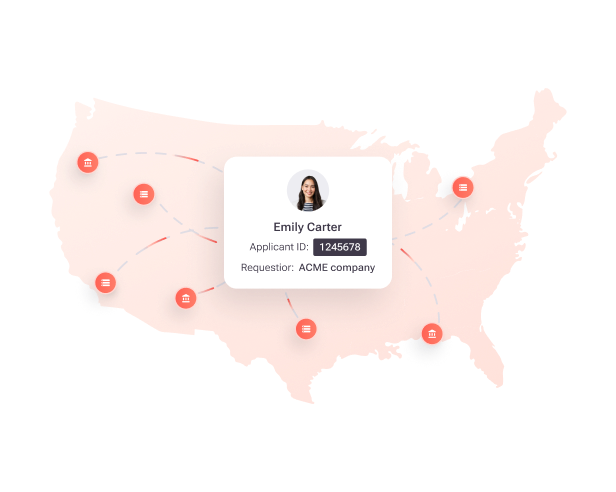
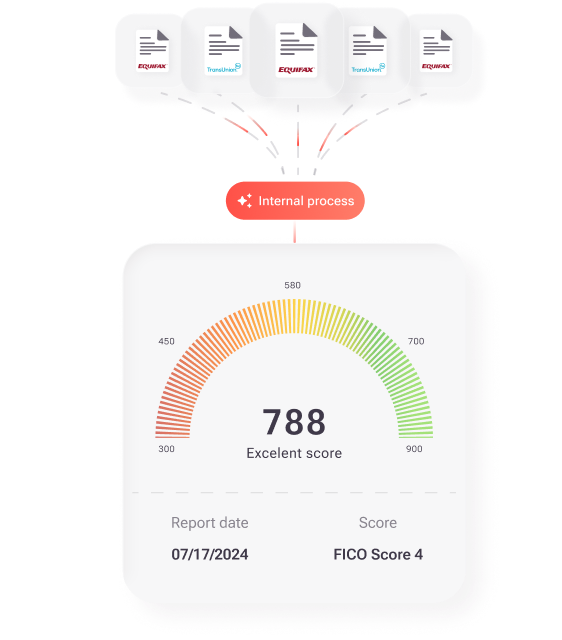
TenantEvaluation meets all three criteria. Founded in 2007 and built exclusively for Florida community associations and management companies, TenantEvaluation has processed 100,000+ applications annually across 5,000+ communities. As a direct reseller of TransUnion and Equifax data, accessed under strict bureau rules with no gray-market or offshore sources, TenantEvaluation delivers primary-source credit data with built-in adverse action workflows and complete audit trails for every application.
Real-World Example: Fraud Prevention in a Miami Condo
A CAM managing a 200-unit condo in Miami receives an application. Under a document-only workflow, the applicant uploads a government-issued ID and pay stubs. Generating convincing fake pay stubs takes less than five minutes with free online tools, and employer verification calls can be routed to accomplices. The document check clears. The applicant moves in. The fraud surfaces months later.
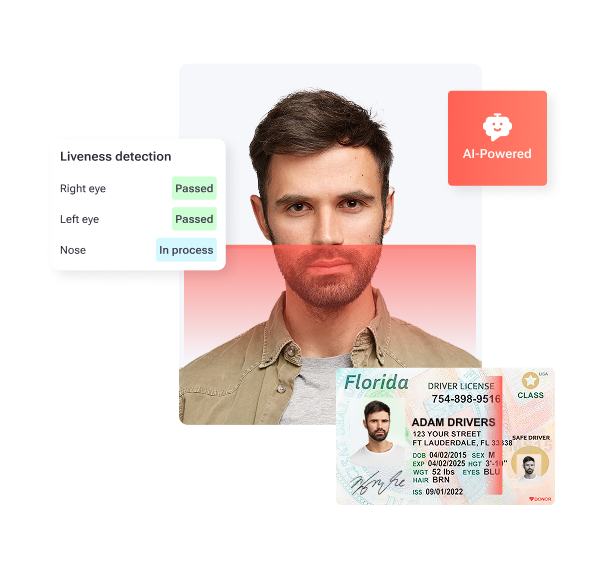
Under TenantEvaluation’s workflow, the same applicant completes IDVerify, a biometric identity verification layer embedded natively in the screening process. Government ID validation, AI-powered liveness detection, and selfie-to-ID biometric facial comparison run automatically. The CAM sees verification results, including ID authenticity confirmation, liveness status, and biometric match result, directly inside the screening report before any approval decision. Digital ID verification reduces fraudulent tenancy rates and the associated financial losses.

Compliance, Risk, and Governance Considerations
Under the FCRA, tenant screening companies that provide reports including credit, criminal, or eviction data to landlords for housing decisions qualify as Consumer Reporting Agencies and must follow reasonable procedures to ensure maximum possible accuracy. For community associations, the screening vendor, not only the association, carries FCRA obligations.
Key FCRA requirements for community association screening include:
- Written consent via standalone disclosure before any consumer report is pulled
- Permissible purpose certification for every application
- Adverse action notices containing the CRA’s name, contact information, and the applicant’s right to a free report copy and dispute within 60 days
- Reasonable procedures to assure maximum possible accuracy, including primary-source data access and identity matching
- Vendor agreements that include data-accuracy warranties, audit rights, and indemnification for FCRA violations
TenantEvaluation is built with FCRA compliance as the foundation. Automated adverse action workflows, strict permissible purpose controls, and built-in audit trails come standard.
Common Challenges and Failure Points in Association Screening
The most common accuracy failures in community association screening fall into four categories, each representing a different point in the screening lifecycle where accuracy can break down.
- Document-only identity review (the identity layer): Digital forgeries now account for 57% of all document fraud, representing a 244% year-over-year increase. Document checks alone cannot confirm physical presence.
- Third-party data aggregation (the data layer): Screening vendors that do not hold direct bureau reseller status introduce data latency, accuracy gaps, and liability exposure for associations.
- Fragmented lease records (the record-keeping layer): Missing or outdated lease copies, manual expiration tracking, and disconnected spreadsheets create operational blind spots and compliance risk tied to incomplete records.
- No board-integrated workflow (the decision layer): Approval decisions made outside a connected platform produce email chains, manual follow-ups, and no auditable decision record.
Together, these four gaps create compounding risk. Even when identity is verified, inaccurate data or missing records can still produce a flawed decision.
Best Practices and Emerging 2026 Standards
Comprehensive identity verification should create a cloud-based biometric anchor that can be reused to re-verify identity later, because attackers cannot pass biometric checks and liveness detection even with stolen credentials or printed photos. This principle, that biometric verification creates a reusable trust anchor, now sits at the center of emerging 2026 standards for community association screening.
Emerging 2026 standards for community association screening include:
- Biometric liveness detection layered with document authentication as the identity baseline
- Direct credit bureau reseller status as a vendor qualification criterion
- Automated adverse action workflows embedded in the screening platform
- Centralized, real-time lease tracking connected to the onboarding lifecycle
- Board-ready approval dashboards with timestamped, auditable voting records
TenantEvaluation’s QuickApprove accelerated approval workflow addresses the board-integration standard directly. It moves applications from submission to decision faster, with real-time application tracking, automated communication support, and a board-ready approval process inside one connected platform, while preserving control, compliance, and visibility. Explore QuickApprove and Lease Tracking in a live environment and see board-integrated workflows in action.

How Accurate Are Background Checks with Biometric Verification
Combining document verification with biometric or database checks can reduce identity fraud acceptance rates compared to single-method approaches. As noted earlier, biometric verification works best as a layer added to document and database checks, not as a replacement for either.
Deepfakes account for 20% of biometric fraud attempts, which is why TenantEvaluation’s IDVerify uses a multi-layer structure. This multi-layer structure, the same IDVerify workflow described earlier, addresses both document forgery and biometric spoofing by combining liveness detection with facial biometric mapping and government ID authentication. A property management company using AI tenant screening with identity verification can achieve reductions in fraudulent applications and faster screening times.
Evaluation Criteria and Decision Framework for Screening Vendors
When you evaluate screening providers against the four accuracy criteria that matter most for community associations, a clear pattern appears. Biometric verification, direct bureau access, HOA specialization, and FCRA audit trails highlight that employment-focused vendors were not built for this use case. The table below quantifies these gaps across major providers and shows why TenantEvaluation is the only platform designed specifically for Florida condo and HOA workflows.
| Provider | Native Biometric Verification | Community Scale | Direct Bureau Reseller Status | HOA/Condo Specialization | Board Workflow | Lease Tracking | Built-In FCRA Audit Trails |
|---|---|---|---|---|---|---|---|
| TenantEvaluation | Yes: IDVerify (government ID validation, AI liveness, selfie-to-ID match) | 5,000+ communities, 100k+ applications annually | Direct TransUnion and Equifax reseller, no third-party aggregation | Yes, built exclusively for Florida condos and HOAs | Yes, QuickApprove board dashboard | Yes, native Lease Tracking | Automated adverse action workflows with timestamped audit trail on every application |
| Checkr | No, third-party integrations only | Not disclosed | Not a direct bureau reseller for tenant screening | No, employment screening focus | No board-specific dashboard | No native lease tracking | Audit logs and adverse action tools, employment-oriented |
| Cisive | No native biometric layer for tenant screening | Not disclosed | Employment-focused bureau access | No community association specialization | No board dashboard | No lease lifecycle tracking | Compliance tools present, not tailored to HOA governance |
| DISA | No native biometric identity verification for residential screening | Not disclosed | Employment and workplace screening focus | No HOA or condo workflow | No association-specific approval tools | No integrated lease tracking | Audit capabilities for employment, not adapted for tenant adverse action |
| Generic Tenant Screening Vendors | Typically document-upload only, no liveness detection | Varies | Often use third-party aggregators | No Florida HOA or condo specialization | No board voting dashboard | Limited or no lease tracking | Basic audit logs, adverse action support varies |
Best Background Screening Choice for Florida Condos
Florida condos face a specific combination of requirements: FCRA compliance, Florida Statute § 83.43–83.683 screening standards, Fair Housing Act consistency obligations, and the operational complexity of board-governed approval processes. Florida law permits review of criminal records for tenant screening; however, decisions must comply with fair housing obligations and be evaluated on an individual basis.
TenantEvaluation’s Lease Tracking capability connects resident onboarding, unit data, approvals, and lease documentation into one centralized, real-time workflow. CAMs, property managers, and boards gain real-time lease status visibility, automated lease document collection, unit-level tracking, and audit-ready digital records. This structure replaces spreadsheets and scattered email chains with a connected operational experience from application to occupancy. See Lease Tracking in action for your Florida condo and explore centralized lease management built for Florida associations.
Frequently Asked Questions
What metrics define background screening accuracy for community associations in 2026?
Accuracy in 2026 is measured across several quantifiable dimensions specific to community association workflows. The Identity Verification Exception Rate tracks the percentage of applicants requiring secondary review because identity or income signals conflict. Manual Review Accuracy measures the share of flagged files confirmed as genuine issues versus false positives. Application Processing Time targets under 12 hours for automated pipelines. Bad Debt Percentage should target less than 1.5% of gross potential rent for Class A and B assets as an outcome metric. For community associations, accuracy also includes whether the screening vendor holds direct bureau reseller status, whether biometric identity confirmation is embedded natively, and whether every decision is traceable through a complete FCRA audit trail.
How much does biometric verification reduce identity fraud compared to document-only screening?
Combining document verification with biometric or database checks can reduce identity fraud acceptance rates compared to single-method approaches. A property management company can reduce its fraudulent tenancy rate with digital ID verification, avoiding fraud cases and associated financial losses. Biometric verification works best as a layer added to document and database checks. TenantEvaluation’s IDVerify uses the same multi-layer structure described earlier, combining government ID validation, AI-powered liveness detection, and biometric selfie-to-ID facial comparison natively inside the screening workflow, which addresses both document forgery and biometric spoofing without redirecting applicants to external portals.
What does FCRA reseller status mean for community associations, and why does it matter?
A direct bureau reseller is a screening provider that accesses credit data directly from TransUnion or Equifax under strict bureau rules, regular compliance audits, and permissible-purpose controls, rather than through third-party aggregators or gray-market data sources. For community associations, this distinction matters because reseller status influences data freshness, accuracy, and liability exposure. When a screening vendor uses aggregated or offshore data, the association inherits the accuracy risk. Under the FCRA, consumer reporting agencies must follow reasonable procedures to assure maximum possible accuracy, including accessing primary sources such as county and federal courthouses and verifying personal identifiers to prevent false positives. TenantEvaluation acts as a direct reseller of TransUnion and Equifax data, with no gray-market or offshore sources, which helps protect community associations from liability exposure tied to inaccurate third-party data.
How does tenant screening for community associations differ from employment background screening?
Both employment and tenant screening fall under the FCRA as consumer reports, which requires disclosure, written consent, and adverse-action notices. The key differences are structural. The FCRA’s standalone disclosure requirement applies specifically to employment screening, where the subject must receive a clear, conspicuous disclosure in a document consisting solely of that disclosure. Tenant screening requires written authorization and permissible-purpose certification but follows a different disclosure format. Eviction filings often do not appear on a credit report, especially when cases are dismissed or lack a money judgment, which creates a blind spot unique to tenant screening that employment-focused vendors do not address. Community association screening also requires board-integrated approval workflows, Florida-specific governing document compliance, and lease lifecycle tracking from application through occupancy, capabilities that employment-focused vendors such as Checkr, Cisive, and DISA are not designed to provide.
Conclusion: Applying the 2026 Evaluation Framework
The 2026 accuracy standard for community association background screening rests on four measurable criteria. These criteria include biometric identity verification embedded natively in the screening workflow, direct credit bureau reseller status with no third-party aggregation, HOA and condo specialization with board-integrated approval processes, and complete FCRA audit trails on every application. Generic employment-focused vendors do not satisfy these criteria for Florida community associations. Providers without direct bureau relationships introduce data accuracy risk. Platforms without biometric verification leave communities exposed to preventable fraud.
TenantEvaluation is built specifically for community associations and management companies, with FCRA compliance as the foundation. With the scale described earlier, direct TransUnion and Equifax reseller relationships, IDVerify biometric verification, QuickApprove accelerated approval workflows, and centralized Lease Tracking from application to occupancy, TenantEvaluation delivers the accuracy framework that Florida condos and HOAs require in 2026.
