Written by: Luis Teran, Co-founder, CEO, TenantEvaluation | Last updated: July 21, 2026
Key Takeaways for Florida Associations in 2026
- Florida condo and HOA associations face rising synthetic-identity and document-forgery fraud that manual screening cannot detect. New 2026 legislation makes fraudulent rental applications a third-degree felony.
- A legally defensible identity verification workflow requires FCRA-compliant consent, government-ID validation, AI liveness detection, biometric facial matching, and permissible-purpose background checks.
- Associations must stay within the $100 statutory fee cap under Chapters 718 and 720. Platforms using revenue-sharing models can keep boards fee-neutral or revenue-positive while automating collection.
- Centralized, FCRA-first platforms with board voting dashboards, lease tracking, and 55+ community support replace fragmented workflows and produce audit-ready records for CAMs and boards.
- TenantEvaluation delivers an all-in-one biometric and FCRA-compliant platform purpose-built for Florida associations. See the platform in action by scheduling a demo to strengthen your screening process.
Why Florida Condo and HOA Associations Need Stronger Tenant Identity Verification in 2026
Identity fraud in Florida’s residential communities now occurs at a scale that manual document review cannot handle. Ninety-three percent of property managers nationwide report encounters with application fraud, per the NMHC Pulse Survey of leading apartment owners and managers. Greystar has reported that up to half of all rental applications are fraudulent in select buildings in Atlanta. When fraud succeeds, eviction costs can range from $3,500 to $10,000 per case, and total exposure including attorney fees and lost rent can reach upwards of $25,000 per incident.
Florida’s legislative response arrived in 2026. CS/HB 1293, signed by Governor DeSantis and effective October 1, 2026, creates Florida Statute §817.537, making it a third-degree felony to obtain a residential rental unit through materially false identity statements, forged documents, or impersonation. The bill passed the House 110–0. Associations that rely on document-only screening remain exposed to the fraud that occurs before any criminal remedy applies. Biometric verification closes this gap at the screening stage, before fraud escalates into a criminal case.
Step-by-Step Identity Verification Workflow for Florida Condos
Florida condominium associations operating under Chapter 718 may require prospective lessees to submit to an approval process when authorized by the governing documents. A legally defensible identity verification workflow for Florida condos includes the following steps:
- Collect a completed application with written consent for background and credit screening, as required under the FCRA.
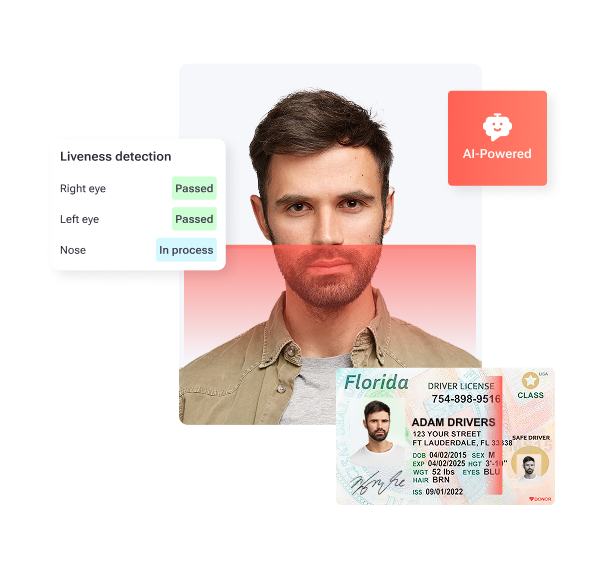
- Validate the government-issued ID submitted by the applicant for authenticity.
- Confirm physical presence through AI-powered liveness detection to prevent impersonation and synthetic identity fraud.
- Perform biometric facial matching between the applicant’s selfie and the submitted ID.
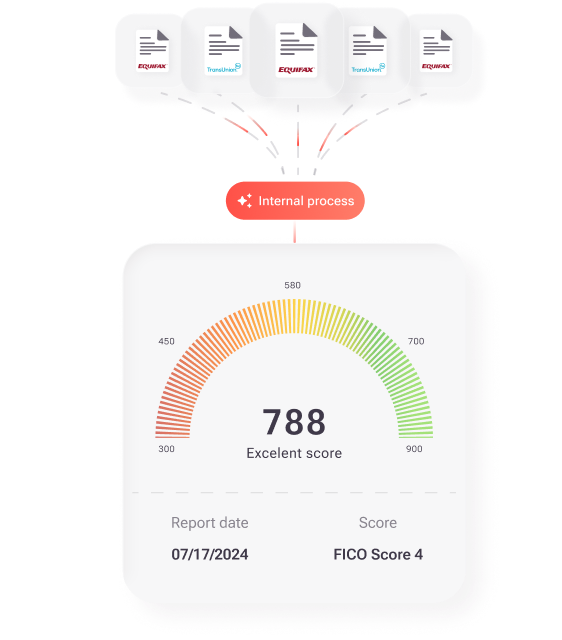
- Run FCRA-permissible background and credit checks through a direct credit bureau reseller relationship.
- Document the decision with a complete audit trail and issue an adverse action notice if the application is denied based on a consumer report.
The three fraud categories that have seen a documented spike in Florida are online document-forging services, falsified income claims, and synthetic identity theft that combines real and fabricated data to pass standard screening. Steps 2 through 4 above directly address all three categories and cannot be replicated by document-upload-only workflows.
Background Checks and Screening Authority for Florida HOAs
Florida HOAs can require background checks when they follow statutory boundaries and their governing documents. Florida statutes under Chapter 720 governing homeowners associations and Chapter 718 governing condominium associations provide statutory authority for associations to adopt and enforce rental restrictions and rules, including tenant screening and approval processes, within defined boundaries. Screening criteria must be applied consistently to all applicants to satisfy fair housing obligations, and any denial based on a consumer report triggers FCRA adverse action notice requirements.
Most Florida HOAs require pre-move-in approval that includes completed tenant applications, screening documentation, background checks, lease agreements, identification verification, and vehicle registration details. Identity verification remains a legitimate and enforceable component of that process when applied uniformly.
Screening Tools That Stay Under Florida’s $100 Statutory Fee Limit
Under Florida Statutes § 718.112(2)(k), a condominium association may charge a lease approval fee only if authorized in the governing documents, and the fee may not exceed $100 per applicant. Many associations operate under governing documents that set a lower cap, commonly $100. Screening platforms that charge flat subscription fees or per-application fees above the statutory ceiling create direct liability exposure for the association.
TenantEvaluation’s revenue-sharing model deducts its service fee from the collected application fee and rebates the remainder to the association or management company. This structure keeps the association fee-neutral or revenue-positive without exceeding statutory limits. The platform also automates fee collection during the online application submission, so staff do not handle manual payment processing.
Industry Landscape: Synthetic-Identity Fraud and the Move to Biometrics
Synthetic fraud is one of the fastest-growing financial crimes in the U.S., costing industries billions annually. AI-powered fraud in 2026 can produce convincing income documents, identification, and verification letters that look authentic at first glance. The fraud environment described earlier, where 93 percent of managers report fraud encounters, has pushed the industry toward stronger identity controls.
The industry response is a structural shift from document-based review to biometric-confirmed identity. The global biometric access control market is projected to grow at a CAGR of 8.4% through 2029. Facial recognition with liveness detection (PAD) is evaluated in NIST FATE Part 10 (NISTIR 8491), while IREX 10 evaluates iris recognition identification performance. Document-only review cannot detect impersonation at all, and platforms without liveness detection can be defeated with a printed photograph.
Embedding Identity Verification into Daily CAM and Board Workflows
Identity verification must fit smoothly into the existing application workflow for Community Association Managers. It should not create extra portals, manual steps, or new friction for applicants. Fragmented systems, where identity verification happens in one tool, background checks in another, and board approvals via email, create operational blind spots that both fraud and compliance failures exploit.
Management teams in Florida condos and HOAs are often forced to piece together information from multiple independent systems when investigating incidents or responding to resident concerns, resulting in fragmented visibility. The same fragmentation affects the onboarding process itself. Disconnected screening, approval, and lease documentation workflows produce incomplete records that cannot support an audit or adverse action defense.
Boards need a different interface than CAMs. Associations must document their owner verification method in writing within board minutes to demonstrate fairness and provide legal protection if access is disputed. A board voting dashboard that timestamps every review and approval action satisfies this requirement automatically.
FCRA Compliance Requirements for Florida Associations
The Fair Credit Reporting Act governs every association that uses a consumer report, including background checks and credit reports, in a screening decision. Florida rental applications must include written authorization for background and credit checks as part of the required disclosures to obtain applicant consent for screening.
When a consumer report influences a denial, the association must provide an adverse action notice that includes the name, address, and phone number of the consumer reporting agency used, a statement that the agency did not make the decision and cannot explain why the applicant was denied, notice of the applicant’s right to dispute the accuracy of the report, and notice of the applicant’s right to obtain a free copy of the report within 60 days.
Landlords should keep a copy of any adverse action notice in the applicant file and store screening records securely for a defined retention period. TenantEvaluation is built specifically for community associations and management companies, with FCRA compliance as the foundation. As a direct reseller of TransUnion and Equifax data, TenantEvaluation accesses bureau data under strict bureau rules with no gray-market or offshore data sources. Its automated adverse action workflows generate compliant notices without manual drafting.
Operational Pain Points and Practical Best Practices
Florida CAMs and boards encounter recurring operational friction points when managing tenant screening:
- Manual document review that cannot detect AI-generated forgeries or synthetic identities.
- Approval workflows distributed across email chains and spreadsheets, creating bottlenecks during peak seasons.
- Lease documentation stored in disconnected folders and inboxes with no real-time occupancy visibility.
- Age-restricted community applications handled through fragmented manual processes, producing inconsistent documentation.
- Fee collection managed separately from the application, creating reconciliation gaps.
Emerging best practices address each of these directly. To mitigate FCRA compliance risk, associations are standardizing adverse action workflows with template notices and source logs. This approach removes manual drafting that creates inconsistency. For identity confirmation, biometric liveness detection replaces document-only review and directly counters AI-generated forgeries. Centralized lease tracking then connects verified onboarding records to active occupancy status in real time, closing the visibility gap that fragmented folders create. Finally, board voting dashboards replace email-based approval chains with timestamped, auditable decisions that satisfy documentation requirements.
See how one platform consolidates all these workflows by scheduling a TenantEvaluation demo.
Neutral Evaluation Framework: Criteria for Selecting Identity-Verification Software
Florida CAMs and boards evaluating screening platforms can use a clear scoring framework. Each vendor should be measured against these criteria:
- Biometric liveness detection: The platform should confirm physical presence through AI-powered liveness detection and biometric facial matching, not rely on document uploads alone.
- $100 fee automation: The platform should automatically enforce the statutory fee cap and handle fee collection within the application workflow.
- Board voting dashboard: The platform should provide a dedicated, timestamped board review and voting interface that generates an audit trail.
- Lease integration: The platform should connect lease documentation to the onboarding record and provide real-time status visibility from application to occupancy.
- 55+ community support: The platform should standardize age-restricted application handling with consistent documentation across communities.
- FCRA-first design: The platform should act as a direct credit bureau reseller with automated adverse action workflows and built-in permissible-purpose controls.
- Florida-specific configuration: The platform should be built for Chapters 718 and 720 workflows, not adapted from a generic rental tool.
2026 Florida Law Changes That Affect Screening Workflows
CS/HB 1293, effective October 1, 2026, creates Florida Statute §817.537, making it a third-degree felony to knowingly obtain a residential rental unit through materially false identity statements, forged documents, or impersonation. The law also amends Florida Statute §83.56 to classify fraudulent rental entry as an act of noncompliance allowing termination of the rental agreement.
HB 1293 strengthens the legal remedy available after fraud occurs. It does not replace the association’s obligation to prevent fraud at the screening stage. Biometric identity verification before approval forms the operational layer that HB 1293 assumes associations will deploy.
Separately, Florida Statutes § 720.306(1)(h) allows homeowners associations to adopt amendments prohibiting or regulating rental agreements for terms of less than six months or limiting rentals to no more than three times per calendar year. Florida Statutes § 718.110(13) provides that condominium declaration amendments prohibiting rentals or changing rental term duration or frequency generally apply only to owners who consent or who purchase after the amendment’s effective date.
Platform Comparison on Florida-Specific Screening Criteria
The evaluation criteria outlined above translate directly into platform selection decisions. The comparison below shows how three platform categories perform against the criteria that matter most for Florida associations in 2026.
| Criterion | TenantEvaluation | ApplyCheck / Verify Screening Solutions | Generic Property Management Platforms |
|---|---|---|---|
| Biometric Liveness Detection | IDVerify: government ID validation, AI liveness detection, and biometric facial matching, native to the platform, no external portal | Document-based screening via TazWorks, no native biometric liveness layer reported | Document upload only, no liveness detection or biometric matching in standard configurations |
| $100 Fee Automation | Automated fee collection within the application workflow, revenue-sharing model keeps associations fee-neutral or revenue-positive within statutory limits | Fee structures vary, no Florida-specific statutory fee automation documented | Subscription or per-unit pricing, not aligned with per-application statutory fee caps |
| Board Voting & Lease Integration | QuickApprove board voting dashboard with timestamped audit trail, Lease Tracking connects onboarding, approvals, and lease documentation in real time | No dedicated board voting dashboard, lease tracking not integrated into screening workflow | Basic document storage and user roles, no unified Florida association governance workflow |
| 55+ Community Support | 55+ Communities Verification standardizes age-restricted application handling, reduces manual work, and improves documentation consistency across Florida HOAs and condos | No dedicated 55+ community workflow documented | No specialized 55+ workflow, general rental tools only |
Frequently Asked Questions
What is the statutory fee limit for tenant screening in Florida condominiums, and how do associations stay within it?
The $100 cap described earlier applies per applicant and requires authorization in the governing documents. Associations stay within this limit by using a platform that automates fee collection within the application workflow and applies a revenue-sharing model, deducting the platform’s service fee from the collected application fee and rebating the remainder to the association. This approach keeps the association fee-neutral or revenue-positive without manual reconciliation or the risk of exceeding the statutory cap.
What FCRA obligations apply when a Florida condo or HOA denies a tenant application based on a background check?
When a consumer report, including a background check or credit report, influences a denial, the association must provide the applicant with an adverse action notice. That notice must identify the consumer reporting agency used, state that the agency did not make the decision and cannot explain the denial, and inform the applicant of their right to dispute the report’s accuracy and to obtain a free copy within 60 days. The association must also retain a copy of the notice and the screening records. Platforms built with FCRA compliance as a foundation automate adverse action notice generation and maintain a complete audit trail for every application, which reduces manual work for CAMs and lowers liability exposure for the association.
How does biometric identity verification differ from traditional document-based screening, and why does it matter for Florida associations in 2026?
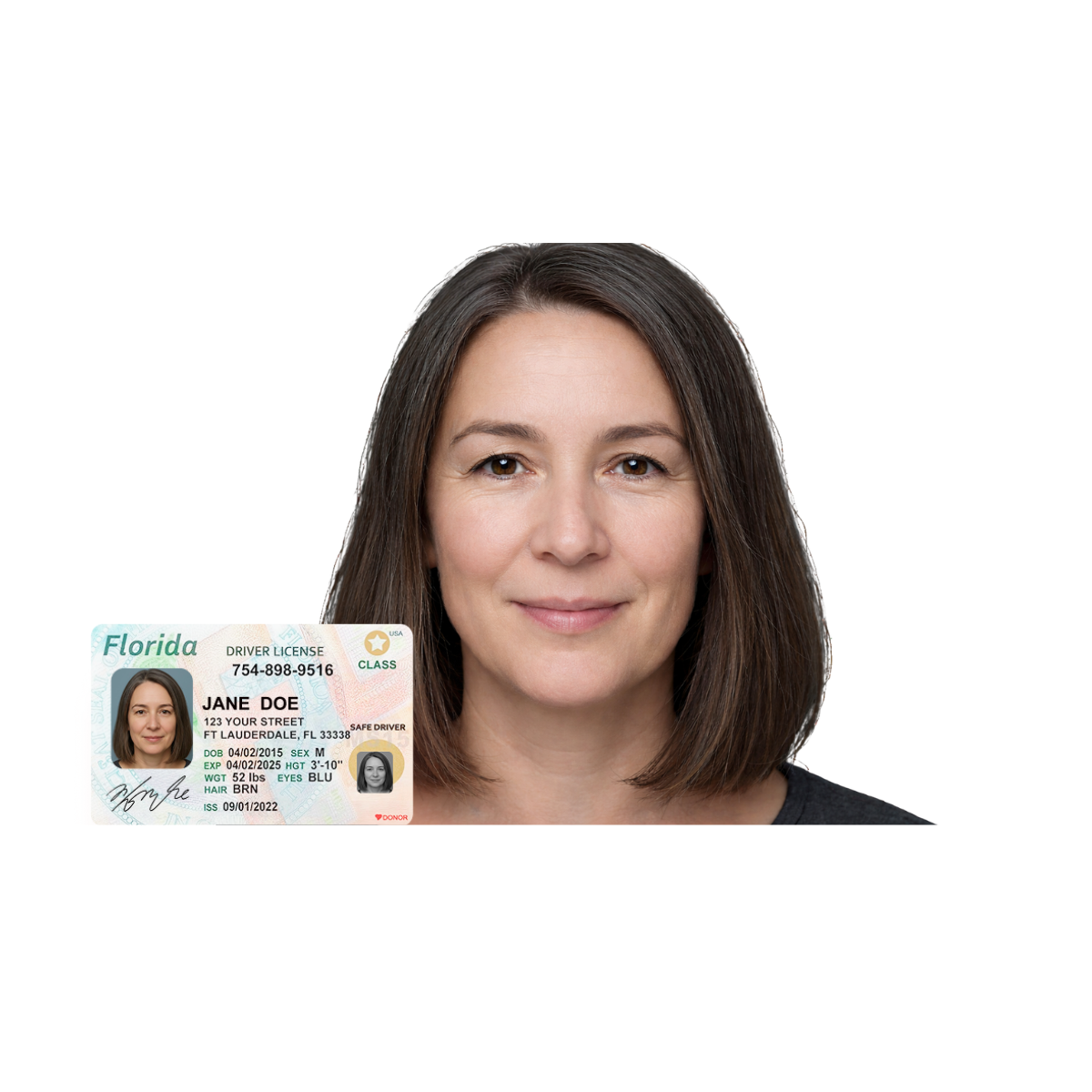
Traditional document-based screening requires applicants to upload a copy of a government-issued ID, which a manager then reviews visually. This method cannot detect AI-generated forgeries, synthetic identities that combine real and fabricated data, or impersonation by someone using another person’s stolen documents. Biometric identity verification adds three layers that document review cannot match: government ID authenticity validation, AI-powered liveness detection that confirms the applicant is physically present and not a photograph or deepfake, and biometric facial matching that compares the applicant’s selfie to the submitted ID. With 93% of property managers nationwide reporting encounters with application fraud per the NMHC Pulse Survey and AI tools capable of producing convincing forged documents, biometric verification has become the operational standard that document-only screening can no longer substitute for.
What should Florida 55+ communities look for in a screening platform to handle age-restricted application requirements?
Age-restricted communities operating under the Housing for Older Persons Act face documentation and consistency requirements that generic screening tools are not designed to address. A purpose-built capability for 55+ communities should standardize how age-restricted requirements are handled across all applications. It should reduce the manual communication burden on CAMs, improve documentation consistency so that records are reliable in the event of an audit or dispute, and integrate directly into the existing onboarding workflow rather than operating as a separate manual process. The capability should support internal operational control while leaving legal guidance to the association’s attorney.
How does centralized lease tracking reduce compliance risk for Florida community associations?
Centralized lease tracking reduces compliance risk by eliminating blind spots in lease status and documentation. Fragmented lease management, such as missing lease copies, manual expiration tracking, and disconnected spreadsheets, increases the chance of compliance issues and resident disputes. Centralized lease tracking connects resident onboarding, unit data, approvals, and lease documentation into one real-time workflow, giving CAMs and boards visibility into lease status at any point in the occupancy lifecycle. Automated lease document collection during onboarding ensures that records are complete from the start, and searchable digital history allows staff to retrieve any record instantly for an audit, a board inquiry, or a dispute resolution.
Conclusion: Applying This Framework to Strengthen Your Process
Florida associations evaluating identity verification screening software in 2026 face a defined set of statutory requirements, a documented fraud environment, and operational realities that generic rental platforms were not designed to handle. The evaluation framework in this guide, including biometric liveness, $100 fee automation, board voting and lease integration, 55+ support, and FCRA-first design, maps directly to the criteria that separate purpose-built association platforms from adapted generic tools.
TenantEvaluation is the platform that satisfies every criterion in that framework. Founded in 2007 and built exclusively for Florida community associations and management companies, it processes over 100,000 applications annually across 5,000+ communities. Its all-in-one workflow combines IDVerify biometric identity verification, QuickApprove board voting and accelerated approvals, 55+ Communities Verification, and Lease Tracking, all inside one FCRA-first platform with direct TransUnion and Equifax reseller relationships, automated adverse action workflows, and built-in audit trails. It has generated $150 million for communities and holds a 4.8/5 Google rating.
