Written by: Luis Teran, Co-founder, CEO, TenantEvaluation | Last updated: August 26, 2026
Key Takeaways for Florida Condo Board Background Checks
- HOA background checks for Florida condo boards focus on governance suitability and fiduciary risk, not occupancy approval or lease performance.
- Core screening components include identity verification, multi-state criminal records, sex-offender registry searches, financial and credit history, and litigation or conflict-of-interest checks.
- FCRA compliance is mandatory when a consumer reporting agency is involved, including standalone written disclosure, written authorization, and a defined adverse-action sequence.
- Associations must weigh the nature and gravity of offenses, time elapsed, and role relatedness, and complete an individualized assessment before disqualifying any candidate.
- Florida associations can manage compliant board-candidate screening through TenantEvaluation’s QuickApprove workflow and board dashboard at TenantEvaluation.
1. How Board-Candidate Screening Differs From Resident Screening
Florida condo board background checks and resident screening share some tools but serve different purposes. Board screening protects governance quality and fiduciary integrity, while resident screening focuses on occupancy and lease performance. These differences change scope, depth, permissible purpose, and the regulatory framework for each process.
- Purpose: Board-candidate screening focuses on governance suitability, fiduciary risk, and conflicts of interest, not occupancy approval or lease performance.
- Scope: Board screening often includes credential corroboration, prior board service, vendor relationships, and competing business interests that do not matter in resident screening.
- Financial depth: Board checks commonly include bankruptcies, civil judgments, and tax liens because candidates may control or disburse association funds subject to Florida Statute 718.111 fidelity bonding requirements.
- FCRA applicability: A volunteer director seat is not automatically an FCRA-covered employment, credit, tenant, or insurance decision, but once a consumer reporting agency produces a formal report, FCRA consent and adverse-action rules apply.
- Insurance linkage: Board screening outcomes directly affect fidelity bond eligibility, which does not apply to resident screening.
- Bylaw standing: Many bylaws require board candidates to be current on all dues and assessments with no pending violations, a threshold not typically applied to prospective residents.
| Dimension | Board-Member Screening | Resident Screening |
|---|---|---|
| Primary purpose | Governance suitability and fiduciary risk | Occupancy approval and lease performance |
| Criminal records | Multi-state, county, and FBI-level, with felony disqualifiers tied to fidelity insurance | Multi-state and county, focused on safety and tenancy risk |
| Financial history | Bankruptcies, judgments, tax liens, and fund-disbursement suitability | Credit score, rental payment history, income verification |
| Conflict-of-interest check | Vendor relationships, competing entities, prior board litigation | Not typically included |
| Bylaw standing requirement | Dues current, no pending violations | Not applicable |
| Fidelity insurance linkage | Direct, disqualifying offenses affect bond eligibility | None |
| FCRA consent required | Yes, when a consumer reporting agency produces the report | Yes, always |
2. Core Screening Components for Florida Condo Board Candidates
- Identity Verification: This step confirms the candidate’s identity by comparing government-issued ID with public records. It supports every later search and helps document permissible purpose.
- Multi-State and County Criminal Records: These searches cover state repositories and county courthouse records for felony and misdemeanor convictions. Some association bylaws disallow candidates with past felony convictions from serving on the board because such convictions can prevent the HOA from obtaining comprehensive fidelity insurance.
- Sex-Offender Registry Search: This search checks state and national sex-offender registries. It has become standard in Florida community association screening because board members serve in a residential environment.
- Financial and Credit History: This component evaluates bankruptcies, civil judgments, tax liens, and credit standing. Financial risk searches covering bankruptcies, civil judgments, and tax liens are available for Florida fiduciary, finance, or cash-handling roles when a permissible purpose is documented and must follow FCRA adverse-action rules. Board members who sign checks or authorize payments fall within this category under Florida Statute 718.111(11)(h).
- Litigation and Conflict-of-Interest Check: Some associations bar candidates who have pending litigation with the association to avoid conflicts of interest and confidentiality issues. Public-records searches for prior board service, vendor relationships, and competing business interests round out this due diligence.
Once an association defines these core components, the next step is building a process that meets federal consent and disclosure rules.

3. FCRA Consent and Disclosure Rules for Board Screening
Using a consumer reporting agency for board-candidate screening triggers specific FCRA consent and adverse-action requirements. Associations and CAMs must follow each step in sequence to reduce legal risk.
- Standalone Written Disclosure: Florida follows FCRA consent standards that require a standalone disclosure document separate from application materials, since embedded consent language within forms fails to meet compliance standards. The disclosure must clearly state that a consumer report may be obtained.
- Written Authorization: Federal FCRA §1681b(b)(2) requires a stand-alone written disclosure and the candidate’s written authorization before any consumer report is procured. The association must obtain this authorization before ordering the report.
- Pre-Adverse Action Notice: Pre-adverse action procedures require providing the candidate a copy of the background report, a written summary of rights, and a minimum five-day consideration period before a final decision.
- Final Adverse Action Notice: If the association decides against the candidate, it must send a final adverse-action notice that identifies the consumer reporting agency and explains the candidate’s right to dispute the report.
- Permissible Purpose Documentation: The association must document the permissible purpose for obtaining each report. TenantEvaluation’s built-in audit trails and strict permissible-purpose controls support this documentation step for every application processed through the platform.
4. Lookback Periods for Florida HOA Board Background Checks
- Seven-Year FCRA Default: Under the FCRA, non-conviction adverse information older than seven years is generally not reportable in many lower-salary contexts, and Florida follows the FCRA seven-year lookback period as the default for criminal-history reporting.
- Convictions Have No Cap: Convictions are not subject to the FCRA’s seven-year reporting cap, so older convictions may still appear on a Florida background check report unless another law limits their use. For board candidates, older felony convictions can still affect fidelity insurance eligibility.
- Sealed and Expunged Records: Sealed or expunged records are generally inaccessible except to the entities listed in §943.059, but Florida Statute §943.045 itself imposes no reporting restrictions on screening vendors. Associations should confirm that their screening provider applies relevant restrictions correctly.
- Level 2 Fingerprint Checks: Level 2 background checks in Florida are fingerprint-based and search both state FDLE and national FBI NCIC databases. These checks are not universally required for volunteer board members, yet some associations and insurers request them for candidates with fund-disbursement authority.
5. Individualized Assessment and Typical Disqualifiers
A background check result alone does not automatically disqualify a board candidate. Associations must conduct an individualized assessment that weighs the specific facts of each case. This approach aligns with EEOC guidance on decisions based on criminal history, which applies even to volunteer governance roles.
This guidance requires consideration of the nature and gravity of the offense, the time elapsed since conviction or completion of sentence, and the relatedness of the offense to the role. Florida associations using this framework for board screening should document how they applied each factor.
- Nature and Gravity of the Offense: Offenses involving fraud, theft, embezzlement, or financial misconduct carry greater weight for candidates who will control or disburse association funds.
- Time Elapsed: The length of time since the offense and any evidence of rehabilitation both matter in an individualized assessment.
- Role Relatedness: The association should evaluate how closely the offense relates to board responsibilities, especially fund-disbursement authority.
- Fidelity Insurance Disqualifiers: Level 2 background checks can disqualify individuals from positions of trust based on certain serious offenses.
- Out-of-State Offenses: Florida law considers out-of-state offenses for disqualification if they are substantially similar to in-state offenses.
- Financial Red Flags: Unresolved bankruptcies, active tax liens, or civil judgments tied to fiduciary misconduct often disqualify candidates who will have check-signing authority under the association’s fidelity bond.
6. Florida Insurance Rules and Bylaw Impacts on Screening
- Fidelity Bonding Requirement: Florida Statute 718.111 requires every condominium association to maintain fidelity bonding or insurance covering persons who control or disburse association funds.
- Coverage Sufficiency: Fidelity bonding coverage must be sufficient to cover the maximum funds that will be in the custody of the association or its management agent at any one time. A board candidate’s background check result can influence whether the insurer will extend coverage to that individual.
- Personal Liability Exposure: Board members who fail to maintain required insurance coverage under Florida Statute 718.111 may be held personally liable for losses, since directors must discharge their duties with the care of an ordinarily prudent person under Florida Statute 718.111(1)(d).
- D&O Insurance: Florida community associations cannot treat D&O insurance as a substitute for background screening of board candidates because D&O does not cover vetting of fiduciary conduct, financial responsibility, or conflicts of interest. Background screening and D&O coverage work together but do not replace one another.
- Governing Document Review: Because governing documents vary, candidate-screening criteria based on bylaws should be checked against the association’s declaration and bylaws before application, since these rules differ from statutory background-check requirements. CAMs should confirm that screening criteria match current governing documents before rolling out a board-candidate screening policy.
- HB 913 Update: HB 913, signed June 23, 2025 and effective July 1, 2025, updated Section 718.111(11), Florida Statutes, but did not require unlimited liability coverage for condominium association board members, so directors and officers coverage remains a separate, standard policy decision.
7. Selecting a Compliant Screening Provider for Florida Boards
Choosing a screening provider for Florida condo board candidates requires criteria tailored to governance roles. The right platform supports compliance, documentation, and clear board decision-making.

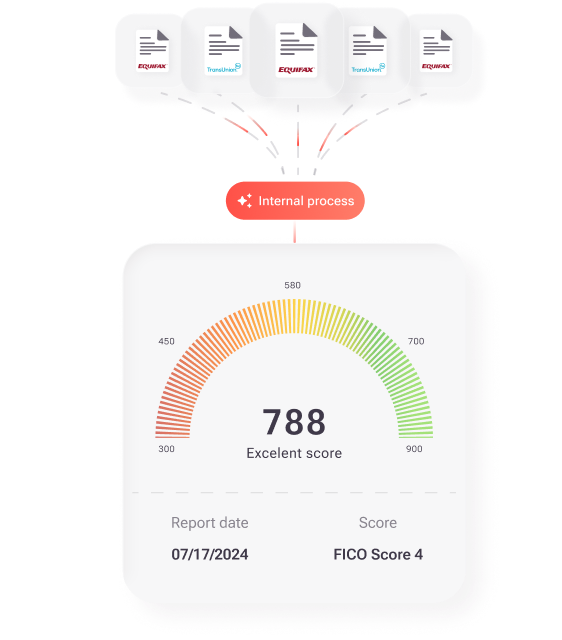
- Direct Credit Bureau Reseller Status: A provider that is a legitimate reseller of TransUnion and Equifax data, accessing information under strict bureau rules with regular compliance reviews, reduces liability exposure compared with providers that rely on gray-market or offshore data sources. TenantEvaluation holds direct reseller relationships with both bureaus.
- Permissible-Purpose Controls: The platform should document and enforce permissible purpose for every report ordered, which prevents unauthorized access to consumer data and supports FCRA defensibility.
- Built-In Audit Trails: Every application action, including consent capture, report ordering, and adverse-action notices, should be timestamped and stored in an auditable record.
- Automated Adverse-Action Workflows: Manual adverse-action processes often create timing errors. A platform with automated pre-adverse and final adverse-action workflows reduces the risk of procedural FCRA violations.
- Board Dashboard: QuickApprove includes a dedicated board review and voting dashboard that gives board members direct, real-time access to application status, summarized reports, and a voting panel. This setup replaces email chains and spreadsheets with a connected approval process inside TenantEvaluation.
- Florida-Specific Configuration: The platform should support Florida-specific bylaw requirements, fidelity insurance considerations, and governing-document customization instead of applying a generic rental-screening template to board-candidate review.
- FCRA-First Design: TenantEvaluation is built for community associations and management companies, with FCRA compliance as the foundation and workflows designed around association use cases rather than generic rentals.
Frequently Asked Questions
Are HOA board members in Florida required by law to undergo background checks?
Florida law does not impose a universal statutory mandate requiring all HOA or condo board members to pass a background check before serving. However, Florida law requires associations to maintain fidelity bonding covering persons who control or disburse association funds, which creates a practical screening imperative for candidates with financial authority. Many association bylaws independently require background checks or impose good-standing requirements as a condition of candidacy. CAMs and board presidents should review their governing documents and consult legal counsel to confirm specific requirements for their association.
What is the difference between a Level 2 background check and a standard HOA board background check in Florida?
A standard HOA board background check typically uses a consumer reporting agency to search multi-state criminal databases, county courthouse records, sex-offender registries, and financial history. A Level 2 background check in Florida is fingerprint-based, searches both the Florida Department of Law Enforcement (FDLE) database and the national FBI NCIC database, and applies to positions of trust defined under Florida Statute 435.04. Level 2 checks are not universally required for volunteer board members but may be requested by insurers or specified in governing documents for candidates with fund-disbursement authority.
Does FCRA consent apply when screening volunteer condo board candidates?
FCRA consent requirements depend on whether a consumer reporting agency produces the report, not on whether the role is paid or volunteer. When an association uses a consumer reporting agency to obtain a background report on a board candidate, the FCRA’s standalone disclosure, written authorization, and adverse-action procedures apply. Associations that rely only on lawful public-records research conducted without a consumer reporting agency may avoid FCRA obligations, but this distinction requires careful evaluation. Using a platform with built-in FCRA-compliant consent workflows supports documentation consistency and strengthens internal processes regardless of the candidate’s volunteer status.
Can a condo association deny a board candidate based solely on a criminal record?
A denial based solely on a criminal record without individualized assessment creates legal exposure. EEOC guidance, which informs best practices even outside traditional employment, requires consideration of the nature and gravity of the offense, the time elapsed since the conviction or completion of the sentence, and the relatedness of the offense to the specific responsibilities of the role. For board candidates, the connection between the offense and financial-control authority is a key factor. Associations should document the individualized assessment process for every adverse decision based on criminal history and consult legal counsel before finalizing board-candidate disqualification policies.
How does TenantEvaluation support Florida condo associations with board-candidate screening?
TenantEvaluation is built for community associations and management companies in Florida, with FCRA compliance as the foundation. The platform supports documentation consistency through built-in audit trails, automated adverse-action workflows, and strict permissible-purpose controls. TenantEvaluation’s direct bureau relationships, mentioned in Section 7, ensure no gray-market or offshore data sources are used. The QuickApprove workflow includes a dedicated board review and voting dashboard that gives board members real-time application visibility and a structured approval process, replacing email chains and spreadsheets with a connected, audit-ready workflow inside one platform.
Conclusion
HOA background checks for condo boards in Florida typically include criminal record searches, credit and financial reviews, and conflict-of-interest checks. These components differ from resident screening in purpose, depth, and regulatory linkage, especially the connection to fidelity bonding requirements under Florida law. When a consumer reporting agency is involved, FCRA consent obligations apply, including a standalone written disclosure, written authorization, and a defined adverse-action sequence.
Individualized assessment of criminal history, including the nature of the offense, time elapsed, and role relatedness, remains a necessary step before any adverse decision. Florida-specific bylaw provisions and insurance requirements further shape how associations design and apply board-candidate screening policies. Selecting a provider with direct bureau reseller status, strong permissible-purpose controls, robust audit trails, and a board-ready dashboard supports documentation consistency and strengthens internal processes for Florida community associations managing board-candidate screening in 2026.
