Written by: Luis Teran, Co-founder, CEO, TenantEvaluation | Last updated: July 1, 2026
Key Takeaways for Florida Condo Screening
- Florida condo associations must obtain written FCRA consent, charge no more than the $100 statutory screening fee, and issue adverse-action notices when required.
- Screening criteria must be documented in governing documents, applied uniformly, and reviewed for fair-housing compliance to reduce disparate-impact liability risk.
- Associations with 25+ units must maintain secure, access-controlled records and comply with Florida’s Information Protection Act breach-notification rules.
- Reusable tenant screening reports require documented verification to ensure consistency and reduce FCRA and fair-housing exposure.
- TenantEvaluation automates consent workflows, adverse-action notices, and audit-ready recordkeeping for Florida condo associations.
Florida HOA and Condo Authority to Require Background Checks
Florida condo associations and HOAs may require background checks as a condition of tenancy or purchase approval when the authority to screen appears in the association’s governing documents. That authority typically appears in the declaration, bylaws, or rules and regulations. The screening process must also comply with the federal Fair Credit Reporting Act (FCRA) and Florida Statutes Chapter 718 for condominiums or Chapter 720 for HOAs.
Under the FCRA, a community association qualifies as a “user” of consumer reports when it orders background checks on applicants. This status creates specific obligations. The association must have a permissible purpose, provide a clear written disclosure in a standalone document, and obtain the applicant’s written authorization before ordering any report. Verbal consent does not satisfy FCRA requirements.
Florida law grants condo associations authority to adopt rules governing the use of association property and the approval of tenants and purchasers. That authority must rest on the governing documents. Boards that implement screening without explicit governing-document authority create legal exposure. A governing-document review should occur before any new screening policy rollout.
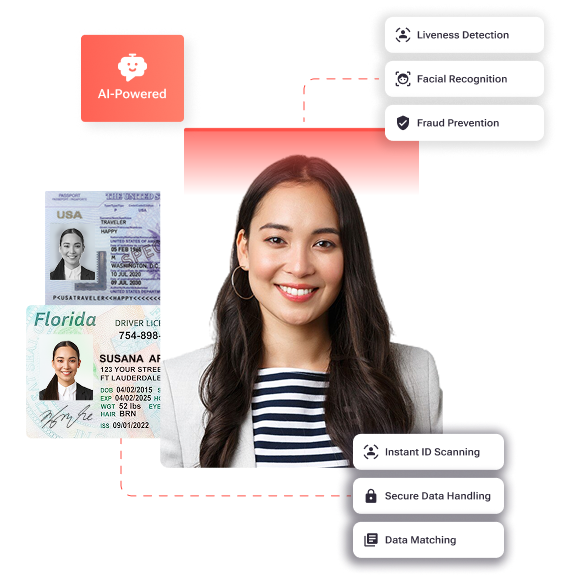
TenantEvaluation’s consent workflow captures written FCRA disclosure and authorization digitally during the online application, before any report is ordered. This creates a timestamped, audit-ready record that separates the association’s decision-making role from TenantEvaluation’s data-provision role. IDVerify further strengthens permissible-purpose validation by confirming applicant identity through biometric liveness detection and government ID authentication before screening authorization proceeds.
Background Check Criteria That Commonly Disqualify Applicants
Florida condo associations may establish disqualifying criteria such as specific criminal conviction types, eviction history, or minimum credit thresholds. These criteria must appear in the association’s governing documents or screening policy, apply uniformly to every applicant in the same category, and undergo review against federal fair-housing standards to reduce disparate-impact liability under the Fair Housing Act.
Blanket criminal history bans create significant fair-housing risk. The U.S. Department of Housing and Urban Development has issued guidance stating that categorical exclusions based solely on arrest records, without a conviction, or overly broad felony bans may produce discriminatory outcomes against protected classes. Florida associations should work with legal counsel to craft criteria that are individualized and time-limited where appropriate. Criteria should relate directly to the safety and welfare of the community.
Consistent application of criteria provides the operational safeguard. Every applicant in the same unit-type or tenure category must be evaluated against the same written standards. TenantEvaluation’s platform encodes each community’s approved criteria directly into the screening workflow. No application bypasses the established thresholds, and every decision carries a documented rationale in the audit trail.
Once an association has established its screening criteria, the next compliance checkpoint is the fee structure. Florida law imposes specific limits on what condo associations can charge applicants.
Florida Condo Screening Fee Cap 2026
Florida law caps the screening fee a condo association may charge a prospective tenant at $100 per applicant. In 2025, CS/HB 43 proposed changes to reusable screening report handling, but the bill died in committee. The $100 cap therefore remains in effect without any statutory obligation to accept applicant-provided reports.
The $100 cap applies per applicant, not per household, which means an association screening two adult applicants for the same unit may collect up to $200 total but no more than $100 per individual. This per-applicant structure matters because Florida does not impose a statewide statutory cap on tenant screening or application fees outside the condo context. Condo associations must track the condo-specific limit carefully to avoid liability.
Associations benefit from having a documented process for reviewing any applicant-provided screening reports and for managing fees within the cap. TenantEvaluation’s platform is purpose-built to manage fee collection within the statutory limit and to support consistent, audit-ready workflows for all applications.
Adverse Action Notice Requirements for Florida Associations
When a Florida condo association takes an adverse action such as denial, conditional approval, or any action less favorable than the best terms offered based in whole or in part on information in a consumer report, the FCRA requires an adverse action notice. The notice must identify the consumer reporting agency that provided the report, state that the agency did not make the decision, and inform the applicant of the right to a free copy of the report and to dispute inaccurate information.
The FCRA’s pre-adverse action step requires associations to provide the applicant with a copy of the report and a summary of rights before the final adverse decision is communicated. This step is often skipped because boards and managers assume the final notice alone is sufficient, which is incorrect. Skipping the pre-adverse action step is one of the most common FCRA violations in community association screening and carries statutory damages of $100–$1,000 per violation, plus potential punitive damages and attorney’s fees.
Manual adverse action workflows drafted in email or printed and mailed create documentation gaps and timing errors. TenantEvaluation’s automated adverse action workflow triggers the pre-adverse action notice at the correct procedural moment, delivers the required documents to the applicant, tracks the waiting period, and then releases the final adverse action notice. All steps carry timestamped records stored in the platform’s audit trail. No manual drafting. No missed steps.
Section 718.111 Background Checks and Recordkeeping
Florida Statutes §718.111 governs the general powers and duties of condo associations, including corporate authority, fiduciary duties, assessments, contracts, liens, and records maintenance. For associations with 25 or more units, compliance with records requirements includes maintaining records in a secure, access-controlled format with protections for personally identifiable information.
Associations with 25 or more units that store applicant records such as background check reports, consent forms, and adverse action notices in online or cloud-based systems must ensure those systems align with Florida’s Information Protection Act. FIPA mandates breach notification within 30 days of discovery.
TenantEvaluation addresses these requirements through PCI Level 1 compliance, end-to-end encryption, and automatic redaction of sensitive PII, including Social Security numbers and financial account details, from uploaded documents. The platform’s built-in audit trails log every access event, application action, and document interaction, giving associations a defensible record in the event of a regulatory inquiry or breach investigation. For age-restricted communities managing additional documentation layers, 55+ Communities Verification standardizes application handling and supports documentation consistency across the portfolio.

Reusable Tenant Screening Reports in Florida
A reusable tenant screening report is a consumer report prepared by a licensed consumer reporting agency, delivered directly to the applicant, and presented by the applicant to the association as part of their application. The failed CS/HB 43 legislation would have created a framework for reusable reports, but its death in committee means associations currently have no statutory obligation to accept them.
For associations, the operational challenge is verification. Boards must confirm that any reusable report is current, complete, and sourced from a legitimate consumer reporting agency before relying on the data for a decision. Associations that accept unverified or outdated reports without a documented review process face FCRA exposure and fair-housing risk if criteria are applied inconsistently across applicants who submit such reports versus those who undergo fresh screening.
TenantEvaluation’s platform provides a structured intake path for applicant-provided report submissions, with documented review steps and consistent criteria application regardless of the screening data source. This structure keeps the association’s decision-making process uniform and audit-ready across all application types.
Common Board Scenarios During Screening
New spouse or domestic partner moving in mid-lease: The association’s governing documents determine whether a new occupant triggers a new screening requirement. If the documents require screening for all adult occupants, the new occupant must complete the full application process, including FCRA consent, before taking occupancy. The board cannot waive screening for one occupant category without applying the same waiver uniformly.
Applicant requests an interview before submitting a background check: Associations may conduct interviews as part of the approval process only when interviews are authorized in the governing documents and conducted uniformly. Interviews cannot replace FCRA-required written consent and disclosure. The background check authorization must be obtained in writing regardless of whether an interview occurs.
Governing documents are silent on screening criteria: A board that lacks explicit screening criteria in its governing documents should pause background checks until the documents are amended through the proper legal process. Operating without documented authority creates liability. TenantEvaluation’s QuickApprove accelerated approval workflow operates within the association’s established governing-document framework. It accelerates the process without bypassing the board’s decision-making authority or the association’s compliance obligations.
Common Board Questions
- Can the board deny an applicant based solely on a criminal record? The board cannot rely on a categorical ban. Criteria must be individualized, documented, and reviewed for fair-housing compliance.
- Who sends the adverse action notice, the board or the screening company? The association, as the decision-maker, is responsible for adverse action notices. TenantEvaluation automates delivery, but the obligation rests with the association.
- How long must screening records be retained? Associations should consult legal counsel to determine an appropriate retention period for consumer report-related documentation.
- Can the association charge a separate administrative fee on top of the $100 screening fee? The $100 cap covers the cost of the background check. Separate administrative fees may be permissible if authorized by the governing documents, but legal counsel should confirm this before implementation.
- Does TenantEvaluation make the approval decision? TenantEvaluation provides data and automates the workflow. The board retains all decision-making authority.
Frequently Asked Questions
What is the FCRA, and why does it apply to Florida condo associations?
The Fair Credit Reporting Act is a federal law that regulates how consumer reports, including background checks and credit reports, are obtained, used, and disclosed. Florida condo associations are classified as “users” of consumer reports when they order background checks on applicants, which means they must follow FCRA requirements for written consent, permissible purpose, and adverse action notices. Non-compliance exposes the association to federal statutory damages, punitive damages, and attorney’s fees.
What is the timeline for the adverse action process?
The FCRA requires a two-step process. First, before a final adverse decision, the association must provide the applicant with a copy of the consumer report and a written summary of FCRA rights. A reasonable waiting period, typically five business days, must elapse before the final adverse action notice is issued. The final notice must identify the consumer reporting agency, confirm the agency did not make the decision, and inform the applicant of the right to dispute inaccurate information.
Who is responsible for FCRA compliance, the management company or the board?
Both parties share responsibility. The board, as the governing body of the association, holds ultimate legal responsibility for compliance with FCRA requirements. The Community Association Manager or management company typically administers the process on the board’s behalf. TenantEvaluation’s platform maintains a clear operational separation. TenantEvaluation provides data and automates workflows, while the board retains decision-making authority. This separation is documented in the platform’s audit trail.
What documentation must the association maintain for each screening decision?
Associations should retain the signed FCRA disclosure and authorization form, the consumer report itself or a record that one was obtained, any pre-adverse action notice and proof of delivery, the final adverse action notice and proof of delivery when applicable, and the written basis for the approval or denial decision. TenantEvaluation stores all of these records in a searchable, audit-ready digital format connected to each application, which removes the need for manual filing systems or scattered email chains.
Are there exceptions to the screening fee cap for condo associations?
As discussed earlier, the $100-per-applicant cap remains in effect for condo associations. Associations should consult with legal counsel regarding any exceptions or additional fees. Since CS/HB 43 died in committee, no statutory requirement currently exists to accept reusable tenant screening reports.
Conclusion: Building a Defensible Screening Program
Florida condo association background check compliance in 2026 requires a documented, consistently applied process that satisfies FCRA consent requirements, respects the $100 fee cap, delivers adverse action notices at the correct procedural moments, and maintains secure, audit-ready records under Florida law and data protection standards. Boards and Community Association Managers that rely on manual processes or generic screening vendors face compounding liability risk as regulatory expectations continue to tighten.
TenantEvaluation is built specifically for community associations and management companies, with FCRA compliance as the foundation, not an afterthought. With direct reseller relationships to TransUnion and Equifax, automated adverse action workflows, biometric identity verification through IDVerify, accelerated approvals through QuickApprove, and centralized lease lifecycle control, TenantEvaluation turns every compliance obligation into an automated, documented, and defensible workflow.
See the full compliance platform in action, from consent to approval to record retention.
