Written by: Luis Teran, Co-founder, CEO, TenantEvaluation | Last updated: July 5, 2026
Key Takeaways
- FCRA-compliant screening starts with written authorization, automated adverse action notices, and a complete audit trail before any report is accessed.
- Florida community associations must follow state preemption laws, exclude sealed records, and apply uniform written screening criteria to every applicant.
- Generic rental tools often lack board dashboards, biometric verification, lease tracking, and the governance features required for HOA and condo workflows.
- Direct bureau reseller status, county-level criminal searches, and automated FCRA sequences reduce liability exposure compared to third-party or outdated data sources.
- TenantEvaluation provides purpose-built screening, board voting, and lease tracking for Florida associations, helping teams streamline every step of the process.
Criminal Background Criteria Florida Property Managers Rely On
Florida Community Association Managers (CAMs) and boards evaluate criminal background checks against specific, documented criteria. Florida’s 2023 tenant screening preemption law preempts local tenant-screening ordinances and centralizes regulation at the state level. Sealed or expunged adult records and automatically expunged juvenile records may not be used in screening decisions.
Property managers also rely on several baseline checks for thorough screening.
- Nationwide and county-level criminal searches, not just national database sweeps
- Sex offender registry and FBI Most Wanted cross-referencing
- Eviction history outcomes, not just filings
- A documented, written screening policy applied uniformly to every applicant before the first application is accepted
These criteria form the starting point for responsible screening, yet many low-cost services fall short. Many low-cost screening services miss evictions by checking only the applicant’s current county or rely on outdated criminal databases, which creates liability exposure for associations that believe they have completed due diligence.
Step-by-Step Background Check Process for Property Managers
The FCRA sets a strict sequence for background and credit checks. A clear, standalone disclosure must be provided before any background or credit check is initiated, separate from other documents and free of liability waivers. Written authorization from the applicant must follow. Only after these steps may a Consumer Reporting Agency (CRA) furnish the report.
Under FCRA Section 604(a), a consumer’s clear written authorization stating “I authorize you to procure a consumer report on me” qualifies as a permissible purpose. A signature on a form that only acknowledges reports may be obtained does not meet this standard.
If a denial follows, a pre-adverse action notice must be sent with a free copy of the report and the FTC Summary of Rights, allowing at least five business days for the applicant to dispute inaccuracies before a final adverse action notice is issued. Verbal statements such as “it did not work out” constitute FCRA violations.
Resident Screening Workflow Tailored to Community Associations
Community association screening follows a more complex approval path than standard rental screening. Associations operate under governing documents, including bylaws, rules, and declarations, which add requirements on top of state and federal law. Board approval usually functions as a required step rather than an optional review.
Each application must move through a documented sequence.
- Application intake and document collection
- Identity verification
- Credit, criminal, and eviction report retrieval
- Income verification
- Board review and vote
- Approval or adverse action notice issuance
- Lease documentation and occupancy tracking
Every step generates records that associations must retain for several years. These files demonstrate consistent application of criteria and support defenses against discrimination or FCRA claims.
Generic rental tools are not designed for this governance-heavy workflow. They lack board voting dashboards, association-specific document logic, and the audit infrastructure that multi-step community approval processes require.
Florida Market Pressures and Regulatory Requirements
For condominiums in Florida where association approval is required to lease a unit, the Florida Condominium Act (Chapter 718) caps the association’s screening or transfer fee at $100 per applicant or $150 per married couple. This cap shapes how associations structure fee collection and cost recovery.
Florida landlords must process and decide on rental applications submitted by service members within seven days. HUD guidelines advise against blanket criminal-record bans and require individual assessment of each conviction according to its nature, severity, and timing.
Identity fraud now affects community associations more frequently. Rental applications can include misrepresented identities, fake pay stubs, or manipulated bank statements. Traditional document-upload screening cannot reliably detect synthetic identities or impersonation attempts, which leaves boards exposed.
FCRA-First Compliance Approach in TenantEvaluation
TenantEvaluation is built specifically for community associations and management companies, with FCRA compliance serving as the foundation rather than an add-on feature.
This focus affects daily operations. TenantEvaluation functions as a legitimate reseller of TransUnion and Equifax data, accessing bureau data under strict bureau rules with regular compliance reviews and no gray-market or offshore data sources. This reseller status, which most generic platforms do not hold, helps associations avoid liability tied to impermissible data sourcing.
The platform enforces the full adverse action sequence described earlier. It automatically collects written consent, certifies permissible purpose, delivers notices with required documentation, manages the dispute window, and maintains a complete audit trail. Organizations must document and retain copies of all disclosure forms, authorizations, consumer reports, and adverse action notices to support auditability. TenantEvaluation generates and stores these records automatically.
Willful FCRA violations expose associations to actual damages or statutory penalties of up to $1,000 per instance. Documented cases show landlords facing $10,000 penalties per applicant for failing to send required notices under California’s ICRAA.
Where Generic Rental Screening Platforms Fall Short
Generic rental screening tools often lack automated Adverse Action Notice generation and delivery, which forces manual compliance work and increases legal risk under the FCRA. Additional failure points appear across governance, fraud prevention, and recordkeeping.

- No board dashboard: Approval decisions route through email chains and spreadsheets, with no timestamped voting record.
- No biometric verification: Basic document-based review lacks a biometric layer, leaving communities exposed to impersonation fraud.
- No 55+ handling: Age-restricted community requirements are managed manually, which creates inconsistent documentation and audit exposure.
- No lease tracking: Lease records remain disconnected from the onboarding workflow and sit across folders, inboxes, and spreadsheets.
- No Florida association focus: Screening criteria, fee structures, and workflows target generic multifamily rentals instead of HOA or condo governance structures.
- Many generic platforms lack built-in features to manage local regulatory variations, which forces manual compliance management and increases FCRA liability risk.
Integrated Screening Best Practices for Community Associations
Effective screening for community associations requires both legal discipline and operational consistency. Start by documenting screening criteria in writing before accepting the first application, then apply those criteria uniformly to every applicant. This written policy creates the legal foundation for defending against discrimination claims.
Next, confirm that data sources meet FCRA standards. Use only compliant CRAs with direct bureau relationships, county-level criminal searches, and identity or alias verification, because third-party or outdated data introduces unnecessary risk. When evaluating criminal records, assess the nature of any offense, time since the offense, relevance to the housing context, and evidence of rehabilitation before making a denial decision.
Automate the adverse action workflow to remove manual compliance gaps and reduce missed notices. Maintain complete audit trails for every application, including consent forms, reports, and all notices, so that any decision can be reconstructed during an audit.
Finally, integrate board review into the screening platform with timestamped voting records instead of separate email threads. Connect lease documentation to the onboarding record from application through occupancy so that every approval, lease, and renewal remains visible in one system.
Book a demo to see TenantEvaluation’s FCRA-first workflow built for Florida community associations.
Comparison Framework for Credit Check Tools in Florida Associations
The table below compares platforms across seven criteria relevant to Florida community association screening. Capability indicators reflect publicly documented platform features as of June 2025.
| Platform | FCRA Reseller Status (Direct Bureau) | Board Dashboard | Biometric Verification | 55+ Handling | Lease Tracking | Revenue Model | Florida Association Focus |
|---|---|---|---|---|---|---|---|
| TenantEvaluation | Yes, TransUnion & Equifax reseller | Yes, QuickApprove board voting panel | Yes, IDVerify biometric plus liveness | Yes, 55+ Communities Verification | Yes, real-time lifecycle tracking | Pay-per-application; revenue sharing | Built exclusively for community associations |
| SmartMove | TransUnion reseller (applicant-pay model) | No | No | No | No | Per-report fee paid by applicant | Generic rental focus |
| TurboTenant | Third-party bureau access | No | No | No | Basic lease storage | Subscription plus per-report | Multifamily rental focus |
| Zillow Rental Manager | Third-party bureau access | No | No | No | No | Per-report fee | Generic rental focus |
| AppFolio | Third-party bureau access | Limited | No | No | Yes, property management module | Monthly subscription | Broad property management |
| RealPage | Third-party bureau access | Limited | No | No | Yes, property management module | Monthly subscription | Broad property management |
| Verify Screening Solutions | TazWorks platform (white-labeled) | No | No | No | No | Per-report fee | Background check focus |
| ApplyCheck | TazWorks platform (white-labeled) | No | No | No | No | Per-report fee | Background check focus |
| Snappt | No, fraud detection only | No | No | No | No | Subscription | Income and fraud verification only |
Florida-Focused Background Checks for Landlords
Florida landlords and community associations need background checks that match state-specific standards. These standards include individual criminal offense evaluation under the 2023 preemption law, exclusion of sealed and expunged records, compliance with the seven-day service member application window, and uniform application of criteria under the Fair Housing Act.
The most effective background check solution for Florida landlords combines direct bureau data access, county-level criminal searches, automated FCRA adverse action workflows, and a documented audit trail. A generic national database sweep cannot meet these expectations.
HOA Resident Screening and Board Governance
HOA resident screening carries governance requirements that standard rental screening tools do not address. Boards must vote on applications under governing documents, which creates a need for a structured review and voting workflow with timestamped records. Generic tools may not integrate with property management workflows, leading to fragmented processes and increased manual steps.
TenantEvaluation’s QuickApprove accelerated approval workflow gives boards a dedicated review and voting panel inside one connected platform. Boards gain real-time application tracking and automated communication support while keeping oversight and screening due diligence intact.

Connected Lease Tracking for Community Associations
Lease management in community associations often becomes fragmented. Teams deal with missing lease copies, manual expiration tracking, disconnected spreadsheets, and no direct link between the approved application and the active lease record.
TenantEvaluation’s Lease Tracking capability connects resident onboarding, unit data, approvals, and lease documentation inside one centralized, real-time workflow. CAMs, boards, and community operations teams gain real-time lease status visibility, including active, pending, expired, or missing leases.
The platform also supports automated lease document collection during onboarding, unit-level tracking, searchable digital history, and audit-ready records. From application to occupancy, every lease stays connected, searchable, trackable, and ready for review inside one platform.
Frequently Asked Questions
What is the difference between a credit check and a full background check for community association applicants?
A credit check retrieves a consumer’s credit history, including payment history, outstanding balances, and derogatory marks, from a bureau such as TransUnion or Equifax. A full background check adds criminal history, eviction records, sex offender registry searches, and identity verification.
For Florida community associations, both components are typically required and both trigger FCRA obligations. These obligations include written consent, permissible-purpose certification, and adverse action procedures if a denial follows. TenantEvaluation’s SafeCheck+ solution combines credit, criminal, eviction, and identity data into a single screening report, with the adverse action workflow automated inside the platform.
Are community associations in Florida required to follow FCRA rules when screening applicants?
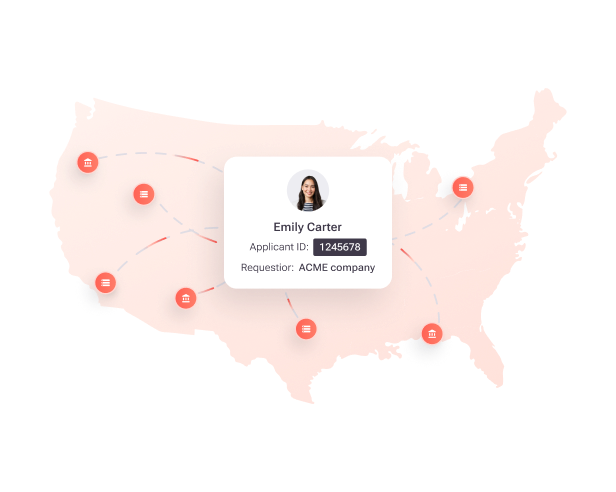
Yes. Any time a Florida community association uses a third-party Consumer Reporting Agency to obtain credit, criminal, eviction, or background reports on an applicant, the FCRA applies. This coverage includes obtaining written authorization before the report is pulled, providing a standalone disclosure, and issuing pre-adverse and final adverse action notices with the required report copy, Summary of Rights, and dispute window when a denial or conditional approval relies on report findings.
Willful violations expose associations to statutory damages of up to $1,000 per incident, plus attorney fees. Florida condo associations also remain subject to the fee cap mentioned earlier in this article.
What should a board dashboard include for HOA resident screening approvals?
An effective board dashboard for HOA resident screening should provide real-time application status visibility and AI-generated applicant summaries. It should also include a structured voting panel with timestamped approval or denial records, access to supporting screening reports, and automated communication triggers for next steps.
The dashboard should operate inside the same platform as the screening workflow, not as a separate email thread or spreadsheet. This structure keeps every board action connected to the application record and audit trail. TenantEvaluation’s QuickApprove accelerated approval workflow includes a board-ready review and voting dashboard built specifically for this purpose, giving boards faster, clearer, and more consistent approvals without losing control, compliance, or visibility.
How does biometric identity verification reduce fraud risk in condo and HOA applications?
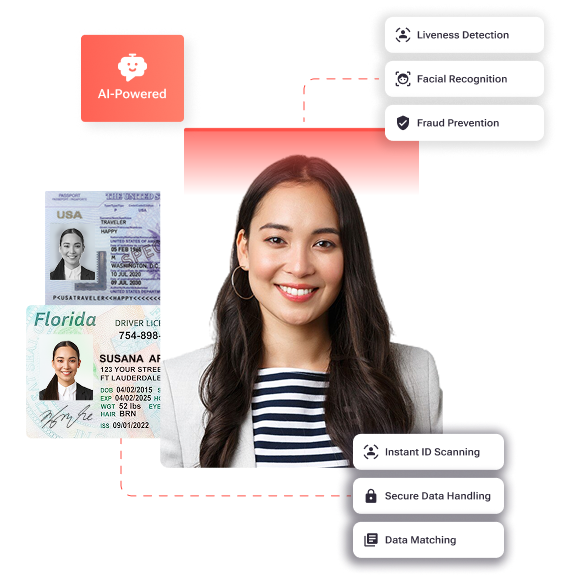
Traditional screening relies on document uploads, which cannot confirm that the person submitting the application matches the person named on the documents. Biometric identity verification adds a physical presence layer that includes government-issued ID validation, AI-powered liveness detection, and facial biometric matching between the applicant’s selfie and their ID.
This approach moves communities from document-based review to verified physical identity confirmation before approval decisions. Rental applications can contain fraud, including misrepresented identities. TenantEvaluation’s IDVerify+ runs natively inside the screening workflow, without external portals, and delivers ID authenticity confirmation, liveness verification status, and biometric match results directly within the screening report visible to the CAM.
Conclusion: Selecting Credit Check Tools Built for Associations
Florida community associations operate in a screening environment shaped by FCRA requirements, state-specific statutes, board governance obligations, identity fraud pressure, and the complexity of managing applications across multiple communities. Generic credit check tools for property managers rarely address these factors in a coordinated way.
The evaluation criteria that matter for community associations include direct bureau reseller status, automated adverse action workflows, board voting infrastructure, biometric identity verification, structured 55+ application handling, centralized lease tracking, and a revenue model aligned with association economics. TenantEvaluation meets each criterion with purpose-built functionality and processes more than 100,000 applications annually across over 5,000 communities, using a pay-per-application model that generates revenue for associations instead of adding subscription overhead.
CAMs and boards reviewing their current screening process should confirm whether existing tools automate the full adverse action sequence described earlier, maintain a complete audit trail, give boards structured visibility into approvals, and connect lease documentation to the onboarding record from application through occupancy.
