Written by: Luis Teran, Co-founder, CEO, TenantEvaluation | Last updated: September 1, 2026
Key Takeaways for Condo Boards
- 84.3% of operators have encountered falsified income documents, so specialized fraud prevention protects condo boards from added fiduciary risk.
- Generic screening tools miss board voting workflows, audit trails, and Florida-specific compliance features required under Chapter 718.
- FCRA compliance creates shared legal obligations for both the screening vendor and the association, including adverse action notices and permissible purpose controls.
- Biometric verification and payroll-database checks catch 85–95% of fake documents, while manual review methods catch only 40–50%.
- See how TenantEvaluation streamlines condo board approvals with built-in compliance and fraud prevention.
Buyer’s Checklist for Condo Association Screening Software
Boards and Community Association Managers (CAMs) need a clear evaluation framework before comparing solutions. Generic screening criteria do not match the governance and compliance requirements of a community association. Use this checklist to assess any vendor.

- Board Voting and Approval Workflow. The software must support a formal board review and voting process with a dedicated dashboard, timestamped audit trails, and AI-generated application summaries. Florida condo boards that meet monthly can consume most of the statutory approval window simply by waiting for the next meeting, so a purpose-built workflow removes that bottleneck.
- FCRA Compliance and Adverse Action. Under the FCRA, tenant background screening reports are consumer reports, and both the screening company and the association as the user carry legal obligations. The vendor must be a legitimate consumer reporting agency or a direct reseller of credit bureau data, with built-in adverse action workflows.
- Fraud Prevention with Biometric Verification. Manual document review catches only 40–50% of fake pay stubs, whereas payroll-database and biometric verification methods catch 85–95%. Look for AI-powered liveness detection, government ID validation, and biometric facial matching.
- Document Collection and Redaction. The platform should automate document collection with intelligent form logic, reject incomplete submissions, and automatically redact sensitive PII such as Social Security numbers.
- Lease Tracking and Payment Collection. The system should provide centralized, real-time lease visibility from application to occupancy. It should also support a connected payment workflow for application fees and deposits that sends funds directly to the association’s account.
The 5 Best Condo Association Tenant Evaluation and Background Check Solutions Compared
The following five solutions are evaluated against the checklist above. The table below summarizes how each solution performs on the criteria that matter most to condo boards.
| Solution | Board voting workflow | Fraud prevention | Florida / HOA features | Pricing fit for associations |
|---|---|---|---|---|
| TenantEvaluation | Dedicated board dashboard and QuickApprove | Biometric IDVerify and audit trails | 55+ workflows, fee caps, lease tracking | Pay-per-application with revenue share |
| RentSpree | No board voting tools | Standard reports only | No association-specific workflows | Per-report pricing for agents |
| TenantCloud | No board dashboard | Basic TransUnion reports | Landlord-focused features | Low-cost plans for small landlords |
| Buildium | Screening as one module | TransUnion-powered checks | General property management focus | Monthly subscription plus per-applicant fees |
| AppFolio | Enterprise workflows, not board-specific | FolioScreen proprietary system | Built for large portfolios | Unit minimums and higher monthly costs |
1. TenantEvaluation: Purpose-Built for Community Associations
TenantEvaluation is the only platform designed exclusively for condo associations and HOAs. Founded in 2007 by property managers, board members, and software engineers, TenantEvaluation digitizes and automates the entire resident onboarding process. That process spans application and document collection through background checks and board approvals. It serves 5,000+ communities and processes 100,000+ applications annually, with a 4.8/5 Google rating.
Board Governance. The QuickApprove workflow provides a dedicated review and voting dashboard for boards, with real-time application tracking, automated communication support, customized approval letters, and a personalized welcome package. Because it replaces email chains and spreadsheets with a connected, board-ready approval process, it eliminates the bottleneck of waiting for the next board meeting while preserving board oversight and compliance review.

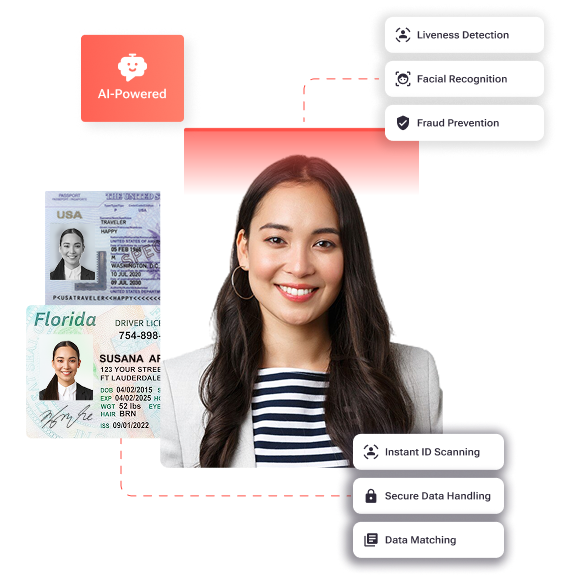
Fraud Prevention. IDVerify integrates biometric identity verification directly into the screening workflow, combining government ID validation, AI-powered liveness detection, and biometric facial matching. This approach moves communities from document-based review to verified physical identity confirmation inside TenantEvaluation, without external portals.
Association-Specific Features. 55+ Communities Verification helps Florida condos and HOAs standardize age-restricted application handling. It reduces manual work and supports documentation consistency across communities. Centralized Lease Tracking connects resident onboarding, unit data, approvals, and lease documentation into one streamlined, audit-ready workflow with real-time lease status visibility.

Revenue Generation. The revenue-sharing model turns application processing into a compliant income stream for the association. TenantEvaluation has generated $150M for communities to date.
Compliance. As a direct reseller of TransUnion and Equifax data, accessed under strict bureau rules with no gray-market sources, TenantEvaluation builds FCRA compliance into the platform. Built-in adverse action workflows and full audit trails help protect associations from liability exposure and support the obligations referenced earlier, including the 84.3% fraud rate many operators face.
2. RentSpree: Agent-Friendly, Limited for Boards
RentSpree is a widely used screening tool for real estate agents and individual landlords, offering fast credit, background, and eviction checks. For agents managing a single transaction, it feels functional and accessible.
For condo associations, it falls short on every governance criterion. RentSpree lacks a formal board voting and approval workflow, timestamped audit trails, and association-specific features such as 55+ community verification or centralized lease tracking. It functions as a screening tool without end-to-end onboarding and governance features. Associations that rely on RentSpree still manage approvals through email chains and spreadsheets, which increases FCRA exposure and board liability.
3. TenantCloud: Budget-Friendly for Small Landlords
TenantCloud offers affordable tenant screening and property management features, with a free basic plan and paid plans starting at $15/month. Its screening pulls from TransUnion consumer reports, with tenants paying for reports to reduce costs for property managers.
TenantCloud is designed for individual landlords managing a small number of units. It has no board approval dashboard, no association-specific compliance workflows, and no biometric fraud prevention. A condo association managing fiduciary responsibilities, formal approval processes, and Florida-specific statutory requirements needs a governance layer that TenantCloud does not provide.
4. Buildium: Full Property Management Suite with Screening Add-On
Buildium is a comprehensive property management platform with tenant screening powered by TransUnion. Pricing starts at $62/month for the Essential plan, with screening charged at $17 per applicant for manager-paid reports or $35 for applicant-paid reports. It includes a Resident Center portal, accounting tools, maintenance tracking, and online leasing features.
Screening functions as one module within a larger, more expensive system. Buildium is not purpose-built for the condo board approval process. It lacks a dedicated board voting dashboard, biometric ID verification, 55+ community workflows, and the association-specific compliance architecture that Florida condos require. Associations that prioritize governance over broad property management features will still face a gap when relying on Buildium’s screening add-on.
5. AppFolio: Enterprise-Grade Management with Higher Complexity
AppFolio is a powerful property management platform for large companies, with its own proprietary screening system called FolioScreen. Pricing is quote-based with a reported 50-unit minimum and a commonly cited $280/month floor, which makes it impractical for many associations. AppFolio’s Core plan runs approximately $1.50/unit with a $298/month minimum at 200 units, scaling to $5.00/unit at the Max tier.
Like Buildium, AppFolio operates as a broad platform where screening appears as an add-on rather than a governance-focused solution. It lacks specialized board voting workflows, biometric identity verification, and Florida-specific compliance features that TenantEvaluation includes. Its enterprise pricing structure and minimum unit thresholds also create barriers for smaller or mid-sized associations.
Explore how centralized lease tracking and board-ready workflows work in TenantEvaluation.
Why Generic Tenant Screening Falls Short for Condo Boards
The comparison above highlights a structural gap. Generic tools are built for landlord-tenant transactions and do not address the governance, compliance, and community-specific requirements of a condo association. The checklist earlier outlined the missing capabilities; this section explains why those gaps matter in practice.
- Board Approval Process. Associations must apply screening rules uniformly, and an approval right is administrative and bounded. This standard requires a formal, auditable voting process. Generic tools provide no such workflow, so boards fall back to email and spreadsheets without a timestamped record of decisions.
- Association-Specific Rules. Florida condo declarations commonly set minimum lease terms, cap how many times a unit may be leased per year, and impose waiting periods before an owner may lease. When software cannot enforce or verify these requirements, managers must track them manually, which increases error risk and disputes.
- Florida Regulations. Under the Florida Condominium Act, a condo association’s screening fee is capped at $150 per applicant, with spouses and dependents counted as one. A platform like TenantEvaluation supports these Florida-specific workflows, including fee structures and statutory timelines, so boards stay within legal limits.
- FCRA Compliance in Daily Operations. The FCRA imposes obligations on both the screening company and the association as the user, including adverse action notices and dispute handling. A generic tool that lacks workflows or audit trails can expose the association to statutory penalties of up to $1,000 per willful violation.
Florida Compliance: State-Specific Rules Condo Boards Must Follow
Florida condos and HOAs face layered compliance obligations. State statutes and federal law impose requirements that many generic platforms do not address in their default configurations.
- Fee Caps. Under Florida Statute 718.112(2)(i), a condo association’s screening fee is capped at $150 per applicant, with spouses and dependents counted as one applicant, and the fee cannot be charged again on a lease renewal with the same lessee.
- Fair Housing. HUD guidance treats an automatic ban on any applicant with any criminal record as a potential source of disparate-impact liability; an individualized review weighing offense type, recency, and evidence of rehabilitation holds up far better than a blanket rule.
- FCRA Adverse Action. If an association denies an applicant based on a consumer report, it must provide a written adverse action notice identifying the reporting agency, stating the agency did not make the decision, and explaining the applicant’s right to a free report copy and to dispute errors. TenantEvaluation’s built-in adverse action workflows and audit trails are designed for this requirement.
- Rental Restriction Authority. A Florida condo board cannot create rental restrictions through policy alone; restrictions must be in the declaration or a validly recorded amendment, and they apply only to owners who consented or acquired their units after the amendment was recorded.
Frequently Asked Questions About Condo Association Tenant Screening
What do condo associations look for in background checks?
Condo associations look for criminal history, creditworthiness, eviction history, income verification, and identity verification. These checks help confirm that applicants are financially responsible and do not pose a risk to the community. Screening must be applied uniformly and must comply with federal Fair Housing and FCRA requirements.
How long does tenant evaluation take for a condo association?
With a manual process, tenant evaluation in South Florida condos commonly takes up to 30 days. Delays often occur because associations wait for board meetings and outside management companies to process paperwork. TenantEvaluation automates the process end-to-end, reducing application cycles by up to 70% and turning days-long reviews into a streamlined workflow that can be completed in hours. The QuickApprove workflow specifically targets bottlenecks during high-volume seasons and in communities with complex onboarding requirements.
What are red flags for tenant applicants in a condo association?
Common red flags include recent evictions, criminal history relevant to community safety, credit scores below 620, income below 2.5x the monthly rent, and identity fraud indicators such as mismatched documents, fabricated pay stubs, or PDF metadata showing files were created in an editing tool rather than exported by a bank or payroll system. A red flag should trigger a specific verification step. Every denial must map to a written criterion and follow the FCRA adverse action process.
What is the best tenant screening solution for small HOAs?
For small HOAs, the best solution is affordable, easy to use, and free from long-term contracts or minimum unit thresholds. TenantEvaluation’s pay-per-application model with revenue sharing makes it cost-neutral or revenue-generating for the association, because the platform funds itself through application fee processing. AppFolio’s 50-unit minimum and Buildium’s monthly subscription tiers create higher fixed costs, while TenantEvaluation scales with the association’s actual volume.
Does a condo association need to be FCRA compliant when screening tenants?
Yes. When a condo association uses a background screening report as part of a tenant approval decision, both the screening vendor and the association as the user of that report carry obligations under the FCRA. These obligations include providing adverse action notices when denying an applicant based on a consumer report, maintaining permissible purpose controls, and supporting the applicant’s right to dispute inaccurate information. TenantEvaluation is a direct reseller of TransUnion and Equifax data, with built-in adverse action workflows and full audit trails that address these obligations at the platform level.
Conclusion: Choose Screening That Matches Condo Governance
The tenant screening solution a board selects directly affects the community’s security, financial health, and legal standing. Generic tools create risk for condo associations because they lack board voting workflows, audit trails, biometric fraud prevention, and the Florida-specific compliance architecture that associations require.
TenantEvaluation is built specifically for community associations and management companies, with FCRA compliance at its core. From QuickApprove board-ready approval workflows and IDVerify biometric fraud prevention to 55+ Communities Verification and centralized Lease Tracking, TenantEvaluation delivers what a condo board or CAM needs to streamline approvals and protect the community. As mentioned earlier, it is trusted by thousands of communities processing more than 100,000 applications each year.
