Written by: Luis Teran, Co-founder, CEO, TenantEvaluation
Key Takeaways for Florida Condos and HOAs
- FinCEN’s March 2025 Interim Final Rule exempts most Florida condos and HOAs from CTA BOI reporting as domestic U.S. entities.
- Only foreign entities qualified to do business in the U.S. require beneficial ownership filings; Florida associations under Chapters 718 and 720 qualify for exemption.
- Identity verification still plays a central role in resident screening and fraud prevention, even when your association is exempt from CTA filing.
- Biometric tools such as ID validation, liveness detection, and facial matching provide stronger fraud protection than traditional document checks.
- Secure your Florida community with TenantEvaluation’s automated biometric verification by exploring automated identity verification solutions tailored to Florida associations.
Strategic Context: CTA, Exemptions, and Identity Risk in 2026
The Corporate Transparency Act landscape shifted dramatically in 2025. The U.S. Court of Appeals for the Eleventh Circuit declared the CTA constitutional on December 16, 2025, and FinCEN’s exemptions remain in effect. Florida associations face $500 daily penalties if they are non-exempt, while identity fraud risks continue escalating across communities regardless of CTA status.
Florida Chapter 718 and 720 statutes already impose strict governance requirements on condos and HOAs. The CTA was designed to add federal oversight through beneficial ownership reporting, but FinCEN’s March 26, 2025 interim final rule eliminated BOI reporting requirements for all U.S. companies and U.S. persons. This exemption shields most Florida associations from CTA filing burdens, yet it does not remove the underlying challenge of confirming who actually controls and occupies homes within your community.
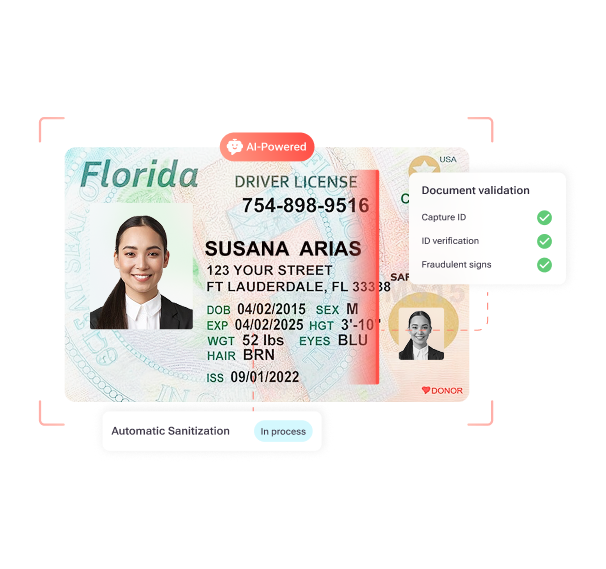
Community Association Managers report increasing synthetic identity attempts and document fraud during resident onboarding. These fraud attempts persist regardless of CTA filing status, which means associations still need biometric-grade identity verification to protect against fraudulent occupants even with CTA exemptions in place. To address this growing threat, explore automated identity verification solutions designed specifically for Florida communities.
CTA Filing Status for Florida HOAs and Condos
Most Florida HOAs and condos do not need to file CTA BOI reports under current rules. FinCEN’s March 2025 interim final rule confirms that companies created in the United States are no longer considered reporting companies and are exempt from beneficial ownership information reporting. This exemption covers domestic entities formed under U.S. state law, including Florida condominium associations and homeowners associations.
Under the original CTA framework, board members with substantial control would have qualified as beneficial owners requiring identification. These individuals typically include presidents, directors, and officers exercising 25 percent or greater influence. FinCEN defines substantial control as serving as a senior officer or possessing authority to appoint or remove senior officers.
The following table summarizes how Florida HOAs and condos align with each exemption criterion, showing why most associations qualify for automatic exemption.
|
Exemption Criteria |
Yes/No |
FL HOA/Condo Fit |
Source Authority |
|
Domestic U.S. Entity |
Yes |
Formed under Florida law |
FinCEN Interim Rule |
|
Foreign Entity |
No |
Not applicable |
31 U.S.C. § 5336 |
|
Registered in U.S. |
N/A |
Domestic formation |
March 2025 Rule |
|
BOI Filing Required |
No |
Exempt under current rule |
FinCEN Q&As |
CTA Exemption for Florida Condominium Associations
Florida condominium associations formed under Chapter 718 qualify as domestic entities exempt from BOI reporting. FinCEN’s March 21, 2025 interim final rule revised the definition of “reporting company” to include only entities formed under foreign law and registered to do business in any U.S. state. Florida condo associations do not meet that definition and therefore fall within the exemption.
Beneficial Owners in Florida Condos and HOAs
Board presidents, directors, and officers with substantial control would constitute beneficial owners under original CTA definitions. However, no U.S. person needs to be identified as a beneficial owner of reporting companies under FinCEN’s Interim Final Rule. This change removes BOI reporting obligations for domestic association leaders while leaving internal identity verification needs unchanged.
Florida Condo CTA Compliance Status in 2026
The Eleventh Circuit’s constitutional ruling maintains CTA validity while FinCEN’s exemptions remain effective. FinCEN has not issued a final rule following its March 21, 2025 Interim Final Rule, with delays cited including a lapse in appropriations. Associations should monitor future guidance while continuing to rely on the current exemption framework.
Industry Trends: Identity Fraud and Screening in 2026
Post-exemption clarity allows Florida associations to focus on core identity verification challenges. Industry data shows rising synthetic identity fraud attempts in community screening processes. Traditional document-based verification often proves insufficient against sophisticated fraud schemes targeting high-value residential properties.
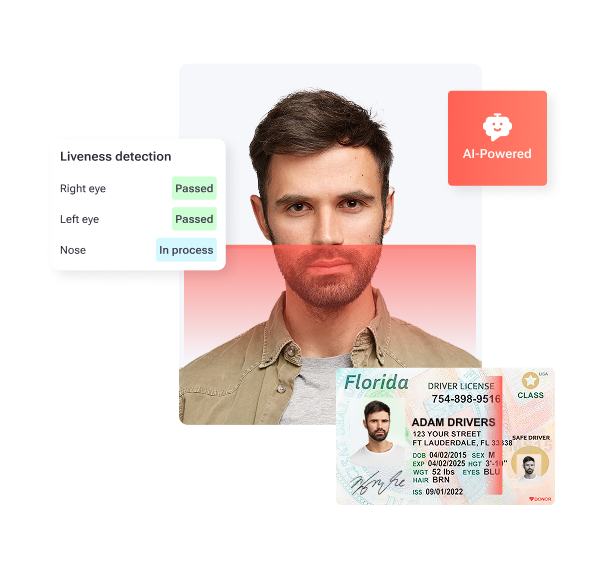
Biometric identity verification now serves as the emerging standard for community protection. Advanced solutions combine government ID validation, AI-powered liveness detection, and facial biometric matching to confirm applicant authenticity before approval decisions.
FinCEN BOI ID Requirements for Non-Exempt HOAs
While most Florida associations benefit from the domestic exemption, understanding BOI filing requirements clarifies what exempt entities avoid and why strong identity practices still matter. For the rare Florida association that might not qualify for domestic exemption, BOI filing requires specific identity documentation. BOI reports require beneficial owners’ full legal name, date of birth, current residential home address, and an image of an unexpired identification document.
The following table breaks down each filing step and the verification tools that help ensure accurate submission.
|
Filing Step |
Required Action |
ID Documentation Tips |
Verification Tools |
|
Entity Information |
Legal name, DBA, EIN |
Match incorporation docs |
State records verification |
|
Beneficial Owner ID |
25%+ ownership/control |
Board resolution documentation |
Governance review |
|
Personal Details |
Name, DOB, address |
Residential address only |
Address validation |
|
ID Image Upload |
Unexpired passport/DL |
High-resolution scan |
Document authentication |
Corporate Transparency Act and HOA Board Members
Board members exercising substantial control include presidents, directors with appointment authority, and officers making important decisions. FinCEN defines substantial control as including service as a senior officer or possession of authority to appoint or remove senior officers. Even when exempt, boards should understand these roles because they mirror the individuals who often approve residents and manage risk.
Common CTA and Identity Verification Pitfalls
Florida associations face several compliance risks even under current exemptions. Misidentifying beneficial owners, relying on expired identification documents, incorrectly assessing exemption status, and manual fraud detection create liability exposure. The last risk, manual fraud detection, is particularly problematic because document-based verification alone cannot prevent sophisticated identity fraud attempts.
Manual processes delay resident approvals and expose associations to data security breaches. Traditional screening methods lack biometric confirmation, which allows fraudulent applicants to enter communities using stolen or synthetic identities.
Best Practices: Automating Screening with Biometric ID
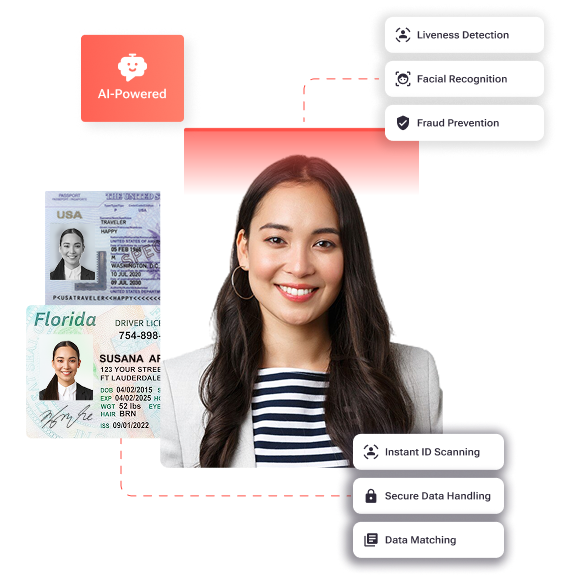
TenantEvaluation’s IDVerify solution provides biometric identity verification integrated directly into resident screening workflows. This biometric layer combines government ID validation, AI-powered liveness detection, and facial biometric matching to confirm applicant authenticity.
With 5,000+ communities served and $150M in revenue generated for communities, TenantEvaluation specializes in Florida association compliance. This specialization is built on a platform foundation that prioritizes regulatory compliance, specifically FCRA requirements that govern all resident screening. Beyond compliance, the platform’s QuickApprove dashboard provides board members direct access to streamlined approval workflows, which reduces administrative burden while maintaining audit-ready processes.
When evaluating identity verification solutions, Florida associations should compare platforms across four critical dimensions: biometric capabilities, Florida-specific expertise, board accessibility, and compliance foundation. The table below shows how TenantEvaluation compares to common alternatives.
|
Feature |
TenantEvaluation |
ApplyCheck |
Verify Screening |
|
Biometric Verification |
Native IDVerify integration |
Limited options |
Third-party redirects |
|
Florida Specialization |
Florida-specific regulations and workflows |
Generic platform |
Basic screening focus |
|
Board Dashboard |
QuickApprove direct access |
Not available |
Limited board features |
|
FCRA Foundation |
FCRA compliance as the foundation |
Afterthought approach |
Basic compliance |
TenantEvaluation’s revenue-sharing model eliminates upfront costs while generating income for associations. The platform reduces administrative burden by up to 70 percent and strengthens fraud prevention through biometric identity confirmation. See how automated compliance solutions can reduce your administrative workload while improving fraud protection.
FAQ
Do HOAs need to file CTA in Florida?
No, most Florida HOAs and condominium associations are exempt from CTA BOI filing requirements under FinCEN’s March 2025 interim final rule. This exemption applies to domestic entities formed under U.S. state law, including Florida associations formed under Chapters 718 and 720. As noted earlier, the rule exempts U.S.-created entities and their beneficial owners from BOI reporting obligations.
What are the CTA exemption criteria for Florida associations?
Florida condos and HOAs qualify for CTA exemption as domestic U.S. entities formed under state law. FinCEN’s interim rule limits BOI reporting requirements to foreign entities registered to do business in the U.S. Domestic associations formed in Florida therefore qualify for exemption without additional BOI filing requirements or documentation.
What ID documents are required for Florida HOA boards under CTA?
For non-exempt entities, CTA requires beneficial owners to provide full legal name, date of birth, current residential address, and an unexpired government-issued ID image such as a passport or driver’s license. Florida associations typically qualify for domestic exemption, which removes these BOI documentation requirements under current FinCEN rules.
Who is exempt from CTA filing requirements?
Under FinCEN’s March 2025 interim final rule, all domestic U.S. entities are exempt from CTA BOI filing, including Florida condominium associations and HOAs. The exemption covers entities formed under U.S. state or tribal law and their beneficial owners, and it eliminates enforcement actions against domestic companies and U.S. persons while the rule remains in effect.
What are FinCEN BOI ID requirements for HOAs?
The documentation requirements outlined earlier apply to non-exempt reporting companies that must file BOI reports. Florida HOAs typically qualify for domestic exemption, so most boards should focus instead on confirming exemption status and maintaining robust identity verification for resident screening regardless of CTA obligations.
Which HOA board members qualify under Corporate Transparency Act substantial control?
The substantial control definition mentioned earlier covers board presidents, directors with appointment authority, senior officers such as CEOs or CFOs, and individuals making important company decisions. Florida associations generally qualify for domestic exemption under current FinCEN rules, which removes the need to identify these individuals as beneficial owners for CTA purposes.
Do Florida condos qualify for CTA exemption?
Yes, Florida condominium associations formed under Chapter 718 qualify as domestic entities exempt from CTA BOI reporting requirements. As noted earlier, FinCEN’s interim final rule exempts U.S.-formed entities, including Florida condos, from beneficial ownership information filing obligations while the rule remains in effect.
Conclusion: Align Exemption Confidence with Strong Screening
Florida condos and HOAs benefit from CTA exemptions under current FinCEN rules, yet identity verification remains critical for community protection. Boards should confirm their association’s exempt status and implement biometric identity verification to prevent fraud during resident screening.
TenantEvaluation provides a comprehensive solution for Florida associations by combining advanced identity verification through IDVerify+ with an FCRA-compliant foundation and a focused approach to community associations. With more than 5,000 communities served, the platform’s revenue-sharing model helps associations strengthen compliance and screening while generating additional income.
Do not wait for regulatory changes or fraud incidents to impact your community. Automate your compliance and strengthen resident screening with biometric identity verification designed specifically for Florida associations.
